

We may earn a commission when you buy through links on this page, at no extra cost to you. Learn more.
The saint joseph wine region is a Northern Rhône appellation on the right bank of the Rhône River, best known for elegant, peppery Syrah reds and smaller amounts of Marsanne- and Roussanne-based whites. Its vineyards climb steep, often granite-rich slopes across 26 communes in the Ardèche and Loire. The long, narrow appellation connects the area around Chavanay in the north with the Tournon and Mauves area farther south, so wines can show meaningful differences in fruit, structure, and ripeness.
Saint-Joseph offers a useful entry into the Northern Rhône: its reds deliver classic Syrah character without requiring every bottle to be a major cellar project, while its less common whites bring a savory, floral alternative. Understanding the geography, grape rules, and producer choices makes it easier to find a style that suits the table and the occasion.
Where Saint-Joseph Sits in the Northern Rhône
Saint-Joseph occupies the western, or right, bank of the Rhône in the northern Rhône Valley. The appellation runs roughly 50 kilometers from Chavanay toward Guilherand, crossing 23 communes in the Ardèche and three in the Loire, according to Inter Rhône.
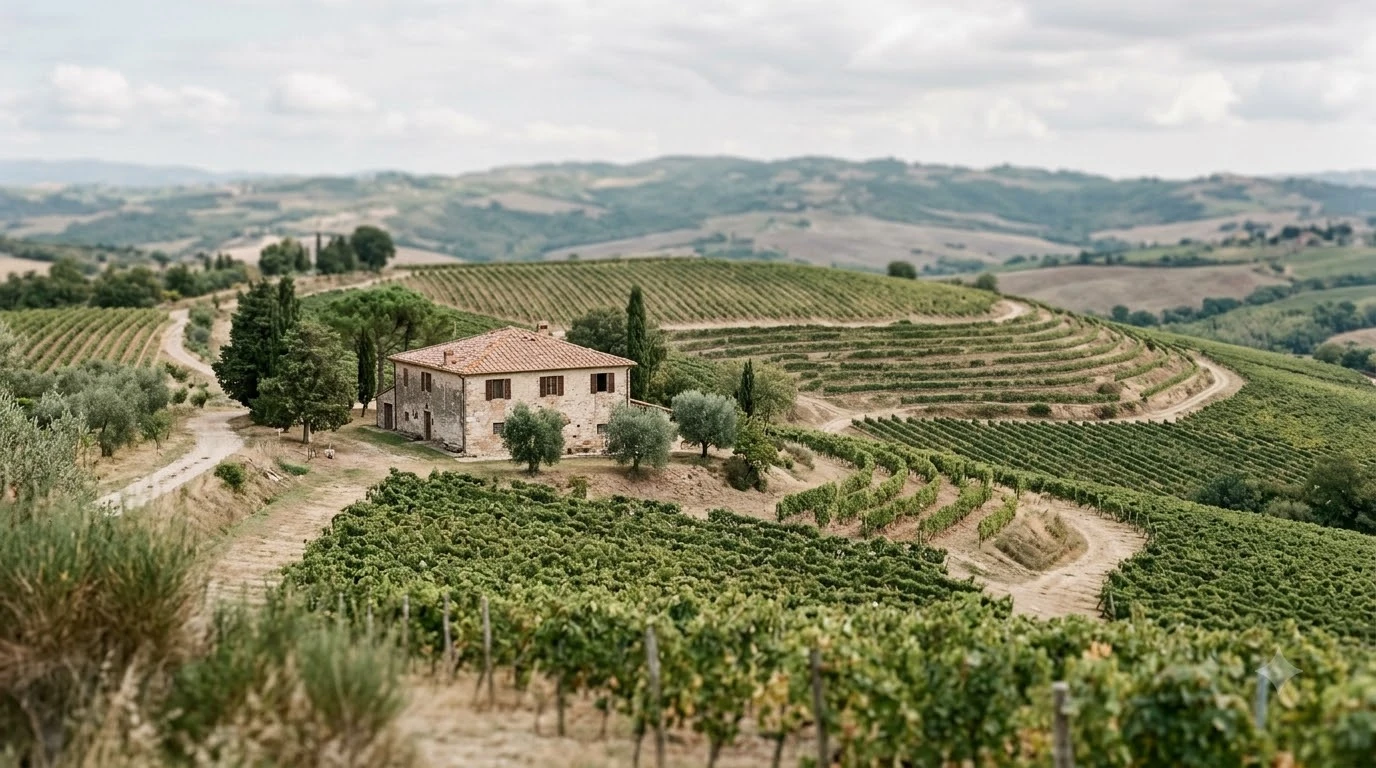
This is not one compact vineyard with a single village at its center. Vines appear in a long corridor of slopes, terraces, and plateaus overlooking the river. The northern end sits near Condrieu and Côte-Rôtie; farther south, the vineyards face the area around Hermitage, Cornas, and Saint-Péray. Towns such as Chavanay, Mauves, Tournon-sur-Rhône, and Guilherand help orient the map, but the appellation’s vineyards do not form an unbroken carpet between them.
The name can cause confusion because Saint-Joseph is both a place name and a protected wine appellation. A bottle labeled Saint-Joseph comes from the delimited area and follows its production rules; it is not simply any Syrah grown somewhere along the Rhône. The appellation was officially recognized in 1956, and its historic name was Vin de Mauves before the name Saint-Joseph came into use in the 17th century. For a broader map of French regions and their wine identities, the site’s Wine Regions resource gives useful context. Saint-Joseph is part of the Northern Rhône family, not the southern Rhône blend tradition built around varieties such as Grenache. That distinction helps explain why Syrah defines the red wines so clearly here.
Granite Terraces, Slopes, and a Mixed Climate
The landscape is one of Saint-Joseph’s strongest signatures: steep, narrow terraces catch the sun above the river, while granite and related rocky soils provide drainage and shape the wines’ structure. The climate combines semi-continental conditions with Mediterranean influence, creating warm, sunny growing sites alongside cooler seasonal patterns.
Inter Rhône places the appellation near the 45th parallel and identifies granite, clay, and sand among its soils. Granite is especially important, but it is not the only material under the vines. The southern sector also includes gneiss and complex granite, and different exposures can produce different levels of ripeness even within a short distance. The official Inter Rhône appellation profile describes the steep terraces as important for both sun exposure and drainage.
Many of the best-known slopes face south or southeast, helping the vines receive sunlight in a region where the season is not uniformly Mediterranean. The Rhône moderates the landscape, but weather still varies from year to year. A semi-continental pattern means growers must pay attention to spring conditions, summer heat, and autumn rain; harvest timing can be relatively late in this part of the Rhône.
Terracing also affects the work in the vineyard. Narrow, steep parcels limit the use of machinery, so vineyard tasks can require substantial manual labor. That practical reality helps explain why Saint-Joseph is a landscape of small parcels and varied grower approaches rather than a single uniform farming model. It also means a producer’s location and vineyard practices can matter as much as a broad appellation name.
Syrah, Marsanne, and Roussanne: The Grapes Behind the Wines
Syrah is the defining red grape of Saint-Joseph, while Marsanne and Roussanne make the appellation’s dry whites and may also appear in small amounts in red blends. The red wines are expected to be Syrah-led; the whites offer a different view of the same steep, sunny Rhône slopes.
Red wines: Syrah at the center
Saint-Joseph red must contain at least 90 percent Syrah, with Roussanne and/or Marsanne permitted for up to 10 percent of the blend. In practice, many producers bottle a straight Syrah, letting site, vintage, harvest choices, and cellar work shape the result. This rule keeps the appellation’s red identity clear while allowing a small amount of white grape to add nuance.
Syrah commonly brings dark or red berry fruit, black pepper, violet, and savory notes. Depending on site and ripeness, the profile can also suggest olive, licorice, smoked meat, or earth. Tannin is usually noticeable, though its texture can range from fine and supple to firm and drying. Oak can add spice and frame, but it should not erase the fruit or the peppery character that makes the grape recognizable.
White wines: Marsanne and Roussanne
Saint-Joseph blanc is made from Marsanne, Roussanne, or a blend of the two. Marsanne tends to give body and a broad, rounded texture, with medium acidity and flavors that can move toward pear, nuts, and flowers. Roussanne often contributes aromatic lift, with notes associated with apricot, hawthorn, honeysuckle, and other white flowers.
These whites are generally dry, aromatic, and more textured than sharply tart. They can be appealing young for their fruit and floral character, while fuller examples may gain nutty and honeyed complexity with time in bottle. Because white Saint-Joseph is a smaller part of production, it may take a little more searching to find than the red, but it is a worthwhile option for drinkers who usually reach for Rhône reds.
What Saint-Joseph Tastes Like: Northern and Southern Styles
Saint-Joseph is not a single flavor profile: the northern and southern parts of the appellation can produce different expressions of Syrah, and cellar choices add another layer of variation. The broad pattern is a red wine with fresh fruit, pepper, violet, savory detail, and a firm but often polished structure.
Descriptions of the southern wines around Mauves and Tournon often emphasize supple red fruit and freshness, while northern examples can lean toward darker fruit, leather, and pepper. Decanter’s regional coverage also notes that northern vineyards tend to ripen later, a factor that can influence fruit character and harvest decisions. These are useful guideposts, not strict rules: aspect, elevation, vine age, crop levels, and the weather of an individual growing season all matter.
Producer choices can make two wines from nearby sites feel quite different. Some growers favor gentler extraction and restrained oak to preserve vivid fruit and a more open texture. Others use more new or larger-format oak, longer maceration, or a firmer structure to create a deeper, more age-worthy style. Decanter’s Northern Rhône profile of Saint-Joseph and Crozes-Hermitage discusses this range of approaches and names producers including Jean-Louis Chave, Gonon, Guigal, Coursodon, Pierre Gaillard, and Yves Cuilleron.
Recent review descriptions from Wine Enthusiast provide another illustration of the range: Domaine Verzier’s Empreinte is described through black cherry, lavender, and violet, while Yves Cuilleron’s Les Serines is presented with darker plum, blackberry, and clove notes. Such tasting notes are snapshots of individual bottlings, not a promise that every Saint-Joseph will show the same aromas. The more useful expectation is a Syrah with both fruit and savory detail, supported by freshness and tannin.
How to Choose a Bottle and Read the Label
Start with the color, then consider the producer and the style of the cuvée. Red Saint-Joseph is the natural starting point for classic Northern Rhône Syrah, while white Saint-Joseph is a less common choice for people who enjoy dry, aromatic whites with texture.
The front label usually makes the key information clear: Saint-Joseph identifies the appellation, and the producer’s name or domaine identifies who made the wine. Some labels also name a specific cuvée or vineyard parcel. A single-vineyard or named-cuvée wine may emphasize a particular slope or cellar approach, but the name alone does not tell you whether the wine will be lighter, more tannic, or more oak-marked. Looking up the producer’s approach and the vintage is more useful than assuming that every special-sounding cuvée is automatically superior.
For a first bottle, look for a producer whose style is clearly described as fresh-fruited or approachable if you plan to open it soon. If you prefer a more structured red for a meal or a few years in the cellar, consider a bottling with firmer tannin, greater concentration, or oak influence. Names that appear in regional coverage and current reviews include Jean-Louis Chave, Gonon, Guigal, Coursodon, Yves Cuilleron, Domaine Durand, Domaine Verzier, and Domaine Les Alexandrins. These are examples to investigate rather than a ranking; vintage and cuvée still matter.
It also helps to know what Saint-Joseph is not. It is not a Bordeaux village appellation, so comparisons with the Saint-Émilion wine region or the Saint-Julien wine region are useful mainly as contrasts in geography and grape tradition. Those Bordeaux names signal a different regional framework, whereas Saint-Joseph is a Rhône appellation defined by Syrah and the local white grapes. The label is a clue to place and production rules, not a guarantee of one exact flavor.
Food Pairings, Serving Temperature, and Cellaring
Saint-Joseph red works especially well with savory foods that can meet Syrah’s fruit and tannin, while the white is a natural match for poultry, fish, and dishes with a creamy or herb-driven sauce. Serving temperature and a little air can make the difference between a wine that feels closed and one that shows its aromatic range.
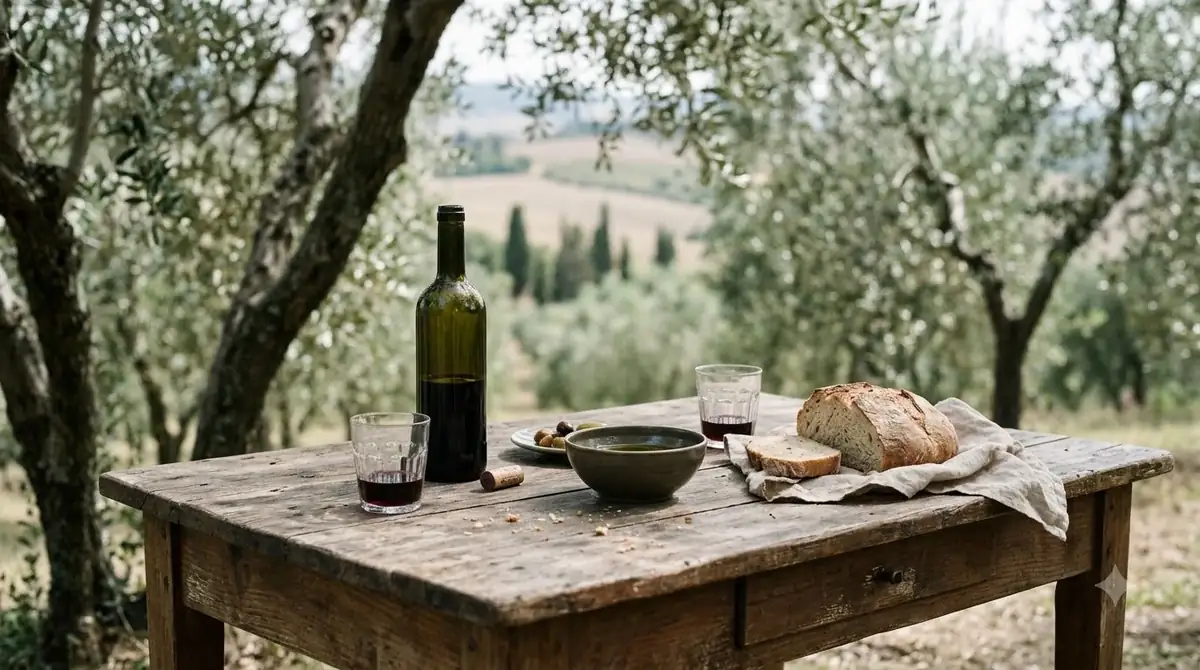
For red Saint-Joseph, consider roast lamb, grilled beef, duck breast, mushroom dishes, or lentils with herbs. The wine’s pepper and dark fruit complement browned meat and savory cooking, while salt and fat soften the perception of tannin. Aged hard cheeses can also work well. Avoid pairing a firm, tannic red with oily fish: the texture and flavor can clash. For white Saint-Joseph, try roast chicken, pork with herbs, trout, scallops, or fish in a butter-based sauce. Match the acidity of the food and wine so a sharply acidic dressing does not flatten a softer white.
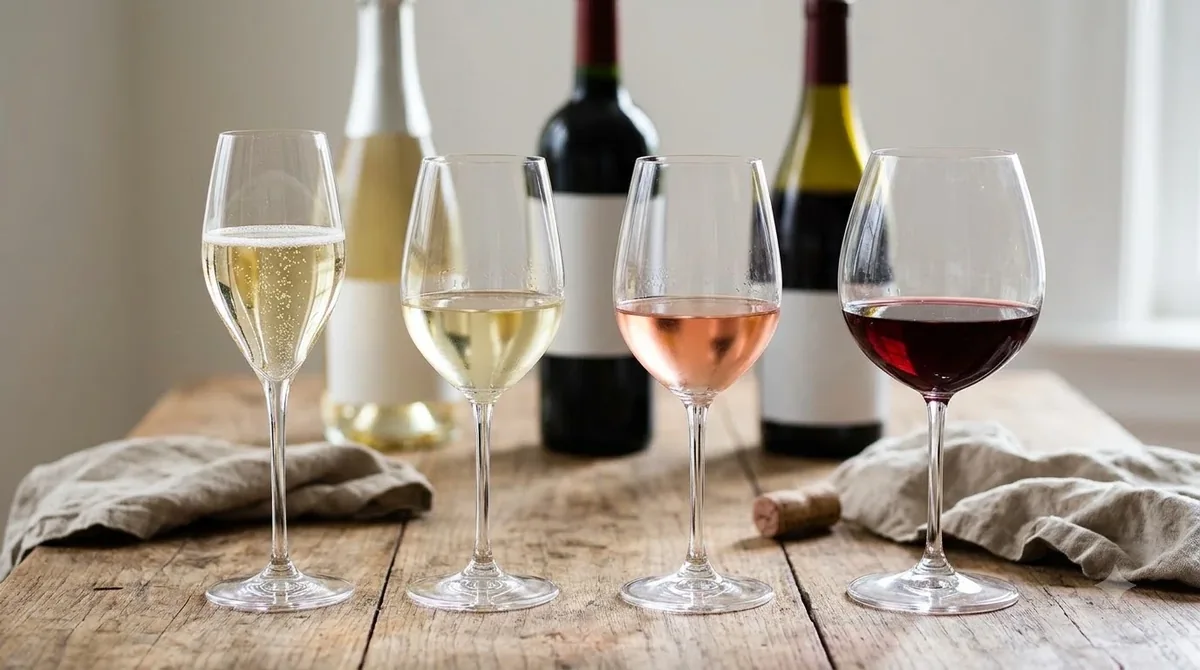
Serve a fuller red slightly cool rather than at a warm room temperature. A young, structured Syrah may benefit from 30 to 60 minutes in a decanter; a lighter or older bottle may need less air and should be handled gently. White Saint-Joseph is best served cool but not ice-cold, so its aromas and texture remain visible. Store unopened bottles on their sides in a dark, steady place near 55°F, away from heat and temperature swings.
| Wine or service detail | Practical guideline | Why it helps |
|---|---|---|
| Saint-Joseph red | 60–65°F | Shows Syrah fruit, pepper, and structure without feeling hot. |
| Saint-Joseph white | 50–55°F | Preserves freshness while allowing floral and nutty aromas to emerge. |
| Young, structured red | Decant 30–60 minutes | Gives a firm wine time to open before serving. |
| Standard bottle | 750 ml; about five 5 oz pours | Useful for planning a meal for several guests. |
| Opened still wine | Refrigerate and aim to finish within 3–5 days | Cold storage slows the loss of freshness. |
Tip: Put a full-bodied Saint-Joseph red in the refrigerator for about 15 to 20 minutes before serving if the room is warm. The goal is a serving temperature around 60–65°F, not a chilled, muted red.
Cellaring depends on the wine’s concentration, tannin, vintage, and the producer’s approach. Many bottles are enjoyable after a few years, once the fruit and structure begin to settle, while more concentrated examples from strong sites can develop for longer. There is no need to hold every bottle for a decade: choose a drinking window that matches the wine’s weight and your preference for primary fruit or mature savory notes. For a simple dinner, a red Saint-Joseph can be opened while the food is finishing and poured after a short rest in the glass. For a more formal meal, decant a young, structured bottle and serve it with lamb, roast beef, or a mushroom-rich dish. White Saint-Joseph deserves the same care as the red: a moderate chill and a suitable glass help show its texture and aromatic detail.
Frequently Asked Questions
How many producers work with Saint-Joseph?
The appellation’s official site lists 190 operators placing Saint-Joseph wines on the market. That figure includes businesses involved in marketing the wines and should not be read as a count of individual vineyard owners. The large number of operators helps explain the range of bottlings available under one appellation name.
Can a Saint-Joseph vineyard also be part of Condrieu?
Four communes at the northern end of the Saint-Joseph area also have land eligible for Condrieu: Chavanay, Malleval, Saint-Pierre-de-Boeuf, and Limony. The overlap concerns the mapped appellation areas, not a single bottle carrying both names. Each wine must satisfy the rules for the appellation printed on its label.
Is Saint-Joseph an AOC or an AOP?
Both terms may appear in discussions of the same protected designation. AOC is the French term, Appellation d’Origine Contrôlée, while AOP is the broader European designation, Appellation d’Origine Protégée. The two labels describe a protected link between a product and its defined place of origin.
Does Saint-Joseph have a connection to literature?
Yes. Inter Rhône points out that Victor Hugo mentions Mauves wine in Les Misérables, referring to the wine by its older local name. The reference is a reminder that the area’s wine identity predates the modern appellation system by many generations.
What does the word cuvée mean on a Saint-Joseph label?
Cuvée is a producer’s named wine or selected blend, and it does not automatically mean the wine comes from one vineyard. In the Rhône, a cuvée may combine several grape varieties, parcels, or cellar lots, depending on the producer’s aim. The term is a useful clue to a winery’s range, but it is not a quality ranking by itself.
Saint-Joseph is a rewarding appellation for anyone drawn to Northern Rhône Syrah but looking for a range of drinking styles, from fresh and peppery reds to textured, aromatic whites. Start with a producer whose style matches your table, then explore different parts of the long river corridor to see how slope, soil, and cellar choices shape the wine.
More in Wine Regions
 Willcox Wine Trail: Discover Arizona’s High-Elevation Wine CountryUpdated Nov 20, 2026
 Yakima Valley Wine Region: Find the Best Styles to TryUpdated Nov 20, 2026
 Vosne Romanee Wine Tasting: Identify Aromas and Choose Better PairingsUpdated Nov 20, 2026
 Yakima Valley Wine Festival: Find the Best Seasonal Wine EventsUpdated Nov 20, 2026
 Wales Vineyards: Discover Cool-Climate Wines and Where to VisitUpdated Nov 20, 2026
 Yountville Wine Festival: Discover Napa Wines and Local FoodUpdated Nov 20, 2026