

We may earn a commission when you buy through links on this page, at no extra cost to you. Learn more.
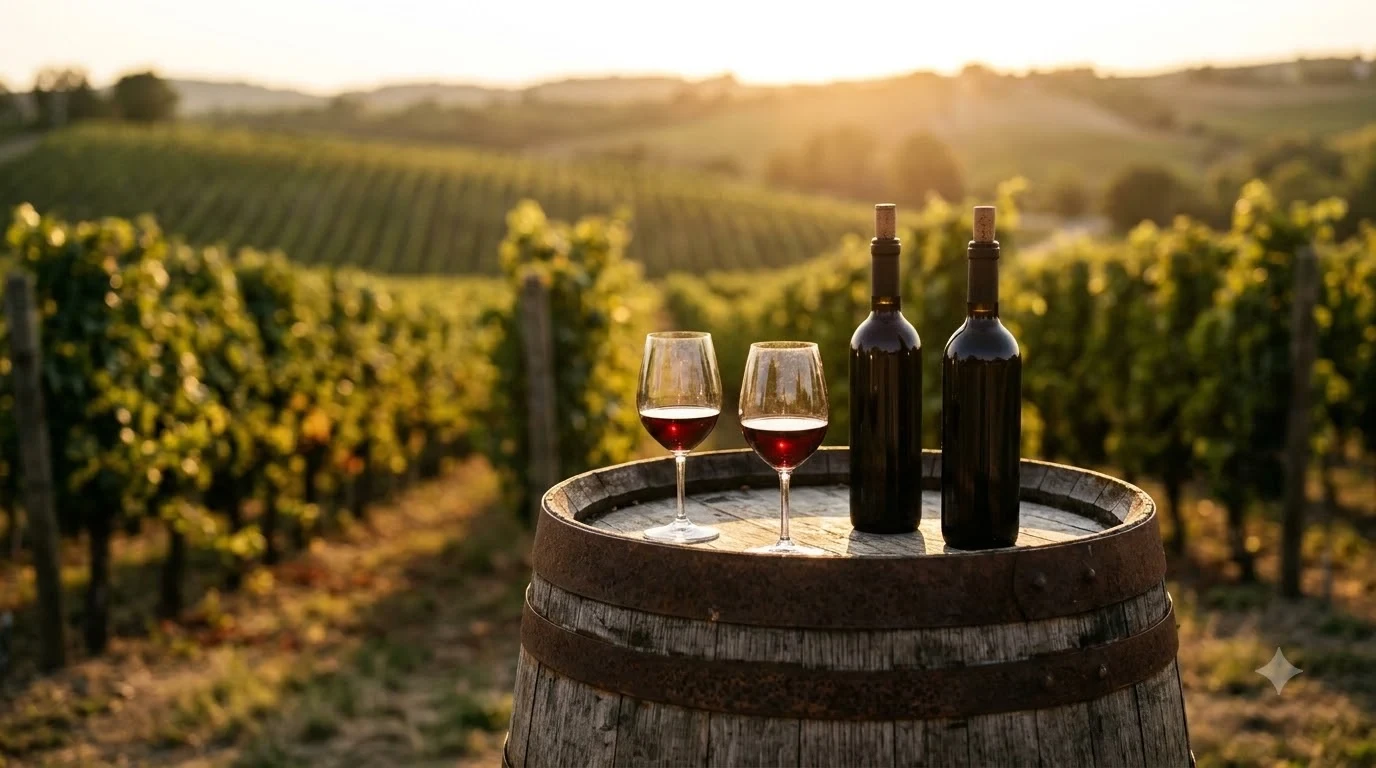
Roussillon vineyards produce some of southern France’s most distinctive dry reds, aromatic whites, rosés and naturally sweet fortified wines. Located between the Mediterranean Sea and the Pyrenees, this historic wine region combines hot, sunny conditions with dramatic changes in elevation, soil and coastal influence. Its signature grapes include Grenache, Carignan, Syrah and Mourvèdre, while appellations such as Côtes du Roussillon, Collioure, Maury and Banyuls offer very different expressions of the landscape.
Roussillon deserves attention from wine drinkers who want to explore beyond the familiar names of Bordeaux, Burgundy and the Rhône Valley. Its vineyards reflect a strong Catalan heritage, an extraordinary range of growing conditions and a long tradition of producing both dry table wines and fortified specialties. Understanding the geography, grapes and appellations makes it much easier to recognize what a bottle offers and choose a style suited to the occasion.
Where Roussillon’s Vineyards Are Located
Roussillon occupies France’s far southwestern Mediterranean corner, primarily within the Pyrénées-Orientales department. Its vineyards stretch from the coastal communities near Spain to inland valleys and mountain foothills, creating a compact region with several distinct growing environments.
The region is often described as an amphitheater facing the Mediterranean Sea. The Corbières mountains form much of its northern boundary, the Pyrenees and Mount Canigou dominate the western landscape, and the Albères range extends along the southern border near Spain. Three major rivers, the Agly, Têt and Tech, cross the territory and influence the distribution of vineyards, soils and settlements.
Perpignan is the principal urban center and a useful starting point for understanding the wine-producing area. North of the Têt, the Agly Valley includes Maury, Tautavel and several important Côtes du Roussillon Villages communities. Further south, the Têt Valley and the Aspres provide a transition between inland agricultural land and the Mediterranean-facing hills.
Along the coast, the Côte Vermeille contains some of the region’s most recognizable vineyard scenery. Around Collioure, Port-Vendres, Banyuls-sur-Mer and Cerbère, vineyards occupy steep slopes above the sea. These locations are particularly important for Collioure dry wines and Banyuls fortified wines.
The wider region also maintains a distinctive cultural identity. Roussillon was historically connected to Catalonia and became part of France under the Treaty of the Pyrenees in 1659. Catalan traditions remain visible in local architecture, food, place names and wine culture. This background helps explain why Roussillon has a character that differs from neighboring Languedoc, despite their frequent appearance together in broader regional wine discussions.
According to the Wines of Roussillon industry organization, the regional vineyard landscape includes 14 protected wine designations and two geographical indications, with approximately 24 grape varieties used across the area. These classifications cover a substantial range of dry and sweet styles. Readers exploring other geographically distinctive wine-growing areas can also compare the coastal and maritime influences of Tasmania vineyards with those found in southern France.
Climate, Elevation and Vineyard Soils
Roussillon has a Mediterranean climate characterized by hot summers, mild winters and relatively limited rainfall. Its sunny growing conditions support ripe grapes, while elevation, mountain air and maritime breezes help preserve freshness in suitable vineyard sites.
One of the most influential features is the Tramontane, a strong northwesterly wind that crosses the region from the direction of the Pyrenees. Regional information describes the vineyard area as experiencing this wind approximately one day in three. It can help dry vineyard vegetation after rainfall, but strong gusts can also damage young shoots and increase water stress during dry periods.
The warmer Marin wind comes from the Mediterranean and can bring moisture and rainfall. Together, these contrasting air movements contribute to the region’s changing vineyard conditions. Coastal areas receive maritime moderation, while inland locations and elevated slopes experience different temperature patterns.
Elevation is another major influence. According to the Conseil Interprofessionnel des Vins du Roussillon, vineyards extend from sea level to approximately 650 meters. Many sites occupy elevations around 200 to 350 meters, although individual appellations and vineyard parcels vary considerably.
Soil diversity is equally important. Roussillon contains several geological formations, including brown and black schist in the Agly Valley, granite and gneiss in elevated inland locations, clay-limestone foothills and stony river terraces along the Agly, Têt and Tech. Sandy and clay-rich soils are also found in parts of the Aspres.
These differences matter because vines respond to water availability, soil depth, drainage and temperature. A Grenache vineyard planted on schist in Maury can produce a different expression from one grown on a coastal slope or a deeper inland soil.
According to the European Union’s published geographical specification for Roussillon, the area’s vineyard soils are generally dry, stony and well drained, with relatively low organic matter in the designated parcels. These characteristics help explain why many vineyards are established on challenging hillsides rather than exclusively on the most fertile agricultural land.
Tip: When comparing two Roussillon wines made from the same grape, look beyond the variety name. The appellation, vineyard elevation and soil description can reveal important differences in ripeness, structure and freshness.
The Main Grape Varieties in Roussillon
Grenache and Carignan form the foundation of traditional Roussillon red wines, while Syrah and Mourvèdre provide additional structure, color and complexity. White Grenache, Grey Grenache, Macabeu and Muscat are equally important to understanding the region’s white and fortified wine traditions.
Grenache Noir is arguably the defining red grape. It performs well in warm, dry conditions and produces wines with ripe red fruit, dark cherry, plum and spice characteristics. Old Grenache vines are particularly valued in several inland areas, where naturally modest yields can contribute to concentrated fruit and substantial texture.
Carignan has a long history in Roussillon. Older plantings are often cultivated as bush vines, a traditional form that can withstand the region’s strong winds. The grape provides acidity, color and structure, helping balance the richness of Grenache-based blends. Its characteristic flavors include dark berries, herbs and savory spice.
Syrah contributes dark fruit, floral notes and peppery character. It is often grown in cooler or deeper soils because the variety can be sensitive to strong winds. Mourvèdre adds firm tannins, darker fruit and aging potential, making it a useful partner for Grenache and Carignan in structured red blends.
Other permitted or locally significant red grapes include Lledoner Pelut and Cinsault. Lledoner Pelut is related in character to Grenache but can provide additional color and structure. Cinsault is useful for lighter reds and fresh rosés, bringing red berry aromas and a softer overall profile.
White wines draw on a different group of varieties. Grenache Blanc can provide body and ripe fruit, while Grenache Gris contributes aromatic detail and a distinctive texture. Macabeu, also known as Macabeo, is valued for its freshness and ability to express differences between vineyard sites.
Vermentino, known locally in France as Rolle, can contribute citrus and herbal notes. Marsanne and Roussanne are also used, providing texture, stone-fruit character and aromatic complexity. Muscat à Petits Grains and Muscat d’Alexandrie are particularly relevant to the region’s sweet fortified wines.
The following table summarizes the principal grapes and their typical contributions.
| Grape variety | Color | Typical wine contribution |
|---|---|---|
| Grenache Noir | Red | Ripe cherry, plum, body and warmth |
| Carignan | Red | Acidity, structure, dark berries and spice |
| Syrah | Red | Black fruit, pepper and floral notes |
| Mourvèdre | Red | Firm tannins, dark fruit and aging structure |
| Cinsault | Red | Fresh red berries and lighter texture |
| Grenache Blanc | White | Body, ripe fruit and rounded texture |
| Grenache Gris | White | Aromatic complexity and texture |
| Macabeu | White | Freshness and subtle mineral character |
| Muscat | White | Floral aromas and pronounced grape character |
Blending is an important part of the region’s winemaking tradition. Producers combine varieties to balance ripeness, acidity, tannin and aromatic intensity. For example, Grenache can supply generous fruit, Carignan can provide freshness and Syrah can add darker fruit and spice. The proportions depend on the appellation, vineyard conditions and producer’s objectives.
Some estates also bottle single-variety wines, especially from old Grenache or Carignan vineyards. These wines offer a more direct opportunity to explore individual grape characteristics and the influence of a particular vineyard site.
Important Roussillon Wine Appellations
Roussillon’s appellation system separates several major dry wine areas from its traditional fortified sweet wine designations. Understanding the distinction between Côtes du Roussillon, Côtes du Roussillon Villages, Collioure and Maury makes regional wine labels considerably easier to interpret.
Côtes du Roussillon is the broad regional appellation for dry red, white and rosé wines. Red examples frequently use Grenache Noir, Carignan, Syrah and Mourvèdre, while white blends can include Grenache Blanc, Grenache Gris and Macabeu. The broad geographic coverage allows producers to work with different vineyard environments throughout the region.
Côtes du Roussillon Villages is a more specific designation reserved for red wines. It is associated with selected communities and generally emphasizes more concentrated expressions, with production requirements that differ from the broader regional appellation.
Five named village designations are particularly useful to recognize: Caramany, Latour-de-France, Lesquerde, Tautavel and Les Aspres. Caramany and Latour-de-France are associated with the Agly Valley, Lesquerde is known for elevated granite-based sites, Tautavel has a strong red-wine identity, and Les Aspres covers southern inland vineyard communities.
Collioure is the major coastal dry-wine appellation. It produces red, white and rosé wines from vineyards around the Côte Vermeille. Grenache is particularly important, although Carignan, Syrah and other authorized grapes also contribute to its dry wine styles. The Mediterranean setting gives the appellation a distinctive identity, while its steep slopes make vineyard work demanding.
Maury Sec is a dry red designation centered on the Maury area in the Agly Valley. It is particularly associated with black schist soils and Grenache-based wines, often supported by Carignan and Syrah. Its dry style should not be confused with the traditional sweet Maury wines, which belong to a separate appellation category.
Roussillon also has two important geographical indications: IGP Côtes Catalanes and IGP Côte Vermeille. These provide additional flexibility for producers whose wines do not fall within the more restrictive appellation rules. They can cover red, white, rosé and certain specialized styles.
The following overview helps distinguish the principal designations.
| Appellation | Main wine styles | Geographic association |
|---|---|---|
| Côtes du Roussillon | Red, white, rosé | Wider Roussillon area |
| Côtes du Roussillon Villages | Red | Selected inland villages |
| Collioure | Red, white, rosé | Côte Vermeille coastline |
| Maury Sec | Dry red | Agly Valley |
| Côtes Catalanes IGP | Red, white, rosé | Wider regional territory |
For a broader perspective on how regional designations influence wine style, readers can explore Wine Regions and compare Roussillon’s classification system with other European appellation traditions. A useful comparison is Chianti Classico vineyards, where geographical origin and production rules also play an important role in defining wine identity.
For further regional background, the Wine Enthusiast guide to Languedoc and Roussillon explains the historical relationship between the two neighboring wine regions and outlines their principal appellations.
Vins Doux Naturels: Roussillon’s Fortified Sweet Wine Heritage
Roussillon is one of France’s most important regions for vins doux naturels, or naturally sweet fortified wines. These wines are made by adding grape spirit during fermentation, preserving part of the grapes’ natural sugar while increasing the finished wine’s alcohol content.
The process is known as mutage. Fermentation begins as yeast converts grape sugar into alcohol. Before all the sugar has fermented, producers add neutral grape spirit, which stops fermentation and leaves residual natural sweetness in the wine. The result is a fortified wine that can retain intense fruit character while offering a range of sweetness and aging styles.
Grenache is central to many red and amber expressions, while Muscat plays an important role in aromatic white wines. Roussillon’s five principal vins doux naturels appellations are Rivesaltes, Maury, Banyuls, Banyuls Grand Cru and Muscat de Rivesaltes.
Banyuls and Banyuls Grand Cru
Banyuls is associated with the steep vineyards of the Côte Vermeille, particularly around Banyuls-sur-Mer and neighboring coastal communities. Many vines grow on terraced schist slopes above the Mediterranean, where the landscape makes mechanized vineyard operations difficult.
Banyuls can be made in several styles, including red, white, rosé and aged expressions. Rimage wines emphasize youthful fruit, while traditional and oxidative styles develop more complex notes of dried fruit, nuts, caramel and spice. Banyuls Grand Cru is a particularly distinctive designation associated with extended aging and a tawny style.
Maury
Maury comes from the Agly Valley, where dark schist soils and warm growing conditions have long supported ripe Grenache grapes. Traditional Maury wines are generally rich and sweet, with flavors of blackberry, plum, dried cherry, chocolate and spice.
Different classifications and aging methods create a range of expressions. Grenat wines tend to retain more youthful fruit, while Tuilé styles develop amber-brown or brick-colored tones and more pronounced dried-fruit characteristics. Maury Sec, by contrast, is a dry red wine and should not be confused with the fortified sweet designation.
Rivesaltes and Muscat de Rivesaltes
Rivesaltes is a broad fortified wine appellation with several styles. Ambré wines are generally made from white grapes and develop amber color and oxidative complexity through aging. Grenat wines are based on red grapes and emphasize darker fruit, while Tuilé wines develop more mature, nutty and dried-fruit characteristics.
Hors d’Âge and Rancio expressions are associated with extended maturation and oxidative development. They can show remarkable complexity, with aromas of toasted nuts, dried citrus peel, caramel and concentrated fruit.
Muscat de Rivesaltes is different because it emphasizes the highly aromatic Muscat grape family. Its wines can display fresh grape, orange blossom, peach and citrus aromas, with a sweet and perfumed profile. They are especially suitable for drinkers who prefer floral wines rather than the darker fruit and oxidative notes found in some Grenache-based fortified wines.
The regional classification information published by the Roussillon wine organization distinguishes these five sweet wine appellations from the nine dry PDO appellations. This division is important because it demonstrates that Roussillon’s identity is not limited to its traditional fortified wines.
The modern region also produces a substantial range of dry wines, and producers increasingly focus on expressing vineyard location, old vines and individual grape varieties. For additional detail on the regional history and differences between dry and fortified styles, the Wines of Roussillon regional publication provides information about appellations, grapes, terroirs and winemaking practices.
How Roussillon Wines Taste and What to Serve With Them
Roussillon wines range from full-bodied, concentrated reds to fresh whites, aromatic rosés and deeply flavored sweet fortified wines. Their ideal food pairings depend on the grape varieties, acidity, tannin, sweetness and the influence of vineyard location.
Dry red wines from Côtes du Roussillon and Côtes du Roussillon Villages often display ripe dark berries, plum, black cherry, Mediterranean herbs and pepper. Grenache-based examples can feel generous and warming, while Carignan contributes freshness and Syrah adds darker fruit and spice. Mourvèdre can give certain blends a firmer tannic structure.
These wines work particularly well with grilled lamb, beef, roasted vegetables and dishes featuring rosemary, thyme or garlic. A Grenache-led red can complement grilled lamb chops, while a more structured Carignan and Syrah blend can stand up to slow-roasted beef or braised short ribs.
Because Cabernet Sauvignon generally has high tannin, Merlot has medium and softer tannin, and Pinot Noir has lower-to-medium tannin with higher acidity, it is useful to consider the same structural differences when choosing food for Roussillon reds. Wines with firmer tannins generally pair better with protein-rich foods and dishes containing fat or salt, which soften the perception of tannin.
White Roussillon wines offer another useful direction. Grenache Blanc and Grenache Gris blends can have a rounded texture, while Macabeu and Vermentino can provide fresher citrus and herbal character. These wines suit grilled fish, seafood rice, roast chicken, vegetables and dishes featuring Mediterranean herbs.
Rosé wines from Collioure and Côtes du Roussillon can complement seafood, grilled prawns, salads and lighter poultry dishes. Their refreshing fruit character makes them particularly useful for meals served outdoors or alongside dishes containing olive oil, tomatoes and fresh herbs.
Fortified sweet wines require a different approach. Banyuls and Maury can accompany dark chocolate, chocolate desserts, dried figs, nut-based pastries and blue cheese. Muscat de Rivesaltes is a natural partner for fruit tarts, peaches, apricots and lighter desserts with floral or citrus flavors.
A useful pairing principle is to match the sweetness of the wine to the sweetness of the dessert. A dessert that is sweeter than the wine can make the wine seem less expressive and more acidic. With blue cheese, the combination of salt and rich texture can balance the concentrated sweetness of a mature Banyuls or Maury.
For serving, temperature matters. The following recommendations provide a practical starting point:
- Dry Roussillon reds: 60–65°F for fuller-bodied examples, with lighter reds benefiting from 55–60°F.
- Dry white wines: 45–50°F for lighter expressions and 50–55°F for fuller-bodied whites.
- Rosé: 45–50°F to retain freshness and fruit definition.
- Sweet fortified wines: Approximately 43–50°F for aromatic or lighter expressions, adjusting for the wine’s body and maturity.
Serve a standard 5-ounce glass when enjoying dry table wines. A 750-milliliter bottle provides approximately five such servings. Fortified wines can be poured in smaller amounts because their alcohol and flavor concentration are generally higher.
Storage also affects the drinking experience. Keep unopened bottles on their sides in a cool, dark environment near 55°F, away from direct sunlight and sudden temperature changes. Once opened, refrigerate still wines and aim to consume them within approximately three to five days. Fortified wines generally last several weeks after opening, although their condition depends on sweetness, alcohol level, oxygen exposure and storage conditions.
Roussillon reds with substantial structure can benefit from decanting, particularly when young. Allowing approximately 30 to 60 minutes of aeration can help soften the initial impression and make the fruit and savory aromas easier to recognize.
Frequently Asked Questions
Are Roussillon vineyards the same as Languedoc vineyards?
No. Roussillon and Languedoc are neighboring wine regions in southern France with separate historical and cultural identities. Roussillon has a particularly strong Catalan connection, while Languedoc has its own Occitan heritage. Their wines are sometimes discussed together because both are part of the broader Mediterranean wine-producing area of Occitanie.
What is the difference between Banyuls and Maury?
Both are important fortified sweet wine appellations, but their geographical origins differ. Banyuls comes from the coastal Côte Vermeille, while Maury is associated with the inland Agly Valley and its schist-rich landscape. Banyuls also has a separate Grand Cru designation, which is not interchangeable with ordinary Banyuls.
What does Rancio mean on a Roussillon wine label?
Rancio describes an oxidative style of wine maturation rather than a grape variety. Extended exposure to oxygen and particular aging conditions can produce aromas reminiscent of walnuts, toasted nuts, dried fruit and caramel. Roussillon’s traditional Rancio wines are distinctive regional specialties and can appear in different wine categories.
Are there organic vineyards in Roussillon?
Yes. The region’s dry Mediterranean conditions and strong winds can support organic and biodynamic vineyard management, although individual producers follow different practices. Organic certification is not automatic for wines from the region, so buyers should distinguish certified production from broader sustainability claims.
When does the grape harvest take place in Roussillon?
The harvest generally takes place from late summer into early autumn, with the exact timing depending on grape variety, elevation and vineyard exposure. Earlier-ripening varieties and warmer coastal parcels may be harvested before later-ripening grapes from cooler inland sites. Producers assess grape maturity and acidity to determine the appropriate picking date.
Roussillon offers an unusually broad introduction to Mediterranean French wine, from Grenache-based coastal reds to fresh white blends and historic fortified specialties. Exploring appellations such as Collioure, Maury, Banyuls and Côtes du Roussillon is an excellent way to understand how geography, grape variety and winemaking traditions shape the wines of southern France. For wine enthusiasts seeking distinctive regional bottles, Roussillon is a rewarding area to explore one appellation at a time.
More in Wine Regions
 Willcox Wine Trail: Discover Arizona’s High-Elevation Wine CountryUpdated Nov 20, 2026
 Yakima Valley Wine Region: Find the Best Styles to TryUpdated Nov 20, 2026
 Vosne Romanee Wine Tasting: Identify Aromas and Choose Better PairingsUpdated Nov 20, 2026
 Yakima Valley Wine Festival: Find the Best Seasonal Wine EventsUpdated Nov 20, 2026
 Wales Vineyards: Discover Cool-Climate Wines and Where to VisitUpdated Nov 20, 2026
 Yountville Wine Festival: Discover Napa Wines and Local FoodUpdated Nov 20, 2026