

We may earn a commission when you buy through links on this page, at no extra cost to you. Learn more.
Red Mountain Wine Tasting is best approached as a focused tour of Washington Cabernet Sauvignon, Merlot, and Syrah, sampled close to the warm, windy vineyards that shape their character. The Red Mountain AVA sits near Benton City in south-central Washington and is one of the state’s smallest wine-growing areas. Its dry climate, southwest-facing slopes, and gravelly soils favor concentrated red wines with firm structure. Plan a few seated appointments, compare different producers’ interpretations, and leave time to enjoy the open vineyard views.
Red Mountain is a useful destination for understanding why a small American Viticultural Area can have a distinct identity. You can taste wines made from fruit grown on the appellation’s slopes, compare single-variety bottlings with Bordeaux-style blends, and learn how place influences ripeness, tannin, and freshness. The guide below explains the region, the grapes to seek out, how to organize tastings, and what to serve with the bottles you bring home.
Where Red Mountain Fits in Washington Wine Country
Red Mountain is a compact AVA near Benton City, east of the Yakima River in south-central Washington. The area was designated in 2001, covers 4,040 acres, and sits within the Yakima Valley AVA, which in turn is part of the much larger Columbia Valley AVA.
The name can make the region sound larger and more rugged than it is. The Washington State Wine Commission describes elevations from about 500 to 1,500 feet, with broad, southwest-facing slopes rather than a towering alpine peak. The reddish color that gives the area its name is most apparent in spring, when native cheatgrass changes color. The landscape is a mix of vineyard blocks, dry grassland, roads, and low ridges, so the experience is more open and agricultural than forested or mountainous.
| Red Mountain measure | Typical figure | Why it matters |
|---|---|---|
| AVA designation | 2001 | Defines the appellation’s recognized origin |
| Total AVA area | 4,040 acres | One of Washington’s smallest AVAs |
| Elevation range | 500–1,500 feet | Encompasses a range of slope positions |
| Average annual precipitation | 5 inches | Creates a dry growing environment |
| Cabernet Sauvignon share | About 60 percent of plantings | Explains the region’s strong Cabernet identity |
These figures describe the AVA rather than the amount of land planted to grapes. The Washington State Wine Commission’s Red Mountain AVA profile identifies Cabernet Sauvignon, Merlot, and Syrah as its leading varieties. That scale makes it possible to spend a day tasting a fairly concentrated range of styles without traveling between distant wine districts. For broader context on how American appellations differ, the overview of Wine Regions explains the role that geography and growing conditions play in regional identity.
How Climate, Wind, and Soil Shape the Wines
Red Mountain’s wines reflect a hot, dry growing season balanced by airflow and cooler nights. The combination helps grapes ripen fully while retaining enough acidity to keep many of the reds from feeling flat or heavy.
The AVA receives an average of about 5 inches of rain annually, according to the Washington State Wine Commission. Its broad southwest-facing slopes take in strong afternoon sun, and persistent winds move through the area from the direction of the Yakima River. The river also moderates temperatures and helps reduce frost risk. The Commission notes that nighttime temperatures can fall by as much as 40 degrees Fahrenheit, a substantial swing that helps preserve acidity after warm days.
Soils are commonly described as sandy loam and gravel, with high alkalinity and calcium carbonate. These soils are relatively low in nutrients, which can limit vine vigor and encourage smaller berries. Smaller berries have a higher proportion of skins to juice, and the combination of thick skins, wind, and long sunny days can contribute to deeply colored wines with noticeable tannin. The result is not simply power: well-made examples also show freshness, structure, and a distinct line through the finish.
That structure is one reason Red Mountain wines often respond well to food and, in some cases, a little time in the cellar. Cabernet Sauvignon can bring firm tannin and dark-fruit depth, while Syrah can combine savory notes with ripe fruit. Merlot is generally softer, but it can still have plenty of concentration in this warm site. Producers and vineyard blocks differ, so tasting several wines side by side is more revealing than assuming every bottle has the same profile.
Which Grapes and Wine Styles to Look For
Cabernet Sauvignon is the region’s calling card, with Merlot and Syrah forming the other core varieties. Tasting these three grapes in separate bottlings is a practical way to understand the range of texture and flavor that Red Mountain can produce.
Cabernet Sauvignon accounts for about 60 percent of plantings, according to the Washington State Wine Commission. Expect a full-bodied red with dark cherry, blackcurrant, plum, cedar, or dried-herb notes, supported by substantial tannin. The exact balance depends on producer and vintage, but a Cabernet flight can show how vineyard position, harvest decisions, and oak use influence the same grape. A single-variety wine is useful for assessing the site without the added variables of a blend.
Merlot offers a different point of comparison. It usually has medium tannin and a rounder texture than Cabernet Sauvignon, with plum, black cherry, and cocoa-like flavors in many examples. In a Bordeaux-style blend, Merlot can soften Cabernet’s grip and add a broader middle palate. Syrah often shifts the tasting toward blackberry, black pepper, smoked meat, olive, and violet, with medium-plus to high tannin depending on how it is made. Compare a straight Syrah with a Cabernet to see how the grape changes the impression of the same warm, windy place.
Cabernet Franc, Malbec, Petit Verdot, and Carménère may also appear in varietal bottlings or blends. Col Solare’s regional tasting-room description, for example, lists Cabernet Sauvignon, Malbec, Syrah, Merlot, and Carménère among the wines it presents. Smaller-production grapes are worth trying when available, but they should be treated as supporting discoveries rather than the region’s main identity. For another mountain appellation centered on red varieties, Howell Mountain wine tasting offers a useful comparison of California’s elevated Napa terrain with Washington’s warmer, wind-exposed slopes.
What a Red Mountain Tasting Can Include
A visit can include more than powerful Cabernet. Producers pour single-variety reds, blends, and occasional white or less-common red wines, allowing visitors to compare how vineyard fruit is handled across different styles.
Kiona Vineyards is one of the area’s established family wineries and offers a useful example of that range. Its tasting-room page describes year-round indoor and outdoor seated tastings, with reservations encouraged but not required. The wines shown on the page include its Heart of the Hill Cabernet Sauvignon, Mourvèdre, and a Pinot Noir and Lemberger blend, alongside other estate-grown selections. This makes Kiona a sensible stop for visitors who want to taste beyond the region’s best-known Cabernet and Merlot styles.
Other tasting-room options give the day a different emphasis. The Red Mountain AVA visitor directory describes Col Solare’s tasting room on a bench above the valley, with wines that include Cabernet Sauvignon, Malbec, Syrah, Merlot, and Carménère. Hedges Family Estate is presented as a château-style estate with vineyard views, while Fidélitas focuses on Bordeaux varieties and a Red Mountain identity. These are distinct experiences, so it is useful to decide whether the priority is a broad flight, a vineyard setting, a particular grape, or a conversation about blending.
Some wineries outside the appellation also make wines from Red Mountain fruit. That means a bottle labeled Red Mountain can be produced elsewhere in Washington, and you may encounter the region’s grapes in tasting rooms far beyond Benton City. When comparing wines, pay attention to the appellation printed on the label, the producer’s location, and whether the wine is a single-vineyard bottling or a broader regional blend. These details help separate the origin of the grapes from the place where the wine was made.
How to Plan a Relaxed Tasting Route
Red Mountain is small enough for a focused day, but reservations and opening schedules still matter. Build the itinerary around two or three tasting appointments, check the route between them, and allow time to pause for vineyard views instead of rushing from one pour to the next.
Start with the Red Mountain AVA visitor directory, which lists tasting rooms and notes that many wineries offer tastings by appointment. Its advice to call ahead is useful because schedules and seating arrangements can vary. The Red Mountain AVA visit directory also helps distinguish tasting rooms located within the appellation from wineries elsewhere that feature Red Mountain fruit. Check the individual winery’s booking information before setting out, especially for groups or weekend visits.
Kiona’s own visitor information describes indoor and outdoor seated tastings throughout the year and says reservations are encouraged, though not required. It also lists charcuterie boards and recommends including one in the reservation to help ensure availability. Col Solare is a natural alternative for visitors interested in a tasting room with a high bench setting and a broad view over the valley. A route that includes one stop for Cabernet and Bordeaux blends and another for Syrah or less-common varieties will generally provide a more useful comparison than choosing several wineries with nearly identical tasting lists.
Keep the practical details simple. Arrange a designated driver or other safe transportation before beginning, bring water, and avoid scheduling more tastings than the group can enjoy attentively. A seated flight gives you time to compare aroma, texture, and finish; use a notebook or phone note to record the producer, grape, vintage, and one or two impressions from each glass. A short note such as “blackcurrant, firm tannin, cedar” is more useful later than a general comment that a wine was good.
Tip: Before leaving, confirm each tasting room’s appointment policy, current hours, and group rules directly with the winery. A quick call can prevent a long drive to a closed or fully booked room.
What to Eat With Red Mountain Wines
The region’s Cabernet Sauvignon, Merlot, and Syrah are natural partners for savory foods with protein, richness, and enough flavor to stand up to firm tannin. Food also changes how a wine feels, so pairing a structured red with salt and fat can make the finish seem smoother.
Cabernet Sauvignon works especially well with grilled steak, lamb chops, braised short ribs, and aged hard cheeses. Its high tannin can feel drying on its own, while protein and fat soften that sensation. Merlot is a flexible match for roast chicken with mushrooms, pork tenderloin, meatloaf, or a burger with melted cheese. Its softer, medium-tannin profile is often easier with dishes that have a little sweetness from caramelized onions or roasted vegetables.
Syrah can meet stronger flavors such as grilled sausages, pepper-crusted beef, lamb kebabs, smoky eggplant, or barbecue that is savory rather than very sweet. Salt and fat can balance tannin, while herbs, black pepper, and char echo some of the savory notes found in Syrah. For a vegetarian meal, try grilled portobello mushrooms, lentils with rosemary, or a hearty dish of roasted eggplant and tomato. Match the wine’s weight to the dish: a concentrated Cabernet needs more substance than a light salad.
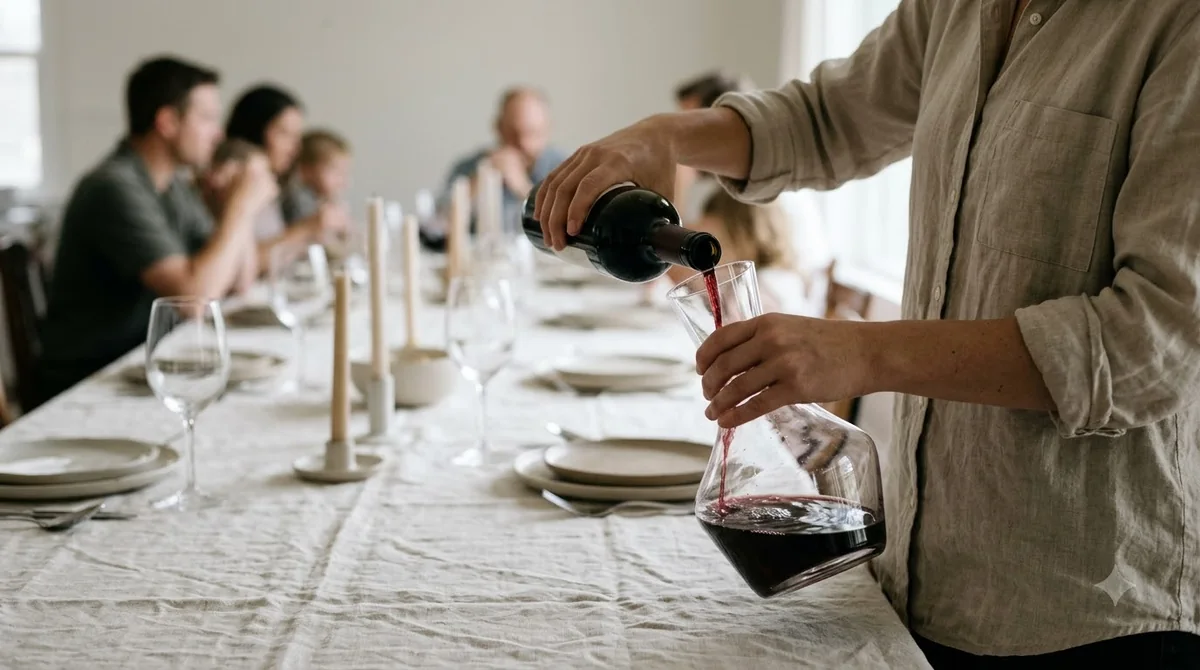
Be careful with very hot chili dishes. Alcohol and tannin can make chili heat feel stronger, so a spicy sauce may overwhelm a full-bodied Red Mountain red. Oily fish can also clash with tannic reds; choose a crisp white instead. Serve full-bodied reds around 60 to 65 degrees Fahrenheit rather than warm room temperature. A young, full-bodied bottle may benefit from 30 to 60 minutes in a decanter, particularly when its tannin is still firm. These small adjustments can make a tasting flight more comfortable and a dinner pairing more balanced.
Frequently Asked Questions
These five answers cover the region’s name, white-wine exceptions, lesser-known grapes, a notable vineyard, and the number of wineries within the AVA.
Why is the region called Red Mountain?
The name comes from the reddish appearance of native cheatgrass on the slopes during spring. The AVA’s underlying landform is an anticline within the Yakima Fold Belt, rather than a tall, isolated mountain made of red rock. The color is seasonal vegetation, not a description of the soil across every vineyard.
Does Red Mountain produce white wine?
Yes, although red grapes dominate the appellation. Kiona’s Old Vine Chenin Blanc comes from plantings that the winery dates to 1976, showing that white varieties have a place in the region’s vineyard history. White wines remain less typical than Cabernet Sauvignon, Merlot, and Syrah.
What is Lemberger, and can I taste it there?
Lemberger is a red grape also known as Blaufränkisch in parts of Europe. The Red Mountain AVA visitor directory notes that Kiona farms a 61-acre family vineyard with old-vine Lemberger, Cabernet Sauvignon, and Merlot. Kiona’s tasting-room list has also featured a Pinot Noir and Lemberger blend, so it is a useful name to ask about during a visit.
Which Red Mountain vineyard is associated with DeLille Cellars?
Upchurch Vineyard is an 18.5-acre site on a small plateau at the southern tip of Red Mountain. DeLille Cellars’ vineyard page says it has been sustainably farmed since its inception in 2007 and is certified by L.I.V.E. and Salmon Safe. Cabernet Sauvignon from the site is used in wines that include D2, Four Flags, and Doyenne.
How many wineries are located inside the AVA?
The Washington State Wine Commission says more than 15 wineries are located within Red Mountain. That count refers to wineries in the appellation itself, not every Washington producer that buys or sources Red Mountain fruit. The distinction explains why the region’s name appears on wines poured in tasting rooms across the state.
Red Mountain rewards a deliberate tasting approach: start with Cabernet Sauvignon, compare Merlot and Syrah, and add a less-common variety when a producer has one open. With a little advance planning, two or three well-chosen stops can show how a small Washington AVA produces reds with both concentration and freshness. Bring home the bottle that best fits your palate, then serve it with food that complements its weight and tannin.
More in Wine Regions
 Willcox Wine Trail: Discover Arizona’s High-Elevation Wine CountryUpdated Nov 20, 2026
 Yakima Valley Wine Region: Find the Best Styles to TryUpdated Nov 20, 2026
 Vosne Romanee Wine Tasting: Identify Aromas and Choose Better PairingsUpdated Nov 20, 2026
 Yakima Valley Wine Festival: Find the Best Seasonal Wine EventsUpdated Nov 20, 2026
 Wales Vineyards: Discover Cool-Climate Wines and Where to VisitUpdated Nov 20, 2026
 Yountville Wine Festival: Discover Napa Wines and Local FoodUpdated Nov 20, 2026