


We may earn a commission when you buy through links on this page, at no extra cost to you. Learn more.
Prosecco sulfites occur naturally during fermentation, and winemakers may add more sulfur dioxide to protect the wine from oxidation and spoilage. Most Prosecco sold in the United States carries a “Contains Sulfites” declaration because federal labeling rules require it when total sulfur dioxide reaches 10 parts per million. The statement does not tell you the wine’s exact sulfite concentration or whether the winemaker added sulfites. Understanding the production process and label terminology makes it easier to choose a bottle that matches your preferences.
Prosecco is an Italian sparkling wine generally made primarily from Glera grapes. Its fresh fruit character, lively acidity, and bubbles make it popular as an aperitif and an accompaniment to food. However, questions about sulfur dioxide often arise when drinkers notice the sulfite declaration on the back label. The important distinction is between sulfites that develop naturally during fermentation and sulfites that winemakers deliberately introduce. Both can be present in the same bottle, and neither the grape variety nor the sparkling-wine classification alone reveals the finished wine’s total sulfite concentration.
Why Prosecco Contains Sulfites
Prosecco contains sulfites because yeast can produce sulfur compounds during alcoholic fermentation, even when a winemaker does not deliberately add sulfur dioxide. Producers may also use sulfiting agents to protect the wine during production, storage, and bottling. These two sources explain why sulfites are a normal part of many conventional wines, including sparkling wines.
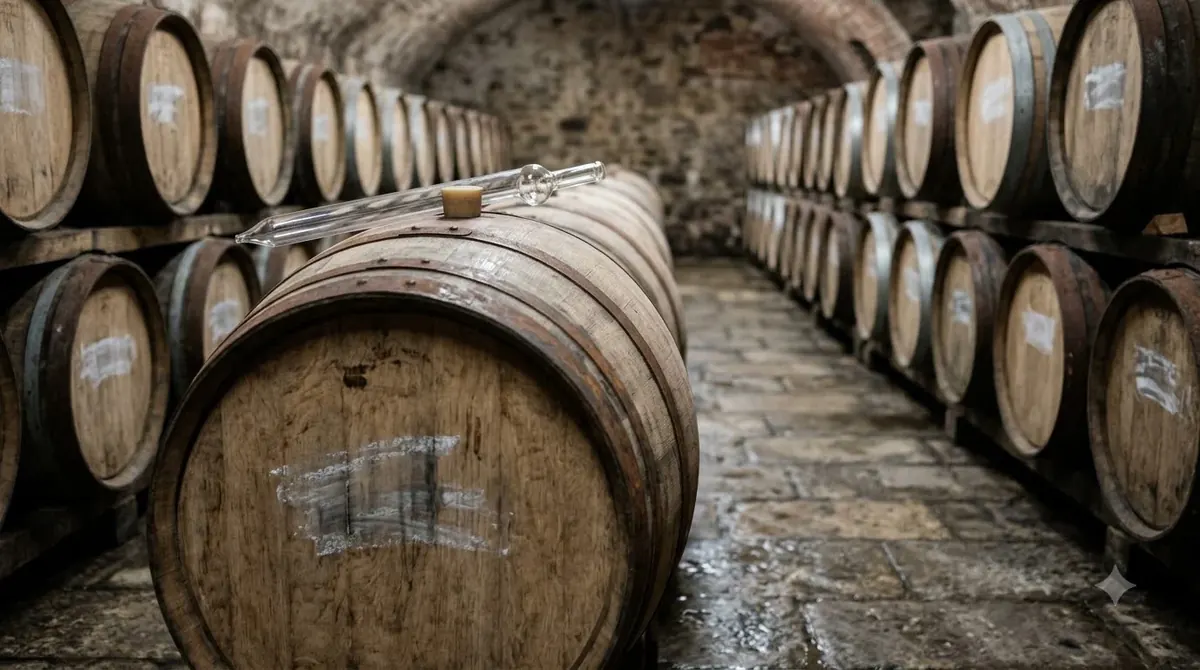
Sulfites are compounds associated with sulfur dioxide, commonly written as SO2. In winemaking, sulfur dioxide is used for its antioxidant and antimicrobial properties. It helps protect wine against unwanted oxidation and limits the activity of microorganisms that can cause spoilage. These functions are particularly useful during the handling and storage stages, when wine may encounter oxygen or unwanted microbial activity.
Natural sulfites develop as yeast converts grape sugars into alcohol and other fermentation products. The amount varies according to the fermentation conditions, yeast activity, and other production factors. Consequently, a wine made without deliberately added sulfites is not necessarily a wine containing zero sulfites. The natural fermentation process can leave measurable quantities in the finished bottle.
Added sulfites are a separate consideration. A winemaker may introduce sulfur dioxide at different stages to help protect grape juice, fermenting wine, or finished wine. The quantity and timing depend on the producer’s approach, the condition of the grapes, the wine’s chemistry, and the intended storage requirements. There is no single universal sulfite addition level for every bottle of Prosecco.
It is also important to distinguish sulfur dioxide from other compounds that may be discussed in conversations about wine. Sulfites are not the same thing as histamines, tannins, or alcohol. They have different chemical properties and different roles in wine. A label that identifies sulfites does not provide information about the wine’s histamine content, tannin concentration, or other individual characteristics.
Prosecco’s bubbles do not eliminate sulfites or make the wine naturally free from sulfur dioxide. Carbon dioxide is responsible for the sparkling sensation, while sulfur dioxide serves a different purpose in preserving wine quality. Both compounds can be present in the same bottle without being interchangeable.
How Sulfites Work During Prosecco Production
Prosecco production involves several stages in which protecting the wine from oxidation and unwanted microorganisms matters. Sulfur dioxide can be used during grape processing, fermentation management, stabilization, and bottling. The precise approach varies between producers, so two bottles made from the same grape variety can have different total sulfite concentrations.
Prosecco DOC production is based primarily on the Glera grape. According to the Consorzio Tutela Prosecco DOC, its production regulations permit specified additional grape varieties up to a maximum of 15% in qualifying wines. These include varieties such as Chardonnay, Pinot Bianco, Pinot Grigio, and Pinot Nero vinified as white wine, alongside certain local varieties.
Once grapes are harvested, producers process them into juice and begin fermentation. Yeast converts natural grape sugars into alcohol, creating carbon dioxide and a range of other fermentation compounds. Sulfites may already be present naturally by the end of this stage. Some winemakers also use sulfur dioxide during processing to help manage oxidation and microbial activity.
For sparkling Prosecco, a second fermentation generally takes place in a pressurized tank using the traditional tank method associated with the wine. The resulting carbon dioxide remains dissolved in the wine, creating its characteristic bubbles. This fermentation and the subsequent stabilization steps are part of a larger production process in which producers monitor the wine’s condition and protect it against unwanted changes.
Before bottling, producers may use stabilization and filtration procedures to prepare the wine for commercial distribution. Sulfur dioxide can contribute to protection during this period, although its use is not identical in every winery. The final concentration depends on the amount naturally produced, any deliberate additions, and the wine’s chemical characteristics.
These details explain why it is misleading to assume that every Prosecco has an identical sulfite level. The grape variety establishes part of the wine’s identity, but it does not establish a fixed sulfur dioxide concentration. Likewise, the fact that two bottles come from the same DOC does not mean they underwent precisely the same sulfite-management decisions.
Understanding Sulfite Levels and US Labeling Rules
For American consumers, the most important number is 10 parts per million, or ppm, of total sulfur dioxide. According to the US Alcohol and Tobacco Tax and Trade Bureau (TTB), wine containing 10 ppm or more must carry a sulfite declaration. This is a labeling threshold, not a statement that every wine displaying the declaration contains the same quantity.
The distinction between the labeling threshold and the actual concentration is central to understanding Prosecco labels. A bottle containing 10 ppm and another containing a substantially higher amount can both display the same words: “Contains Sulfites.” The declaration confirms that the applicable threshold has been reached, but it does not identify an exact measurement.
Here is how the principal US labeling distinctions work:
| Labeling situation | Total sulfur dioxide | What it means |
|---|---|---|
| Mandatory sulfite declaration | 10 ppm or more | A sulfite statement is required. |
| Declaration not required | Below 10 ppm | An applicable TTB laboratory analysis must establish the level for the labeling waiver. |
| Organic wine category | Below 10 ppm | Added sulfites are prohibited; naturally occurring sulfites are permitted. |
| Made with organic grapes category | Up to 100 ppm sulfur dioxide | Added sulfur dioxide is permitted under the applicable USDA rules, with disclosure requirements. |
The first two rows describe the general US sulfite-labeling threshold. The last two describe separate USDA organic labeling categories. These rules should not be confused: a wine can be below the federal labeling threshold without being certified organic, and organic certification involves additional requirements beyond sulfur dioxide concentration.
For wines that reach the threshold, the required statement can appear on the front, back, strip, or neck label. The wording commonly used in the United States is “Contains Sulfites.” The TTB also permits a statement identifying the particular sulfiting agent.
The declaration has specific printing requirements. According to the TTB, containers larger than 187 milliliters require a minimum sulfite-statement type size of 2 millimeters. Containers of 187 milliliters or less require a minimum of 1 millimeter. The statement must also be legible, appear against a contrasting background, and remain sufficiently distinct from surrounding descriptive information.
For a bottle below 10 ppm, the declaration is not mandatory if the applicable testing requirements are satisfied. However, a missing statement is not proof that a wine contains no sulfites. It indicates that the product qualifies for the relevant labeling treatment, which is based on laboratory analysis rather than an assumption about the production method.
The TTB also explains that producers and importers cannot simply use a private laboratory report to obtain the specific sulfite-labeling waiver. Its guidance requires an official TTB laboratory analysis for that purpose. This is one reason the absence of a sulfite statement should not be treated as a general claim of zero sulfur dioxide.
For the exact federal requirements, the TTB sulfite-labeling guidance provides details about thresholds, permitted statements, testing, and label presentation.
Natural Sulfites Versus Added Sulfites
Natural sulfites are produced during fermentation, while added sulfites are deliberately introduced by the winemaker. Both contribute to the total sulfur dioxide measurement used for US labeling purposes. The distinction matters because a wine can contain sulfites even when no sulfiting agent was added during production.
Natural fermentation is not a process that produces only alcohol and carbon dioxide. Yeast also creates smaller quantities of other compounds, including sulfur-containing substances. Some of these compounds contribute to the wine’s chemical composition, and naturally occurring sulfur dioxide can be part of the finished product.
Added sulfites, by comparison, are a winemaking decision. A producer might use sulfur dioxide to protect freshly pressed grape juice from oxidation or to help preserve wine before bottling. The producer may adjust the approach depending on the condition of the grapes, cellar conditions, and the wine’s stability.
There is no reliable way to determine the exact difference between natural and added sulfites simply by examining the appearance, aroma, or taste of Prosecco. A wine’s freshness, acidity, fruit character, and bubbles do not provide a dependable numerical measurement. Laboratory testing is necessary to establish the total concentration accurately.
There are also limitations to interpreting label statements. For example, “No sulfites added” describes a production decision rather than guaranteeing that the finished wine contains none. Natural fermentation may still result in measurable sulfur dioxide. This is why wording about naturally occurring sulfites can appear alongside a statement that no sulfites were added.
In US labeling, a wine containing 10 ppm or more can use certain alternative statements when the sulfites are naturally occurring rather than deliberately added. These include “Contains naturally occurring sulfites” and “No sulfites added; contains only naturally occurring sulfites,” subject to the applicable rules.
Tip: Read “No sulfites added” as a statement about the winemaker’s production choices, not as a promise of zero sulfites. If the exact total concentration matters to your purchasing decision, request product-specific laboratory information from the producer or importer.
Another important distinction concerns the phrase “sulfite-free.” The TTB does not permit wine labels to use claims such as “sulfite free,” “free of sulfites,” or “contains no sulfites.” Even when a wine has a very low concentration, the more precise language relates to a measured level or the absence of detectable sulfites under the applicable testing conditions.
The TTB recognizes statements such as “Contains less than 10 ppm sulfites” when the appropriate laboratory report establishes that concentration. It also permits certain no-detection statements when laboratory testing supports them. These are more specific than broad claims suggesting that a wine contains absolutely no sulfites under every possible measurement.
Organic Prosecco and Sulfite Restrictions
Organic wine certification can provide useful information about sulfite production practices, but not every wine made with organic grapes follows the same rules. In the United States, wine labeled “organic” has stricter sulfite restrictions than wine labeled “made with organic grapes.” The distinction is important when comparing organic Prosecco options.

According to the USDA National Organic Program’s wine-labeling framework, added sulfites are prohibited in wine carrying the regulated “organic” claim. Naturally occurring sulfites are permitted, provided the finished wine contains less than 10 ppm. The wine must also meet the other applicable organic production and certification requirements.
This means organic wine can still contain naturally occurring sulfites. Organic certification does not require fermentation to produce zero sulfur dioxide, nor does it mean that yeast cannot generate sulfur-containing compounds. Instead, the restriction applies to deliberately added sulfites and the maximum permitted naturally occurring concentration.
The category “made with organic grapes” has different requirements. Under the USDA framework, producers may use sulfur dioxide, up to a maximum of 100 ppm, in this category. Added sulfites must be disclosed, and the wine cannot use the USDA organic seal in the same way as wine in the fully organic category.
The following comparison makes the distinction clearer:
| Feature | Organic wine | Made with organic grapes |
|---|---|---|
| Organic grape requirement | Certified organic grapes | Certified organic grapes |
| Added sulfites | Not permitted | Permitted within the applicable limits |
| Maximum sulfur dioxide | Less than 10 ppm naturally occurring | Up to 100 ppm |
| USDA organic seal | Permitted | Not permitted |
| Certifier oversight | Required | Required |
These categories show why the phrase “organic grapes” alone does not establish that a finished Prosecco contains no added sulfites. The wine’s actual labeling category matters. A bottle carrying the words “made with organic grapes” can have sulfur dioxide added under the relevant production rules, while a fully organic wine cannot.
Imported Prosecco introduces another consideration. A wine produced in Italy may be certified under an organic program in its country of origin, but its sale in the United States must comply with the applicable US labeling framework and any recognized international equivalency arrangements. The USDA explains that organic alcohol beverages must meet both USDA organic requirements and TTB alcohol-labeling requirements.
Organic certification also covers more than sulfur dioxide. It involves requirements concerning agricultural ingredients, yeast, permitted processing materials, and production oversight. A certified operation must work with an accredited certifying agent, and the relevant label must go through the applicable approval process.
For a closer look at the official distinctions, the USDA organic wine labeling guidance explains the differences between fully organic wine and wine made with organic grapes.
Choosing and Serving Prosecco
Choosing Prosecco with a particular sulfite profile requires more than selecting a sweetness level or a grape variety. The most useful approach is to identify the production claims that matter to you, distinguish certification from marketing language, and obtain product-specific information when necessary. You can then select a bottle based on both its production method and its intended use.
Start by considering the type of Prosecco. The Consorzio Tutela Prosecco DOC recognizes sparkling, semi-sparkling, and still versions within its designation. Sparkling Prosecco is the familiar bubbly style, while Frizzante is semi-sparkling and still Prosecco has no sparkling character. These categories describe the wine’s style, not its sulfite concentration.
Prosecco DOC is based primarily on Glera, and sparkling versions have a minimum total alcohol content of 11% by volume under the denomination’s production regulations. The wine may also be produced as Rosé using 85–90% Glera and 10–15% Pinot Nero. None of these grape or alcohol specifications establishes a particular sulfite level.
When comparing bottles, look for meaningful production descriptions. Terms such as “organic” and “made with organic grapes” have specific regulatory implications in the United States. By contrast, expressions such as “natural,” “traditional,” or “minimal intervention” do not independently establish the finished wine’s sulfur dioxide concentration.
A producer’s technical information may offer additional details about sulfur dioxide management. Some wineries publish production notes, laboratory measurements, or information about whether sulfites are deliberately added. If those details are unavailable, contacting the winery or US importer is a more reliable approach than guessing from the bottle’s style or price category.
Keep the serving conditions in mind as well. Prosecco is generally best served chilled, around 40–50 F for sparkling wine. A standard 750 mL bottle provides approximately five 5-ounce servings, making it a practical choice for an aperitif or a small gathering.
Its refreshing acidity and bubbles work well with salty snacks, seafood appetizers, and lighter dishes. Prosecco can also accompany fruit-based desserts when the sweetness of the wine is suitable for the food. For a more specific pairing, see our guide to Prosecco with chocolate, which explores how different chocolate styles interact with sparkling wine.
For readers comparing sparkling wine categories, the distinction between Prosecco and other styles is also useful. Prosecco is typically made using the tank method, while Champagne and Cava undergo their second fermentation in the bottle. Those production differences affect texture, aroma, and winemaking choices, but they do not establish that one category automatically contains fewer sulfites than another.
Likewise, sweetness is not a reliable indicator of sulfur dioxide concentration. Brut, Extra Dry, and other sparkling-wine sweetness categories describe residual sugar rather than sulfite content. A dry Prosecco may contain sulfites, just as a sweeter version may. The two measurements address different aspects of the wine.
For broader information about grapes, wine styles, and production methods, explore our Wine by Type resource. Understanding the style and production category makes it easier to ask more useful questions about an individual bottle.
Prosecco Sulfites Compared With Other Wines
Prosecco does not automatically contain more or fewer sulfites than other wines. Total sulfur dioxide varies with grape condition, fermentation, production choices, stabilization, and bottling. Comparing wines by category alone can therefore produce misleading conclusions.
For example, Prosecco and still white wine may both carry the same US sulfite declaration even though their actual sulfur dioxide concentrations differ. The words “Contains Sulfites” establish that a labeling threshold has been reached, not that the two wines contain identical amounts.
White wines often receive sulfur dioxide protection because preserving delicate fruit aromas and limiting oxidation are important production goals. However, white wine sulfite levels vary substantially between producers and individual bottles. A discussion of white wine sulfites can help explain the broader role of sulfur dioxide in wines made from white grapes.
Red wines are not automatically free of sulfites either. They can contain naturally occurring sulfur dioxide and may receive additions during production. The difference between red and white winemaking practices does not establish a universal sulfite ranking, and color alone cannot reveal the total concentration.
Champagne, Cava, and Prosecco also cannot be ranked reliably by their production method. Champagne and Cava use bottle fermentation, while Prosecco commonly uses tank fermentation. These methods create different sparkling-wine styles, but both categories can involve sulfur dioxide management.
The same principle applies to Prosecco Rosé. Its use of Pinot Nero alongside Glera changes its color and some of its sensory characteristics, but it does not create a fixed sulfite level. The producer’s handling and stabilization choices remain important.
There is also no dependable relationship between a wine’s sweetness and its sulfur dioxide concentration. A Brut Prosecco is not necessarily lower in sulfites than an Extra Dry bottle. Sweetness categories describe residual sugar, while sulfite labeling is based on total sulfur dioxide measured in parts per million.
When making comparisons, use the same type of information for every wine. If one producer supplies a laboratory result and another only provides a general statement about production practices, those two descriptions are not directly comparable. A meaningful numerical comparison requires measurements for the actual products being considered.
Consumers interested in wine production more generally should also distinguish between sulfites and other ingredients or processing materials. A vegan wine claim, for instance, concerns animal-derived materials used during production or clarification, rather than sulfur dioxide. Our explanation of whether Prosecco is vegan covers that separate question.
The main lesson is straightforward: Prosecco is not inherently a low-sulfite or high-sulfite wine. Its concentration depends on the individual wine and its production history, not simply its grape variety, sweetness category, or sparkling-wine designation.
Frequently Asked Questions
Does Prosecco contain sulfites if it is unopened?
Yes. Sulfites are part of the wine’s chemical composition before the bottle is opened, and the unopened state does not eliminate them. A sealed bottle preserves the wine’s existing composition rather than removing sulfur dioxide.
Does Prosecco DOC have a fixed maximum sulfite level?
The Prosecco DOC production summary identifies grape varieties, production areas, and alcohol requirements rather than providing one universal sulfite concentration for every bottle. Individual producers must also comply with applicable winemaking and market regulations. The DOC designation alone does not reveal the finished wine’s measured sulfur dioxide level.
Can Prosecco be labeled as containing only naturally occurring sulfites?
Yes, qualifying wine can carry wording indicating that its sulfites are naturally occurring rather than deliberately added. Under US labeling rules, such statements have specific requirements, and a producer must substantiate applicable claims. The TTB also recognizes that naturally occurring sulfite concentrations can vary between individual batches.
Does a Prosecco Mini bottle follow the same sulfite labeling threshold?
The 10 ppm total sulfur dioxide threshold applies to wine regardless of whether it is sold in a standard bottle or a smaller format. However, the minimum printed type size changes with container capacity. Under TTB rules, a container of 187 mL or less requires a minimum 1 mm sulfite declaration, compared with 2 mm for larger containers.
Can the sulfite concentration change between Prosecco vintages?
Yes. Naturally occurring sulfites can vary between vintages, production cycles, and individual batches. The TTB specifically identifies these variations as reasons producers may need additional laboratory testing when evaluating sulfite-labeling requirements. A result from one bottle or production batch should not automatically be applied to every later release.
Prosecco sulfites are a normal part of sparkling-wine production, arising naturally during fermentation and sometimes supplemented by winemakers for preservation. The US “Contains Sulfites” statement identifies a regulatory threshold rather than an exact concentration, while organic certification provides a separate set of production restrictions. For the clearest comparison, focus on the bottle’s actual certification category and seek verified product-specific laboratory information when exact sulfur dioxide levels matter to your decision.
More in Wine Types & Grapes
 Zinfandel Sugar Content: Dry Red vs. White Zinfandel GramsUpdated Nov 21, 2026
 Best Zinfandel Substitute Options for Sipping and CookingUpdated Nov 21, 2026
 Zweigelt Food Pairing: Best Dishes, Cheeses, and Serving TipsUpdated Nov 21, 2026
 Zinfandel Tannins Explained: How Structure Shapes Every BottleUpdated Nov 21, 2026
 Zinfandel Sweetness Level: Dry Red vs. Sweet White Zin ExplainedUpdated Nov 21, 2026
 Xinomavro Food Pairing: Best Dishes, Styles, and Serving TipsUpdated Nov 21, 2026