

We may earn a commission when you buy through links on this page, at no extra cost to you. Learn more.
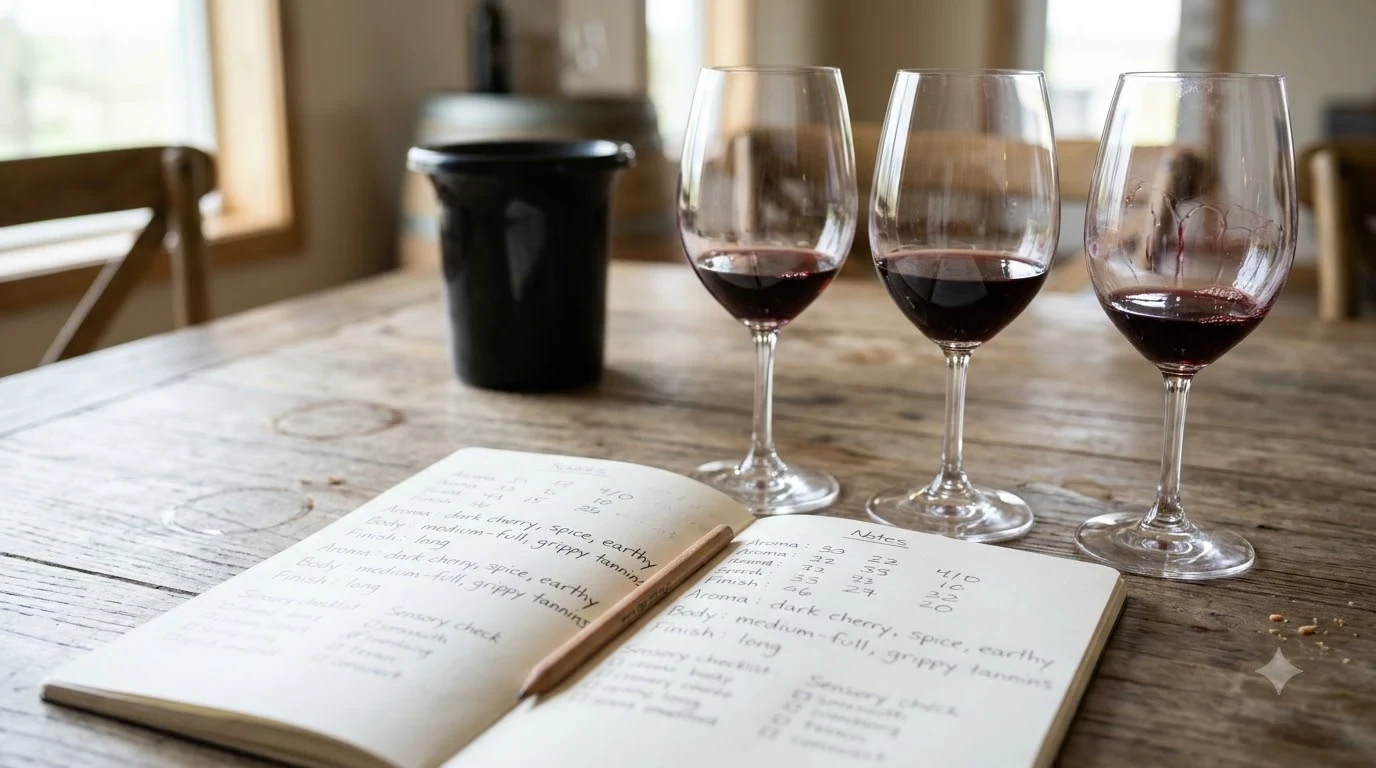
pomerol wine tasting is easiest to understand as a study of Merlot-led red Bordeaux shaped by clay, gravel, and iron-rich soils. Expect ripe plum and dark berry fruit, a velvety but structured palate, and, in mature bottles, savory notes such as truffle, cedar, and graphite. The most useful way to taste it is to connect each aroma and texture to the grape blend, the vineyard’s position on the plateau, and the wine’s age.
Pomerol is a small appellation on Bordeaux’s Right Bank, but its wines are not one-note or interchangeable. A glass from a clay-rich site can feel broader and denser than one from sandier ground, while vintage, winemaking, and bottle age add further variation. This guide explains what to look for, how to serve the wine, and which details make a tasting more revealing.
Pomerol on Bordeaux’s Right Bank
Pomerol is a red-wine appellation in the Libournais area of Bordeaux, on the right bank of the Dordogne system. Its compact vineyards sit around the village of Pomerol and extend into a defined area near Libourne, with Saint-Émilion immediately to the east.
The landscape is a gently descending plateau rather than a dramatic hillside. The Barbanne stream marks the northern boundary, Saint-Émilion lies to the east, and Libourne borders the appellation to the southwest. This location is useful to remember because it places Pomerol among the Merlot-centered wines of Bordeaux’s Right Bank, not among the Cabernet Sauvignon-led communes of the Médoc on the opposite side of the Gironde.
Bordeaux.com describes Pomerol as an 813-hectare appellation with 138 winegrowers, accounting for about 0.7% of Bordeaux’s vineyard area. Many growers work relatively small holdings, so a tasting flight can show meaningful differences from one estate to the next even when every bottle carries the same appellation name. For a wider orientation to French and international regions, the site’s Wine Regions overview can help place Pomerol in context.
Pomerol has no official château classification comparable to the 1855 system used in parts of the Médoc, and it has no equivalent ranking that formally orders its estates by quality. Reputation therefore comes from the individual château, vineyard location, producer track record, and the bottle in front of you. Wine Enthusiast’s Pomerol overview also highlights the appellation’s Merlot and Cabernet Franc focus and its characteristically plump, velvety texture.
The Grapes and Blend Structure
Merlot is the defining grape of Pomerol, with Cabernet Franc usually playing a supporting role and Cabernet Sauvignon appearing less often. That combination helps explain why many examples feel generous and rounded without losing the freshness and structure needed to develop in the bottle.
Bordeaux.com gives an approximate vineyard-area mix of 80% Merlot, 15% Cabernet Franc, and 5% Cabernet Sauvignon. These figures describe the plantings across the appellation, not a mandatory recipe for every wine. Individual estates choose their blend according to their parcels, vintage conditions, and house style; some bottles are made entirely or almost entirely from Merlot, while others use Cabernet Franc to add aromatic lift and line.
Merlot generally contributes ripe plum, black cherry, and a broad mid-palate. In Pomerol, the grape can combine that fruit weight with a supple texture, though the wine is not necessarily soft or low in structure. A young, concentrated bottle may have firm tannins and a tight finish, especially when its fruit and oak are still integrating.
Cabernet Franc can contribute floral aromas, freshness, and a firmer outline. Cabernet Sauvignon, where used, can add more pronounced tannin and darker-fruit structure. Decanter describes the local mix as approximately 80% Merlot and 15% Cabernet Franc, with the remaining 5% made up of other permitted varieties such as Malbec and Petit Verdot as well as Cabernet Sauvignon. That broader mix is one reason not to assume that two Pomerols will taste identical simply because Merlot dominates both.
Clay, Gravel, and the Pomerol Plateau
Pomerol’s soil is one of the clearest clues to its range of textures. Clay, gravel, and sand appear in changing proportions across the plateau, while iron-rich subsoil is associated with the local term “crasse de fer.”
The central and higher parts of the plateau include clay and gravel that can regulate water available to the vine. Clay holds moisture and can support a wine with greater depth and volume; gravel and stones can contribute to firmer structure and a different expression of ripeness. The exact balance varies from parcel to parcel, so “Pomerol soil” should not be treated as one uniform mixture.
Decanter’s account of the appellation describes a high terrace with older gravel-and-clay soils and a maximum altitude of about 40 meters. Around the central plateau, sandy-gravel ground with many stones can produce wines with a firmer tannic frame that benefit from bottle age. Lower terraces toward the west become sandier, and wines from those areas may feel lighter and fresher, with less power and aromatic complexity than examples from the central plateau.
In a comparative flight, pay attention to whether a wine feels broad and dense or more lifted and linear, then treat that impression as a clue rather than a definitive soil diagnosis. A tasting note cannot identify a parcel reliably on its own; producer choices and seasonal conditions interact with geology. The most useful exercise is to compare several bottles side by side and record their differences before guessing at vineyard origin.
The regional profile from Bordeaux’s Pomerol appellation page describes clay-gravel and sandy-gravel soils, with density changing from one plot to another and iron oxide in the subsoil. In the glass, think of terroir as a set of influences rather than a flavor additive: soil affects water supply and vine development, which in turn can influence ripeness, body, tannin, and freshness.
How to Taste Pomerol in Five Stages
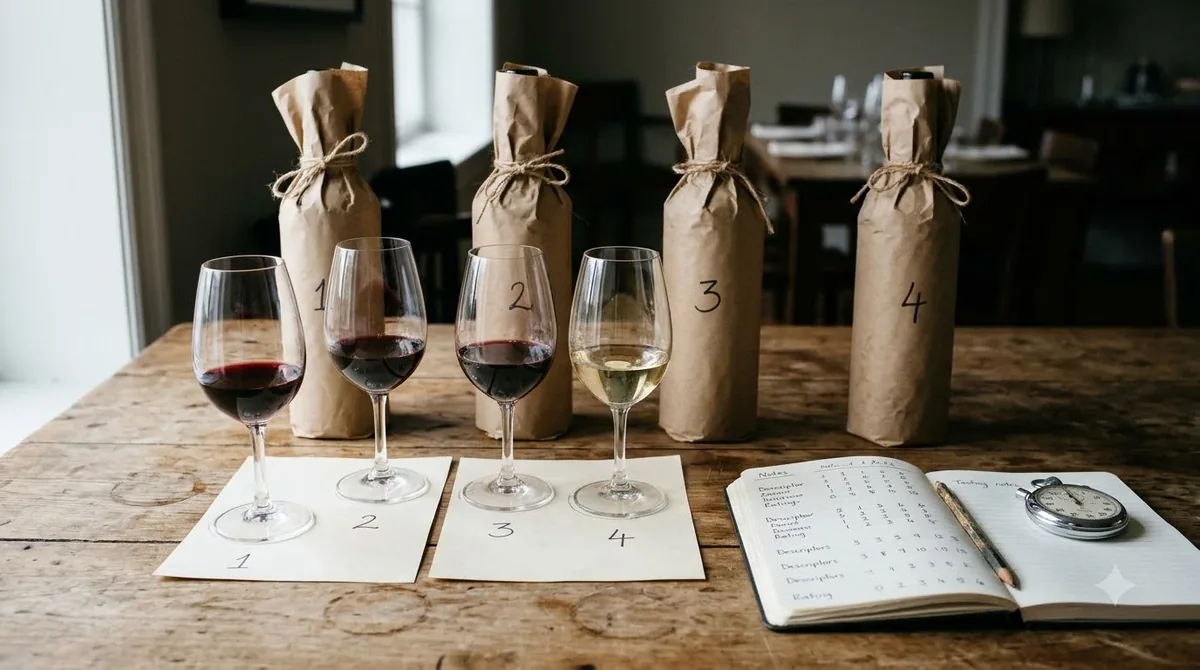
A clear tasting sequence helps separate fruit, structure, and development instead of reducing the wine to a general impression of richness. Start with the glass and the wine’s condition, then move from appearance to aroma, palate, and finish.
First, pour a modest amount into a clean, generously sized wine glass and look at the color against a white background. A young Merlot-based Pomerol may appear deep ruby or purple-ruby; with age, the rim can move toward garnet or brick. Color alone does not establish quality or age, but it gives you a first clue to record before the aromas begin to change in the glass. Second, swirl gently and smell before searching for specific descriptors. Begin with broad families: fresh red fruit, darker fruit, flowers, spice, earth, and oak. Plum, black cherry, blackberry, violet, and truffle are useful reference points, but do not force every note into every glass. Take a second smell after a minute or two; a young wine may become more expressive as it meets air, while a mature wine may show delicate savory notes quickly and then gradually fade.
Third, take a small sip and let the wine coat the palate. Assess acidity, tannin, body, alcohol warmth, and the movement of flavor from entry to finish. Merlot often gives a rounded center, but the tannins can still be noticeable. Ask whether they feel fine and integrated or drying and firm, and whether the fruit remains clear as the structure builds.
Fourth, pay attention to length and balance after swallowing. A long finish is not simply a powerful one; the more useful question is whether fruit, acidity, tannin, and any oak influence remain in proportion. Finally, write a short note using three or four precise observations, such as “black plum, violet, fine-grained tannin, cedar finish,” rather than a string of generic praise. If you are comparing a Merlot-led Bordeaux with a different style, an Bolgheri wine tasting can provide a useful contrast in how another European region expresses its own grape mix and place.
| Practical tasting detail | Useful number | How to apply it |
|---|---|---|
| Standard pour | 5 oz | Leave room in the glass to swirl and smell. |
| Typical bottle volume | 750 ml | Yields about five 5-ounce glasses. |
| Serving range for a full-bodied red | 60–65°F | Start cool enough to keep alcohol warmth in check. |
| Air for a young, full red | 30–60 minutes | Decant when the wine seems tight or closed. |
Aromas, Texture, and the Effect of Age
The classic Pomerol profile joins dark and red fruit with floral and earthy complexity. In a younger wine, fruit may lead; with bottle development, savory notes can become more prominent and the tannins often feel more integrated.
Look first for plum, damson, blueberry, blackberry, or black cherry. The exact balance depends on ripeness and the producer’s choices. Some bottles show a fresher red-fruit edge, while others lean toward darker fruit and cocoa-like richness. Floral notes such as violet, peony, and mimosa can sit above the fruit, adding lift to a wine that might otherwise seem broad or dense.
With time, truffle, cedar, graphite, tobacco, dried flowers, and earthy tones may emerge. These are development cues, not a checklist that every older bottle must satisfy. A wine stored poorly can lose fruit and freshness without gaining complexity, while a well-kept bottle may retain a clear core of fruit even as tertiary aromas appear. Taste the wine’s balance rather than treating age as a guarantee of quality.
Oak is another variable. Bordeaux.com describes 12–18 months of barrel aging as a common part of Pomerol’s development, and notes that five to ten years of cellaring can help wines reveal more of their potential. Those are useful reference ranges, not universal instructions: a lighter, earlier-drinking example may show well sooner, while a concentrated wine from a structured vintage may need longer. During a tasting, distinguish sweet spice or toast from the fruit and from the earthy aromas that can develop in the bottle.
Serving Temperature, Cellaring, and Food Pairings
Pomerol is best served cool rather than warm, with enough air for a young, structured bottle to open. The right food pairing should complement the wine’s ripe fruit and tannin without overwhelming its freshness.
For a full-bodied red, begin around 60–65°F. A room that feels comfortable to people can be warmer than ideal for red wine, especially in a heated dining room; a brief period in a cool place can bring the bottle into range. If the wine is young and concentrated, decanting for 30–60 minutes may soften the impression of a closed nose and let the fruit show more clearly. An older bottle is more delicate, so open it carefully and taste as you go rather than assuming it needs prolonged aeration.
For longer storage, keep bottles on their sides in a dark, stable place near 55°F, away from vibration and large temperature swings. Consistency matters more than a single exact reading. A warm cupboard, sunny kitchen counter, or garage with changing temperatures can age wine unevenly. Once opened, refrigerate the bottle and bring the remaining wine back toward serving temperature before the next pour; most still wines are best enjoyed within about three to five days.
For food, start with roast beef, lamb, duck, venison, or other savory meats. Mushrooms, lentils, and dishes with browned or roasted flavors can echo the wine’s earthy side, while aged hard cheeses and soft washed-rind cheeses can work with its fruit and structure. Fat and salt soften the perception of tannin, which is why a well-seasoned steak or a rich braise can make a young Pomerol seem more approachable than it does on its own. Be more cautious with very spicy dishes: chili heat can feel stronger alongside alcohol and tannin. Oily fish is also a difficult match for tannic red wine, so choose a lighter-bodied red or a crisp white for salmon with oily sauces or richer seafood. Sweet desserts need a wine at least as sweet as the dish, which makes dry Pomerol a poor match for most sugary desserts. A fruit-forward cheese course or savory mushroom dish is usually a better finish.
Tip: When comparing two Pomerols, serve them at the same temperature and use the same glass. Taste the lighter or younger wine first, then move to the more concentrated or older bottle; this keeps the first wine from being overshadowed and makes differences in tannin, aroma, and finish easier to identify.
Frequently Asked Questions
These quick answers add a little history and geology to the practical tasting clues above. They are useful context when a label or a conversation turns to Pomerol’s past and its most famous sites.
When was Pomerol recognized as an appellation?
Pomerol was established as an appellation in 1936, among the first group created by France’s national appellation institute. Its legal recognition came long after vines were cultivated in the area, so the modern appellation is only one chapter in a much older local history.
When was Merlot first planted in Pomerol?
Decanter’s historical account dates the first planting of Merlot in Pomerol to 1761. The grape did not become dominant immediately; its share expanded over the following period, particularly after the severe frost of 1956 reshaped vineyard plantings.
What does the Pétrus “buttonhole” refer to?
It is a small patch of heavy blue clay near the highest part of the Pomerol plateau, described by Decanter as roughly 3–4 hectares. The clay is associated with the deep color, power, and volume of Château Pétrus, making the site a well-known example of the appellation’s fine-grained soil variation.
When did Pomerol become important for wine rather than market gardening?
Decanter’s account says wine became important to the local economy mainly in the 16th and 17th centuries. Before then, Pomerol had long functioned as an orchard and market-garden area serving nearby Libourne, although vines may have been present in Roman times.
What helped Pomerol gain a larger audience in the United States?
Decanter credits the attention of American wine critic Robert Parker during the 1980s with helping give Pomerol a boost in the United States and other markets. The article singles out the exceptional 1982 Bordeaux vintage as an important part of the appellation’s growing international reputation.
The best way to understand Pomerol is to taste beyond its reputation: compare fruit, tannin, freshness, and savory development, then consider how the vineyard’s soil and the producer’s choices may have shaped them. With a measured pour, the right serving temperature, and a thoughtful food match, the appellation’s range becomes easier to recognize and enjoy.
More in Wine Regions
 Willcox Wine Trail: Discover Arizona’s High-Elevation Wine CountryUpdated Nov 20, 2026
 Yakima Valley Wine Region: Find the Best Styles to TryUpdated Nov 20, 2026
 Vosne Romanee Wine Tasting: Identify Aromas and Choose Better PairingsUpdated Nov 20, 2026
 Yakima Valley Wine Festival: Find the Best Seasonal Wine EventsUpdated Nov 20, 2026
 Wales Vineyards: Discover Cool-Climate Wines and Where to VisitUpdated Nov 20, 2026
 Yountville Wine Festival: Discover Napa Wines and Local FoodUpdated Nov 20, 2026