

We may earn a commission when you buy through links on this page, at no extra cost to you. Learn more.
The phrase organic sangiovese refers to a dry red wine made from Sangiovese grapes grown under certified organic farming standards, with the exact U.S. label claim depending on how the wine was made and whether sulfites were added. Expect the grape’s familiar fresh cherry and red-plum character, lively acidity, and noticeable tannin rather than a separate “organic” flavor. For a useful purchase, look for a named certification statement, check whether the bottle says “organic” or “made with organic grapes,” and choose the regional style and body that fit your meal.
Organic Sangiovese brings together an expressive Italian grape and a set of farming and production rules. It can be a bright, everyday red for pizza or tomato pasta, or a more structured bottle suited to slow-cooked meat and aged cheese. The label matters: U.S. organic wine wording is more specific than a simple statement that the grapes were farmed organically.
What Organic Sangiovese Means on a U.S. Wine Label
Organic Sangiovese is not a different grape variety or a distinct flavor category; it is Sangiovese wine made with certified organic grapes and processed under the applicable organic rules. The familiar grape character remains the starting point, while the certification tells you something about farming and permitted cellar practices.
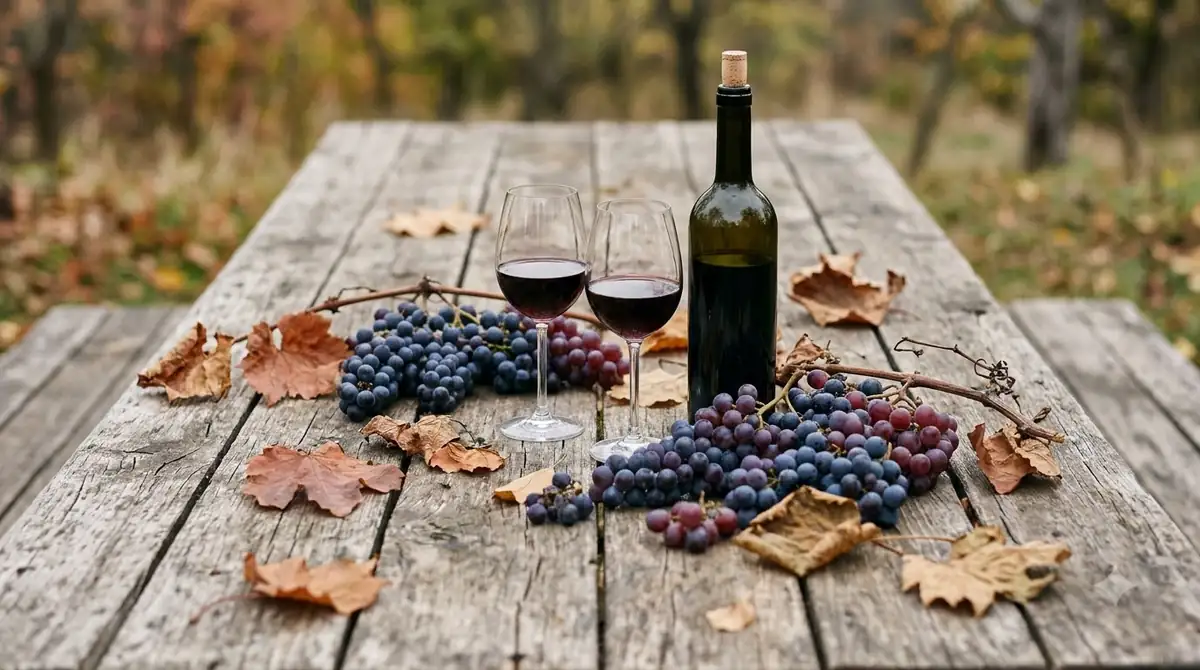
Sangiovese is a red Italian variety best known for its connection to Tuscany and Chianti. A wine made from it may be a single-variety bottling or a blend, so “Sangiovese” on the front label does not always mean that every drop came from that grape. Chianti Classico, for example, can contain 80% to 100% Sangiovese, with the balance drawn from permitted red varieties. The organic claim and the grape percentage answer two different questions: one concerns production standards, and the other concerns the wine’s composition.
For a bottle sold in the United States, distinguish “organic wine” from “wine made with organic grapes.” The first is the stricter finished-wine category and does not permit added sulfites. The second confirms that the grapes are organic but allows a limited amount of added sulfur dioxide under the U.S. rules. Both categories require certified organic grapes; neither is a promise that a wine will be sweet, low in alcohol, low in tannin, or made without every cellar additive.
Organic also does not automatically mean biodynamic, natural, vegan, or unfiltered. Those terms describe different practices or attributes and should be assessed separately. A producer may use more than one approach, but one claim does not prove another. Readers comparing farming claims across red varieties can also look at organic merlot; the organic certification question is separate from the grape’s individual taste and structure.
How USDA Organic Wine Rules Affect Imported Bottles
For U.S. buyers, the words on the bottle are important because wine-specific organic rules differ from the rules used for many foods. The key distinction is added sulfites: they disqualify a wine from the U.S. “organic wine” category, while a wine made entirely from certified organic grapes may qualify for the “made with organic grapes” category when it meets the other requirements.
The USDA’s Agricultural Marketing Service explains that imported wine sold under an organic equivalence arrangement must meet U.S. organic labeling requirements. A wine that is certified organic in its home country may therefore use different wording in an American store. For example, an imported Sangiovese with added sulfites may be sold in the United States as “made with organic grapes,” not as “organic” wine. The label should also identify the certifying body in the required statement on the information panel. The USDA’s organic labeling guidance sets out the distinction.
| U.S. label wording | Grape requirement | Added sulfites | USDA organic seal |
|---|---|---|---|
| Organic wine | All grapes must be certified organic | Not permitted | May be used |
| Made with organic grapes | All grapes must be certified organic | Sulfur dioxide only, up to 100 ppm total sulfites | Not permitted |
“Made with organic grapes” is not a weaker claim about the vineyard: all grapes still have to be certified organic. The distinction concerns permitted cellar practices and label wording. Under USDA guidance, sulfur dioxide is the permitted added sulfiting agent for this category, and the finished wine must not exceed 100 parts per million total sulfites; the USDA seal cannot appear. Look for the certifier’s name or mark rather than relying on a green design or “eco-friendly” phrase, and remember that the U.S. label must follow U.S. rules even when a foreign certification logo appears. The Alcohol and Tobacco Tax and Trade Bureau also reviews organic alcohol labels alongside the certifier.
Where Sangiovese Grows and Why Region Changes the Style
Sangiovese is an Italian grape with a strong Tuscan identity, but its name covers a family of local selections and clones grown in more than one part of the country. For shoppers, the region named on the bottle helps explain the wine’s likely balance, structure, and traditional blend rules.
The Consorzio Vino Chianti describes Sangiovese as a native Italian grape cultivated from Romagna to Campania, with Tuscany its most emblematic home. The grape ripens medium-late and is usually harvested from the second half of September to mid-October. It also needs sufficient time on the vine and careful protection from harvest-period rain, so site and vintage influence the result.
Chianti and Chianti Classico are related but distinct geographic designations. According to the European Commission, Chianti PDO generally contains 70% to 100% Sangiovese, while Chianti Classico must contain at least 80% and may include up to 20% other red varieties. Chianti Classico production, from vineyard to bottle, must take place in its territory between Florence and Siena. A bottle marked Chianti Classico therefore gives a more specific origin than a general Tuscan Sangiovese label.
Landscape affects ripening, too. The European Commission describes Chianti’s warm Mediterranean influence, rolling hills, and daily temperature fluctuations as factors that help grapes maintain a balance of sugar and acidity. Vineyards average roughly 200 to 400 meters above sea level and cannot exceed 700 meters. These details help explain regional differences without guaranteeing that every bottle tastes alike. The Chianti Classico consortium’s description of the grape and its production area outlines the appellation’s composition rules.
Flavor, Acidity, Tannin, and Body to Expect
Most Sangiovese wines are dry reds with pronounced freshness, red-fruit flavors, and a noticeable but variable tannic grip. Organic certification does not make the wine lighter or fruitier; climate, ripeness, vineyard site, blending, extraction, and aging have more direct influence on the glass. The Consorzio Vino Chianti identifies cherry, plum, and blackberry among the grape’s primary fruit aromas. With time in wood, a wine may also show vanilla, coffee, or tobacco notes. Floral scents add another dimension, while marked acidity and tannin give the wine its firm outline. Younger, unoaked styles tend to emphasize fruit and freshness; wines with more structure and wood influence may feel broader and more savory.
Acidity is one of the grape’s most useful features at the dinner table. It refreshes the palate between bites of tomato sauce, cured meat, or cheese and helps a dry red feel lively rather than heavy. Tannin is the drying sensation that can collect around the gums; it may be more noticeable in a young, concentrated Sangiovese and softer after bottle age or with food containing protein and fat.
Do not assume every bottle will be powerful. A simple Chianti intended for early drinking can be brisk and medium-bodied, while a concentrated Sangiovese may have firmer tannins, deeper fruit, and more capacity to age. Fermentation vessel, time on skins, oak use, blending partners, and bottle maturation all influence texture. An organic seal tells you about certified production, not whether a wine spent 6 months or 2 years in a cellar.
How to Choose a Bottle of Organic Sangiovese
Start with the label claim, then use grape percentage, origin, alcohol level, and producer information to narrow the style. The best buying decision is the bottle whose certification and flavor profile match what you are looking for, not simply the one with the most prominent organic imagery.
First, identify the exact organic wording. For a U.S.-certified “organic wine,” added sulfites are not permitted. For “made with organic grapes,” the grapes are certified organic but added sulfur dioxide may be used within the stated 100 ppm limit. If the bottle is imported, do not assume the wording on a producer’s website or a foreign-market label will be identical to the retail label used in the United States. Look for the certifier’s name or certification mark and the required statement on the information panel.
Next, read the origin and variety information. A Tuscany IGT or similar regional bottling may offer a flexible expression of Sangiovese, while Chianti DOCG and Chianti Classico DOCG follow their own geographic and composition rules. The Chianti Classico minimum of 80% Sangiovese leaves room for a small amount of another permitted red grape; a single-variety bottling will be different. If you prefer a brighter, more direct red, look for a younger style with straightforward fruit notes. For a fuller dinner wine, seek a more structured selection and ask whether it has seen oak or extended aging.
Finally, consider the occasion and the people at the table. Sangiovese is naturally dry and usually marked by acidity and tannin, so it suits savory meals better than a request for a sweet red. For a softer, rounder red comparison, compare its structure with Merlot; for a sweeter flavor profile, organic moscato is a more relevant category, while organic sweet red wine addresses a different preference. Compare structure and sweetness rather than assuming that an organic claim determines taste. Before purchasing, check the certification statement, named origin, Sangiovese percentage if given, vintage, alcohol percentage, and any notes about oak or aging. A retailer’s description can suggest the wine’s style, but the label and producer’s technical information are more useful for confirming blend and production details. Broader Wine Buying Guides offer a framework for comparing other grapes and regions too.
Serving Temperature and Food Pairings
Sangiovese is at its most versatile with food that matches its dry character and lively acidity. Serve lighter, younger examples slightly cool, give fuller versions a little more warmth, and build pairings around savory dishes rather than very sweet or aggressively spicy food.
For a lighter Sangiovese, aim for about 55 to 60°F; for a fuller, more structured red, serve closer to 60 to 65°F. A brief chill can make a young bottle feel fresher, especially in a warm room, while serving a full-bodied wine too cold can mute its aroma and make tannin seem harder. Open the bottle shortly before dinner and pour a small taste to assess it. A young, full red may benefit from 30 to 60 minutes in a decanter, but a lighter, easy-drinking wine usually needs less air.
Tomato-based dishes are natural partners because their acidity can meet the wine’s freshness. Try Sangiovese with marinara pasta, pizza, lasagna, roasted tomatoes, or a tomato-and-herb bean stew; the European Commission specifically points to simple tomato pasta as a pairing for Chianti PDO. Its savory edge also suits grilled sausage, meatballs, roast chicken, mushrooms, and hard cheeses. Salt and fat soften tannin, making cured meats and richer dishes useful companions. Avoid very sweet sauces, which can make a dry wine taste sour or thin. Chili heat is amplified by alcohol and tannin, while oily fish can clash with tannic reds; a high-acid white is usually a safer choice for the fish. Pour a standard 5-ounce serving and expect about five glasses from a 750-milliliter bottle.
Tip: For a straightforward pairing, serve a younger Sangiovese at 55 to 60°F with tomato-sauce pizza or pasta. If the wine is fuller and more tannic, move toward 60 to 65°F and pair it with sausage, roast meat, or aged cheese.
Frequently Asked Questions
These five quick answers add useful background on Sangiovese’s history, growing area, and regional names. They also help explain why the same grape name can appear on bottles with different origins and levels of specificity.
How many Sangiovese clones are there?
The Consorzio Vino Chianti describes Sangiovese as a family with more than 100 clones. These selections developed as the grape adapted to different places over time, which helps explain why wines carrying the same variety name can differ in aroma, structure, and local identity.
How much of Italy’s vineyard area is planted with Sangiovese?
The Consorzio Vino Chianti says Sangiovese occupies about 11% of Italy’s national wine-growing area. It is cultivated from Romagna in the north-central part of the country toward Campania farther south, although Tuscany remains its best-known regional home.
When was Chianti first legally recognized?
The European Commission records the first legal recognition of Chianti in 1716, under Cosimo III de’ Medici, Grand Duke of Tuscany. The original defined area centered on the villages of the League of Chianti, Greve, and their surroundings; the designated production area later expanded.
Why does Sangiovese need careful vineyard canopy management?
The Consorzio Vino Chianti describes Sangiovese bunches as tightly formed and compact, which makes air circulation and sun exposure important. Light and airflow need to reach into the bunch, not just the outside of the vine canopy.
Is the origin of the word Sangiovese certain?
No. The Consorzio Vino Chianti lists several proposed explanations, including links to San Giovanni Valdarno and to the phrase “sangue di Giove,” but it does not present one origin as settled fact. The earliest reliable written reference it cites dates to the 16th century.
Organic Sangiovese is a practical choice for drinkers who enjoy dry red wine with cherry fruit, firm freshness, and a savory finish, while also wanting verified organic production. Start with the exact U.S. label wording, then choose the Tuscan origin and weight that suit your food and occasion. That approach makes it easier to buy a bottle for what it is, rather than for a vague impression created by the word “organic.”
More in Wine Buying Guides
 Cheap Red Blend: How to Find a Flavorful Bottle for LessUpdated Nov 20, 2026
 Pinot Grigio Gift: How to Choose a Bottle They’ll EnjoyUpdated Nov 20, 2026
 Best White Wine at Total Wine for Every MealUpdated Nov 20, 2026
 Wine Fridge Replacement Shelves: Find the Right FitUpdated Nov 20, 2026
 Best Sparkling Wine Under 20: Find Bubbles Worth BuyingUpdated Nov 20, 2026
 Best Wine For Birthday Celebrations With Perfect Party PairingsUpdated Nov 20, 2026