

We may earn a commission when you buy through links on this page, at no extra cost to you. Learn more.
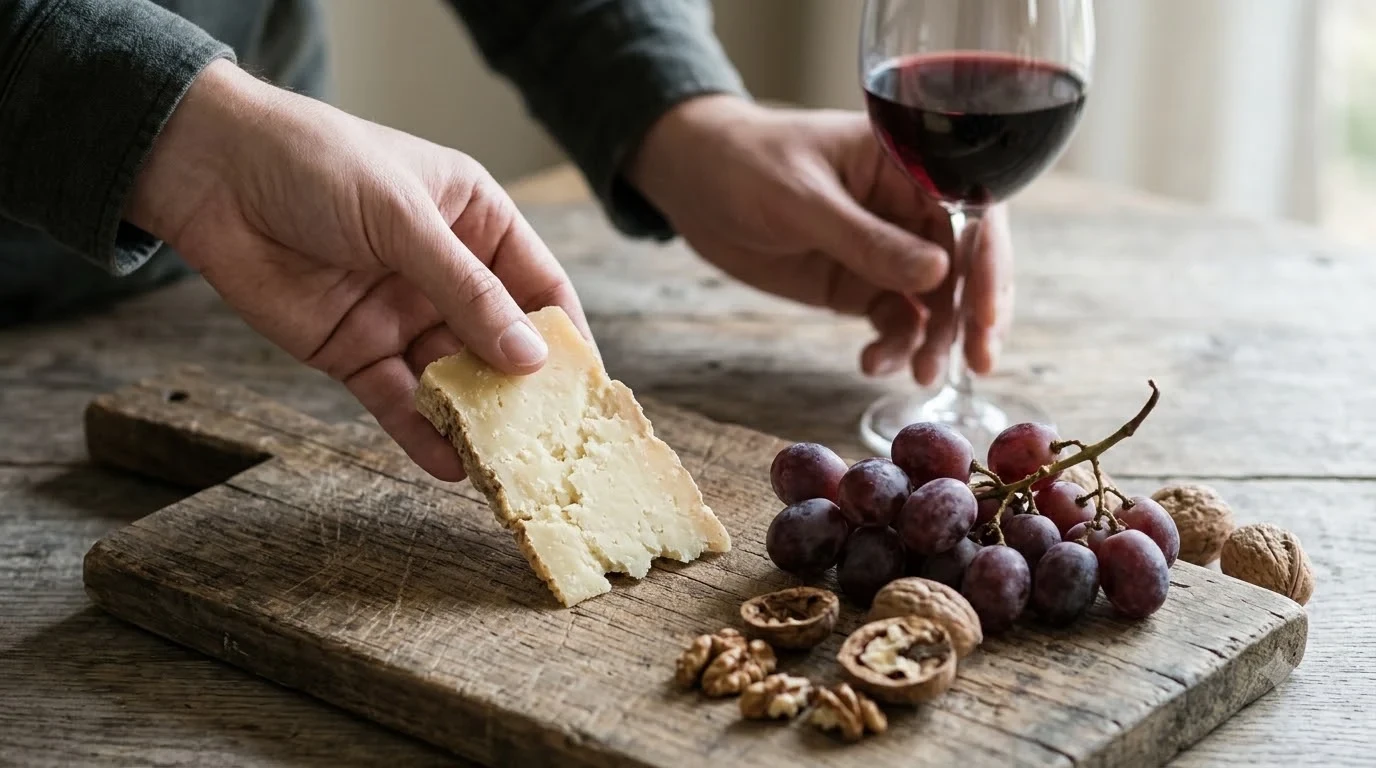
The best match for moscato with cheese is a salty blue cheese, although creamy and washed-rind cheeses can also work when the wine’s sweetness, acidity, and intensity are in balance. Moscato d’Asti brings peach, apricot, and floral aromas, gentle bubbles, and a refreshing line of acidity. Start with Gorgonzola or Roquefort, then add Brie, aged Gouda, or a mild goat cheese for a varied board.
Moscato is often treated as a dessert-only wine, but its sweet-and-fresh character can be useful with savory food. The key is to choose cheese with enough salt, richness, or distinctive flavor to meet the wine, rather than putting a delicate cheese beside a very sweet, aromatic pour. The pairings below focus on the styles most often found in American wine shops, especially Moscato d’Asti.
Why Sweet Moscato Works With Salty Cheese
Sweet Moscato works particularly well with cheese that is salty, rich, or assertive because the contrast softens the impression of both. Blue cheese is the most dependable starting point: its salt and savory intensity balance Moscato’s ripe fruit, while the wine’s acidity refreshes the palate between bites.
Moscato d’Asti commonly shows peach, apricot, citrus, orange blossom, and elderflower aromas. The wine is sweet, but acidity keeps that sugar from tasting flat. According to the wine information published by Coop, Moscato d’Asti generally has 4.5 to 6.5 percent alcohol by volume and gentle bubbles; Wine Enthusiast’s discussion with Asti DOCG director Giacomo Pondini likewise describes a wine with lively acidity, light effervescence, and alcohol near 5 percent. That combination makes it less weighty than many rich dessert wines.
Cheese changes the way sweetness is perceived. A salty blue can make a sweet wine seem more balanced, while the wine can make the cheese taste rounder and less sharply salty. The result is not that one flavor disappears. Instead, each gives the other a counterpoint: salt against fruit, savory intensity against floral aroma, and creamy texture against a fresh finish.
Wine Folly recommends sweet wines such as Moscato with funky, washed-rind, and blue-veined cheeses. Its broader rule is to match the intensity of the wine and cheese, rather than choosing only by color or country. That is a useful test here: a pungent cheese can stand beside Moscato’s aromatic profile, but a very mild cheese may seem quiet or slightly sweet by comparison.
Blue Cheese Is the Most Reliable Match
Blue cheese is the classic place to begin because its salt, creaminess, and mold-driven savory character have enough force to meet sweet Moscato. Gorgonzola Dolce is a particularly friendly choice, while Roquefort, Stilton, and Danish blue suit drinkers who prefer a stronger contrast.
For a gentle first pairing, choose Gorgonzola Dolce. It is milder than many aged blue cheeses, so its savory edge meets the peach and floral notes in Moscato d’Asti without overwhelming them. Serve a small amount on a plain cracker or thin pear slice.
For a more assertive plate, try Roquefort or firm Stilton. Their salt and blue-mold character suit a sweet Moscato better than a lean, bone-dry white. Keep the serving simple with neutral bread or fresh pear; strongly spiced crackers and chutneys can compete with the wine.
Choose the blue cheese by strength
Use Gorgonzola Dolce for guests who are new to blue cheese, Danish blue or Stilton for medium-to-strong flavor, and Roquefort for a salty, vivid contrast. The more pungent the cheese, the more useful a clearly sweet, aromatic Moscato becomes. Wine Folly’s guide to pairing wine and cheese likewise groups Moscato with blue-veined and washed-rind styles, while Coop names blue cheese as a savory match for Moscato d’Asti.
Fresh, Creamy, and Soft-Ripened Cheeses
Fresh and creamy cheeses can pair with Moscato when their texture and flavor are not too delicate for the wine. Try ricotta, mascarpone, fresh chèvre, Brie, or Camembert with a lighter, well-chilled Moscato, and use fruit or plain bread to connect the cheese to the wine’s aromas.
Fresh chèvre has a tangy, lactic character that can echo the wine’s freshness, especially when the cheese is young and mild. Serve a small portion with ripe pear, peach, or orange zest. Skip a sharp vinaigrette: acidic food needs a wine with equal or higher acidity, and a sharp dressing can make a sweet wine seem less lively.
Ricotta and mascarpone are softer choices, best with Moscato that is lightly sweet or restrained in aroma. Serve ricotta on toast with sliced peach, or spoon mascarpone beside fresh berries. If the cheese tastes bland, add a little salt or choose a more flavorful cheese rather than piling on extra sugar.
Brie and Camembert sit between fresh and assertive. Their bloomy rind and buttery center bring more flavor than plain cream cheese, and a ripe Brie can stand up to Moscato’s fruit. Choose a Brie that is creamy but not ammonia-sharp; apple, unsalted almonds, or plain baguette are enough alongside it. Moscato d’Asti has gentle effervescence rather than the forceful bubbles of many traditional-method sparkling wines, so treat it as a soft, refreshing companion. If the pairing seems too sweet, reduce sweetness on the plate: serve chèvre without jam, choose plain crackers instead of honey biscuits, and add salted nuts.
Washed-Rind and Aged Cheeses Need a Careful Match
Washed-rind cheeses suit sweet Moscato when their aroma and savory depth are strong enough to meet the wine. Taleggio and Époisses offer a softer, earthy route, while aged Gouda and mature Cheddar provide a firmer, nutty or savory alternative that works best with a Moscato that is fresh rather than syrupy.
Washed-rind cheeses develop their distinctive aromas through repeated washing of the rind during maturation. Taleggio is supple and savory, with a creamy center and earthy notes; Époisses is often more pungent and persistent. Both can work with Moscato because the wine’s sweetness offsets salt and strong aroma. Start with Taleggio if you want a less forceful introduction, then try Époisses if the group enjoys assertive cheese.
Portion size matters with these cheeses. Their aroma can fill the palate quickly, so cut small pieces and serve plain bread rather than a stack of strongly seasoned crackers. A spoonful of sliced pear or a few grapes can bridge the fruit in the wine and the savory cheese. Avoid putting several intensely washed-rind cheeses together as the only choices; one bold cheese is more inviting when balanced by a mild option and a blue cheese.
Aged Gouda and mature Cheddar offer a different kind of contrast. As hard cheese ages, it loses moisture and develops a more concentrated flavor. Nutty, caramel-like notes in an aged Gouda can connect with Moscato’s honeyed or ripe-fruit character, while the savory bite of mature Cheddar counters the sweetness. Choose a well-aged, flavorful cheese rather than a mild young block. If the wine is especially sweet, select the sharpest cheese on the board.
Choose the Right Moscato Style for the Cheese
For most cheese boards, a lightly sparkling, sweet Moscato d’Asti is the most flexible starting point because its ripe fruit, moderate alcohol, acidity, and gentle fizz can handle both salt and cream. Asti Spumante is more vigorously sparkling and generally higher in alcohol, while still and late-harvest Muscat wines can have very different sweetness and weight.
The word “Moscato” refers to the Muscat grape family and a range of wines, not one fixed level of sweetness or one production method. Moscato d’Asti is the Piedmont specialty most often associated with gentle bubbles and sweetness. Coop describes it as a wine made from Moscato Bianco, with tank fermentation and a light pressure of about 1.7 bar. Asti Spumante has more pronounced bubbles and a higher alcohol level than Moscato d’Asti; some examples use the traditional bottle-fermentation method.
These differences change the cheese choice. A delicate Moscato d’Asti is a natural partner for Gorgonzola Dolce, Brie, or Taleggio; a fuller sweet Muscat can stand beside sharper blue or pungent washed-rind cheese. A dry or less-sweet Muscat calls for fresh goat cheese, ricotta, or a mild bloomy-rind cheese. Use the table as a starting point: alcohol and pressure describe the general Moscato d’Asti profile cited by Coop, not every wine sold under the broad Muscat name.
| Wine or serving detail | Typical figure | Cheese direction |
|---|---|---|
| Moscato d’Asti alcohol | 4.5–6.5% ABV | Gorgonzola Dolce, Brie, Taleggio |
| Moscato d’Asti bubble pressure | About 1.7 bar | Fresh, creamy, or moderately rich cheeses |
| Sweet-white serving temperature | 43–50°F | Chill to keep the wine fresh beside rich cheese |
| Standard tasting pour | 5 oz | Enough to compare two or three cheeses |
| 750 ml bottle | About 5 standard pours | Plan roughly one bottle for five tasting glasses |
Temperature matters: a warm sweet wine can seem heavy, while an overly cold glass can hide its aroma. Serve sweet whites at 43 to 50 degrees Fahrenheit, then let the wine warm slightly if its peach and floral notes seem muted. Keep the bottle chilled between pours. Before choosing the cheese, review is Moscato sweet or dry and how to pronounce Moscato to identify the style and say its name with confidence.
Build a Moscato Cheese Board That Tastes Balanced
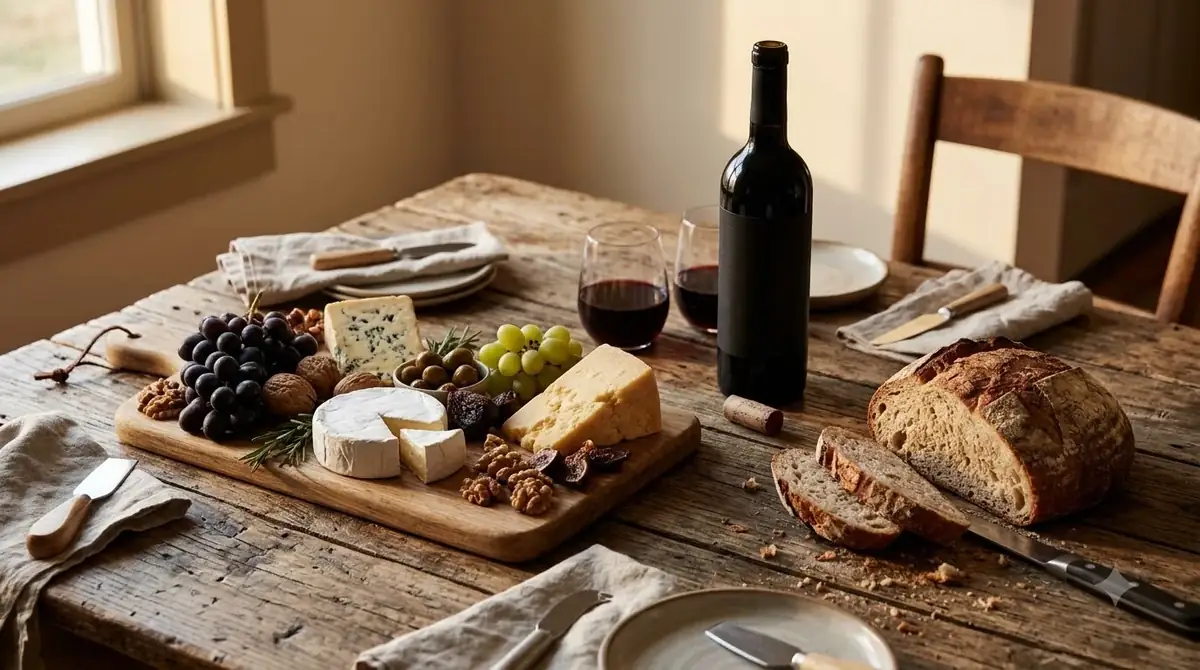
A balanced Moscato board needs only three or four cheeses, one or two fresh accompaniments, and plain bread or crackers. Use one blue cheese as the anchor, then add a creamy cheese and a savory or nutty choice so guests can compare different textures without overwhelming the wine.
For a simple board, set out Gorgonzola Dolce, Brie, aged Gouda, and fresh chèvre. That lineup gives you blue-cheese salt, buttery creaminess, nutty depth, and tangy freshness. Offer modest tasting portions with plain baguette, water crackers, sliced pear, apple, and toasted walnuts. These foods add crunch without bringing a second source of strong sweetness. Honey, fig jam, and dried fruit can work in small amounts, but too much turns the board into a dessert plate. Give each cheese its own knife where practical, especially blue and washed-rind styles, to keep strong aromas and mold from transferring to milder choices.
Build contrast without crowding the flavors
Use salt and texture as the main accents: blue cheese counters sweetness, aged Gouda echoes ripe fruit, and tart goat cheese adds freshness. Include fresh fruit rather than several sweet spreads. Wine Enthusiast’s conversation with Asti DOCG director Giacomo Pondini describes the Piedmont tradition of serving Moscato d’Asti with bread, butter, and anchovies, and also discusses spicy dishes. For a cheese board, try mildly spiced pepper jelly beside blue cheese rather than a very hot chile condiment. Moscato’s sweetness can balance a little chili heat, while its low alcohol and low tannin make it a more comfortable partner for restrained spice than a big red wine.
Tip: Make the first bite Gorgonzola Dolce with a thin slice of pear, then sip chilled Moscato d’Asti. It is a quick way to check the balance before adding stronger blue cheese, washed-rind cheese, or sweet accompaniments.
Frequently Asked Questions
These answers cover five useful details, from the three Piedmont provinces associated with Moscato d’Asti to the meaning of the late-harvest term Vendemmia Tardiva.
Where is Moscato d’Asti produced?
Moscato d’Asti is a specialty of Piedmont in northwestern Italy. Coop’s regional overview identifies the provinces of Asti, Cuneo, and Alessandria as the permitted production area for the wine.
How long has Moscato Bianco been grown in Monferrato?
Coop’s overview says Moscato Bianco was already cultivated in the Monferrato area about 500 years ago. The landscape’s sandy and chalky soils are part of the regional growing context described in that account.
What does Vendemmia Tardiva mean on a Moscato label?
Vendemmia Tardiva refers to a late harvest. In the Moscato d’Asti example described by Coop, grapes are picked later when they are overripe and have more concentrated sugar, producing a sweeter wine style.
Does Moscato d’Asti improve with long bottle aging?
Most Moscato d’Asti is best enjoyed young because its delicate bubbles are part of its appeal. Coop notes that bottles stored for more than a year can lose some of their fine perlage, so extended cellaring is not usually the goal.
What does DOCG indicate on a Moscato d’Asti bottle?
DOCG is an Italian designation for wines whose origin and production rules are subject to official controls. Coop describes the DOCG mark on Moscato d’Asti as a state-controlled guarantee of origin, linking the wine to its defined production area in Piedmont.
For a first pairing, open a lightly sparkling Moscato d’Asti and serve it with Gorgonzola Dolce, then add Brie and aged Gouda to broaden the board. Once you know how the wine’s sweetness and acidity behave with salty cheese, it becomes easier to build pairings around the flavors you enjoy.
More in Wine Types & Grapes
 Zinfandel Sugar Content: Dry Red vs. White Zinfandel GramsUpdated Nov 21, 2026
 Best Zinfandel Substitute Options for Sipping and CookingUpdated Nov 21, 2026
 Zweigelt Food Pairing: Best Dishes, Cheeses, and Serving TipsUpdated Nov 21, 2026
 Zinfandel Tannins Explained: How Structure Shapes Every BottleUpdated Nov 21, 2026
 Zinfandel Sweetness Level: Dry Red vs. Sweet White Zin ExplainedUpdated Nov 21, 2026
 Xinomavro Food Pairing: Best Dishes, Styles, and Serving TipsUpdated Nov 21, 2026