

We may earn a commission when you buy through links on this page, at no extra cost to you. Learn more.
Mikasa white wine glasses are a stylish choice for everyday wine drinking and entertaining, with several collections offering lead-free crystal, dishwasher-safe construction, and capacities from 13 to 18 ounces. The Cheers, Melody, Aline, Grace, Cora, and Optic collections provide different combinations of bowl shapes, decorative details, and materials. For most buyers, Melody offers a particularly appealing balance of traditional styling and practical capacity, while Cheers stands out for entertaining and Aline suits a more contemporary table.
Mikasa makes white wine glasses for people who want coordinated tableware without limiting themselves to plain, conventional stemware. Its selection includes clear crystal designs, hand-blown glass, textured bowls, and decorative patterns that give each collection a distinct personality. However, appearance is only one consideration: capacity, rim shape, stem proportions, dishwasher compatibility, and replacement availability also matter. This review examines the differences between the main collections and explains which characteristics deserve attention before choosing a set.
Specs and Key Features of Mikasa White Wine Glasses
Mikasa’s white wine glass selection covers several distinct designs rather than one standardized shape. The most useful differences are material, bowl capacity, overall height, and decorative treatment, which determine how each set fits into everyday dining or more formal entertaining.
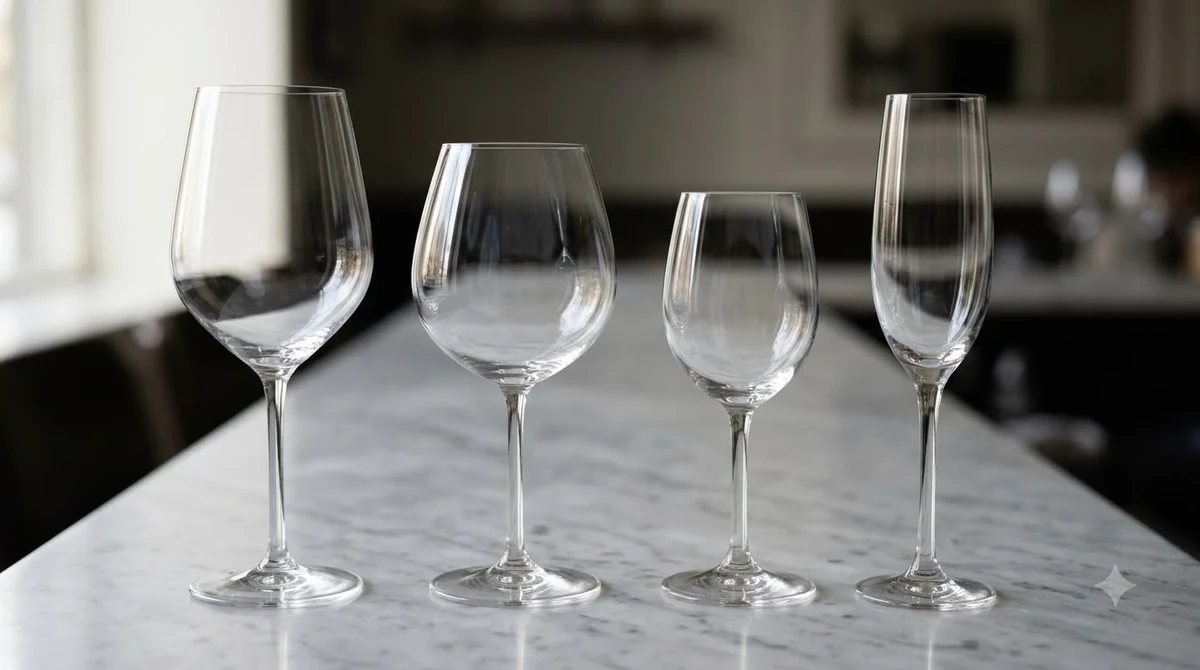
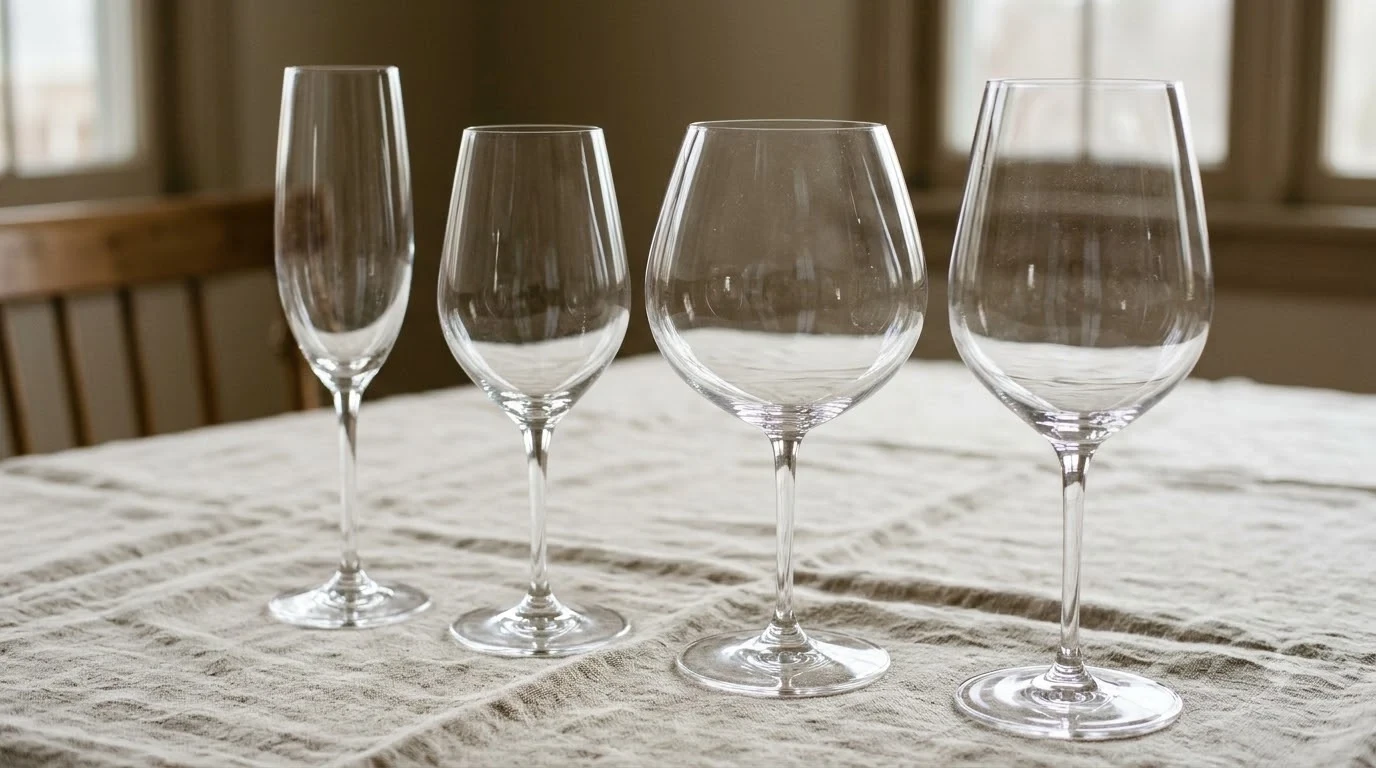
The Cheers collection is particularly recognizable because its four glasses feature coordinating but different etched patterns. Melody takes a quieter approach with understated clear glass styling, while Aline uses a more contemporary silhouette with a wide base. Grace has a tulip-shaped profile, and Cora offers a hand-blown alternative with a smaller stated capacity. Optic adds vertical surface texture instead of relying on decorative etching.
The following specifications are taken from Mikasa’s product descriptions. Dimensions refer to individual glasses, not the complete storage footprint of a four-piece set.
| Collection | Material | Capacity | Height | Diameter | Set size |
|---|---|---|---|---|---|
| Cheers | Lead-free crystal | 16 oz | 8.5 in | 3.5 in | 4 |
| Melody | Lead-free crystal | 15 oz | 8.75 in | 3.25 in | 4 |
| Aline | Lead-free crystal | 16 oz | 9 in | 3.5 in | 4 |
| Grace | Lead-free crystal | 18 oz | Not specified | Not specified | 4 |
| Cora | Hand-blown glass | 13 oz | 7.75 in | 3.25 in | 4 |
| Optic | Glass | 15 oz | 8.875 in | 3.25 in | 4 |
One important distinction is that crystal and ordinary glass are not interchangeable descriptions. Mikasa specifically identifies Cheers, Aline, and Grace as lead-free crystal, while Cora is described as hand-blown glass and Optic simply as glass. Melody is also described in its product copy as European lead-free crystal, although its specification section identifies the material more generally as glass. Buyers who place particular importance on material should pay attention to the detailed description of the individual collection. Mikasa’s official white wine glass collection provides an overview of the available designs and their product descriptions.
Capacity also deserves some context. A 16-ounce bowl does not mean that a standard wine serving should fill the glass. A typical wine pour is approximately 5 ounces, leaving space for the wine’s aromas to develop and making the glass easier to handle. The larger capacities of Cheers, Aline, and Grace provide additional room without requiring larger servings.
For a wider comparison of bowl shapes, materials, and stem proportions, see our guide to white wine glasses. It provides useful context for deciding whether Mikasa’s more decorative designs match your preferred style of stemware.
What Owners Like About the Design and Everyday Experience
Owner feedback on Mikasa white wine glasses frequently emphasizes attractive styling, comfortable handling, and useful bowl sizes. The Cheers and Melody collections are particularly interesting because their customer comments highlight different strengths: distinctive decoration for Cheers and understated practicality for Melody.
The Cheers set addresses a familiar problem during dinner parties: guests forgetting which glass belongs to them. Each of its four glasses has a different coordinating etched pattern, including dots, lines, and swirls. This makes individual glasses easier to identify without separate wine charms or handwritten labels. It is a thoughtful detail for households that regularly host four people or more.
The decorative treatment also gives Cheers a more relaxed personality than completely plain stemware. The patterns remain visible when the glasses are empty, and they create visual variety without introducing colored glass that might interfere with the appearance of a white wine. For buyers who enjoy distinctive table settings, this is a meaningful advantage.
Melody appeals to a different customer. Its clear appearance works with a wider range of dinnerware, flatware, and serving pieces. Mikasa’s owner comments describe the glasses as attractive, comfortable to hold, and pleasantly weighted. One recurring theme in the feedback is the balance between an elegant appearance and a shape that does not feel excessively delicate.
That combination makes Melody worth considering for households that want one set for weekday dinners and weekend guests. Its 15-ounce capacity is generous enough for aromatic whites, while the relatively conventional silhouette avoids the more decorative character of Cheers.
Aline has a stronger contemporary identity. Its curved profile and wide base distinguish it from traditional narrow-stemmed wine glasses. At 9 inches tall, it also has a noticeably taller profile than Cora, which measures 7.75 inches. Buyers who want a modern-looking place setting may prefer Aline’s proportions.
Grace offers another appealing design direction. Its tulip-shaped bowl flares toward the rim, creating a recognizable silhouette that looks more formal than a straight-sided drinking glass. Its 18-ounce capacity is the largest among the collections with published capacity information in this comparison. That extra room can be useful when serving aromatic white wines that benefit from space above the liquid.
The Optic collection appeals to people who prefer texture over elaborate decoration. Its vertical lines add visual interest while keeping the glasses clear and relatively versatile. The four-piece set has a 15-ounce capacity, making it comparable to Melody in volume despite its different material and appearance.
These differences demonstrate why choosing solely by appearance can be misleading. A glass that looks beautiful in a product photograph might be less convenient for your cabinet, dishwasher, or usual serving routine. The most satisfying choice is the one whose proportions and design fit how the glass will actually be used.
Common Complaints About Durability, Quality, and Fit
Mikasa’s collections have positive owner feedback, but customer comments also reveal concerns about breakage, manufacturing consistency, and differences between replacement purchases. These are important considerations for anyone buying stemware intended for frequent use.

The Cheers collection illustrates both sides of the ownership experience. Some owners appreciate the decorative patterns and report using their glasses regularly for years. Others describe breakage during early use or concerns about imperfections in the glass. There are also comments from customers who received glasses with visible defects or found that newer purchases did not match older pieces as closely as expected.
One particularly relevant issue is replacement consistency. Wine glasses are vulnerable to accidental breakage, and customers who have owned a collection for several years may want to replace just one piece. However, a later purchase can differ in bowl size, stem proportions, glass thickness, or decorative execution. A matching product name does not always guarantee a perfect visual match between older and newer production.
Shipping and packaging are additional considerations. Glassware requires careful protection during transportation, and customer feedback includes reports of damaged arrivals. This is not unique to Mikasa, but it makes the seller’s return procedure important. Inspect a new set promptly, particularly around the rims, stems, and feet, where damage may be difficult to notice inside protective packaging.
Some buyers may also find the Cheers patterns too decorative for a minimalist table. Although the individual designs are coordinated, they do not create the completely uniform appearance of a conventional four-glass set. This is a feature for people who enjoy variety but a possible disadvantage for buyers who prefer identical place settings.
Capacity can create another mismatch. A 16-ounce glass is relatively generous for a white wine glass, and the 18-ounce Grace bowl is larger still. These dimensions provide room for aroma development, but they may feel oversized to someone accustomed to smaller traditional stemware.
Cabinet storage is another practical issue. A glass measuring 9 inches tall needs more vertical clearance than a shorter tumbler. Stemmed glasses also require careful arrangement to avoid contact between neighboring bowls. Buyers with limited kitchen storage should measure their shelves before selecting a taller design.
Dishwasher compatibility should not be mistaken for unlimited resistance to damage. Mikasa lists dishwasher-safe care for the featured collections, but delicate stems and glass rims can still be affected by collisions with cookware, plates, and other glasses. Crowded racks create unnecessary risks.
There is also a distinction between a product’s stated material and how sturdy it feels. Lead-free crystal does not mean unbreakable crystal. Similarly, an ordinary glass model is not automatically more durable simply because its material description differs. Construction, thickness, stem proportions, and handling all contribute to practical durability.
For customers comparing several brands, our broader wine glasses recommendations provide a useful starting point for evaluating alternative shapes and everyday designs.
Who Should Buy Mikasa White Wine Glasses and Who Should Skip Them
Mikasa white wine glasses are a good fit for buyers who value coordinated tableware, decorative details, and multiple design choices. They are less suitable for people whose main priorities are extreme durability, replacement simplicity, or highly specialized professional wine service.
Good choices for everyday wine drinkers
Melody is a sensible option for someone who wants attractive but relatively understated stemware. Its 15-ounce capacity and clear appearance make it adaptable to Sauvignon Blanc, Pinot Grigio, Riesling, and Chardonnay. It also works with a broad range of table settings without demanding a particularly formal occasion.
Optic is another option for regular use. Its vertical texture gives the bowl a more interesting appearance than plain glass, while the 15-ounce capacity remains practical for common white wine styles. It may appeal to buyers who like decorative glassware but do not want the more individualized patterns of Cheers.
Cora is worth considering for people who prefer a smaller glass. Its 13-ounce capacity is the lowest among the listed collections in this comparison, and its hand-blown construction gives it a different character from the other models. Its 7.75-inch height may also suit cabinets with less vertical clearance.
Good choices for entertaining
Cheers is particularly appropriate for dinner parties and informal gatherings. Four distinct patterns help guests identify their own glasses, and the 16-ounce capacity provides room for swirling without making the bowl unusually restrictive.
Grace is another attractive entertaining choice, especially when a more formal presentation is important. Its tulip shape and 18-ounce capacity create a visually prominent piece of stemware. It is particularly appealing for people who enjoy a larger bowl and a distinctive silhouette.
Aline suits contemporary dining rooms and modern tableware. Its 9-inch height and 3.5-inch diameter make it a substantial-looking glass, and its curved profile provides a stronger design statement than a simple traditional bowl.
Who should consider alternatives?
People who regularly break stemware may want to prioritize simple, sturdy glass designs rather than elaborate crystal collections. Those who need to replace individual glasses frequently should also investigate whether their preferred retailer sells open-stock replacements.
Wine enthusiasts who want highly specialized tasting shapes may prefer dedicated glassware designed around particular grape varieties. For example, a Sauvignon Blanc glass and a fuller-bowled Chardonnay glass can emphasize different aromatic and structural characteristics. Mikasa’s general-purpose white wine models are better understood as versatile household stemware than as highly specialized tasting instruments.
Buyers who prefer a matching set of six or eight should also consider their serving requirements. The featured Mikasa collections are presented as four-piece sets, so larger households may need multiple packages or a different glassware range.
How Mikasa Compares to Alternative Wine Glass Styles
Mikasa competes primarily through its range of decorative designs and practical household capacities. Its collections offer several recognizable silhouettes, but buyers should distinguish between versatile everyday stemware and more specialized glassware designed for particular wine styles.
For comparison, a conventional white wine glass generally has a smaller bowl than a large red wine glass. The smaller opening helps maintain a more contained aromatic environment and can make chilled wine easier to enjoy at a consistent temperature. Mikasa’s 13-to-18-ounce options cover a fairly broad range within this general category.
Cheers, Aline, and Melody have capacities of 16, 16, and 15 ounces respectively. These are useful general-purpose sizes, particularly for people who serve several different white wine varieties. Grace’s 18-ounce bowl provides additional room, while Cora’s 13-ounce design offers a more compact alternative.
The distinction becomes more important when comparing white and red wine stemware. Cabernet Sauvignon and Syrah generally benefit from larger bowls that provide room for aeration. Pinot Noir is also commonly served in a wider bowl, although its lower-to-medium tannin profile and high acidity make it quite different from Cabernet Sauvignon. White wine glasses generally emphasize freshness and temperature management rather than extensive aeration.
That does not mean a white wine glass should be extremely small. A glass with a 15-ounce capacity can comfortably accommodate a 5-ounce serving while leaving sufficient room above the liquid. This is one reason Mikasa’s Melody and Optic designs are useful general-purpose choices.
Another difference is material. Some competing glassware collections use specialized lightweight crystal or particularly thin rims, while Mikasa offers a mixture of crystal and standard glass constructions. Buyers should compare the complete specifications rather than assuming that the word crystal automatically indicates better performance or greater durability.
Stemless glasses are another alternative. They are easier to store in many kitchens and may be more convenient for casual occasions. However, holding a stemless glass transfers more warmth from the hand to the wine. For whites served around 45 to 50 degrees Fahrenheit, a conventional stemmed glass provides a practical advantage because the bowl can be held without directly warming the liquid.
People interested in comparing red wine-specific shapes can also consult our guide to red wine glasses. It explains why bowl width and overall capacity vary according to the style of wine being served.
For most households, Mikasa is best compared with other general-purpose tableware brands rather than exclusively with specialist wine-tasting glass manufacturers. Its appeal is the combination of decorative coordination, accessible everyday shapes, and a selection that can complement matching dinnerware. Buyers interested in the exact specifications of one popular option can also review Mikasa’s Cheers four-piece white wine glass set.
Care, Serving, and Storage Recommendations
Proper handling makes a substantial difference to the useful life of any stemware collection. Although Mikasa identifies the featured collections as dishwasher safe, careful loading, controlled serving temperatures, and suitable storage help reduce avoidable damage.
For dishwasher cleaning, keep glasses separated from heavy plates, metal cookware, and utensils. Avoid placing neighboring bowls so close together that they can strike each other during a wash cycle. A stem should not be forced into a rack position that puts pressure on the narrow connection between the bowl and the foot.
Hand washing is a reasonable alternative for owners who prefer additional control. Use warm water, mild dish detergent, and a soft sponge. Avoid twisting the bowl and stem in opposite directions while cleaning, as this can place unnecessary stress on the joint.
Drying also requires attention. A lint-free cloth works well for removing water spots, but the bowl should be supported rather than gripped tightly by the rim. If polishing a stemmed glass, use gentle movements and avoid applying excessive pressure to the stem.
Storage is just as important. Keep glasses upright in a stable cabinet or on a suitable glass rack. If they are stored close together, leave enough space to prevent their bowls from knocking against one another. Avoid placing heavy objects above or inside delicate stemware.
Temperature management matters when serving white wine. Light-bodied whites such as Sauvignon Blanc and Pinot Grigio are generally best served around 45 to 50 degrees Fahrenheit. Fuller-bodied Chardonnay is more appropriately served around 50 to 55 degrees Fahrenheit. Sparkling wines are generally served colder, around 40 to 50 degrees Fahrenheit.
Tip: Pour approximately 5 ounces into a Mikasa white wine glass rather than filling the bowl to its full capacity. A 15- or 16-ounce glass provides ample space above the wine for aromas to collect, while a moderate pour also helps preserve the intended serving temperature.
Glass shape cannot compensate for incorrect serving temperature. A chilled Sauvignon Blanc served in an oversized glass will still become warmer if left on the table for too long. For longer meals, pour smaller servings and keep the bottle refrigerated between rounds.
When setting the table, consider the relationship between the glass and the rest of the dinnerware. Cheers works particularly well when its different patterns are intended to be part of the presentation. Melody and Optic are easier to coordinate with matching clear glassware, while Aline and Grace make more noticeable visual statements.
For households that entertain regularly, it can be useful to keep the original product information and item number. Cheers, for example, carries the item number SW910-403. Keeping this information makes it easier to identify the intended design if a replacement becomes necessary.
Owners who have several different Mikasa collections should store them separately when possible. Different bowl heights and stem proportions can make mixed storage less convenient, and separating collections reduces the chance of accidentally pairing mismatched glasses during a dinner party.
Frequently Asked Questions
Are Mikasa white wine glasses made in the United States?
The country of manufacture depends on the individual collection and product. Mikasa’s retail product descriptions do not establish one universal manufacturing country for every white wine glass. Buyers who require a particular country of origin should seek confirmation for the exact item rather than assuming all Mikasa stemware shares the same manufacturing location.
Can Mikasa white wine glasses be used for cocktails?
Yes, general-purpose stemmed wine glasses can also serve certain cocktails, particularly spritzes and wine-based aperitifs. The 16-ounce Cheers and Aline glasses provide room for ice-free mixed drinks and garnishes, although they are not substitutes for dedicated martini or highball glasses.
Are Mikasa crystal glasses suitable as wedding gifts?
They can be suitable wedding gifts, particularly when the recipients enjoy coordinated dining accessories. Cheers offers four different etched patterns, while Melody has a more conventional clear appearance that can work with many existing dinnerware styles. Including a gift receipt is useful because glassware preferences and replacement requirements vary between households.
Does lead-free crystal contain any lead oxide?
Lead-free crystal is formulated without intentionally added lead oxide as the traditional crystal-forming ingredient. Manufacturers can use other mineral oxides to achieve clarity, brilliance, and working characteristics associated with crystal glass. The term describes a material category rather than guaranteeing that every crystal product has identical composition.
Can white wine glasses also be used for rosé?
Yes. General-purpose white wine stemware is appropriate for most dry rosé wines, including Provence-style blends and rosé made from Grenache or Syrah. Serving these wines around 45 to 50 degrees Fahrenheit helps preserve their refreshing acidity and fruit aromas.
Mikasa white wine glasses offer a useful selection for households that want attractive stemware with different materials, bowl sizes, and decorative styles. Melody is a strong starting point for understated everyday use, Cheers is particularly appealing for entertaining, and Aline or Grace suit buyers who prefer more distinctive silhouettes. Compare the actual dimensions and material of each collection before choosing, and prioritize the design that fits your storage space, serving habits, and tableware.
More in Wine Glasses
 Zwiesel Glas Champagne Flutes for Durable Everyday Sparkling WineUpdated Nov 20, 2026
 Vera Wang Crystal Wine Glasses: Design, Quality and Buying AdviceUpdated Nov 20, 2026
 West Elm White Wine Glasses: Compare Designs for Better Everyday Wine ServiceUpdated Nov 20, 2026
 Zalto Stemless Wine Glasses: Discover Their Distinctive DesignsUpdated Nov 20, 2026
 Viski Champagne Glasses That Match Your Style and Sparkling WineUpdated Nov 20, 2026
 Vista Alegre Decanter Review: Crystal Style and Wine ServiceUpdated Nov 20, 2026