

We may earn a commission when you buy through links on this page, at no extra cost to you. Learn more.
The Ivation beverage cooler is a freestanding, compressor-powered drink refrigerator designed to store up to 126 standard cans, with adjustable shelving, a glass door, and a stated temperature range of 38°F to 50°F. Its compact footprint, reversible door, and multiple capacity options make it an appealing choice for a home bar, office, or entertainment area. However, customer complaints about inconsistent cooling and thermostat performance mean buyers should pay particular attention to temperature reliability before choosing one.
Ivation offers several beverage refrigerator sizes, but the 126-can model is the most useful starting point for evaluating the range. It combines a relatively narrow cabinet with substantial advertised storage, compressor cooling, and a presentation-friendly glass door. The important distinction is that attractive specifications do not guarantee consistent real-world temperatures. This review examines the manufacturer’s specifications, setup instructions, customer feedback, and practical limitations to help determine whether an Ivation cooler belongs in your home.
Specs and Key Features
The Ivation beverage cooler range offers several storage capacities, with the 126-can version providing the largest advertised capacity among the models listed in the manufacturer’s user guide. Its compressor system, removable shelving, and reversible glass door make it more versatile than a basic countertop drink refrigerator.
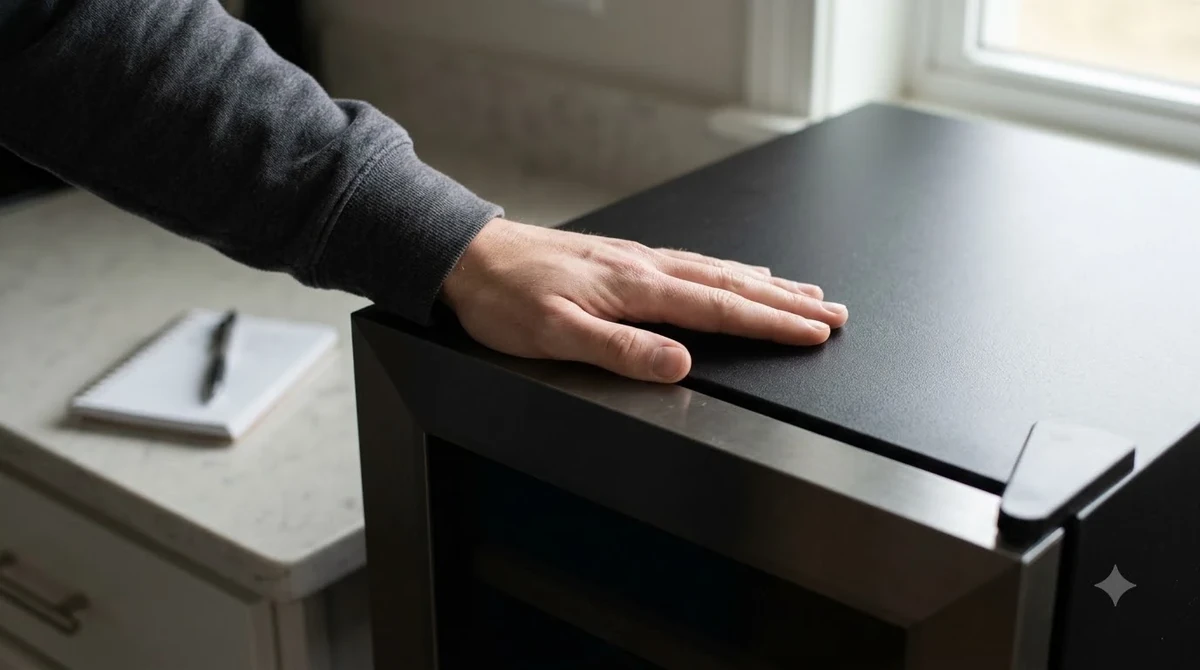
The 126-can model is approximately 3 cubic feet in capacity and measures about 18.66 inches wide, 17.32 inches deep, and 33.07 inches high. That makes it a relatively compact upright refrigerator, although its required ventilation space means the actual installation footprint must be considerably larger than the cabinet dimensions alone.
Ivation specifies compressor cooling rather than thermoelectric cooling. This distinction matters because compressor systems are generally better suited to maintaining refrigerator-like temperatures and handling changing room conditions. The manufacturer lists five cooling points in its product description, while the user guide specifies a temperature range of 38°F to 50°F across the listed beverage cooler family.
The reversible glass door is another practical feature. Depending on the room layout, the door can be configured to open from either side. Three removable shelves and eleven optional shelf positions provide flexibility when arranging cans, smaller bottles, and other beverages.
| Specification | 126-can model |
|---|---|
| Advertised capacity | 126 standard cans |
| Storage volume | 3.0 cubic feet |
| Cooling system | Compressor |
| Temperature range | 38°F–50°F |
| Width | 18.66 inches |
| Depth | 17.32 inches |
| Height | 33.07 inches |
| Weight | 55.8 pounds |
| Electrical supply | 120V, 60Hz |
| Annual energy use | 176.81 kWh |
| Installation | Freestanding |
| Door | Reversible glass door |
| Shelving | 3 removable shelves |
These specifications come from Ivation’s product listing and accompanying user documentation. The stainless-steel version has nearly identical cabinet dimensions, with Lowe’s listing its measurements as 18.70 by 17.30 by 33.10 inches. Small differences between published measurements are normal when retailers round specifications.
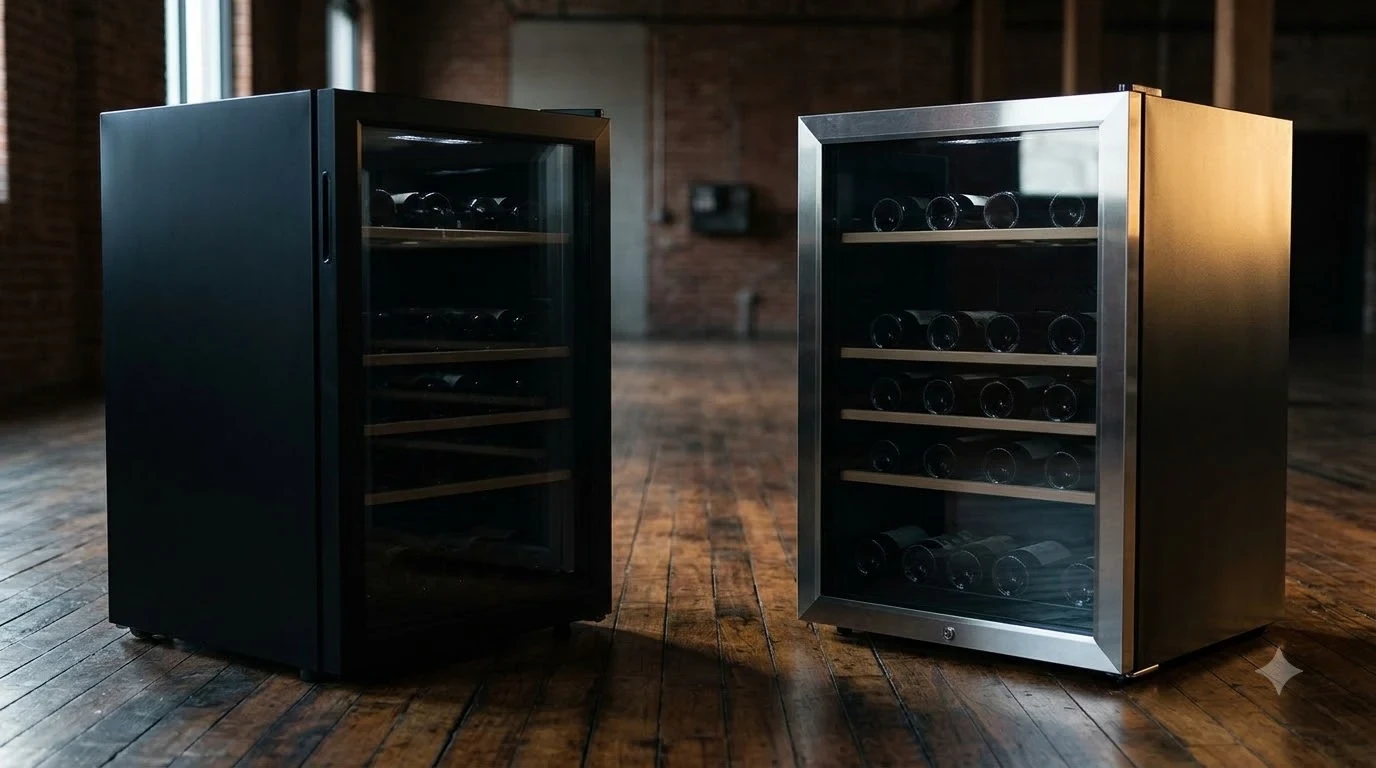
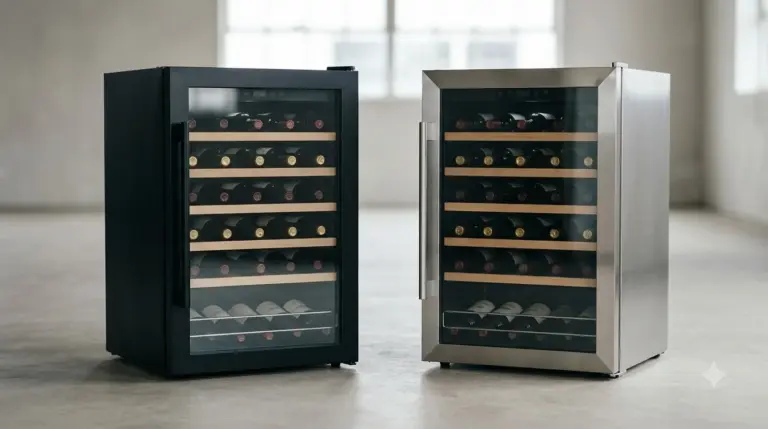
The product description also identifies dual-pane tinted glass, interior LED lighting, a recessed handle, and a dark exterior finish on the black version. These features make it suitable for a visible entertainment area rather than requiring it to be hidden in a utility room.
One important qualification concerns the advertised capacity. The 126-can figure describes standard cans, not an equivalent number of wine bottles or oversized beverage containers. Bottle shapes, shelf spacing, and packaging can reduce the usable capacity. Buyers who primarily store tall bottles should evaluate the shelf arrangement rather than relying exclusively on the headline capacity.
For the complete manufacturer specifications, consult the Ivation 126-can beverage refrigerator listing.
What Owners Like About the Ivation Beverage Cooler
The strongest appeal of the Ivation range is its combination of storage capacity, relatively compact dimensions, and straightforward appearance. Owners looking for a dedicated place to keep everyday drinks organized may appreciate these practical features more than specialized wine-storage functions.
Generous storage options: The 62-, 101-, and 126-can configurations give buyers several ways to match refrigerator capacity to their household. The smallest version is approximately 1.7 cubic feet, the 101-can version is 2.5 cubic feet, and the largest is 3 cubic feet according to the user guide. This range makes it possible to choose a smaller cabinet for an office or a larger one for a family entertainment space.
Attractive glass-door presentation: The tinted glass provides visibility without making the contents completely exposed. Interior LED lighting makes it easier to identify beverages, especially in a dimmer home bar or entertainment room. The stainless-steel and black finishes also offer different styling options.
Adjustable shelving: Removable shelves are helpful when the cooler needs to accommodate different container sizes. A household that stores mostly standard soda cans can organize the interior differently from one that keeps sparkling water, beer bottles, and juice containers.
Reversible door flexibility: The ability to change the door swing can be particularly useful in narrow rooms. For example, a refrigerator positioned beside a kitchen cabinet may need to open in the opposite direction from one placed against a wall in a home office.
Customer feedback is not uniformly negative. Lowe’s and Wayfair customer summaries include positive comments about the compact appearance, convenient storage, and ability to keep beverages cold. Some customers also appreciate how an upright glass-door cooler fits into an entertainment space without occupying the area required by a full-size refrigerator.
However, these positive observations should be balanced against the recurring temperature complaints discussed below. Appearance, capacity, and convenience are useful advantages, but cooling performance remains the primary job of any beverage refrigerator.
Common Complaints and Cooling Performance
Temperature reliability is the most important concern to investigate before buying an Ivation beverage cooler. Although the manufacturer’s documentation specifies a 38°F to 50°F operating range, some customers report that their units do not achieve sufficiently cold temperatures.
Home Depot’s stainless-steel 126-can review page displays a 2.9 out of 5 customer rating, with 40% of reviewers recommending the product across 16 reviews. One customer reported returning the refrigerator because the thermostat did not work correctly. Another described beverages as cool rather than genuinely cold.
Lowe’s customer feedback raises similar concerns about the 126-can stainless-steel model. Some reviewers reported that their units could not cool below approximately 48°F to 55°F, even with the control set toward maximum cooling. These experiences suggest that temperature consistency deserves more attention than the manufacturer’s advertised capacity.
It is important not to interpret a small group of reviews as proof that every unit will have the same problem. Customer reviews represent individual experiences, and room temperature, ventilation, installation, door use, and unit condition can all affect results. Nevertheless, repeated complaints across retail platforms represent a meaningful buying consideration.
Understanding the temperature difference
A refrigerator that maintains beverages near 48°F may still be useful for some drinks, but it will not satisfy everyone looking for very cold soda, beer, or sparkling water. The difference between 38°F and 50°F is substantial in everyday beverage service.
For reference, sparkling wine is generally served around 40°F to 50°F, while light white wines and rosé are typically served around 45°F to 50°F. A cooler that operates reliably within its stated range could therefore help with certain short-term wine-serving needs. However, this is not a dedicated wine-aging refrigerator, and its single-zone beverage configuration limits its usefulness for storing wines that require different serving temperatures.
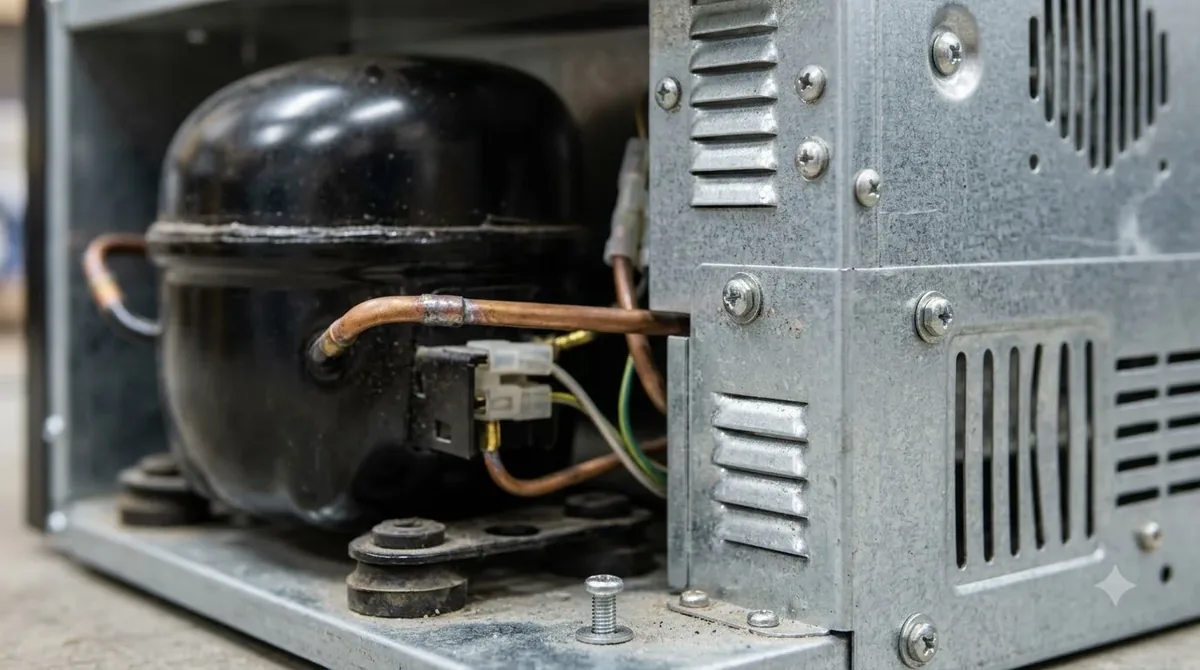
The manual identifies several troubleshooting checks when cooling is insufficient: verify the temperature setting, ensure the room is not excessively hot, check that the door closes completely, inspect the gasket, and confirm adequate ventilation clearance. These are sensible first steps, but they cannot resolve a defective thermostat or failing cooling component.
Tip: Use an independent refrigerator thermometer to check the actual temperature after the cooler has stabilized. Allow the appliance to operate for 24 to 48 hours before judging its temperature performance, and record readings over several hours rather than relying on one measurement immediately after loading drinks.
Another potential disadvantage is replacement-part availability. Ivation’s product listing states that replacement parts are unavailable for the 126-can model. Buyers who prioritize long-term repairability should investigate the support process before purchasing.
Who Should Buy It and Who Should Skip It
The Ivation beverage cooler is most appropriate for buyers who want a separate refrigerator for cans and everyday drinks, have enough room for freestanding installation, and are comfortable checking temperature performance after setup. It is less attractive for anyone who needs guaranteed precise temperatures or a built-in appliance.
Who should consider buying it?
Home bar owners: The 101-can and 126-can models offer substantial advertised capacity for soda, beer, mixers, sparkling water, and other frequently served beverages. The glass door and interior light make drink selection convenient when entertaining guests.
Apartment and condominium households: The upright design occupies less floor space than many full-size refrigerators. The 62-can version is particularly relevant for smaller households that do not need the largest capacity.
Office and recreation rooms: A separate drink refrigerator can reduce repeated trips to the main kitchen. The 101-can model offers a middle ground between a compact refrigerator and a large beverage cabinet.
Buyers who value presentation: The tinted glass, lighting, and available finishes give the appliance a more polished appearance than many basic plastic-front mini fridges.
Who should look elsewhere?
Buyers requiring consistently precise temperatures: The customer reports about insufficient cooling are a serious consideration for anyone who expects a particular temperature to be maintained reliably.
Wine collectors: The Ivation beverage cooler is primarily designed around canned beverages. Wine collectors should instead consider a dedicated wine refrigerator with suitable bottle supports, stable storage conditions, and potentially separate temperature zones. A useful starting point is this overview of the best rated wine cooler options.
Built-in refrigerator shoppers: The manufacturer identifies these units as freestanding. They require substantial clearance around the cabinet, so they should not be treated as under-counter built-in appliances.
Commercial operators: The user guide states that the appliance is intended for household use and not commercial use. A restaurant, bar, or high-volume hospitality business should look for equipment designed for commercial operating demands.
Repairability-focused buyers: The manufacturer’s statement that replacement parts are unavailable for the 126-can listing is a drawback for customers who prefer appliances with clearly supported replacement components.
In short, the Ivation range makes more sense as a household convenience appliance than as a precision beverage-storage solution. Its appeal depends heavily on whether the individual unit delivers acceptable cooling in the intended room.
How It Compares to Alternatives and Other Ivation Sizes
Choosing the right Ivation beverage cooler involves more than deciding between black and stainless steel. Capacity, dimensions, available room, and the intended beverage mix all affect which model makes practical sense.
The 62-can version is the smallest documented option, while the 101-can model provides an intermediate size. The 126-can version increases storage volume but also requires more vertical clearance and weighs considerably more.
For buyers comparing these configurations, the following differences are particularly useful:
| Model family | Capacity | Volume | Approximate dimensions (W × D × H) | Weight |
|---|---|---|---|---|
| IVABC620SS | 62 cans | 1.7 cu. ft. | 16.9 × 17.7 × 22 inches | 37.5 lbs. |
| IVABC1010B / SS | 101 cans | 2.5 cu. ft. | 16.9 × 17.7 × 29.1 inches | 47 lbs. |
| IVABC1260B / SS | 126 cans | 3.0 cu. ft. | 18.7 × 17.3 × 33.1 inches | 56 lbs. |
These measurements are taken from the Ivation user guide, with dimensions rounded to one decimal place. The manufacturer lists the 126-can black version at approximately 55.8 pounds, while the guide rounds the corresponding model-family weight to 56 pounds.
Choosing the 62-can version
The 62-can model is a reasonable choice for someone who wants a dedicated beverage refrigerator without committing to a tall cabinet. At approximately 22 inches high, it may suit a smaller entertainment area or office where vertical space is limited.
Its 1.7-cubic-foot capacity is substantially smaller than the largest model, so it is better suited to moderate household use than regular entertaining for larger groups. The reduced cabinet size may also make it easier to position, although the manufacturer’s ventilation requirements still apply.
Choosing the 101-can version
The 101-can option provides a useful middle ground. Its approximately 29.1-inch height and 2.5-cubic-foot interior offer more capacity than the smallest model without reaching the height of the 126-can version.
For households that regularly keep a mixture of soda, beer, and bottled water, this may be the most balanced configuration. The black and stainless-steel versions offer the same general storage capacity.
Choosing the 126-can version
The largest model makes sense when storage volume is the main priority. Its three-cubic-foot capacity and 126-can specification provide more room for households with frequent visitors or multiple beverage preferences.
However, a larger advertised capacity does not solve the cooling concerns reported by some owners. Anyone comparing the Ivation range with other dedicated refrigerators should prioritize independently verified temperature consistency, warranty support, ventilation requirements, and repair options rather than choosing solely by can count.
For a broader look at beverage and wine-storage choices, the appliance model reviews section provides another useful starting point. A beverage refrigerator should also be distinguished from a wine refrigerator: the former prioritizes general drink storage, while the latter is designed around bottle dimensions and wine-storage requirements.
Installation, Care, and Everyday Use
Proper installation is especially important for a compressor-based beverage refrigerator. Ivation’s manual specifies a three-hour upright waiting period before plugging in the appliance, along with specific clearance requirements that should be considered before selecting a location.
The manufacturer recommends positioning the refrigerator on a flat, level surface capable of supporting the fully loaded unit. The installation area should be dry, well ventilated, and maintained between 41°F and 90°F.
Ventilation is particularly important. The manual calls for at least six inches of clearance behind the refrigerator and ten inches on both sides. These requirements mean the cabinet cannot simply be pushed into a tight gap between kitchen cabinets or against a wall.
The appliance should also be kept away from direct sunlight, ovens, radiators, and other heat sources. A cooler positioned beside a hot appliance may have more difficulty maintaining its desired internal temperature.
Recommended setup procedure
- Choose the location. Measure the cabinet space and account for the additional six inches behind the refrigerator and ten inches on either side.
- Position the appliance upright. Use a level surface that can support the refrigerator and its full beverage load.
- Allow three hours before connecting power. This is the waiting period specified by the manufacturer’s user guide.
- Connect the correct electrical supply. The manual identifies a grounded 115V, 60Hz outlet for the appliance family, while the current 126-can product listing specifies 120V, 60Hz.
- Allow the temperature to stabilize. The manual recommends adjusting the control after 24 to 48 hours and identifies settings 3 and 4 as typical home and office starting points.
- Check the actual temperature. Use an independent thermometer to confirm that the interior is reaching a suitable temperature before loading a full supply of drinks.
- Load beverages carefully. Arrange cans and bottles without obstructing interior circulation or preventing the door from closing securely.
One detail deserves special attention: the control dial’s zero position stops the cooling cycle but does not completely disconnect the appliance from power. If the refrigerator is unplugged, loses electricity, or is switched off, the manual recommends waiting three to five minutes before restarting it.
Cleaning and maintenance
Routine cleaning helps maintain the door seal and interior surfaces. Ivation recommends unplugging the appliance before cleaning and avoiding abrasive cleaning products.
For the exterior, the manual recommends soap and water, followed by thorough rinsing. The glass door can be cleaned with glass cleaner or soap and water using a soft cloth. The temperature control should be wiped with a damp cloth and dried thoroughly.
For the interior, the manual recommends a warm-water and baking-soda solution. The door gasket can be cleaned with soap or a baking-soda solution, rinsed, and treated with a thin layer of petroleum jelly to help prevent sticking.
If ice accumulates inside, the manual describes a manual defrost procedure: unplug the appliance, wait for the ice to melt, remove the water, and restart the unit. Avoid using sharp tools to remove ice because they can damage interior surfaces or cooling components.
These maintenance steps are straightforward, but they do not replace proper ventilation or address a defective thermostat. If the refrigerator repeatedly fails to reach an acceptable temperature after the setup and troubleshooting checks, contacting customer support is more appropriate than continuously turning the dial to its maximum setting.
For entertaining, the refrigerator can also serve as a convenient place to keep mixers and sparkling water ready for cocktails. For example, chilled sparkling wine or prosecco can be used for an Aperol Spritz recipe, although the cooler should not be treated as a substitute for a dedicated wine-storage system.
Frequently Asked Questions
Can the Ivation beverage cooler store wine bottles?
It can accommodate some smaller bottles if the removable shelving is configured appropriately, but the advertised 62-, 101-, and 126-can capacities do not translate directly into bottle capacity. Standard wine bottles are taller and wider than many beverage cans, so usable space depends on the bottle shape and shelf arrangement. Check the interior dimensions and available shelf positions before planning to store a large wine collection.
Does the Ivation beverage cooler have a digital temperature display?
The beverage cooler family documented in the user guide uses a numbered temperature-control dial with positions from zero through five. The manual identifies positions 3 and 4 as recommended starting points for home and office use. The numbered setting is not an exact digital temperature readout, which is why a separate refrigerator thermometer is useful.
Can the Ivation beverage cooler be used in a garage?
The manufacturer’s manual specifies an operating environment between 41°F and 90°F. A garage that becomes colder than 41°F or hotter than 90°F falls outside that stated range. An indoor, temperature-controlled room is therefore the more suitable location.
Does the Ivation beverage cooler have automatic defrost?
The user guide describes a manual defrost procedure for accumulated ice rather than documenting an automatic defrost cycle. The procedure requires disconnecting power and waiting for the ice to melt before removing the resulting water. This is a maintenance consideration for buyers who prefer appliances with less manual intervention.
How should the Ivation beverage cooler be transported?
The user guide instructs owners to allow the refrigerator to stand upright for three hours before connecting power during initial setup. This waiting period is particularly important after transporting or repositioning the appliance. Keeping the refrigerator upright during handling is a sensible precaution, and the manufacturer’s instructions should be followed if it must be laid on its side.
The Ivation beverage cooler offers useful storage flexibility, an attractive glass-door design, and several capacities for different household needs. Its main weakness is the uncertainty surrounding real-world cooling performance, particularly given recurring thermostat and temperature complaints in customer feedback. For buyers who prioritize appearance and can verify that their unit maintains a satisfactory temperature, it may be a practical home beverage refrigerator; those requiring dependable precision, extensive repair support, or wine-specific storage should compare other options before committing.
More in Model Reviews
 Lanbo Dual Zone Wine Fridge Review: Features, Capacity, and DrawbacksUpdated Nov 20, 2026
 Lanbo Beverage Cooler Review: Features, Capacity and ReliabilityUpdated Nov 20, 2026
 Haier Wine And Beverage Center Review: Capacity, Cooling, and FitUpdated Nov 20, 2026
 Haier Countertop Wine Cooler Review: Features and Buying AdviceUpdated Nov 20, 2026
 KitchenAid Built In Wine Fridge Review: Features, Fit and Bottle CapacityUpdated Nov 20, 2026
 KitchenAid 24 Inch Wine Fridge: Features, Capacity, and Buying AdviceUpdated Nov 20, 2026