

We may earn a commission when you buy through links on this page, at no extra cost to you. Learn more.
The practical answer to “how long does merlot last unopened” is about 2 to 5 years from the vintage for most everyday bottles. Structured, well-made Merlot may develop for 5 to 10 years or longer under consistent cellar conditions. There is no universal expiration date because grape quality, winemaking, vintage, closure and storage all affect a bottle’s useful drinking window. For an ordinary fruit-forward Merlot, plan to enjoy it relatively young rather than saving it automatically.
Merlot spans a wide range, from soft, fresh reds designed for weeknight meals to concentrated wines from Bordeaux and other established regions that can evolve in the bottle. The practical goal is to identify which style you have, protect it from heat and light, and open it while its fruit and texture are still appealing.
Typical Merlot Windows: 2–5 Years for Everyday Bottles
For a typical supermarket or everyday Merlot, a useful planning window is about 2 to 5 years from the vintage date. More concentrated, structured examples can have a longer runway, but the grape name alone does not tell you whether a bottle is intended for extended aging.
The vintage date refers to the year the grapes were harvested, not the day the wine reached a store. A winery may mature and bottle the wine before release, so a 2022 vintage is already four years removed from harvest in 2026 even if it was recently purchased; buying it later does not restart its aging clock. Decanter’s regional reporting shows why one number cannot fit every Merlot: in St-Émilion, early-drinking wines from ancient sands and the alluvial plain are generally best around 2 to 5 years, while better examples from a gravelly area can drink well at 5 to 10 years. Those are site-specific examples, not a promise for every bottle from the appellation.
For context, Purdue Extension gives a broad 3-to-10-year range after bottling for red table wines stored correctly, while stressing that style determines where an individual wine fits. That range includes many reds beyond simple, fruit-led Merlot, so it is not a reason to hold an everyday bottle until its tenth birthday.
| Merlot style | Practical drinking window | How to use the range |
|---|---|---|
| Everyday, fruit-forward Merlot | About 2–5 years from vintage | Favor freshness and primary fruit; do not assume extra aging will improve it. |
| Structured, concentrated Merlot | About 5–10 years from vintage | Use the producer’s drinking guidance and maintain stable cellar conditions. |
| Selected St-Émilion limestone-plateau wines | Often need 7–8 years of bottle age; top examples may last 30+ years | This applies to the best wines from a specific terroir, not ordinary Merlot across the region. |
| General red table wine reference | About 3–10 years after bottling | Purdue Extension’s broad range covers red table wines in different styles. |
These windows describe likely quality, not a hard expiration date or a promise of improvement. Outside its ideal window, Merlot may lose fruit, shift in color and feel less lively; the useful target is the period when its style still offers the balance you enjoy.
Why Merlot’s Structure Changes Its Aging Window in Bordeaux and California
Merlot usually has a round texture, ripe plum-like fruit and softer tannins than Cabernet Sauvignon. That approachable profile makes many bottles enjoyable soon after release, while wines with greater concentration, balanced acidity and firmer structure can develop more slowly.
Decanter describes Merlot as a source of both early-drinking reds and serious wines, especially on Bordeaux’s Right Bank in St-Émilion and Pomerol. Soil, site, vintage and the producer’s choices affect concentration and tannin, so a light, supple wine made for early enjoyment should not be treated like a structured estate wine simply because both labels say Merlot.
Winemaking choices matter as much as regional reputation. Riper grapes can provide more flavor concentration; extraction during fermentation can build tannin; and oak aging can add texture and flavor compounds. None of these features automatically guarantees longevity. A heavily oaked Merlot with modest fruit underneath may not age gracefully, while a balanced wine with fresh fruit, acidity and enough tannin may evolve well. The important factor is the relationship between these components, rather than the presence of oak or a particular label term on its own.
La Frenz Winery says its more structured reds, including Merlot, can continue developing for up to 10 years from the vintage under ideal cellaring. Its cellaring recommendations for its red wines show why producer guidance is more useful than a rule for the entire grape variety. Merlot also appears in Bordeaux blends with Cabernet Sauvignon, Cabernet Franc and Petit Verdot; a blend’s aging potential depends on its overall balance and structure, not only its Merlot percentage. For comparison, how long does cabernet sauvignon last unopened can differ because Cabernet Sauvignon generally carries firmer tannins, although individual bottles still vary.
Store Merlot at 55°F, Away From Sunlight and Heat
Stable, cool storage is the most useful way to protect an unopened Merlot bottle. Aim for a temperature near 55°F, keep it dark and avoid repeated temperature swings; a steady environment is more important than an elaborate cellar setup.
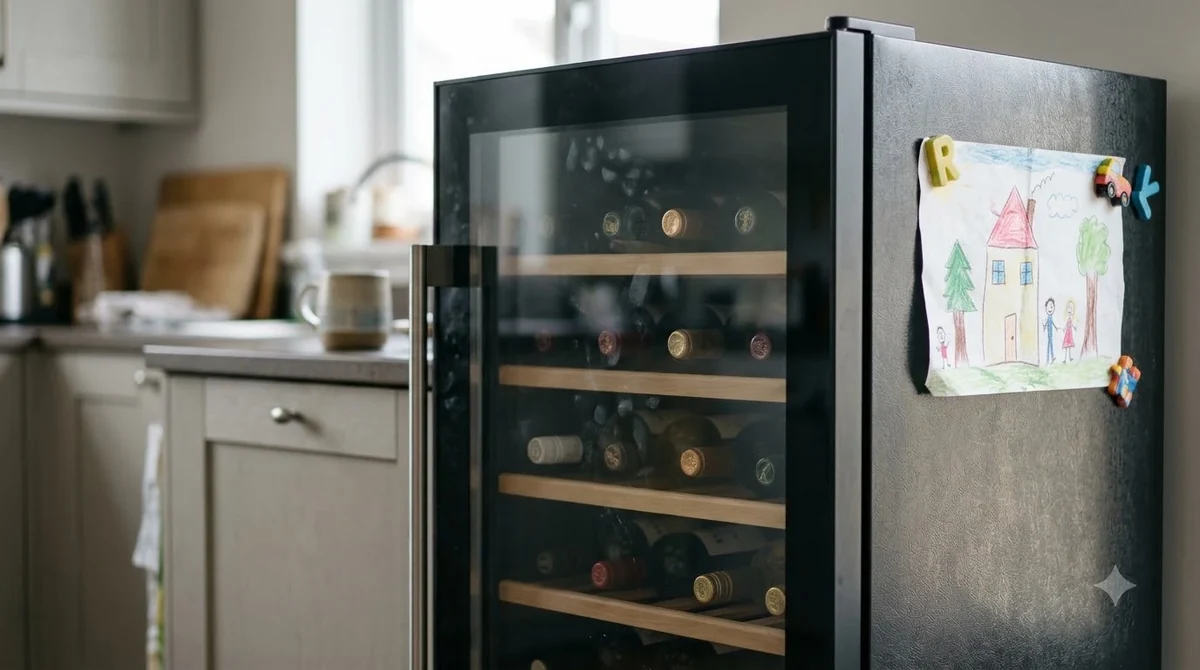
Wine Enthusiast identifies roughly 55°F as a useful storage target and notes that temperature is a major factor in wine’s development. Purdue Extension gives 50°F to 60°F as a long-term storage range. A steady spot near the middle of that band helps slow development; it is preferable to a cupboard that becomes hot every afternoon and cools dramatically overnight.
Light is another avoidable problem. Direct sunlight and ultraviolet exposure can alter a wine’s structure and aromas, so choose a dark pantry, interior closet or wine cabinet instead of a shelf beside a window. Keep bottles away from ovens, radiators and water heaters; in a warm home, a wine refrigerator is more dependable for long storage than a standard refrigerator, which is often around 40°F.
For natural-cork bottles, store them on their sides so the cork remains in contact with the wine. Wine Enthusiast notes that humidity around 50% to 80% helps keep corks from drying out, while excess humidity can damage labels and encourage mold. Avoid vibration and strong odors such as paint or cleaning products. Its wine storage advice also explains why a calm, dark cupboard may suit a bottle for short-term holding, while longer aging calls for more stable conditions. A standard refrigerator is useful for brief chilling, but its dry air and low temperature are not ideal for years of storage. For a multi-year hold, choose a stable wine-storage environment; packaging also changes the question, so compare how long does boxed wine last unopened before choosing a format for a later occasion.
Tip: If your home regularly gets warmer than 70°F, do not keep an age-worthy Merlot in the kitchen or near an exterior window. Move it to the coolest dark interior space available, or use a wine refrigerator set near 55°F for bottles you plan to hold for several years.
Heat Damage and Closure Problems Above 75°F
Heat can shorten Merlot’s useful life even when the bottle has never been opened. Sustained warmth accelerates maturation, while sharp temperature swings can stress the closure and allow air to enter the bottle.
Purdue Extension warns that temperatures above 75°F can age wine unusually and alter aroma, flavor and color; it also advises against even brief exposure to 86°F or higher during distribution. These are not precise spoilage timers, but they explain why a hot car, sunny windowsill, attic or garage is a poor storage place.
Look at the bottle before opening it. Wine that has seeped around the cork, a capsule with sticky residue, a cork that appears to have pushed upward, or a fill level that seems unusually low can indicate heat exposure or a compromised seal. A damaged label alone does not establish that the wine is spoiled, but leakage or a displaced cork deserves attention. Temperature changes can make wine expand and contract, putting pressure on the closure and increasing the chance of air entering the bottle.
There is no reliable way to judge the full condition of a sealed bottle by sight alone. After opening, check the aroma and taste rather than relying only on age. An older Merlot may show dried fruit, earth, tobacco or softer fruit character; a wine damaged by heat or oxidation may smell flat, bruised, stewed or sharply vinegary. Merlot can also shift from deep ruby toward garnet or brick tones and lose some brightness as it ages. Those descriptors are clues, not a laboratory test: focus on whether the wine still has pleasant fruit, a balanced palate and an aroma free of obvious faults.
Opening and Serving Merlot at 55–65°F
Choose an opening date based on the wine’s style and the way it has been stored, then serve it at a temperature that preserves its fruit without making the alcohol feel too warm. A lighter Merlot is generally best around 55°F to 60°F, while a fuller-bodied style can be served around 60°F to 65°F.
If the bottle is an everyday Merlot with a recent vintage, there is usually little benefit in waiting for more age. Its ripe plum, cherry and soft tannins work with roast chicken, pork, burgers, mushrooms, tomato-based pasta and grilled vegetables. Richer versions can suit beef, lamb or duck, while delicate Merlot may be overwhelmed by heavily charred or very spicy food.
For a young, full-bodied red that seems closed or firm, decanting for 30 to 60 minutes can soften its first impression and allow aromas to open. A lighter, older Merlot may need less air, not more; prolonged exposure can make delicate fruit fade. Pour carefully if the wine has been stored for many years, because mature reds can develop sediment. The goal is to separate any deposit from the wine without aggressively aerating a bottle that is already mature.
Temperature changes the impression of alcohol, acidity and texture: a red served too warm can seem heavy, while one served too cold can feel muted and firm. A brief chill is often enough to bring a room-temperature bottle into range. A 750-milliliter bottle yields about five 5-ounce pours, so modest servings are enough to appreciate its aroma and texture. Once opened, Merlot follows a different clock: replace the closure promptly, refrigerate the remaining still wine and aim to finish it within about 3 to 5 days. Oxygen gradually changes the fruit and aroma, so an opened bottle cannot return to long-term cellar storage. For a wider overview of grape styles, browse Wine by Type.
Frequently Asked Questions
How much alcohol does Merlot usually contain?
Wine Enthusiast notes that Merlot from cooler regions such as France often sits around 13% to 14% alcohol by volume, while bottles from warmer regions such as California, Chile and Australia can approach 14.5%. Climate influences grape ripeness and final alcohol, but alcohol percentage alone does not establish a wine’s aging potential.
Can Merlot with a screw cap be stored upright?
Yes. A screw cap does not rely on wine touching a natural cork to keep the closure from drying out, so upright storage is generally suitable. The closure does not determine whether the wine itself is age-worthy; the wine’s structure and its storage history remain the deciding factors.
Is sediment in an older Merlot a sign that it has spoiled?
Not necessarily. Red wine can form a harmless deposit as tannins and tartrates combine and settle during bottle aging. The deposit may look like fine crystals or dark material at the bottom of the bottle, so it is best left behind when pouring rather than stirred into the glass.
Can an unopened Merlot freeze?
Yes. Purdue Extension notes that wines at or below about 23°F can begin to freeze when they contain 14% alcohol by volume or less. Expansion can push the cork outward and may eventually break the bottle, so an unheated freezer, winter vehicle or exposed outdoor storage area is not appropriate for wine.
Why can two Merlots from St-Émilion have different aging potential?
St-Émilion contains several distinct vineyard areas, including a limestone plateau, clay-limestone hillsides and sandy sites. Their soils influence vine water supply, berry concentration and the resulting wine style, so bottles from the same appellation can have very different structures and drinking windows.
The best approach is to treat the 2-to-5-year range as a starting point for everyday Merlot and reserve longer cellaring for wines with clear structure and producer guidance. Keep the bottle cool, dark and still, then open it when its likely drinking window matches the occasion rather than waiting simply because it remains unopened.
More in Wine Types & Grapes
 Zinfandel Sugar Content: Dry Red vs. White Zinfandel GramsUpdated Nov 21, 2026
 Best Zinfandel Substitute Options for Sipping and CookingUpdated Nov 21, 2026
 Zweigelt Food Pairing: Best Dishes, Cheeses, and Serving TipsUpdated Nov 21, 2026
 Zinfandel Tannins Explained: How Structure Shapes Every BottleUpdated Nov 21, 2026
 Zinfandel Sweetness Level: Dry Red vs. Sweet White Zin ExplainedUpdated Nov 21, 2026
 Xinomavro Food Pairing: Best Dishes, Styles, and Serving TipsUpdated Nov 21, 2026