

We may earn a commission when you buy through links on this page, at no extra cost to you. Learn more.
The hermitage wine region is the small Northern Rhône appellation built around a steep, south-facing hill above Tain-l’Hermitage, best known for structured Syrah reds and rich, age-worthy Marsanne-Roussanne whites. Its vineyards sit on the east bank of the Rhône in France’s Drôme department, where granite, limestone, loess, and river deposits create distinct expressions within a compact area. Knowing the hill’s geography, grape rules, and main vineyard sites makes it easier to choose between a powerful red, a textured white, and the rare sweet wine called vin de paille.
Hermitage is a place-name as well as a protected wine appellation, and the label points to a specific hillside rather than a broad regional blend. This guide explains where the vineyards lie, what the principal grapes contribute, how the wines develop, and how to serve them with food.
Location, Scale, and Appellation Boundaries
Hermitage occupies a single, landmark hill on the east bank of the Rhône, directly above Tain-l’Hermitage in the Northern Rhône. The appellation was officially recognized in 1937 and covers vineyards in three Drôme communes: Tain-l’Hermitage, Crozes-Hermitage, and Larnage.
The area is small by French wine-region standards. Published estimates vary: the Ardèche Hermitage tourism organization describes roughly 130 hectares, while Decanter’s vineyard profiles give figures in the 136-to-140-hectare range. These differences do not change the central point: Hermitage is a compact appellation whose reputation rests on one hill, not an expansive growing district. Its slopes face south and receive strong sunlight, creating a warm local mesoclimate within the broader Northern Rhône.
The Rhône separates the hill from the Ardèche granite landscape opposite, and the vineyards form a striking visual landmark above the town. Terraces and retaining walls follow the slope’s contours, allowing vines to grow on terrain that would otherwise be difficult to cultivate. The hillside was designated a protected national heritage site in 2013, a recognition of its cultural landscape as well as its winegrowing history.
Hermitage belongs to the 17 crus of the Côtes du Rhône, but it should not be confused with the larger neighboring Crozes-Hermitage appellation. Crozes-Hermitage surrounds the hill and includes a much broader range of terrain. The distinction matters when reading a label: a bottle marked Hermitage comes from the tightly delimited hillside area and must meet that appellation’s rules.
Granite, Limestone, and the Shape of the Hill
Hermitage’s character comes from a mix of soils and exposures packed into a south-facing slope. The western quarter is primarily granitic, while the central and eastern sections contain more limestone, glacial material, loess, clay, and alluvial deposits from the Rhône.
Les Bessards is the best-known granitic site on the western flank. Decanter describes the granite section as roughly 25% of the hill, with shallow, decomposed granite and pale gravelly sand. Syrah from Les Bessards often produces a firm, concentrated wine with a mineral impression, tightly held tannins, and the structure to mature slowly. Producers including Delas, Bernard Faurie, and M. Chapoutier have bottled wines from this site.
Le Méal, in the central section, has a warmer exposure and a different geological profile. Limestone, compacted glacial deposits, and rounded river stones called galets roulés help produce a broad, early-ripening style. Its reds are often described through ripe blackberry fruit and a generous, muscular texture. Les Greffieux, lower on the slope, combines clay, silt, sand, and alluvial stones; its wines tend to be rounder and juicier than those from Le Méal.
Other sites add further variation. The highest part of Les Grandes Vignes reaches about 325 meters and is associated with a more lifted, elegant expression. L’Hermite is especially instructive because its western portion is granitic while its eastern portion has loess soils, a reminder that a single named vineyard can contain more than one soil type. These site differences explain why two Hermitage wines made from the same grape can feel quite distinct.
Syrah, Marsanne, and Roussanne: The Appellation’s Grapes
Syrah is the defining grape of red Hermitage, while Marsanne and Roussanne make the appellation’s white wines. The regulations also permit a limited proportion of the white grapes in red wine, although many modern reds are made entirely from Syrah.
For red Hermitage, Syrah must account for at least 85% of the blend, so Marsanne and/or Roussanne may make up no more than 15%. In practice, including white grapes is uncommon: many producers bottle 100% Syrah. The permitted blend is a useful point of difference from the way some other Northern Rhône reds are traditionally made, but it should not lead buyers to expect white grapes in every bottle.
White Hermitage is made from Marsanne, Roussanne, or a combination of the two. Marsanne is the more common variety and gives the wine much of its breadth, weight, and nutty fruit; Roussanne contributes floral detail, aromatic complexity, and a balancing line of freshness. The result is not a light, sharply acidic white. It is usually dry, full-bodied, and generous, with texture that can support roasted poultry, creamy dishes, and richer seafood.
The two varieties also shape the rare sweet style, vin de paille. For this wine, fully ripe Marsanne and/or Roussanne grapes are dried on straw mats or racks before pressing, concentrating their sugars and flavors. It is a specialty rather than the everyday face of the appellation, and production depends on suitable conditions and producer choices. The official INAO description of Hermitage confirms the red and white styles and notes the traditional straw-wine method.
Red Hermitage: Dark Fruit, Savory Detail, and Long Aging
Red Hermitage is a full-bodied, deeply colored Syrah with firm tannins, concentrated fruit, and savory complexity. Young bottles often show blackberry, blackcurrant, violet, black olive, black pepper, dried herbs, and smoke, while bottle age brings more earthy and game-like notes.
The wine’s structure is part of its appeal, but it also means that a young bottle may feel stern or tightly wound. Decanter notes that some reds are most approachable within their first four years or after about 10 years, with a quieter phase possible between those points. That is a broad drinking pattern, not a fixed timetable for every producer or vintage. A well-made bottle from a strong year can continue developing for 20 years, and exceptional examples may last 50 years or longer.
Vineyard origin helps explain different red styles. Les Bessards often contributes backbone, mineral tension, and fine but assertive tannin. Le Méal tends to bring a broader frame and ripe blackberry character, while Les Greffieux can add softer fruit and a more rounded feel. A traditional blend brings several sites together to build balance; a single-site bottling makes the character of one parcel easier to recognize.
At the table, red Hermitage suits lamb, beef, venison, duck, and dishes with roasted mushrooms or browned herbs. Its tannin responds well to protein and fat, so a grilled rib roast or slow-cooked lamb shoulder usually makes more sense than a delicate white fish. Strong chili heat can make the alcohol and tannin seem more prominent, so choose a milder preparation when the wine is young and powerful.
White Hermitage and the Rare Vin de Paille
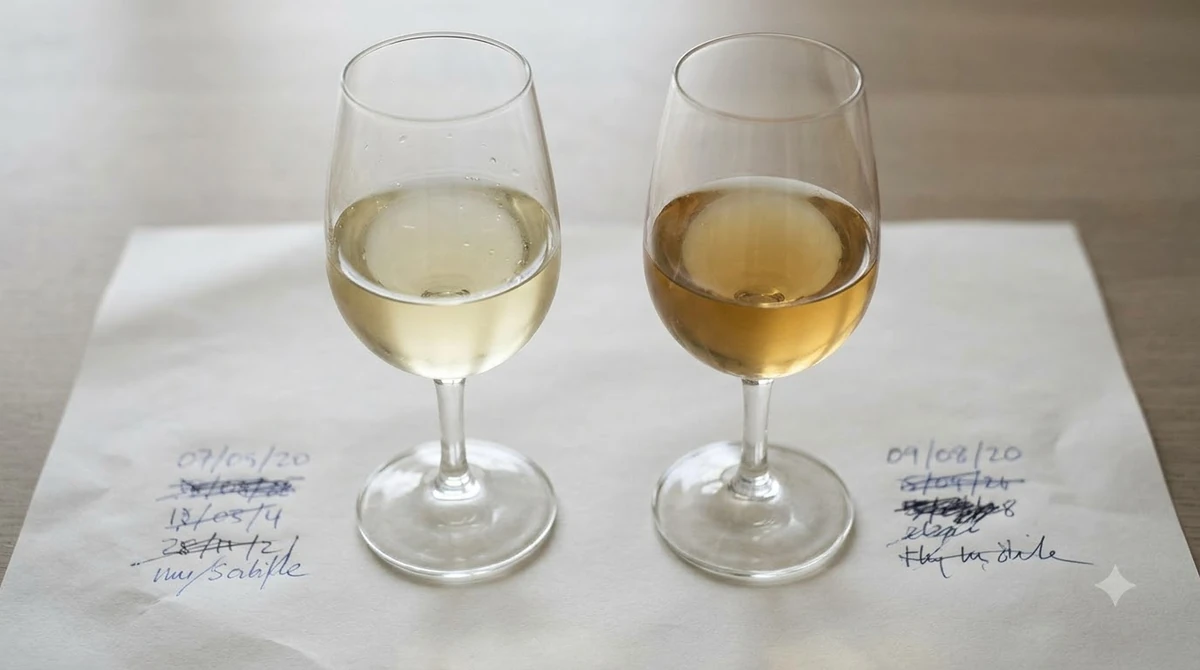
White Hermitage is a substantial, aromatic dry white rather than a crisp aperitif wine. Marsanne usually supplies the richer frame, while Roussanne adds floral notes and aromatic lift; with bottle age, the wines can develop honey, wax, quince, nuts, and baking-spice character.
Decanter describes Marsanne as far more common than Roussanne in these whites, with a practical ratio of roughly seven to one. The wines are generally dry, broad, and full in texture, with flavors that can include almond, hazelnut, pear, peach, apricot, quince, and ginger. Oak aging is common, but the best examples keep the fruit and site character in front rather than allowing wood to dominate.
White Hermitage can be enjoyed on release, yet many bottles gain complexity over 10 to 20 years; top examples may last longer. With age, fresh orchard-fruit notes can shift toward honey, barley sugar, toasted nuts, and spice. This development makes mature white Hermitage a useful alternative to mature red wine at a substantial meal, particularly when the dish has enough richness to match its texture.
Vin de paille is a separate, sweet expression made by drying Marsanne and/or Roussanne grapes before pressing. The process concentrates sugar and flavor, producing a small-volume wine with an intense profile that may suggest dried apricot, honey, quince, and nuts. Serve it with a dessert at least as sweet as the wine, or with blue cheese; a dessert that is sweeter than the wine can make the wine taste thin or sharp.
Serving Temperatures, Decanting, and Food Pairing
Serve red Hermitage slightly cooler than room temperature and white Hermitage cool but not icy. A young, structured red can benefit from 30 to 60 minutes in a decanter, while an older bottle may need gentler handling and less air.
Use the following temperatures as practical starting points. They allow the red’s savory detail to show without making the alcohol seem too warm, and give the white enough warmth to reveal its aromas and full texture.
| Wine style | Serving temperature | Service guidance |
|---|---|---|
| Red Hermitage | 60–65°F | Decant a young, full-bodied bottle for 30–60 minutes. |
| Dry white Hermitage | 50–55°F | Let the wine warm slightly in the glass to reveal its texture. |
| Vin de paille | 43–50°F | Serve with a dessert at least as sweet as the wine. |
A standard 5-ounce pour is a useful measure for still wine; a 750-milliliter bottle holds about five such glasses. For red Hermitage, pair the wine with grilled lamb, roast beef, duck breast, venison, or lentils with mushrooms. Salt and fat soften the impression of tannin, which is why a well-seasoned roast can make a young red feel more balanced.
White Hermitage works with roast chicken, pork with herbs, lobster, scallops, and rich fish dishes. Its weight can stand up to browned butter, cream sauces, and roasted root vegetables, while the wine’s aromatics complement saffron, ginger, and gentle spice. Avoid pairing its lower-acid, broad texture with a dish built around very sharp vinegar or aggressive citrus; the food can make the wine seem flat.
Tip: Open a young red Hermitage 30–60 minutes before serving, but taste it first. If the wine already seems open and expressive, a long decant may not add anything; if it feels tight and tannic, give it more time in the glass.
Choosing a Bottle and Understanding Vineyard Names
Start by deciding whether you want a blended Hermitage or a wine from one named vineyard site. A blend can combine the structure of granite with the roundness of limestone and alluvial soils, while a single-site bottling offers a more focused look at one part of the hill.
Most Hermitage was traditionally blended from different parcels, but single-vineyard bottlings became more common from the 1990s onward. Producers associated with this approach include M. Chapoutier, Delas, Ferraton Père & Fils, and Domaine Bernard Faurie. Domaine Jean-Louis Chave is a prominent example of a producer known for blending parcels from across the hill. These are useful names to recognize, but producer style and vintage still matter more than a label’s prestige alone.
Look for site names such as Les Bessards, Le Méal, Les Greffieux, L’Hermite, Les Grandes Vignes, and Les Rocoules. They are lieux-dits, or named vineyard places, rather than separate appellations or a formal quality ranking. A label naming Les Bessards signals a different soil context from one naming Le Méal, but neither word guarantees that every wine from the site will taste identical. Producer choices in harvest timing, extraction, oak use, and blending also shape the final wine.
Hermitage is distinct from the surrounding Crozes-Hermitage wine region, even though the two names share the same hillside landscape. For a broader comparison with mountain-influenced French wines, the Savoie wine region offers a very different set of grapes and styles. The wider Wine Regions directory can help place both appellations in the context of France and the rest of Europe. For a first bottle, choose a classic red blend if you want the appellation’s full structure, or choose a white Hermitage if you prefer richness without red-wine tannin. A single-site wine is especially useful when you already know whether you enjoy the firmer, more mineral character associated with granite or the riper, broader style of warmer eastern sites. The detailed Decanter survey of Hermitage’s vineyard sites is a helpful reference for understanding these distinctions.
Frequently Asked Questions
How many named vineyard sites are there in Hermitage?
Decanter’s site-by-site survey identifies 20 lieux-dits on the hill. These names describe individual vineyard places and their soils; they are not 20 separate appellations or a formal ranking system.
Was Hermitage red wine ever used in Bordeaux blends?
Yes. In the 18th and 19th centuries, Hermitage red was used to add depth and strength to some Bordeaux wines. This historical practice helped build the reputation of Syrah from the Rhône well beyond its home region.
Was white Hermitage once more famous than red?
White Hermitage was highly prized in aristocratic circles during the 17th century and was sometimes more celebrated than the red. The balance of attention has since shifted, but the appellation’s history includes both colors as prestige wines.
Can the appellation name appear as Ermitage?
Yes. INAO explains that the protected name may be written Hermitage or l’Hermitage, with or without the initial H. The spelling does not make an unrelated wine eligible to use the appellation.
Does Hermitage produce rosé wine?
No. The Hermitage appellation covers red and white wines, not a rosé category. That distinction is part of the appellation’s defined identity and production rules.
Hermitage rewards attention to both grape and place: Syrah gives the reds their depth, while Marsanne and Roussanne create whites with real structure and longevity. Compare the hill’s vineyard names, serve each style at the right temperature, and the differences between its granite, limestone, and alluvial sites become much easier to understand.
More in Wine Regions
 Willcox Wine Trail: Discover Arizona’s High-Elevation Wine CountryUpdated Nov 20, 2026
 Yakima Valley Wine Region: Find the Best Styles to TryUpdated Nov 20, 2026
 Vosne Romanee Wine Tasting: Identify Aromas and Choose Better PairingsUpdated Nov 20, 2026
 Yakima Valley Wine Festival: Find the Best Seasonal Wine EventsUpdated Nov 20, 2026
 Wales Vineyards: Discover Cool-Climate Wines and Where to VisitUpdated Nov 20, 2026
 Yountville Wine Festival: Discover Napa Wines and Local FoodUpdated Nov 20, 2026