

We may earn a commission when you buy through links on this page, at no extra cost to you. Learn more.
In Colorado, grand valley wine comes from the Grand Valley AVA, a high-desert wine region on the Western Slope where vineyards around Palisade and Grand Junction produce expressive reds and whites at roughly 4,000 to 4,500 feet. The region is known for Cabernet Franc, Merlot, Riesling, Syrah, and Viognier, with a style shaped by intense sun, cool nights, dry air, and a short growing season. Its wines can feel both ripe and lively, making Grand Valley a distinctive place to explore Colorado wine.
Colorado’s Grand Valley offers a different picture of American wine country: red-rock mesas, orchards, the Colorado River, and vineyards that must manage both altitude and winter cold. Understanding the AVA’s location, climate, leading grapes, and tasting options makes it easier to choose bottles and plan a visit.
Where the Grand Valley AVA Begins and Ends
The Grand Valley AVA is a federally recognized wine-growing area in Mesa County on Colorado’s Western Slope, centered on the communities of Grand Junction, Fruita, and Palisade. It was established in 1991 and covers approximately 76,000 acres, although only a small fraction of that land is planted to wine grapes.
The appellation follows a defined boundary rather than describing every vineyard in western Colorado. Its western reach approaches Fruita and the Colorado National Monument, while its eastern end includes Palisade and the agricultural land near Clifton. The Colorado River and the Gunnison River meet near Grand Junction, and the river corridor is an important geographic feature within the wider valley. The federal boundary description places the entire AVA inside Mesa County; nearby wine areas in Delta County belong to a different appellation.
That distinction matters when reading a bottle label or planning a tasting trip. A winery may be in the broader Western Slope region without its vineyard source being inside the Grand Valley AVA. The neighboring West Elks AVA lies farther southeast around Paonia and Hotchkiss, along the North Fork of the Gunnison River. It is a separate appellation with its own growing conditions and local identity.
The AVA stretches roughly 118 miles across western Colorado, with vineyards on valley floors, terraces, and slopes near mesas. Palisade is a convenient base for tasting rooms and orchards, while Grand Junction offers more restaurants and access to the Colorado National Monument.
High Elevation, Dry Air, and a Short Growing Season
Altitude is one of the clearest influences on Grand Valley grapes: many vineyards sit between about 4,000 and 4,500 feet, where intense sunlight and large day-to-night temperature changes shape ripening. The area is arid, and growers must plan carefully for irrigation, spring frost, and winter freezes.
Bright high-altitude sunlight can help grapes reach full flavor, while cooler nights can slow the loss of natural acidity. The Colorado Association for Viticulture and Enology describes the state’s grape-growing conditions as a combination of high elevation, intense sunlight, and dramatic day-night temperature shifts; vineyards across the Grand Valley and West Elks AVAs span a broader range of roughly 4,000 to 7,000 feet. Its overview of Colorado grape growing explains why altitude is central to local wine styles.
The same conditions create risks. A short growing season leaves less time for late-ripening grapes to finish, and early autumn cold can interrupt harvest. Winter cold and spring frost can damage buds or reduce a crop, while hot, dry weather increases the need for reliable water. Wine Enthusiast reports that local growers depend on irrigation and must pay attention to water rights as well as frost. Soil depth, slope, exposure, airflow, and access to irrigation can all influence how vines perform from one site to another.
The Grapes That Define Grand Valley Wine
Grand Valley’s best-known grapes include Cabernet Franc, Merlot, Riesling, Syrah, and Viognier, but the regional mix is broader than a single signature variety. Rhône-style whites and reds share the landscape with Bordeaux grapes and cool-climate varieties, giving visitors several useful styles to compare.
Cabernet Franc and Merlot
Cabernet Franc is an important red grape in the AVA and is one of Colorado’s recognizable strengths. It can show cherry and other red-fruit notes, fresh acidity, and herbal or peppery accents, depending on site and winemaking. Wine Enthusiast’s regional profile describes Grand Valley Cabernet Franc as more cherry-toned and less graphite-driven than some East Coast examples. That fruit-forward profile can make it approachable when young, though structure and oak use vary by producer.
Merlot is another central red variety. In general, Merlot has medium tannin and a softer feel than Cabernet Sauvignon, so it can deliver dark cherry, plum, and gentle spice without the firm grip associated with more tannic reds. Some examples are made for early drinking, while more concentrated bottles can gain complexity with time. The grape’s presence in the region also gives visitors a familiar point of comparison when tasting less common Colorado varieties.
Syrah and Viognier
Syrah and Viognier connect Grand Valley with the Rhône Valley of France. Syrah can bring blackberry, plum, black pepper, and savory notes, with medium-plus to high tannin depending on ripeness and extraction. Viognier is an aromatic white grape often associated with peach, apricot, flowers, and a rounder texture. Decanter identifies Syrah, Viognier, and other Rhône varieties as successful choices for Grand Valley, alongside Bordeaux grapes such as Cabernet Franc.
Riesling and Other Whites
Riesling has long held a prominent place among Colorado white grapes. Its naturally high acidity can support dry, off-dry, and sweeter expressions, so it is worth checking the producer’s style rather than assuming every bottle tastes the same. Sauvignon Blanc and Chardonnay also appear in Palisade’s range, along with late-harvest Viognier and smaller experimental plantings. Some growers have explored cold-hardy hybrid varieties such as Vidal Blanc and La Crescent, both as stand-alone wines and as blending components, in response to the region’s winter challenges.
Palisade tasting rooms may also pour blends, rosé, sparkling wine, dessert wine, and fruit-based bottlings. For a first tasting, compare Cabernet Franc with Merlot, then try Riesling against Viognier; the differences in tannin, acidity, and aroma offer a practical introduction to the region’s range.
How Grand Valley Wines Taste and Age
Grand Valley wines often balance ripe fruit with freshness, rather than leaning only toward power or weight. The exact character depends on grape variety, vineyard elevation, vintage conditions, and winemaking choices, so tasting across several producers is more revealing than expecting one uniform regional flavor.
Red wines can offer vivid cherry, plum, blackberry, and pepper, while their structure differs by grape. Cabernet Franc tends to bring firmer acidity and a mix of red fruit with herbal detail. Merlot is usually softer, with medium tannin and a rounded middle palate. Syrah can be more savory and structured, with darker fruit and pepper. Cabernet Sauvignon, where produced, generally has higher tannin than Merlot or Pinot Noir, and can feel firmer when young. These are grape tendencies, not guarantees for every bottle.
White wines also cover more than one style. Riesling and Sauvignon Blanc generally have high acidity, which helps them stay refreshing alongside food. Viognier is more aromatic and can feel broader across the palate, while Chardonnay usually has medium acidity and can range from crisp and lightly oaked to richer versions with lees or barrel influence. Dryness and body should be judged separately: an aromatic wine is not necessarily sweet, and a fuller white does not automatically have low acidity.
Age-worthy potential depends on concentration, acidity, tannin, balance, and the producer’s choices. A structured Cabernet Franc or Syrah may develop secondary notes over several years, while a fresh Riesling may be most appealing for its primary fruit and snap. A concentrated Merlot can also gain complexity with bottle age. For young, full-bodied reds, a 30- to 60-minute decant can soften the first impression and let aromas open, although delicate or older wines may need less air.
Food Pairings and Serving Temperatures
Pair Grand Valley wine by matching weight, acidity, tannin, and sweetness with the dish. Cabernet Franc and Merlot are natural choices for grilled meats and savory vegetables, while Riesling and Viognier can work with poultry, spice, and dishes built around fruit or herbs.
Try Cabernet Franc with grilled lamb, burgers, roast pork, or mushrooms; its acidity can cut through rich flavors, while moderate-to-firm tannin handles protein and savory browning. Merlot suits meatloaf, grilled sausages, tomato-based pasta, and roasted eggplant. Syrah’s darker fruit and peppery character work with barbecue, braised beef, lamb kebabs, and smoky vegetables. Salt and fat soften tannin, while oily fish can clash with tannic reds.
Riesling’s acidity can balance salt, fat, and a little chili heat, making dry or off-dry examples useful with pork, roast chicken, spicy noodles, or ginger. Viognier’s floral aroma and stone-fruit character complement roast poultry and creamy vegetables. Sauvignon Blanc suits salads, goat cheese, green herbs, and seafood; Chardonnay can pair with roast chicken, corn, squash, and richer fish dishes. A wine should be at least as sweet as the dessert, and acidic foods need a wine with equal or higher acidity. Chili heat is amplified by alcohol and tannin, so choose a lower-alcohol, fruit-forward white rather than a high-alcohol Syrah or Cabernet Sauvignon with spicy food.
| Wine style | Serving temperature | Useful match |
|---|---|---|
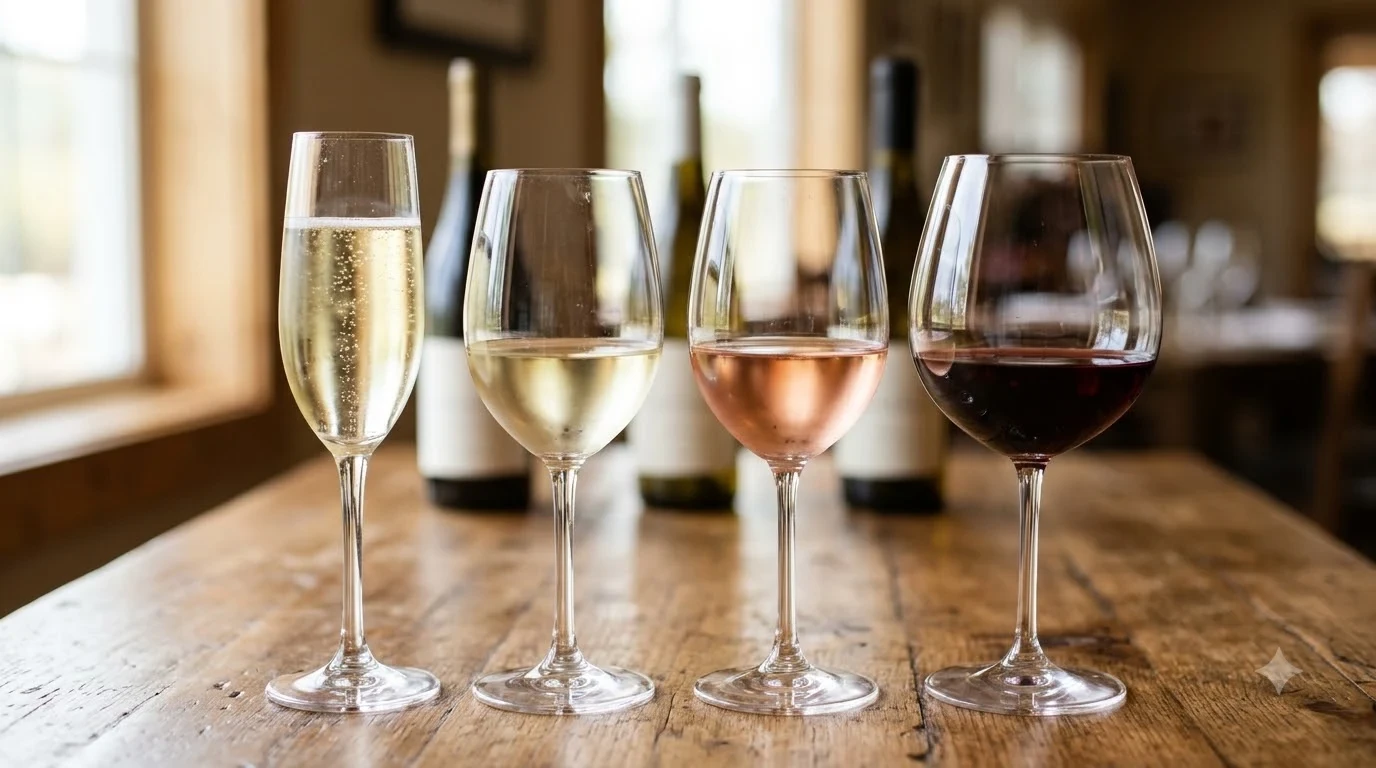
| Sparkling wine | 40–50°F | Salty snacks, fried appetizers, soft cheese |
| Light white or rosé | 45–50°F | Salads, shellfish, goat cheese |
| Fuller white | 50–55°F | Roast chicken, creamy vegetables |
| Sweet white | 43–50°F | Fruit desserts, blue cheese |
| Light red | 55–60°F | Salmon, roast pork, mushrooms |
| Full-bodied red | 60–65°F | Grilled lamb, beef, braised dishes |
Temperature changes how a wine feels: a white served too cold may hide aroma, while a red served too warm can seem alcoholic and heavy. Chill whites and rosé in advance, allow fuller whites a few minutes out of the refrigerator before pouring, and serve full reds slightly cooler than a heated room.
Tip: Pour about 5 ounces per glass from a standard 750-milliliter bottle, which provides roughly five servings. Store unopened bottles on their sides in a cool, dark place near 55°F, and refrigerate opened still wine for about 3 to 5 days.
Tasting Rooms, Harvest, and Planning a Visit
Palisade is the most convenient starting point for a Grand Valley tasting trip, with more than 30 wineries in and around the community and its Fruit and Wine Byway. Grand Junction offers another base, especially for travelers who want restaurants, lodging, and access to the Colorado National Monument in the same visit.
Many Palisade wineries pour several categories, so a flight might include Cabernet Franc, Merlot, Syrah, Riesling, Viognier, rosé, or sparkling wine. The local visitor directory lists producers such as Bookcliff Vineyards, Carlson Vineyards, Colterris, Grande River Vineyards, and Varaison Vineyards. Hours and tasting formats vary by winery and season; some locations ask groups to book ahead, so review each winery’s own visitor information before setting out.
The Fruit and Wine Byway combines tasting rooms with orchard stops and local food. A bicycle can work for short distances around Palisade, but the route uses public roads and working agricultural areas. Plan a sober ride, stay on public roads and marked paths, and bring water and sun protection in summer. Our overview of Grand Valley wine country connects the towns, tasting areas, and local landscape.
September is a popular time to visit because harvest activity is underway and the Colorado Mountain Winefest takes place in Palisade. The festival lets visitors compare producers in one setting; winery visits outside the event can offer more direct conversation about vineyard sites and current releases. Event dates and tasting formats can change, so use the guide to the Grand Valley wine festival when planning around the annual celebration. For a relaxed visit, reserve two or three tasting stops instead of trying to fit every winery into one day, and use our overview of Wine Regions to compare Colorado with other American appellations.
Frequently Asked Questions
How early did irrigation shape agriculture in Grand Valley?
Settlers began digging irrigation ditches soon after arriving in 1881, and the Grand Valley Canal was completed in 1886 to serve about 45,000 acres. The federal Grand Valley Project began delivering irrigation water in 1917, supporting orchards and other crops as well as vineyards.
What does AVA mean on a Grand Valley wine label?
AVA stands for American Viticultural Area, a federally defined grape-growing region. Its designation identifies a delimited place of origin; approval does not certify that every wine from the area has a particular quality level or flavor.
Which towns are named in the official Grand Valley boundary?
The boundary description uses reference points near Palisade, Clifton, Grand Junction, and Fruita, as well as the Colorado National Monument and local canals and roads. It is defined using six U.S. Geological Survey 7.5-minute topographic maps at a 1:24,000 scale.
Is Grand Valley the only American wine region with “Grand” in its name?
No. Ohio’s Grand River Valley AVA is the other U.S. appellation identified by Wine Enthusiast as having “Grand” in its name. The two regions are in different states and have distinct growing conditions.
Why are peaches and other fruit associated with Palisade?
The Bureau of Reclamation notes that high cliffs at the eastern end of the valley near Palisade help protect the area from frost. That protection supports apple, peach, and pear orchards, which give the town an agricultural identity beyond wine grapes.
Grand Valley is a compelling region for drinkers who enjoy discovering how place shapes a familiar grape. Start with Cabernet Franc, Merlot, Riesling, or Syrah, then compare producers and vintages to find the styles that suit your table. A visit to Palisade or a bottle shared at home offers a vivid introduction to Colorado’s high-elevation wine culture.
More in Wine Regions
 Willcox Wine Trail: Discover Arizona’s High-Elevation Wine CountryUpdated Nov 20, 2026
 Yakima Valley Wine Region: Find the Best Styles to TryUpdated Nov 20, 2026
 Vosne Romanee Wine Tasting: Identify Aromas and Choose Better PairingsUpdated Nov 20, 2026
 Yakima Valley Wine Festival: Find the Best Seasonal Wine EventsUpdated Nov 20, 2026
 Wales Vineyards: Discover Cool-Climate Wines and Where to VisitUpdated Nov 20, 2026
 Yountville Wine Festival: Discover Napa Wines and Local FoodUpdated Nov 20, 2026