

We may earn a commission when you buy through links on this page, at no extra cost to you. Learn more.
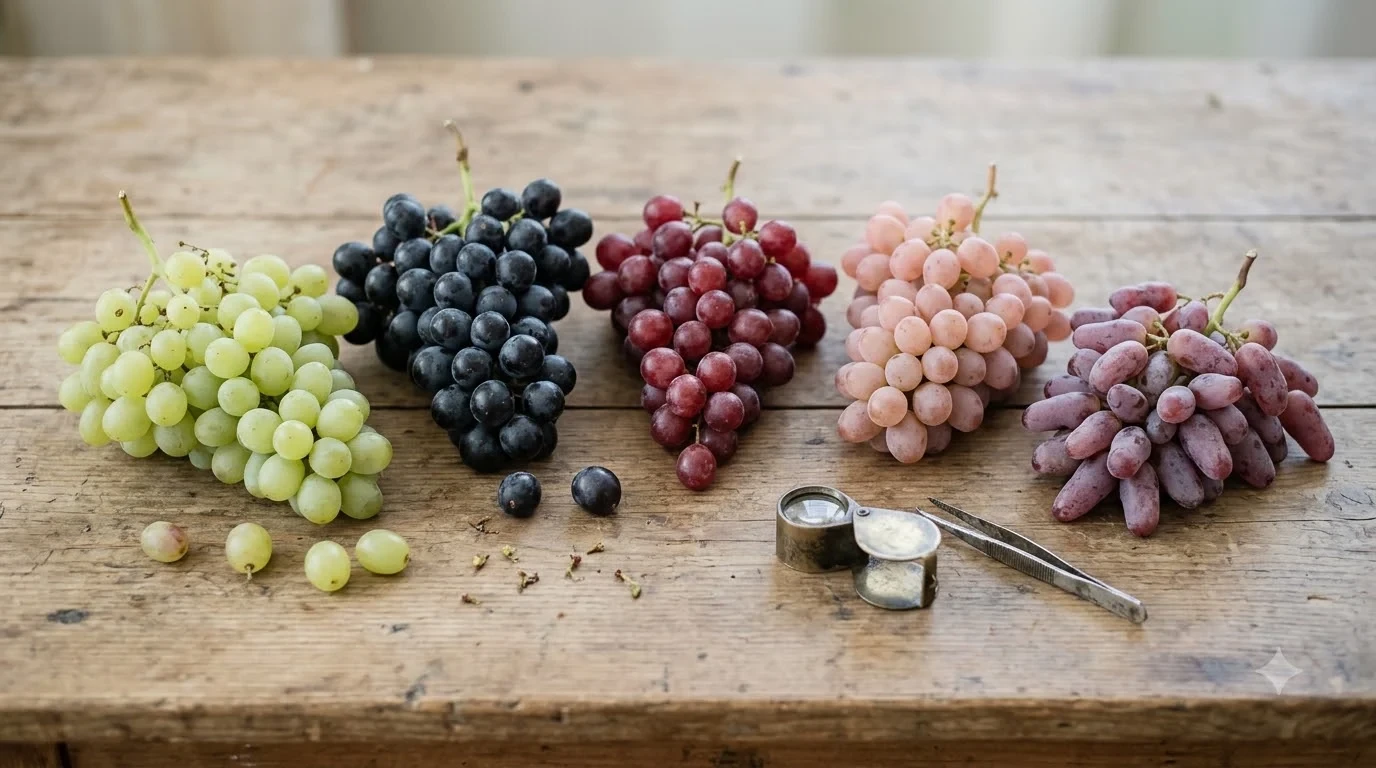
Graciano grape is a red variety from Spain, grown mainly in Rioja, where it is valued for deep color, strong aroma, and the ability to age. The vine yields little fruit and is considered disease-prone, so it is planted in limited amounts. Most Graciano ends up in blends, though some producers bottle it on its own. Outside Spain it appears in France, Australia, California, and several other regions.
This guide covers where Graciano grows, what its wines taste like, why Rioja producers blend it, and how to recognize it on a label. If you have seen the name on a bottle from Spain and wondered whether it is a separate style, the answer is that it is a grape in its own right, even though it often plays a supporting role.
Where Graciano Grows
Spain is the grape’s origin, and Rioja is its main home. Navarra also uses it, and the variety is planted in other parts of the world as well. The grape has a long list of synonyms, including Morrastel, Cagnulari, Xeres, Courouillade, Grosse Negrette, Tintilla, and Minustello. Several of these are regional names, such as Morrastel and Courouillade in France and Minustellu in Corsica.
Within the Rioja appellation the grape covers a small area. According to the overview of Graciano on Wikipedia, it covers about 395 hectares, roughly 0.7 percent of the appellation’s plantings. That small footprint is one reason the grape is more often discussed by specialists than by casual wine drinkers.
| Region | Role of Graciano |
|---|---|
| Rioja, Spain | Main home; mostly a blending partner, with some varietal wines |
| Navarra, Spain | Used in local red wines and blends |
| Languedoc-Roussillon and Corsica, France | Grown under regional synonyms |
| Australia | Blended with Tempranillo or bottled on its own |
| California and several US states | Planted in smaller amounts, including Arizona, Texas, Oregon, and Washington |
| Argentina | Grown in limited plantings |
Flavor, Color, and Style
Graciano is known for a deep red color and a strong, distinctive aroma. Its wines are often described as structured rather than soft, with the kind of firmness that helps a bottle develop over time. Because the grape produces less fruit per vine than many common reds, the concentration in each berry can be high, which adds to the color and body.
Descriptions of the wines vary, but the grape is generally discussed in terms of structure and depth rather than soft, sweet fruit. Exact flavors depend on the vineyard, the vintage, and how the wine is aged, so a Graciano from one producer may taste quite different from another. The best way to learn the style is to compare two or three bottles side by side.
Graciano in Rioja Blends
In Rioja, Graciano is mainly a blending partner. It is a key component of Gran Reservas in Rioja and Navarra, where it adds structure and aging potential to a wine that might otherwise rely on Tempranillo alone. Blending it with the region’s dominant red grape helps balance softness with firmness, which is what many producers look for in a wine meant to rest in the cellar.
Some Rioja producers also make wines that are labeled as Graciano. These bottles are less common, so they are often a good way to taste the grape on its own. When you see Graciano on a blend, the producer is usually using it for depth and backbone rather than for a loud fruit profile.
Growing Graciano
The vine is a challenge in the vineyard. It yields little fruit, which keeps production small and makes each harvest costly to plan. It is also considered disease-prone, so growers need careful management to keep the crop healthy. According to the same reference, the grape does best in warm, arid climates, which helps explain why Spain’s dry interior and some hot regions outside Europe suit it.
Harvest timing matters as well. Graciano is usually picked late in the season, often in late October, so the grape has time to build sugar and flavor. Growers who plant it outside Spain need a site with enough warmth and sun for the fruit to ripen before cool weather arrives.
How to Serve and Pair Graciano
Graciano is a red that benefits from a little breathing and a serving temperature slightly below room temperature, rather than warm. A short wait in the glass helps the aromas open, and a wider glass gives the wine more room to show its color and bouquet. Decanting is optional for most bottles, but a few older Gran Reservas can throw sediment and may be better poured carefully.
The wine’s structure makes it a good partner for grilled and roasted meats, especially lamb, beef, and dishes with a smoky or herbal seasoning. It also works with hearty stews and sausages. Lighter fish and delicate vegetable dishes tend to be overpowered, so save the bottle for food with some weight.
Tip: Look for “Gran Reserva” or “Reserva” on a Rioja label when you want a bottle with time in barrel and bottle. Graciano often appears in these blends, so the label is a useful clue.
Graciano Compared with Tempranillo
Tempranillo is the best-known red grape of Rioja, and most people who buy a Rioja bottle expect its dominant flavors and structure. Graciano sits alongside it in the blend and tends to bring a different set of qualities. Where Tempranillo is often the main voice, Graciano is more often the supporting part that adds color, aroma, and firmness.
That contrast is why a small amount of Graciano can change a blend noticeably. A wine built mostly on Tempranillo may feel rounder and softer, while the same wine with Graciano in the mix often shows more depth and a longer finish. Producers use this balance deliberately, so the proportion of each grape is one of the main differences between one Rioja and another.
For a buyer, the comparison is useful in practice. If you enjoy a Rioja that feels fruit-forward at a young age, a bottle with more Tempranillo may suit you. If you prefer a wine that tightens and develops over several years in the cellar, look for a Reserva or Gran Reserva where Graciano is named or described as a component. Tasting a Tempranillo-led Rioja and a Graciano-led one at the same meal is one of the clearest ways to learn the difference.
Because Graciano is planted in limited amounts, it is less common on the shelf than Tempranillo. That scarcity is part of its appeal for people who want to explore lesser-known Spanish reds, and it is one reason Graciano-focused bottles are often mentioned by specialists before they become widely known.
Frequently Asked Questions
Is Graciano a grape or a wine style?
Graciano is a grape variety. The name refers to the vine and the wines made from it, and it is often used as a blending component in Spanish red wines.
Where is Graciano mainly grown?
Rioja in Spain is its main home, and Navarra also uses it. Smaller plantings appear in France, Australia, California, and other regions.
Why is Graciano used in Rioja blends?
Producers use it for structure, color, and aging potential. It is a key part of Gran Reservas in Rioja and Navarra, where it helps the wine develop over time.
Does Graciano age well?
Yes. The grape is known for its ability to age, which is one reason it appears in Gran Reserva blends that are meant to rest in the cellar before release.
Graciano is a grape that rewards attention, both in the vineyard and in the glass. If you want to explore related red varieties, see chambourcin grape for another red grown in a different style, or start with Wine by Type to compare the main groups of wine. For a neighboring Spanish profile, a Rioja label with Graciano is a good bottle to open with a meal.
More in Wine Types & Grapes
 Zinfandel Sugar Content: Dry Red vs. White Zinfandel GramsUpdated Nov 21, 2026
 Best Zinfandel Substitute Options for Sipping and CookingUpdated Nov 21, 2026
 Zweigelt Food Pairing: Best Dishes, Cheeses, and Serving TipsUpdated Nov 21, 2026
 Zinfandel Tannins Explained: How Structure Shapes Every BottleUpdated Nov 21, 2026
 Zinfandel Sweetness Level: Dry Red vs. Sweet White Zin ExplainedUpdated Nov 21, 2026
 Xinomavro Food Pairing: Best Dishes, Styles, and Serving TipsUpdated Nov 21, 2026