


We may earn a commission when you buy through links on this page, at no extra cost to you. Learn more.
Godinger red wine glasses are worth considering if you want decorative crystal stemware, generous bowl capacities, and several distinctive designs for serving red wine. The brand offers collections ranging from clear, ribbed Divo Optic glasses to colorful Amelia and Sheer designs. Most models use unleaded crystal, but their capacities, construction methods, and cleaning recommendations differ. The main consideration is fragility: attractive finishes and relatively delicate glass construction make careful handling important.
Choosing wine glasses involves more than finding an attractive shape. Bowl proportions affect how comfortably wine can be swirled, the rim influences the drinking experience, and the glass’s overall construction determines whether it suits frequent dinners or occasional entertaining. Godinger offers several approaches to these details, with traditional clear crystal, colored stemware, and decorative textured designs represented across its collections.
This review examines the company’s red wine glass options through published specifications and retailer feedback. It focuses on material, capacity, appearance, practical handling, and the differences between popular collections so buyers can identify a suitable set without assuming that every Godinger glass has the same construction or care requirements.
Specs and Key Features of Godinger Red Wine Glasses
Godinger red wine glasses are not one standardized product. The range includes different capacities, shapes, finishes, and manufacturing descriptions, so comparing individual collections is more useful than judging the entire brand by one design. The Divo Optic, Meridian, Sheer, and Amelia collections illustrate the range particularly well.
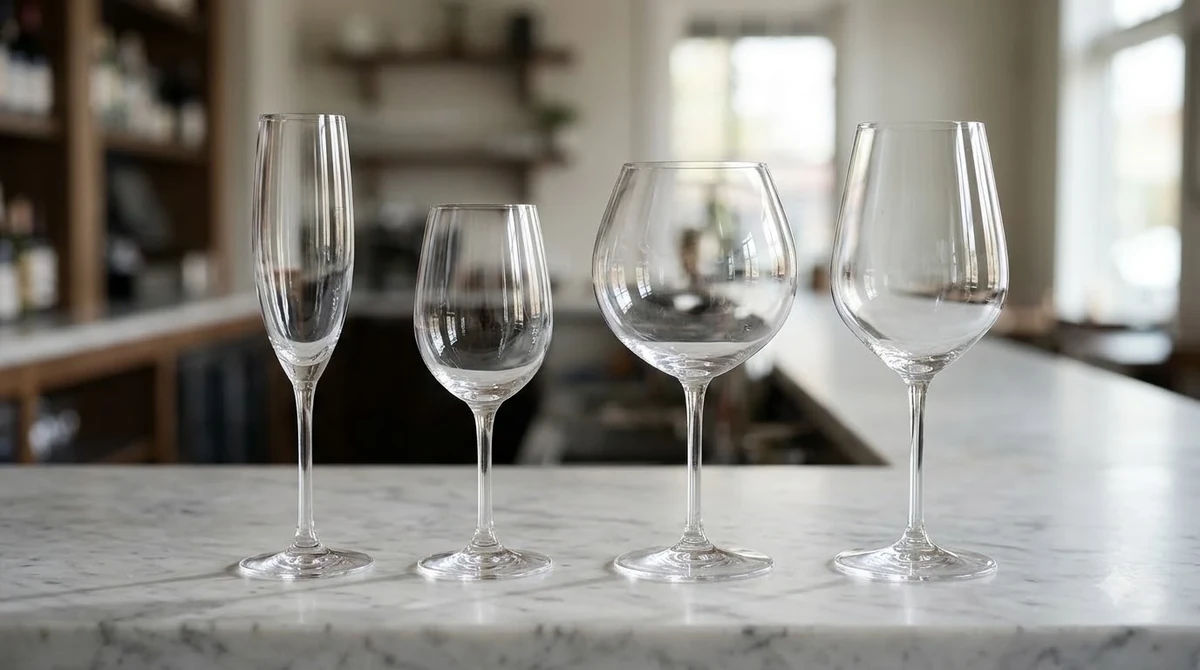
One important distinction is the meaning of crystal in these product descriptions. Several Godinger collections specify unleaded or non-leaded crystal, which is different from assuming that every product uses traditional lead crystal. Buyers who prioritize material composition should look for the stated construction of the exact collection rather than treating all crystal stemware as interchangeable. Godinger’s official Divo Optic red wine glass specifications provide a useful example of the manufacturer’s material, dimensions, and care information.
| Collection | Material and construction | Capacity | Dimensions | Care |
|---|---|---|---|---|
| Divo Optic | Handmade unleaded crystal | 17 oz | 2.62 x 3.25 x 9.75 in | Handwash recommended |
| Meridian | Semi-handmade unleaded crystal | 20 oz | 3 x 3 x 9.5 in | Handwash recommended |
| Sheer Stemmed | Non-leaded crystal | 19.5 oz | 3.74 x 3.74 x 9.09 in | Dishwasher safe according to Macy’s |
| Sheer Coral | Handmade unleaded crystal | 22.5 oz | 2.75 x 3.90 x 9.05 in | Handwash recommended |
| Amelia | Handmade lead-free crystal | 22.5 oz | 3.9 in wide x 9.05 in high | Handwash recommended |
The figures show why capacity alone should not determine a purchase. The 17-ounce Divo Optic has a taller, narrower profile than some other options, while the 19.5-ounce Sheer model combines a wider footprint with a shorter overall height. The 22.5-ounce Sheer Coral has a generous stated capacity, but a larger bowl does not automatically mean that a glass is better for every red wine.
For buyers who want a relatively versatile shape, the 20-ounce Meridian is an interesting middle ground. Its dimensions provide a substantial bowl without reaching the larger stated capacities of the Sheer Coral. Its clear appearance also makes it easier to coordinate with different dinnerware collections and table settings.
The Divo Optic takes a more decorative direction. Its vertical ribbing and faceted surfaces are designed to catch light, giving the glass a noticeable presence even when the table is not formally set. The manufacturer identifies it as handmade, while the Meridian is described as semi-handmade, an important distinction for shoppers comparing production descriptions.
For additional shape comparisons, the red wine glasses selection provides a broader context for evaluating bowl proportions, stem design, and everyday practicality.
What Owners Like About the Design and Drinking Experience
The clearest appeal of Godinger stemware is its decorative variety. Customers looking for glasses that contribute to a table setting, rather than functioning as anonymous drinkware, have several collections to consider. Retailer feedback on Amelia and Sheer highlights appearance, color, and the overall presentation as recurring reasons for satisfaction.
The Amelia collection is particularly distinctive because its color choices make it easier to coordinate stemware with a particular dining room or entertaining theme. AllModern describes its glasses as hand-blown, with a curved shape intended to feel delicate while remaining comfortable in the hand. Available colors include navy, lavender, magenta, mint, peach, rose, and sky blue.
Customer comments on AllModern praise the colors and appearance. Some purchasers describe the glasses as beautiful additions to their existing dinnerware, while others specifically mention their visual impact. This feedback suggests that Amelia is particularly appealing to buyers who want their glassware to contribute to the overall presentation of a meal.
The Sheer collection offers another approach. Rather than relying on prominent ribbing or elaborate faceting, it uses colored crystal to create visual interest. Macy’s identifies its Sheer Stemmed Wine Glasses as a set of four, with a 19.5-ounce capacity per glass. The available colored finishes give buyers an alternative to completely clear glassware.
Owners also appear to appreciate the size and shape of the Sheer glasses. Macy’s customer feedback includes positive comments about their appearance and substantial feel. One reviewer specifically describes the size and shape favorably, suggesting that the glasses can work well as decorative serving pieces as well as functional wine vessels.
Clear crystal remains an attractive option for buyers who prefer a more restrained appearance. The Meridian collection has a comparatively classic silhouette, while Divo Optic introduces a textured surface. These different designs give buyers a choice between a traditional-looking wine glass and a more contemporary statement piece.
Another practical advantage is the range of stated capacities. A 17-ounce bowl, a 20-ounce bowl, and a 22.5-ounce bowl offer different amounts of room for swirling. None requires a full glass of wine to make use of its shape. A standard serving of wine is approximately 5 ounces, leaving considerable space in all three examples.
That extra space matters for red wines because swirling releases aromatic compounds into the air above the wine. A glass with a sufficiently wide bowl can make this process more comfortable, particularly with aromatic Pinot Noir, Cabernet Sauvignon, and Syrah. A larger bowl can also be easier to hold by its stem without warming the wine through direct contact with the bowl.
For households that want decorative stemware for both formal dinners and relaxed gatherings, the visual variety is a meaningful strength. The main qualification is that an attractive appearance should not be mistaken for commercial-grade durability. Construction and handling still deserve careful consideration.
Common Complaints and Potential Drawbacks
The most important concern in the available owner feedback is breakage. Some customers appreciate the delicate appearance of Godinger crystal, but others describe particular glasses as very thin or report receiving damaged pieces. This makes packaging condition, handling, and cleaning practices important parts of the buying decision.
Macy’s customer feedback on the Sheer Stemmed Wine Glasses illustrates the mixed experience. Several comments praise the appearance and overall size, but another purchaser reports that half of the glasses in a delivered box were broken. That reviewer also describes the glass as extremely thin and expresses concern about its fragility during washing and normal use.
This is not proof that every Sheer set has a manufacturing problem. Shipping damage can occur with fragile glassware, and individual customer experiences do not establish a universal defect rate. Nevertheless, a buyer ordering delicate crystal should inspect the shipment promptly and avoid assuming that attractive packaging guarantees that every piece has arrived intact.
AllModern’s Amelia listing presents a similar contrast. Customers frequently praise the colors and appearance, but the retailer’s review summary also identifies concerns about thin material and breakage. This suggests that buyers who prefer thick, heavy tumblers may not find the delicate character of certain Godinger designs ideal.
There is also a difference between a manufacturer’s care recommendation and a retailer’s dishwasher designation. For example, Macy’s identifies the Sheer Stemmed Wine Glasses as dishwasher safe, while Godinger recommends handwashing for collections such as Divo Optic, Meridian, and Sheer Coral.
These instructions should not be generalized across the range. A dishwasher-safe designation for one particular collection does not establish that another collection can tolerate the same cleaning conditions. Nor does it mean that a glass will be protected from collisions with other dishes, racks, or utensils.
Decorative surfaces can introduce another consideration. Ribbing and faceting may require more attention during cleaning than a completely smooth glass. Fingerprints, dried wine, and detergent residue can be more noticeable on decorative crystal, especially when the glass has a reflective finish or colored surface.
Colored stemware also changes the way wine appears. A clear bowl allows drinkers to assess the wine’s color, clarity, and visual development. A navy, rose, or other colored bowl can partially obscure those details. That is a design trade-off rather than a defect, but it matters to anyone who enjoys evaluating wine visually.
Tip: Before discarding the packaging from a new Godinger set, inspect every glass individually under good lighting. Look at the rim, bowl, stem, and foot for chips, cracks, uneven edges, and visible manufacturing imperfections. Keep the packaging until you are satisfied that all four pieces arrived in good condition.
Buyers should also consider replacement convenience. A four-piece set is useful for a small household, but a broken glass can leave the collection incomplete. Before committing to a particular finish, consider whether matching individual replacements are available through the manufacturer or retailer.
Overall, the drawbacks are manageable for careful owners, but they make Godinger a less obvious choice for households that prioritize heavy-duty daily use, frequent machine washing, or exceptionally thick glass construction.
Who Should Buy Godinger Red Wine Glasses and Who Should Skip Them
Godinger is a sensible choice for buyers who value decorative stemware, crystal clarity, and a selection of distinct designs. Its collections are particularly suitable for people who want their wine glasses to coordinate with dinnerware, complement a home bar, or contribute to a special-occasion table.
The Amelia collection is a strong candidate for buyers who prefer colorful table settings. Its seven listed color choices create opportunities to coordinate glasses with blue-and-white dishes, pastel table linens, or more colorful entertaining accessories. The curved shape also gives the glasses a distinctive silhouette compared with standard clear stemware.
Those who prefer a more traditional presentation may find Meridian more appealing. Its clear crystal construction and 20-ounce capacity offer a familiar format for serving red wine. The Czech Republic origin and semi-handmade description are additional details for shoppers who pay attention to manufacturing information.
Divo Optic is better suited to buyers who want texture and a contemporary appearance. The vertical ribbing and faceted surfaces distinguish it from plain stemware, while its 17-ounce capacity remains practical for measured wine servings. Its taller 9.75-inch profile is also worth considering if cabinet clearance is limited.
Sheer is an attractive possibility for those who enjoy colored crystal without the more pronounced texture of Divo Optic. The Macy’s version has a 19.5-ounce capacity and a stated dishwasher-safe designation. That combination may appeal to people who want decorative glassware but prefer not to handwash every piece.
Sheer Coral is a particularly interesting option for buyers who want a large bowl and a noticeable colored finish. Its stated 22.5-ounce capacity provides substantial room for swirling, although the manufacturer recommends handwashing. Its handmade construction also means that buyers should treat the glasses as delicate stemware rather than rugged everyday drinkware.
Godinger may be less suitable for households with young children, crowded kitchen cabinets, or a habit of putting all glassware into a dishwasher regardless of the care instructions. In these environments, simpler and more substantial glassware may be easier to maintain.
Buyers who prioritize professional wine tasting may also prefer completely clear, uncolored glass. A colored bowl can make it more difficult to assess the wine’s appearance. For a household that regularly compares wine styles or evaluates vintage differences, transparency is a more useful characteristic than decorative color.
Similarly, someone who wants a single universal set for red, white, and sparkling wine should consider whether a dedicated red wine shape is necessary. A versatile wine glass can simplify storage and entertaining, particularly in a smaller home. The broader wine glasses comparison is useful for assessing whether a specialized red wine set or a more adaptable collection makes greater sense.
The buying decision ultimately comes down to priorities. Godinger makes the most sense for someone who wants attractive crystal stemware and is willing to handle it with care. It is a less compelling option for anyone who views wine glasses primarily as inexpensive, frequently replaced kitchen equipment.
How Godinger Compares to Alternative Glassware
Godinger occupies an interesting position between straightforward everyday stemware and highly decorative tableware. Its collection variety is a major advantage, but its individual products should be compared with alternatives based on their actual specifications rather than brand reputation alone.
Against simple clear wine glasses, Godinger generally offers more distinctive visual choices. Divo Optic adds ribbing and faceting, Amelia emphasizes color and a curved silhouette, and Sheer introduces decorative finishes. These designs can make a table setting more memorable, but they may be less neutral than plain clear crystal.
Compared with more traditional stemware, Godinger’s larger-capacity options are worth examining. Meridian is listed at 20 ounces, while Sheer Coral reaches 22.5 ounces. These capacities provide room for swirling, but the most useful size depends on the wine, serving habits, and storage available in the kitchen.
A 17-ounce Divo Optic glass can be entirely adequate for everyday red wine service. Cabernet Sauvignon and Syrah do not require the largest available bowl to be enjoyable. A well-shaped 17-ounce glass can provide enough room for a measured pour and moderate swirling.
For Pinot Noir, some drinkers prefer a more generously rounded bowl because the wine’s aromatic character can benefit from a larger surface area. However, a glass’s overall capacity is not a substitute for examining its actual bowl proportions. Two glasses with identical stated volumes can have noticeably different shapes.
Another comparison concerns colored versus clear stemware. Clear glasses are more versatile for tasting and evaluating different wines. Colored glasses are more visually distinctive and can make it easier to assign individual glasses to guests at a gathering. Neither approach is universally superior; the right choice depends on whether visual presentation or wine assessment is the primary objective.
Godinger’s dishwasher-friendly Sheer option also deserves a separate comparison with its handwash-recommended collections. Buyers who strongly prefer machine cleaning should focus on the exact product listing rather than assuming that all Godinger crystal is dishwasher safe. A stated dishwasher designation is useful, but careful loading and appropriate wash settings remain important.
For shoppers considering a different form factor, stemless designs provide another alternative. They are generally easier to store in some cabinets and have no delicate stem to break, although holding the bowl can warm the wine more quickly. The stemless wine glasses guide provides a useful comparison for anyone deciding whether traditional stemware is necessary.
There is also a difference between a glass intended for casual drinking and one designed primarily for presentation. A decorative crystal glass may be an excellent choice for a dinner party, but someone who frequently washes, stacks, and handles glassware may prefer a simpler construction. The more decorative the finish, the more important it becomes to consider how the glass will fit into daily routines.
In short, Godinger’s strongest point is design variety rather than a single technical advantage that makes every collection superior. Its individual glasses should be compared with alternatives using capacity, bowl shape, material, height, care requirements, and the buyer’s preferred visual style.
Care, Storage, and Everyday Use
Proper care can make delicate crystal stemware easier to live with. The safest general approach is to avoid unnecessary handling of the bowl, wash delicate collections individually, and give each glass enough storage space to prevent contact with neighboring pieces.
For Godinger collections that recommend handwashing, begin with lukewarm water and a small amount of mild dish soap. Avoid sudden temperature changes, which can place stress on glass. Very hot water followed immediately by cold rinsing is not a good routine for delicate crystal.
Hold the glass carefully around the bowl rather than twisting the stem while cleaning. Twisting creates pressure at the narrow connection between the bowl and stem, which is one of the more vulnerable areas of traditional wine glass construction. Use a soft sponge or cloth instead of abrasive pads.
Rinse thoroughly to remove detergent residue. A clean rinse is particularly important for wine glasses because leftover soap can affect aromas and leave visible streaks. For drying, use a clean lint-free towel and avoid applying excessive pressure to the stem.
Godinger lists handwashing as the recommended care method for Divo Optic, Meridian, and Sheer Coral. The Amelia listing at AllModern also recommends handwashing. Macy’s, however, identifies its Sheer Stemmed Wine Glasses as dishwasher safe. These are collection-specific distinctions, so care instructions should be followed for the exact glass being used.
When machine washing is permitted, space glasses apart so that they cannot strike each other during the cycle. Avoid placing them where spray arms or other objects could make direct contact. Use a suitable glassware cycle and avoid unnecessarily high temperatures.
Storage is just as important as washing. Store glasses upright on a stable shelf with enough room to remove each piece without knocking into its neighbors. Avoid stacking stemmed wine glasses, since the weight of one piece can put pressure on another glass’s rim or bowl.
For homes with limited cabinet space, consider the height of each collection. Divo Optic measures 9.75 inches tall, Meridian measures 9.5 inches, and Amelia measures 9.05 inches. Checking shelf clearance before purchasing can prevent an otherwise attractive set from becoming inconvenient to store.
Serving temperature also affects the experience of using these glasses. Light reds such as Pinot Noir are generally best served around 55 to 60 degrees Fahrenheit, while fuller-bodied reds such as Cabernet Sauvignon and Syrah are better around 60 to 65 degrees Fahrenheit.
A measured 5-ounce pour is a useful starting point for a standard serving. A 750-milliliter bottle contains approximately five such glasses, although actual serving sizes vary. Even a 17-ounce glass has enough capacity to allow room above the wine for aromas to collect.
For young, full-bodied red wines, decanting for approximately 30 to 60 minutes can help open up aromas before serving. The wine glass then becomes part of the final presentation rather than being expected to do all the work of improving the wine.
Finally, avoid using decorative crystal as a general-purpose container for hot liquids or rough kitchen tasks. Wine glasses are designed for serving beverages, not for handling extreme temperature changes or repeated impacts. With sensible care, Godinger stemware can remain an attractive part of a dining collection for many occasions.
Frequently Asked Questions
Are Godinger red wine glasses made in the United States?
Not every collection has the same country of origin. Godinger identifies its Meridian Red Wine Glasses as originating in the Czech Republic, while its Divo Optic listing describes the glasses as imported without specifying a country. Buyers interested in domestic production should distinguish between the brand name and the manufacturing location of an individual collection.
Can Godinger crystal wine glasses be used for white wine?
Yes, a red wine glass can also serve white wine, although a smaller bowl may be more convenient for some white wine styles. A generous bowl can work particularly well for fuller-bodied Chardonnay, while Sauvignon Blanc is often served in a more moderately sized glass. The wine’s serving temperature and the drinker’s preferred aroma experience matter more than a strict color-based restriction.
Do Godinger wine glasses have a standard replacement policy?
Replacement availability and return arrangements depend on the retailer and individual product listing. The reviewed AllModern Amelia listing identifies a 30-day return policy for eligible purchases, while the manufacturer product pages provide collection information rather than establishing one universal replacement policy. Keep purchase documentation and original packaging if a shipment arrives damaged.
Can Godinger wine glasses be engraved?
The reviewed product specifications do not establish an approved engraving service for these collections. Engraving crystal can involve specialized equipment and may affect delicate glass, particularly on decorative or colored surfaces. Buyers considering personalization should consult a qualified glass engraver before altering their stemware.
Why do handmade Godinger glasses sometimes have small variations?
Handmade and semi-handmade production can produce minor differences between individual pieces. Godinger specifically mentions that slight differences or tiny air bubbles may occur in its Meridian collection. Such characteristics should be distinguished from cracks, chips, sharp rim defects, or damage that compromises the glass’s safe use.
Godinger red wine glasses offer a compelling combination of decorative design, crystal construction, and useful bowl capacities. Divo Optic suits buyers who appreciate textured glass, Meridian provides a classic clear option, and Amelia and Sheer appeal to people who prefer colorful stemware. Choose according to the exact dimensions and care instructions of the collection, and prioritize careful handling if you want your glasses to remain attractive through years of entertaining.
More in Wine Glasses
 Zwiesel Glas Champagne Flutes for Durable Everyday Sparkling WineUpdated Nov 20, 2026
 Vera Wang Crystal Wine Glasses: Design, Quality and Buying AdviceUpdated Nov 20, 2026
 West Elm White Wine Glasses: Compare Designs for Better Everyday Wine ServiceUpdated Nov 20, 2026
 Zalto Stemless Wine Glasses: Discover Their Distinctive DesignsUpdated Nov 20, 2026
 Viski Champagne Glasses That Match Your Style and Sparkling WineUpdated Nov 20, 2026
 Vista Alegre Decanter Review: Crystal Style and Wine ServiceUpdated Nov 20, 2026