

We may earn a commission when you buy through links on this page, at no extra cost to you. Learn more.
For a ge wine fridge not cooling, start by checking the power supply, temperature controls, door seal, and ventilation before assuming a failed compressor. A GE wine center may need 12 to 24 hours to stabilize after a restart or temperature change, and a fully loaded cabinet can take longer. If these basic checks do not restore cooling, use the exact model number to guide a service diagnosis rather than replacing parts by guesswork.
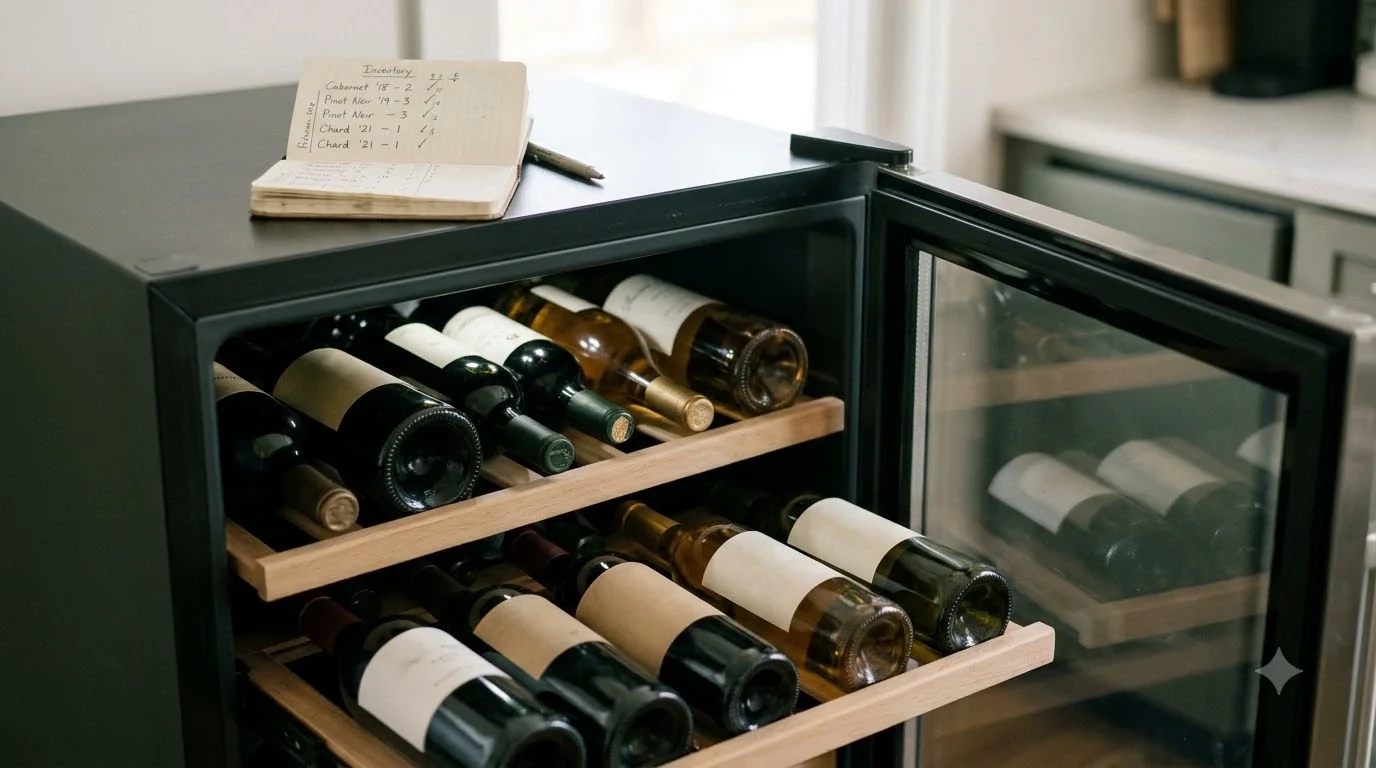
A warm wine cabinet does not always indicate a broken cooling system. A bottle may be holding the door open, a recent load of room-temperature wine may still be cooling, or the appliance may be installed where surrounding air is too warm or restricted. Work through the checks below in order, record the cabinet temperature as it changes, and stop before opening electrical or sealed-system components.
Start With Power, Settings, and a Temperature Check
Begin with the simple conditions that can make a functioning GE wine center appear to have stopped cooling. Confirm that it has power, that its controls are active, and that the cabinet temperature is actually above the selected setting rather than merely changing during a normal cooling cycle.
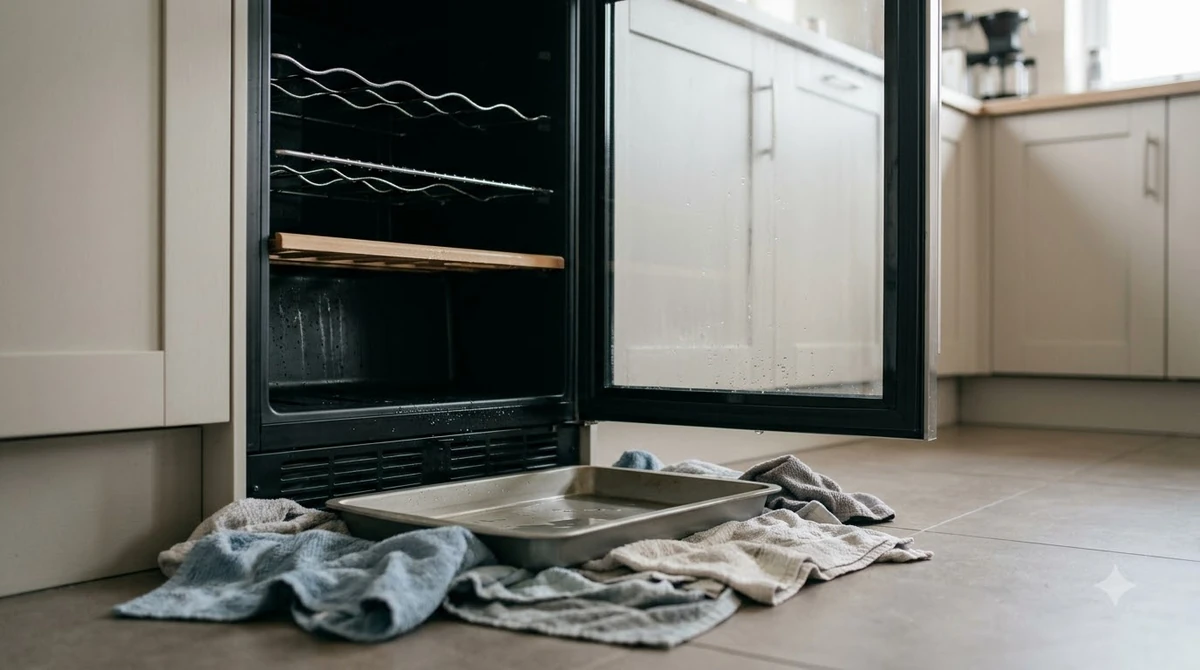
Check that the power cord is fully seated in a working, properly grounded outlet. Look at the household breaker or fuse panel for a tripped breaker or blown fuse; reset a breaker only if there is no sign of a damaged cord, burning smell, moisture at the outlet, or repeated tripping. A blank display and no interior light suggest a power problem, while a lit display with warm bottles points toward a setting, door, airflow, or cooling issue.
Next, read the temperature control carefully. Some GE wine centers use push-button settings, while others have a custom temperature control or separate wine presets. A GE support page for one wine-chiller control family describes a custom range of 40 to 65 degrees Fahrenheit and says that power loss can return that unit family to its Red Wine default of 55 degrees. Verify the setting after an outage, and do not assume that range applies to every GE model. Identify the model number on the appliance and use the matching owner’s manual for its control sequence and supported range. The official GE wine-chiller temperature guidance also explains why room conditions and loading affect the cabinet’s performance.
After confirming the setting, avoid repeated button presses or door checks. Some displays show the measured cabinet temperature, not the target. Close the door and use an appliance thermometer on a middle shelf to check the actual temperature.
Allow Enough Time for the Cabinet to Stabilize
Temperature recovery is gradual, especially after a power interruption, a large load of bottles, or a change to a colder setting. Do not diagnose a failed compressor based on one warm reading taken shortly after the appliance has restarted.
GE’s GWS04 and GVS04 owner instructions say the cabinet may take up to 12 hours to stabilize after it is plugged in and set, and the temperature can rise temporarily after wine or beverages are loaded. A separate GE wine-chiller support article advises allowing 24 hours for wine to reach a selected temperature and says that fully loading an empty cabinet may require 48 hours for the bottles themselves to reach that temperature. These figures describe different recovery situations, not a single universal countdown.
Use the table as a reference, while following the timing in the manual for the exact model. Cabinet air can cool before the liquid in the bottles reaches the same temperature. Frequent door openings release cold air and make recovery harder to assess.
| Situation | Published GE guidance | What to do |
|---|---|---|
| GWS04 or GVS04 first start or restart | Up to 12 hours to stabilize | Set the target and keep the door closed while the cabinet cools. |
| Wine needs to reach a selected temperature | Allow 24 hours | Check the bottle temperature only after a full recovery period. |
| Empty GE wine chiller loaded fully with wine | Up to 48 hours for the wine | Allow the bottles time to cool; do not rely on a quick air reading. |
| Compressor operating in ordinary conditions | Average run time of 15 to 40 percent of operating time | Intermittent cycling by itself does not prove a fault. |
| Hot, humid operating conditions | Run time may approach 90 percent | Check room heat, door openings, and required clearances. |
If the cabinet is still far above its target after the appropriate stabilization period, check whether the setting changed after a power outage and whether the door has stayed fully shut. The GE support information notes that some wine chillers return to a default setting after power is lost, so a unit can be running normally while cooling to a warmer preset than expected. Re-enter the preferred setting using the correct control procedure, then allow another full adjustment period.
Inspect the Door, Gasket, and Bottle Arrangement
A poorly closed door allows warm, humid room air to enter the cabinet and forces the cooling system to work longer. Inspect the full door opening, not just the handle or latch, because a bottle, shelf, or dirty gasket can create a small gap that is easy to miss.
Open the door and check that each shelf is seated in its track and that no bottle projects far enough to stop the door from closing. Look along the top, hinge side, latch side, and bottom of the gasket for tears, flattened areas, looseness, or visible gaps. Wipe dirt or sticky residue from the gasket and its contact surface with a soft cloth and mild soapy water; dry both before closing the door. GE’s condensation troubleshooting guidance also identifies an open door and a poorly seated gasket as causes to check when condensation appears on the exterior.
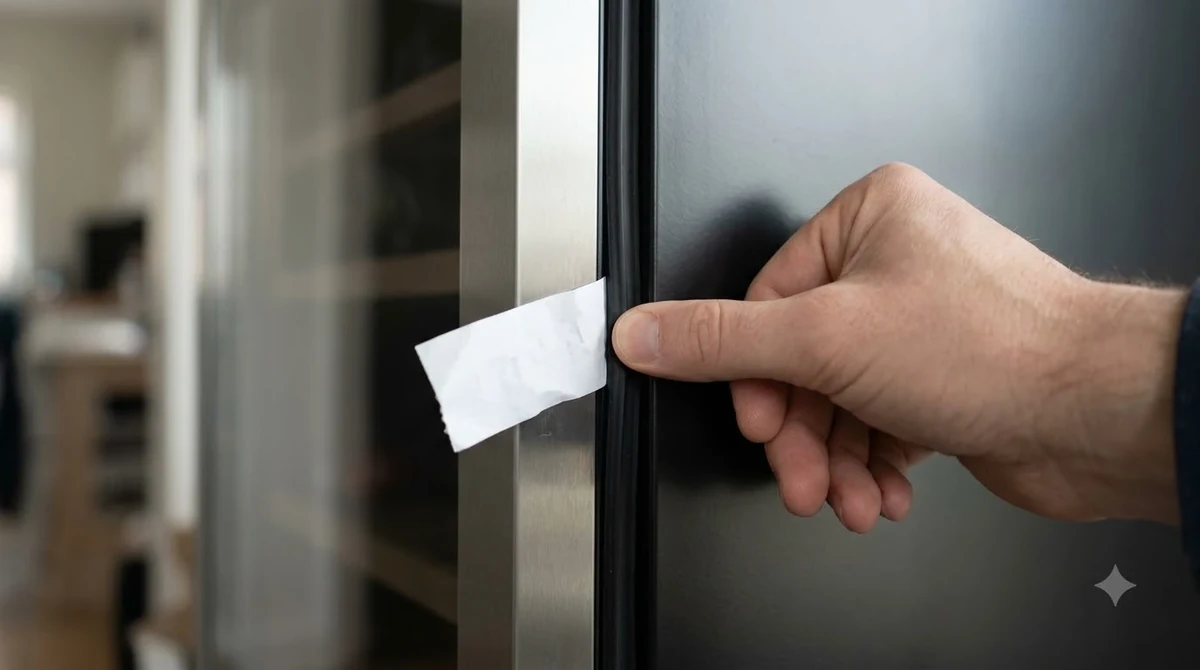
Close the door slowly and watch the gasket make contact around the perimeter. To screen for a weak spot, trap a strip of paper between the gasket and cabinet, then gently pull. If it slides out easily in one area but holds elsewhere, the seal may be uneven. This does not prove the gasket needs replacement; alignment and leveling also affect contact.
Keep bottles from touching the rear wall or blocking internal air passages. A packed cabinet can restrict circulation, while bottles pressing against the door can prevent a full seal. Move the bottles and shelves into their intended positions, leave the designed air paths clear, and avoid adding a large quantity of warm wine all at once. Once the door is closing correctly, limit openings and reassess the temperature after the recovery period appropriate to the model.
Check Ventilation and the Room Around the Wine Fridge
A wine fridge must release heat from its cooling system into the surrounding room. Excessive room heat, a blocked front air path, or installation clearances that do not match the model can leave the cabinet warmer than its setting even while the compressor runs for long periods.
Start by checking the installation location. GE’s support material says its wine centers should not be placed in direct sunlight or exposed to water, and identifies high ambient heat as a performance concern. Another GE wine-chiller guidance page warns against outdoor locations below 40 degrees Fahrenheit or above 90 degrees Fahrenheit; below the lower limit, the appliance may no longer be able to cool as intended, while high heat can leave wine warmer than expected. Do not treat those thresholds as identical across every model or as permission to install a wine center outdoors. The exact installation section for the model takes priority.
Inspect the front grille, kick plate, and any visible air openings for dust, cardboard, packaging, or stored items. Keep the front unobstructed so room air can reach the appliance as designed. GE’s installation information for a wine-chiller family calls for at least 1.5 inches at each side and 2 inches above and behind; other wine-center models may have different built-in or freestanding requirements. Measure the clearances specified by the model’s installation guide instead of assuming that a space that fits the cabinet is large enough to ventilate it.
Consider nearby heat sources: an oven, dishwasher, sunny window, or unventilated closet can raise the temperature around the cabinet. In hot, humid weather, GE says compressor run time can approach 90 percent, compared with an average 15 to 40 percent under varying conditions. Long run time may point to a poor location, but does not alone prove compressor failure.
Tip: Record the room temperature, the displayed cabinet temperature, and the time of each reading. Compare readings taken with the door closed over several hours; this is more useful than judging cooling performance by touch or by how often the compressor seems to run.
Understand the Sounds and Signs of a Component Failure
When power, settings, sealing, loading, and ventilation are all correct, the symptoms can help a technician narrow the likely fault. Distinguish a unit with no power from one that has power but does not cool, or runs continuously without lowering the temperature.
If the display and light are both off, begin with the outlet, cord, and household circuit rather than assuming that the compressor has failed. If the display is lit but the cabinet stays warm, possible causes on some GE designs include a start device, condenser fan, temperature control, or electronic control problem. Sears PartsDirect’s model-specific information for the GE ZDWR240PABS, for example, associates repeated compressor clicking with a possible start-device issue, poor heat removal with a possible condenser-fan problem, and temperature regulation problems with the control. Those part-level possibilities are not a universal parts list for all GE wine fridges.
Listen for patterns, not one isolated sound. A compressor that hums and repeatedly clicks off may be struggling to start; a fan that does not run may indicate an airflow problem; and long run times with weak cooling can point to ventilation, a door seal, or the sealed system. Light vibration, refrigerant sounds, and some expansion noises can be normal. A loud new rattle, burning smell, or repeated breaker trip needs prompt attention.
Do not remove electrical covers, test live wiring, bypass a control, or open the refrigerant circuit as a home troubleshooting step. The GE GWS04/GVS04 manual instructs owners to unplug the appliance before repairs or cleaning and says repairs should be performed by a qualified service professional. If the symptom points to a start relay, fan motor, control board, compressor, or refrigerant leak, give the technician the model number, temperature readings, sound pattern, and the checks already completed.
Protect the Wine and Decide When to Call for Service
While diagnosing the appliance, keep the wine in the most stable cool location available. A short temperature rise during a power interruption or bottle loading is different from a cabinet that remains warm for days, so monitor the actual temperature and move the collection if the unit cannot maintain a suitable storage environment.
During a power failure, keep the door closed as much as possible. GE’s owner instructions say that a gradual temperature rise during an outage should not adversely affect the wine, but in extremely hot conditions they recommend moving it to a cooler location until power returns. After power is restored, verify the setting and allow up to 12 hours for a GWS04 or GVS04 cabinet to stabilize; GE’s separate wine-chiller guidance allows 24 hours for wine to reach its selected temperature. Avoid repeatedly changing the controls during that period.
Call for service when the basic checks do not restore cooling, when the cabinet temperature continues to rise after the model-specific recovery period, or when you notice repeated clicking, a fan that does not run, a burning smell, damaged wiring, or a breaker that trips again. A sealed-system repair, compressor diagnosis, or electrical component test is not a safe trial-and-error project. Ask the technician to confirm the failed part against the complete model and serial information before ordering components, since GE wine centers can use different controls, fans, and cooling layouts.
For further brand-specific troubleshooting, use the GE Profile wine fridge not cooling guide for Profile models, or compare the symptoms with our advice on Allavino wine fridge not cooling and Magic Chef wine fridge not cooling. For broader storage and maintenance topics, the Brand Troubleshooting section can help separate a general cooling problem from a model-specific control issue.
Frequently Asked Questions
These answers explain several model-specific behaviors documented for the GWS04 and GVS04, including the compressor indicator, a possible 5-minute start delay, and why the display changes after a setting is accepted.
Is it normal for the outside of a GE wine fridge to feel warm?
Yes, the GWS04 and GVS04 owner instructions state that the exterior cabinet may get warm during operation. That observation alone does not show that the appliance is overheating or failing. Judge performance by the cabinet temperature and the unit’s ability to reach its selected setting.
Why does the compressor indicator light turn off?
On the GWS04 and GVS04 control panels, the indicator is lit while the compressor is running to cool the cabinet and is not lit when the compressor is idle. A dark indicator can therefore be part of normal cycling. It becomes more concerning when the cabinet remains warm and the cooling cycle does not resume.
Should the compressor start the moment I change the temperature?
Not necessarily. The GWS04 and GVS04 instructions note that the compressor may take about 5 minutes to start after a temperature change. Allow that brief delay before treating a quiet compressor as a fault.
Why does the display return to a different number after I set the temperature?
On the GWS04 and GVS04 controls, the display returns to showing the actual cabinet temperature after the new target has been accepted. The measured temperature may take time to move toward the selected value. This behavior is not, by itself, evidence that the setting failed to save.
Can I scrape frost off the inside wall or melt it with a heater?
No. GE’s GWS04 and GVS04 manual describes automatic defrosting and warns against using a heater, scraper, or sharp instrument to remove frost because these tools can damage the appliance. Follow the model’s defrosting instructions or contact service if heavy frost persists.
Most GE wine-fridge cooling complaints can be narrowed down by checking power, controls, door closure, stabilization time, and airflow in that order. When those basics are sound and the cabinet still cannot reach its target, stop before electrical or refrigerant work and arrange a model-specific diagnosis.
More in Storage & Fridge Care
 How Long Can You Store Wine in a Wine Fridge? Protect Bottle QualityUpdated Nov 20, 2026
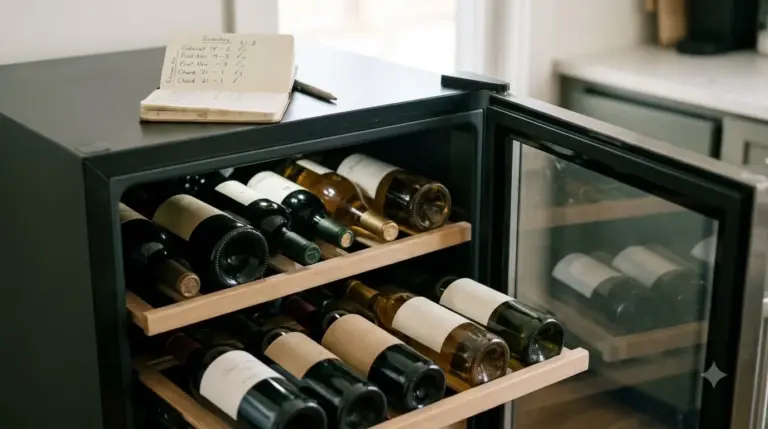 Can You Store Beer in a Wine Fridge? Keep Both Drinks FreshUpdated Nov 20, 2026
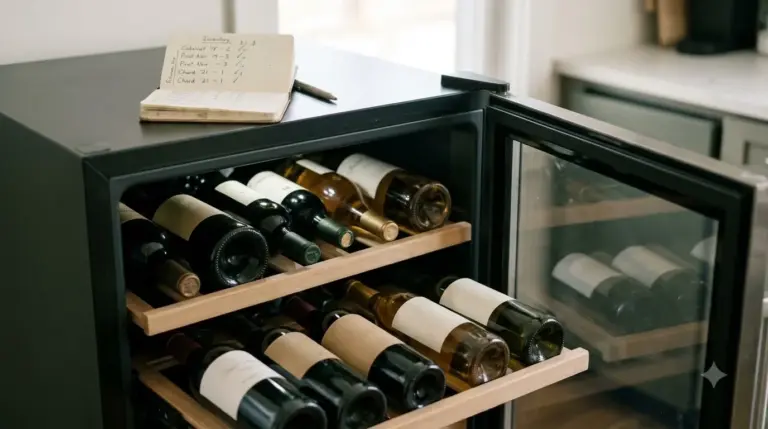 Is It Worth Repairing a Wine Fridge? Spot the Cheap Fixes Before You ReplaceUpdated Nov 20, 2026
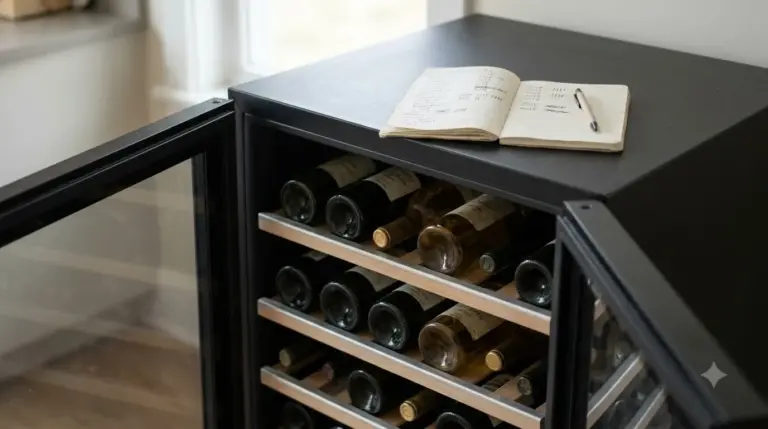 Wine Fridge Condensation: Identify Causes and Fix Moisture ProblemsUpdated Nov 20, 2026
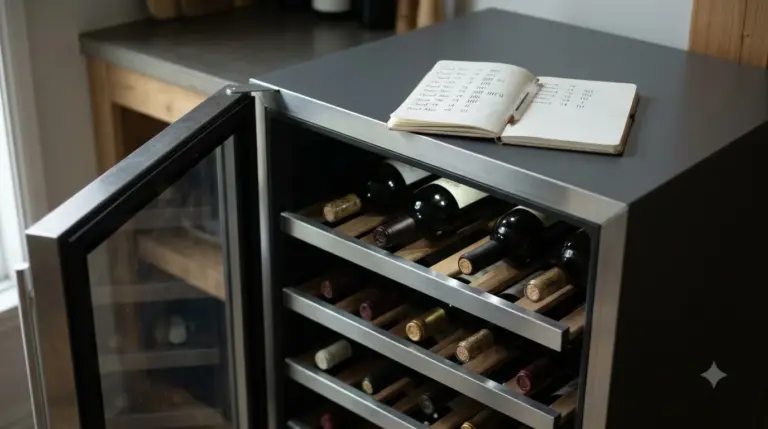 Wine Fridge Too Cold: Protect Your Wine and Fix the TemperatureUpdated Nov 20, 2026
 How to Reset Wine Fridge: Restore Cooling and SettingsUpdated Nov 20, 2026