

We may earn a commission when you buy through links on this page, at no extra cost to you. Learn more.
The gavi wine region is a small, southeastern Piedmont appellation in Italy known for dry white wines made from 100% Cortese grapes. Its wines are usually crisp and bright, with citrus, green apple, white-flower, and almond notes. The best bottles are not limited to aperitif service: differences in soil, altitude, and cellar choices give Gavi enough range for seafood, vegetables, pasta, and more substantial meals.
Gavi offers an approachable way to explore Piedmont beyond its celebrated red wines. Understanding the 11-municipality DOCG, the meaning of Gavi di Gavi, and the region’s three broad soil expressions makes it easier to choose a bottle that suits the table. The broader Wine Regions overview is a useful next step for comparing this appellation with other places and grapes.
Where Gavi Sits in Piedmont
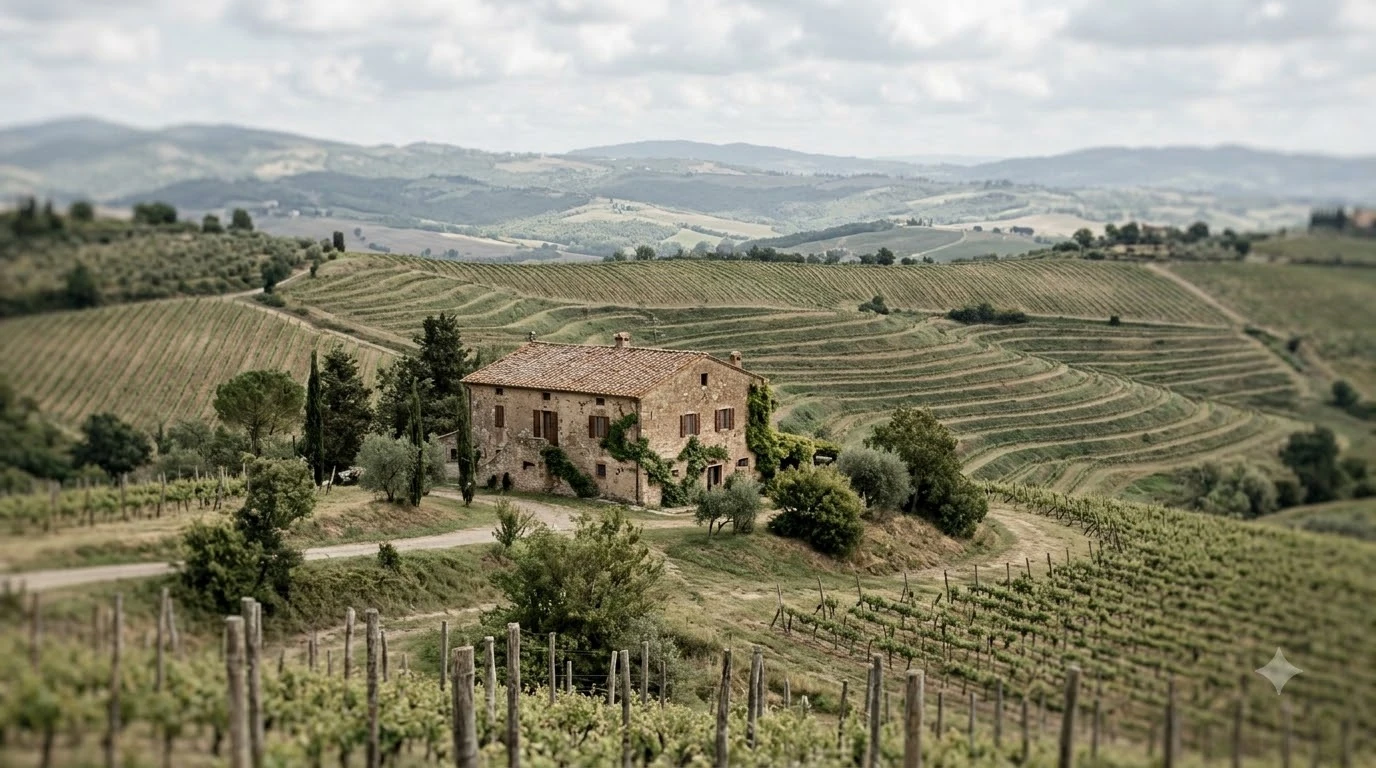
Gavi lies in the far southeastern corner of Piedmont, in the province of Alessandria, close to Liguria and the Apennine foothills. Its position between inland hills and the Ligurian coast helps explain why the wines combine Piedmontese structure with a fresh, maritime feel.
The DOCG covers all or part of 11 municipalities: Bosio, Carrosio, Capriata d’Orba, Francavilla Bisio, Gavi, Novi Ligure, Parodi Ligure, Pasturana, San Cristoforo, Serravalle Scrivia, and Tassarolo. The town of Gavi is the central reference point, but the appellation is larger than the town itself. A bottle labeled simply Gavi can come from qualifying vineyards across this delimited area, while the wording Gavi del Comune di Gavi identifies wine from the municipality of Gavi. Readers comparing how mountain settings shape regional wine styles may also explore the Savoie wine region.
The landscape is hilly rather than mountainous. Vineyard sites vary in elevation and exposure as the land rises toward the Apennines, while sea air moves inland from the Ligurian coast. Decanter places the coast about 30 kilometers south of the vineyards and describes the meeting of sea breezes and Apennine terrain as an important part of local character. That influence does not make Gavi a coastal wine in the same sense as Ligurian whites, but it helps preserve freshness in a warm growing season.
Viticulture here has a long record. Wine Enthusiast traces documentary evidence of vine growing to the Middle Ages and notes the area’s DOCG recognition in 1998. The regional denomination had already been established as a DOC in 1974, so the later DOCG status marked an upgrade in recognition and production controls rather than the beginning of local winemaking. The area’s history also reflects its position on routes connecting the Po Valley, Genoa, and the wider Mediterranean trade network.
Cortese Defines the Region’s White Wines
Gavi DOCG is made from 100% Cortese, a white grape associated with southeastern Piedmont. The variety gives the appellation a recognizable profile: dry, fresh, gently aromatic wines with citrus and orchard-fruit flavors rather than overt tropical ripeness or heavy oak.
Typical aromas include lemon, lime, green apple, pear, white peach, and acacia or other white flowers. A subtle bitter-almond impression often appears toward the finish, and some examples show a stony or lightly saline quality. The exact balance changes with site, harvest decisions, and winemaking, but acidity is usually central to the wine’s shape. The Piemonte regional wine portal describes Gavi as dry, pleasant, fresh, and harmonious, with a straw-yellow color and a gentle, distinct aroma.
Cortese is naturally suited to a clean, precise expression. Many producers ferment and mature Gavi in stainless steel, preserving primary fruit and acidity rather than adding obvious vanilla or toast from new oak. Lees contact can add texture without masking the grape: a few months on fine lees may bring a rounder palate, a faint creamy note, or more weight through the middle. This is one reason two wines made from the same grape can feel different while still reading clearly as Gavi.
Alcohol levels commonly sit around 12% to 13% in the examples discussed by VinePair, although the precise figure varies by producer and vintage. That moderate range, combined with fresh acidity and a dry finish, makes Gavi an adaptable table wine. It can be poured before dinner, but it has enough flavor to work alongside a complete meal rather than disappearing as soon as food arrives.
Soils, Elevation, and Three Distinct Expressions
Gavi is not one uniform hillside: its northern, central, and southern zones have different soil profiles and site conditions. Those differences help explain why one Cortese can feel broad and ripe while another seems linear, floral, and mineral.
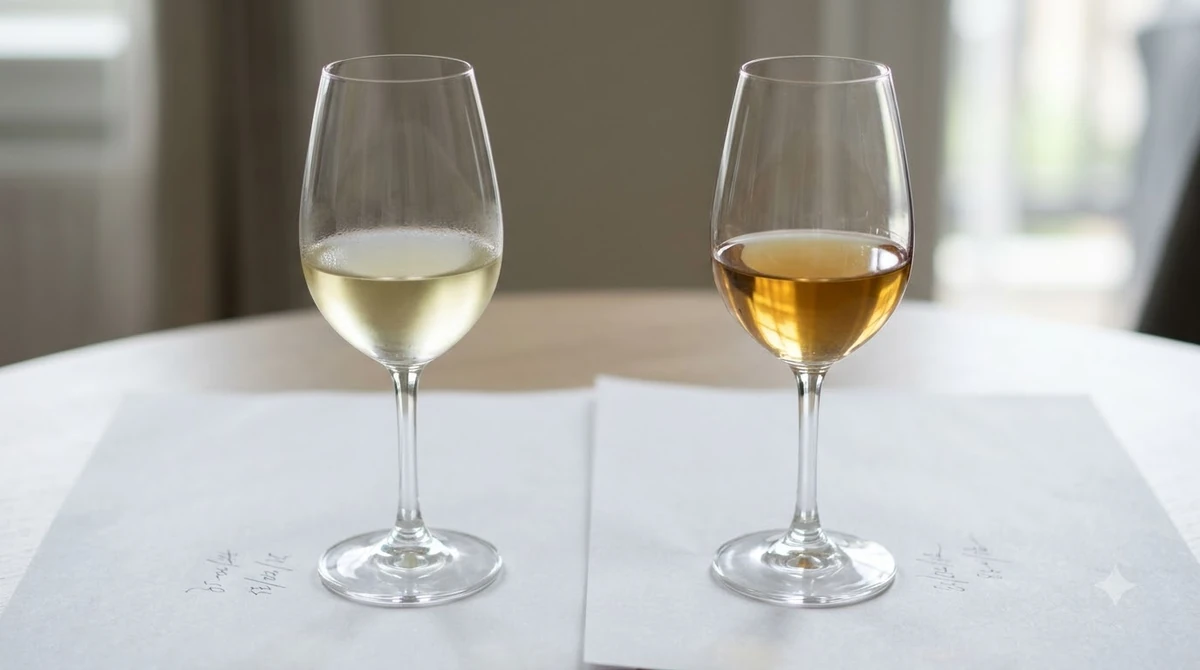
In the north, red soils formed from older alluvial deposits contain clay, sand, gravel, and iron. Wine Enthusiast associates this warmer part of the appellation with wines that have more body, breadth, and structure, often with riper fruit. The extra weight can make northern Gavi a good choice for richer fish preparations, poultry, or dishes with a little more texture.
The central belt includes alternating marl and sandstone, with clays, sands, and pebbles in different proportions. This zone includes vineyards around the line from Serravalle Scrivia through Gavi toward San Cristoforo. Its mixed geology often produces a balance between freshness and substance: enough fruit and palate weight to feel complete, but with the clear acidity that makes Cortese refreshing. These wines can be useful all-purpose choices at the table because they do not lean too far toward either a delicate or a full-bodied style.
Farther south, the vineyards climb toward the Apennine foothills, where pale marine marls and other older, stonier formations become more prominent. Higher sites and lighter-colored soils are associated with wines that feel more fine-boned, taut, and aromatic. Decanter’s profile of Gavi describes the southern, higher-altitude expressions as delicately scented and finely structured, while its account distinguishes the pale marine soils from the red, iron-rich northern belt. For a drinker, the practical lesson is to pay attention to producer and site rather than expecting one fixed Gavi flavor: a northern wine may give more breadth, a central wine may combine fruit and tension, and a southern hillside bottling may emphasize lift and mineral detail. These are tendencies, not formal flavor classifications, and harvest timing or lees aging can shift the impression just as much as the soil beneath the vines. The terms “white soil” and “red soil” are useful shorthand, not a guarantee that every vineyard in a given zone tastes identical.
DOCG Rules, Labels, and Bottle Styles
The DOCG name sets out a defined growing area and production rules, with Cortese as the sole grape for Gavi. The label can also tell you whether the wine is from the municipality of Gavi, made in a sparkling style, or released as a Riserva.
Regione Piemonte lists the grape as 100% Cortese and recognizes still, lightly sparkling, sparkling, and reserve expressions, including a traditional-method sparkling reserve. Its published denomination profile also gives a minimum total alcohol level of 10.5% by volume and minimum total acidity of 5.0 grams per liter. Decanter summarizes the main yield and aging thresholds for the standard DOCG and Riserva categories as follows:
| DOCG detail | Published figure | What it tells you |
|---|---|---|
| Grape variety | 100% Cortese | No blending with other grape varieties under the Gavi DOCG name. |
| Production area | 11 municipalities | The denomination extends beyond the town of Gavi. |
| Maximum yield, standard Gavi | 66 hectoliters per hectare | A regulated production ceiling for the standard wine. |
| Maximum yield, Riserva | 45 hectoliters per hectare | A lower ceiling for the reserve category. |
| Minimum Riserva aging | 12 months total; at least 6 months in bottle | Riserva must spend longer aging before release. |
| Minimum alcohol | 10.5% by volume | The regional profile’s stated minimum for the denomination. |
| Minimum total acidity | 5.0 grams per liter | A minimum acidity requirement in the regional profile. |
Gavi, Cortese di Gavi, Gavi del Comune di Gavi, and Gavi di Gavi are label terms worth recognizing. “Cortese di Gavi” is an alternate denomination wording that makes the grape connection explicit. “Gavi del Comune di Gavi” or “Gavi di Gavi” identifies wine linked to the municipality of Gavi within the larger DOCG area; it is a geographic distinction, not a separate guarantee that a bottle will be superior to every wine from another municipality.
Style terms matter too. Gavi tranquillo is the still version and is the one most commonly encountered. Frizzante has a light sparkle, while spumante is fully sparkling. Riserva indicates a longer-aged category, and Riserva Spumante Metodo Classico identifies a sparkling reserve made by the traditional method. These styles are less common than still Gavi, so a shopper looking for a familiar crisp white should start with a straightforward still bottling.
Winemaking, Aging, and Serving Gavi
Most classic Gavi is made to preserve Cortese’s freshness, with gentle pressing, temperature-controlled fermentation, and stainless-steel maturation. More ambitious bottlings may use extended lees contact or longer bottle aging to add texture and complexity without changing the grape at the center of the wine.
Stainless steel is a frequent choice because it keeps the wine’s citrus, orchard fruit, and floral notes in focus. Some producers leave the wine on fine lees after fermentation, stirring or resting it according to their house style. Lees aging can add a little breadth and a softer mouthfeel, which is useful when the wine will accompany richer dishes. Oak is not a defining feature of the appellation, although individual producers may experiment with vessels or aging methods for selected cuvées.
Young, uncomplicated Gavi is generally best enjoyed for its freshness rather than held for a long cellar wait. More concentrated wines from distinctive sites, longer lees-aged bottlings, and Riserva examples can develop additional layers with bottle age. Decanter describes mature examples with notes of honey, spice, wet stone, and savory length, while younger wines tend to emphasize citrus, flowers, and fresh fruit. Do not assume every bottle will improve for a decade; the producer’s intended style is more informative than the regional name alone.
Serve a light, fresh Gavi at about 45–50°F. That range keeps the wine refreshing but gives its aroma enough room to show. A bottle taken directly from a very cold refrigerator may seem muted at first, so allow it a few minutes in the glass. Use a standard white-wine glass rather than a narrow flute for still Gavi, and pour a moderate 5-ounce serving to leave room for swirling and aroma. After opening, keep the bottle in the refrigerator with a suitable closure and aim to finish it within 3–5 days; store unopened cork-finished bottles on their sides in a cool, dark place near 55°F. A simple young Gavi does not need decanting.
Tip: Chill a still Gavi to 45–50°F, then pour it with the first course and let it warm slightly in the glass. The gradual temperature change can reveal more pear, white-flower, and almond detail without losing the wine’s crisp finish.
Food Pairings That Suit Gavi’s Acidity
Gavi’s dry finish, lively acidity, and restrained aromas make it especially useful with seafood, vegetables, and light pasta dishes. It is a natural partner for the food traditions shared by southeastern Piedmont and neighboring Liguria, but it also works with many straightforward American meals.
Start with shellfish, oysters, grilled white fish, shrimp, or anchovies. The wine’s acidity refreshes the palate between bites, while its citrus and almond notes complement delicate seafood flavors without overwhelming them. Fried seafood is another reliable match: the crisp finish offsets the richness of a light batter. For a simple preparation, serve grilled sea bass with olive oil, herbs, and lemon alongside a classic stainless-steel Gavi.
Regional pairings offer a more specific sense of place. Trofie with basil pesto links Gavi to Ligurian cooking, while ravioli, vegetable dishes, and vitello tonnato fit the wider Ligurian-Piedmontese table. For tajarin with butter, Parmesan, and truffle, choose a Gavi with more body or lees-derived texture rather than the most delicate, sharply citrusy bottling. A central-zone or richer northern expression can provide the extra breadth those savory ingredients need.
Gavi also suits vegetable tarts, omelets, asparagus, zucchini, artichokes, and risotto with herbs or seafood. Piemonte’s regional wine portal specifically recommends shellfish appetizers, meats, vegetables, omelets, and vegetable pies. For richer poultry or veal, look for a fuller example with some lees aging. For cheese, try fresh goat cheese, young cow’s-milk cheeses, or a mild semi-soft style; salt and fat can soften a wine’s impression, while very pungent washed-rind cheese or strongly aged blue cheese may dominate a light bottle. Avoid overwhelming delicate Gavi with heavy smoke, very sweet sauces, or intense chili heat, since alcohol can make chili seem hotter. Match the weight of the wine to the weight of the dish rather than treating every Gavi as identical.
Frequently Asked Questions
Is Gavi the same as Pinot Grigio?
No. Gavi is made from Cortese, while Pinot Grigio is made from Pinot Gris, a different grape variety. Cortese is native to the Alessandria area, whereas Pinot Gris is grown across many wine regions.
Does Gavi also come in sparkling styles?
Yes. Along with frizzante and spumante, the denomination recognizes a traditional-method sparkling Riserva. In the traditional method, the second fermentation that creates the bubbles takes place in the bottle, as it does for Champagne and Cava.
What does the name “Courteis” mean?
Courteis is a local name for the Cortese grape used in the Gavi area. The regional wine profile uses the name to connect the denomination with its historic local grape vocabulary.
How far back does written evidence of Gavi wine go?
Wine Enthusiast traces documentary evidence of vine cultivation in Gavi to 972, when the area was under the authority of the Archbishop of Genoa. That record places local winegrowing well before the DOC designation created in 1974.
What historic sites can visitors see near Gavi?
The medieval Forte di Gavi stands above the town, while the archaeological site of Libarna lies near present-day Serravalle Scrivia. Libarna was a Roman settlement and trading hub, with remains that include roads, residential areas, and a theater.
Gavi is more than a simple Italian aperitif white: its 100% Cortese foundation gives it a clear identity, while its 11 municipalities and varied soils create meaningful differences in style. Choose a fresh, still bottling for seafood and vegetables, or explore a site-specific or Riserva wine when the meal calls for more texture and depth.
More in Wine Regions
 Willcox Wine Trail: Discover Arizona’s High-Elevation Wine CountryUpdated Nov 20, 2026
 Yakima Valley Wine Region: Find the Best Styles to TryUpdated Nov 20, 2026
 Vosne Romanee Wine Tasting: Identify Aromas and Choose Better PairingsUpdated Nov 20, 2026
 Yakima Valley Wine Festival: Find the Best Seasonal Wine EventsUpdated Nov 20, 2026
 Wales Vineyards: Discover Cool-Climate Wines and Where to VisitUpdated Nov 20, 2026
 Yountville Wine Festival: Discover Napa Wines and Local FoodUpdated Nov 20, 2026