


We may earn a commission when you buy through links on this page, at no extra cost to you. Learn more.
The etna wine region is Sicily’s high-altitude volcanic wine zone, known for finely structured Nerello Mascalese reds and fresh, mineral-scented Carricante whites. Vineyards circle Mount Etna on the island’s eastern side, where volcanic soils, strong sunlight, cool nights, and changing elevations create distinct local styles. Knowing the grapes, slopes, and Etna DOC rules makes it easier to choose a bottle for your taste and table.
Etna wines can surprise drinkers who expect every Sicilian red to be deeply colored, full-bodied, and warm in character. Many are lighter on their feet, with bright acidity, savory fruit, and a mineral impression; the whites can be brisk and long-lived. The region also rewards curiosity: two vineyards in neighboring contrade may produce noticeably different wines from the same grape.
Where Etna Sits and Why Elevation Matters
The Etna wine region occupies a belt of vineyards on Mount Etna in eastern Sicily, north of Catania. Its combination of altitude, volcanic terrain, and proximity to the Ionian Sea creates a varied growing environment unlike the warmer coastal plains elsewhere on the island.
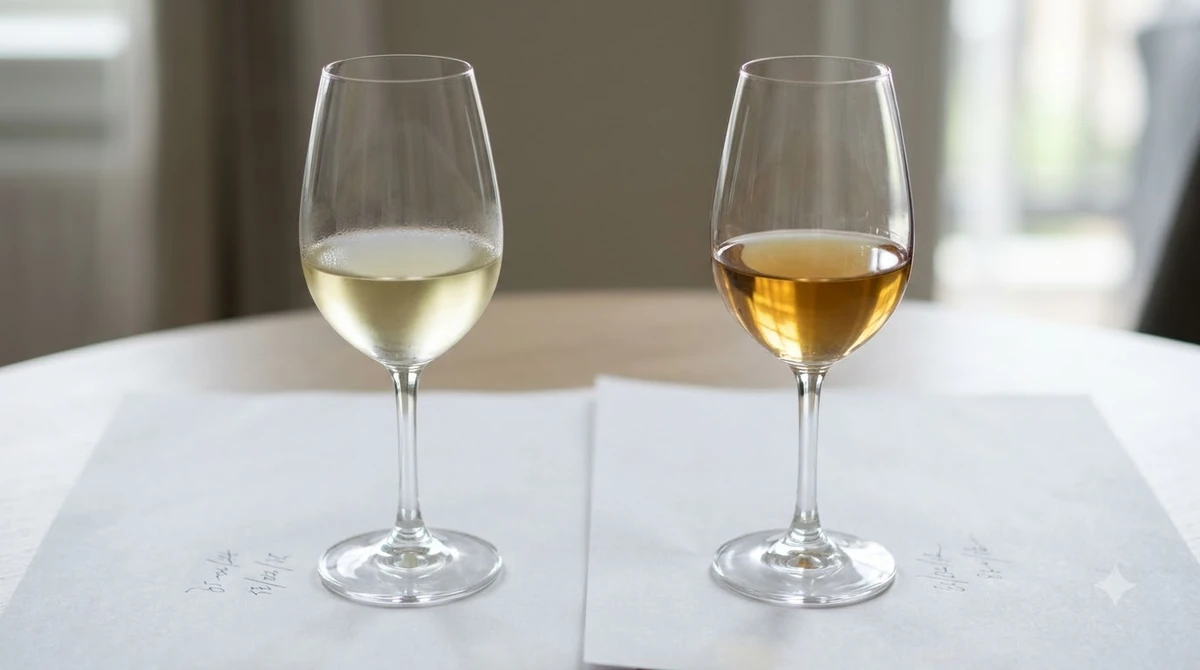
Mount Etna rises more than 3,300 meters above sea level and has a diameter of about 45 kilometers, according to the Etna DOC consortium’s description of the terroir. The designated Etna PDO vineyard area covers just under 1,200 hectares. Vineyards occupy slopes and terraces at different elevations, and a site facing the sea can receive different rainfall, wind, and sunlight from a plot farther inland.
Altitude moderates the intense Mediterranean sun. Warm daylight supports ripening, while cooler nights slow the process and help preserve acidity and aroma. The consortium reports day-to-night temperature differences that can reach 20 to 25 degrees Celsius. That swing helps explain why Etna wines often combine ripe fruit with a lively structure rather than tasting heavy or soft.
The ground is not a uniform layer of black ash. Depending on the lava flow, vineyards may have pebbly, gravelly, sandy, or ash-rich soils; differences in drainage, depth, and fertility shape vine growth. “Mineral” describes a stony or saline impression in the wine, not a literal transfer of minerals from soil into the glass. Steep terraces make vineyard work demanding, and many growers tend low bush vines rather than long, mechanized rows.
The Native Grapes Behind Etna Wines
Four local grapes define the classic Etna palette: Nerello Mascalese, Nerello Cappuccio, Carricante, and Catarratto. Nerello Mascalese is the central red variety, while Carricante is the signature white; the other two grapes provide additional blending options.
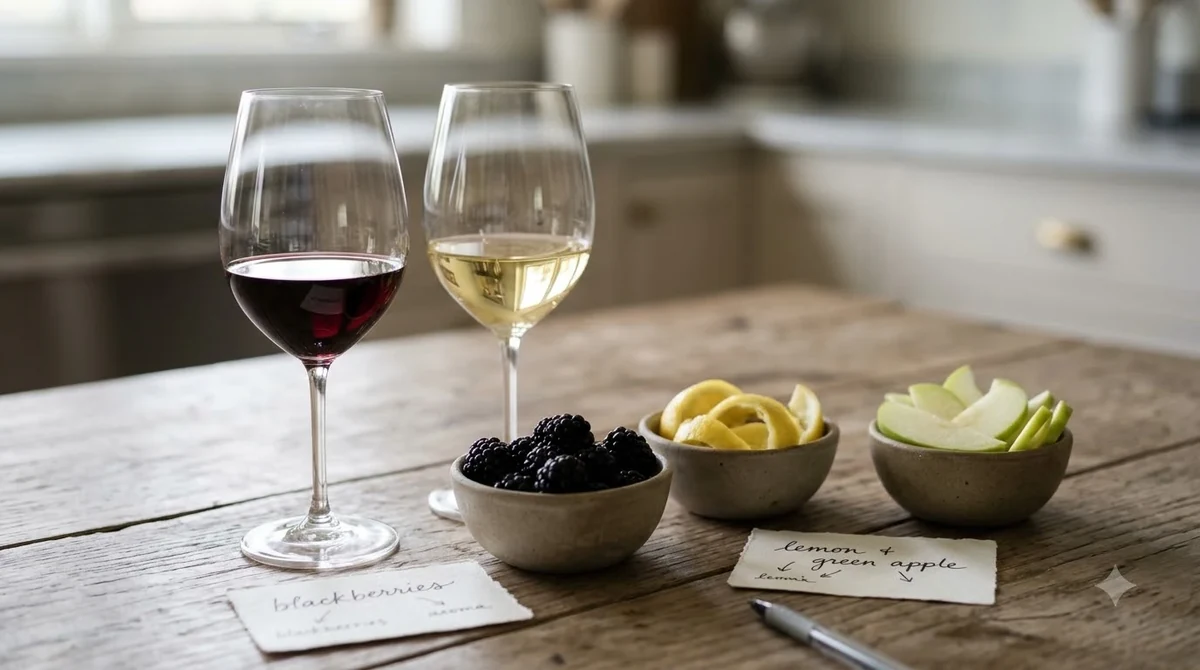
Nerello Mascalese is known for pale-to-medium ruby color, red-fruit character, floral lift, fresh acidity, and firm but often fine tannins. It ripens relatively late: the Etna DOC consortium places its harvest in the second ten days of October. The grape is sensitive to site and vintage, so it can taste delicate and fragrant in one bottling and firmer or more concentrated in another. It is sometimes compared with Pinot Noir for its ability to express place and Nebbiolo for its late ripening, though it remains distinct from both.
Nerello Cappuccio is the traditional partner for Nerello Mascalese in some Etna reds and rosatos. The consortium describes its wines as deeper ruby, with violet nuances, herb and spice notes, and medium structure with delicate tannins. In a blend, it can add color and a softer impression without taking the lead away from Nerello Mascalese. Carricante, by contrast, defines Etna Bianco: it is especially associated with the eastern slope around Milo and produces wines with citrus, white flowers, firm acidity, and a savory or stony finish. Its usual harvest falls from late September to early October.
Catarratto, an indigenous Sicilian white grape, is permitted in Etna Bianco and Etna Bianco Superiore, although it is less central to Etna’s identity than Carricante. A white blend may include Carricante with Catarratto rather than being single-variety. Wines from the Savoie wine region offer another example of how altitude and local grape varieties can produce fresh wines with a strong sense of place.
Reading Etna DOC Styles and Rules
Etna DOC labels identify a regulated origin and a family of styles, rather than one fixed flavor profile. The most useful distinctions are the wine type and the proportion of its principal grape, especially the minimum 80% Nerello Mascalese requirement for Etna Rosso and the minimum 60% Carricante requirement for Etna Bianco.
The DOC was established in 1968 and was Sicily’s first controlled designation of origin. Its rules set grape composition for the main styles. Etna Bianco must contain at least 60% Carricante, and Catarratto may make up to 40%; Etna Bianco Superiore must contain at least 80% Carricante. Etna Rosso and Etna Rosato are based on at least 80% Nerello Mascalese, with Nerello Cappuccio permitted up to 20%. Etna Spumante, whether rosé or made as a white sparkling wine, is also based on at least 80% Nerello Mascalese.
| Etna DOC style | Main grape rule | Useful point to remember |
|---|---|---|
| Etna Bianco | Carricante 60% minimum | Catarratto may reach 40% |
| Etna Bianco Superiore | Carricante 80% minimum | Other white grapes may make up to 20% |
| Etna Rosso | Nerello Mascalese 80% minimum | Nerello Cappuccio up to 20% |
| Etna Rosato | Nerello Mascalese 80% minimum | Shares the core red-grape rule |
| Etna Spumante | Nerello Mascalese 80% minimum | Made rosé or vinified as a white sparkling wine |
| Etna Rosso Riserva | Same grape rules as Etna Rosso | At least 4 years’ aging, including 1 year in wood |
Etna Rosso Riserva is not simply a producer’s more ambitious red. The designation requires at least four years of aging, including at least one year in wood, under the consortium’s published rules. That maturation can allow tannins and savory notes to knit together, but it does not mean every Riserva will taste heavily oaked; the effect depends on vessel size and cellar choices. Etna Spumante is a smaller category: its Nerello Mascalese base can bring red-berry detail and acidity, whether presented as rosato or vinified in white. The DOC name alone does not specify the sparkling production method, unlike Champagne and Cava, which undergo their second fermentation in bottle.
Contrade, Slopes, and Vineyard Differences
Etna’s contrade are named countryside districts that help explain why wines from the same grape can taste different. The consortium identifies 133 contrade, each reflecting local exposure, climate, and volcanic geology; some producers put a contrada name on the label to identify a more specific origin.
The northern slope is the best-known concentration of producers and is closely associated with Nerello Mascalese. The consortium describes it as the side with the largest number of producers and gentler slopes, with cooler conditions and protection from the Peloritani and Nebrodi ranges. Passopisciaro, Solicchiata, and Randazzo are familiar northern reference points, and many recognizable single-contrada reds come from this area.
The eastern slope faces the Ionian Sea and is more exposed to rain and wind. Carricante is especially important here, and bush vines grow on small terraces that reach about 900 meters above sea level, according to the consortium. Milo is a notable eastern reference point for Etna whites. The southeast has extinct eruptive cones and vineyards where Nerello Mascalese and Carricante both perform well. The southwest is farther from the sea, receives less rain, and has strong sunlight and hot winds; Nerello Cappuccio and Carricante suit some sites, and vineyards can exceed 1,000 meters.
A contrada name is more than decoration, but it is not a guarantee that every bottle will taste identical from vintage to vintage. Weather, vine age, harvest timing, extraction, fermentation, and aging all matter. Wine Enthusiast’s profile of Etna producers highlights the contrast between ash-rich terraces at Santo Spirito and the steeper sand-and-basalt soils of Guardiola in the north. The comparison illustrates the point: a named site gives a useful clue, while producer and vintage complete the picture.
What Etna Wines Taste Like and How to Serve Them
Etna reds usually lean toward fragrance, freshness, savory detail, and moderate body rather than dense color and heavy extraction. Etna whites are typically defined by bright acidity, citrus and floral notes, and a lasting, sometimes saline finish.
In Etna Rosso, look for sour cherry, red currant, dried herbs, rose, and earthy or smoky nuances. Nerello Mascalese can bring firm tannins, but its pale color and lifted aromas may remind drinkers more of a fine-boned mountain red than a powerful southern Italian blend. A younger-vine bottling can feel nimble, while older-vine or single-contrada versions may show more depth. Wine Enthusiast notes that structured reds can age eight to 10 years after the vintage; simpler examples are often best enjoyed earlier.
Etna Bianco often offers lemon, grapefruit, green apple, white flowers, and a savory edge. Carricante’s acidity keeps the wine energetic even when it has some body or lees-derived texture. Some bottlings are fermented or matured in oak, but oak is not required. The best examples can develop over five to 15 years or longer, according to Wine Enthusiast. Rosato offers red-fruit notes and a crisp finish; sparkling Etna is another option.
Serve a light-to-medium Etna Rosso at about 55 to 60 degrees Fahrenheit, rather than at warm room temperature. Etna Bianco and rosato generally show well at 45 to 50 degrees; a fuller white can be served closer to 50 to 55 degrees. A 5-ounce pour gives a useful measure, and a 750-milliliter bottle yields about five glasses. If a young, full-bodied red feels tight, a 30- to 60-minute decant can help; delicate Etna bottlings usually need less air. After opening, keep still Etna wines sealed in the refrigerator for three to five days. Store unopened bottles away from heat and light, ideally near 55 degrees Fahrenheit, with cork-finished bottles on their side.
Tip: Chill Etna Rosso for 15 to 20 minutes before serving if the bottle has been stored at a warm room temperature. Aim for 55 to 60 degrees Fahrenheit in the glass; excess warmth can make alcohol stand out and mute the wine’s fresh, floral character.
Food Pairings and Buying Strategies
Etna’s high-acid whites and fragrant reds are flexible at the table, especially with foods built around herbs, tomato, seafood, pork, and grilled vegetables. Matching the wine’s weight and acidity to the dish is more reliable than choosing by color alone.
Pair Etna Bianco with grilled swordfish, shrimp, clams, lemon-dressed vegetables, or pasta with fennel and seafood. Carricante’s acidity balances salt and oil, while citrus notes work naturally with lemon, parsley, and capers. Grilled fish with olive oil and herbs gives the wine room to show its texture. Avoid pairing a very lean white with a sweet sauce, which can make it seem sharp.
Etna Rosso works with roast pork, lamb, mushroom dishes, sausage, tomato-based pasta, and grilled eggplant. Its acidity is helpful with tomato sauce, and its savory character fits browned meat and herbs. Tannins feel less pronounced beside protein and fat, so a moderately structured red works with pork shoulder or lamb chops. Serve a lighter red slightly cool with charcuterie or aged cheeses. Rosato suits tuna, roasted peppers, tomato salads, and grilled chicken; sparkling Etna pairs with fried seafood, salty snacks, and savory pastries.
When choosing a bottle, begin with the style rather than an assumed quality ladder. Select Etna Bianco for a high-acid white, Etna Rosso for an aromatic red with structure, rosato for a chilled middle ground, or Spumante for bubbles. Then consider the producer, vintage, and whether the label names a contrada. Benanti, Graci, Tenuta delle Terre Nere, and I Vigneri are useful names to recognize, but each makes different bottlings. Some Etna-slope wines use a broader Sicilian designation because the DOC’s altitude limits exclude certain sites. A bottle without “Etna DOC” is not automatically inferior; it may come from outside the denomination. For wider context, the Wine Regions directory places Etna alongside Sicily’s other areas, while the Tasmania wine region is another example of a wine identity shaped by maritime conditions and cooler growing sites.
Frequently Asked Questions
These answers cover five details that add context to the region’s grape and label basics, from old-vine survival to traditional cellar buildings and high-altitude sites.
Why do some Etna vineyards have ungrafted vines?
The Etna DOC consortium explains that some of the area’s volcanic soils helped vines remain unaffected by phylloxera. As a result, a number of old parcels still grow on their own roots rather than being grafted onto American rootstocks. This is unusual, but it does not describe every old vineyard on the mountain.
What does palmento mean in Etna winemaking?
A palmento is a traditional stone building used for making wine in Sicily. Historic examples had stone-cut containers and channels that allowed grapes to be trodden and juice to flow by gravity into fermentation or aging vessels. It is a piece of regional winemaking heritage rather than a required feature of modern Etna production.
When did contrada names become official on Etna labels?
Wine Enthusiast reports that contrada distinctions became official in 2011. The named districts give growers and buyers a vocabulary for discussing site differences within the larger denomination. Not every producer chooses to put a contrada name on the front label.
How high can Etna vines grow?
Decanter describes vineyards on Etna’s northeast face at 1,100 meters and notes that the I Vigneri vineyards around Milo reach as high as 1,300 meters. Those sites are exceptional examples of high-elevation viticulture, not a typical altitude for every Etna DOC vineyard. Elevation limits also vary within the denomination.
What is the best season to visit Etna vineyards?
Decanter recommends spring for a visit, when yellow broom flowers across the volcanic landscape and vines begin their growing season. Autumn is also an active period because Nerello Mascalese is harvested late, often in the second ten days of October. Weather on the mountain can change quickly, so vineyard visits need flexible plans.
Etna is best explored through both its main grapes and its individual vineyard names. Start with a Carricante-based white and a Nerello Mascalese red, then compare producers or contrade to see how the volcano’s varied slopes shape each glass.
More in Wine Regions
 Willcox Wine Trail: Discover Arizona’s High-Elevation Wine CountryUpdated Nov 20, 2026
 Yakima Valley Wine Region: Find the Best Styles to TryUpdated Nov 20, 2026
 Vosne Romanee Wine Tasting: Identify Aromas and Choose Better PairingsUpdated Nov 20, 2026
 Yakima Valley Wine Festival: Find the Best Seasonal Wine EventsUpdated Nov 20, 2026
 Wales Vineyards: Discover Cool-Climate Wines and Where to VisitUpdated Nov 20, 2026
 Yountville Wine Festival: Discover Napa Wines and Local FoodUpdated Nov 20, 2026