


We may earn a commission when you buy through links on this page, at no extra cost to you. Learn more.
England wine is mostly sparkling wine from vineyards in southern England, where cool climate and long summer daylight give grapes high acidity and aromatic flavors. The main areas include Kent, Sussex, Surrey, and Essex, and sparkling wine makes up most of the output. Chardonnay and Pinot noir are the core sparkling grapes, while Seyval blanc, Reichensteiner, Müller-Thurgau, and Bacchus have long been widely planted for still wines.
If you have spotted an English bottle on a shelf and wondered whether it is worth trying, you are in good company. English wine has a long history, a rapid recent rise, and a clear identity built around sparkling styles. This guide explains where the wines come from, which grapes are used, and how to serve and pair them.
A Brief History of English Wine
Winemaking in Britain is older than many people expect. According to Wikipedia’s article on English wine, the Romans introduced winemaking to Britain, with vineyards as far north as modern Northamptonshire and Lincolnshire. Over 40 English vineyards appear in the Domesday Book, and 139 were recorded when Henry VIII was crowned in 1509.
The industry then faced hard times. An 1860 tax cut on imported wine left English wine unable to compete on price, and the First World War halted production. Vines were replanted from the 1930s and especially the 1970s. The industry peaked at more than 400 vineyards in the late 1980s, and by 2000 about a third of them had closed. Plantings have grown again since then, helped by strong results in sparkling wine competitions, including a 2004 European panel that placed English wines in most of the top ten spots.
Where English Wine Grows
Vineyards are concentrated in southern England. Essex, Sussex, and Kent are among the most common areas, and the sector has spread into neighbouring counties as producers have expanded. Wikipedia notes that Kent’s Chapel Down is the largest producer by volume, while Surrey’s Denbies Estate is the largest by area, at 107 hectares. The most northerly commercial vineyard is near Malton in Yorkshire.
The region’s spread is part of its appeal. Visitors can find vineyards in rolling countryside, near coastal towns, and on farmland that has been planted for only a few decades. Because the sites vary, the wines do too, and the same grape can taste different from one county to the next.
Wikipedia also notes that all English vineyards lie north of 49.9°N, which gives long summer daylight hours. Summer days above 30°C are few, and the gap between day and night temperatures is wide. Those conditions tend to favor high acidity and aromatic flavors. The same climate also makes yields unpredictable, and one estimate cited on the page suggests only about two years in ten are very good.
The Grapes Behind English Wine
Sparkling wine is the heart of the English industry. Sparkling styles use Chardonnay, Pinot noir, Pinot Meunier, Pinot blanc, Pinot gris, Pinot Noir Précoce, Seyval blanc, and Reichensteiner. Chardonnay and the Pinot family dominate the sparkling category because they combine well with cool-climate acidity.
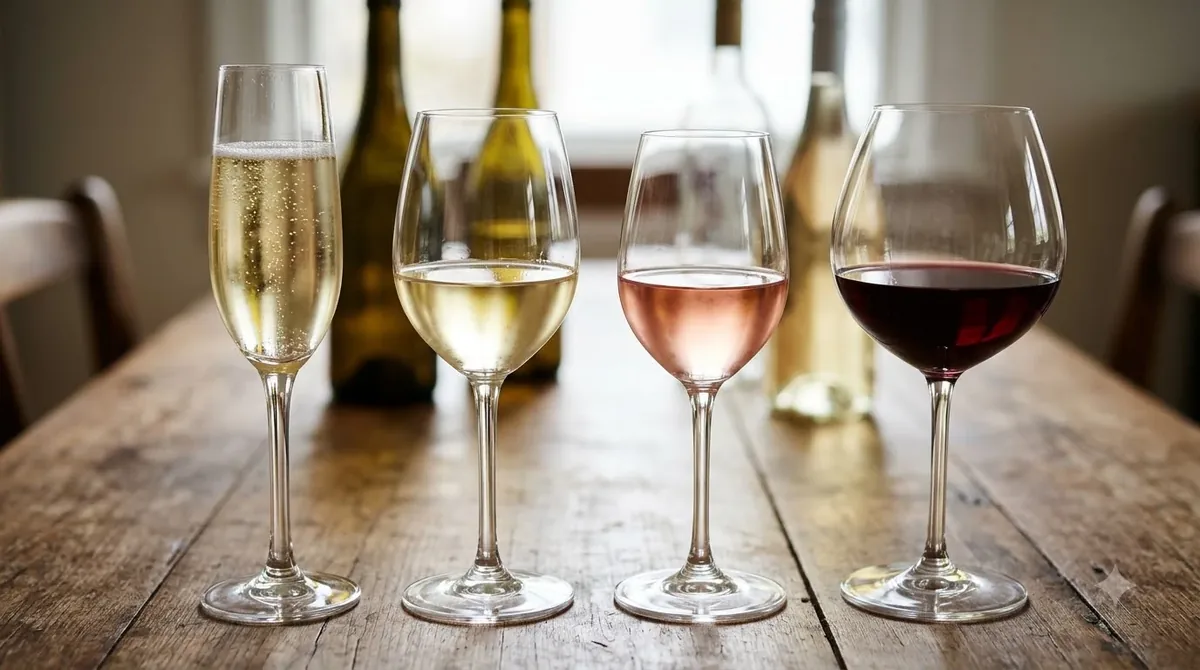
Still wines have a different story. As of 2004, Seyval blanc was the most planted variety, followed by Reichensteiner, Müller-Thurgau, and Bacchus. Red varieties are planted less often, with Dornfelder, Pinot Meunier, and Pinot noir among the names that appear in the sources. Pinot noir is the grape you will most often see in English red and rosé styles.
| Style | Common grapes | What to expect |
|---|---|---|
| Sparkling wine | Chardonnay, Pinot noir, Pinot Meunier | Crisp acidity, fine bubbles, and a fresh finish |
| Still white | Bacchus, Reichensteiner, Müller-Thurgau, Seyval blanc | Light body and aromatic, floral notes |
| Still red and rosé | Pinot noir, Dornfelder | Lighter reds with bright fruit and moderate tannin |
Because English sparkling wine dominates the output, a bottle of English still white or red can feel like a different category altogether. Judge each style by what it sets out to do rather than by a comparison with Champagne or other classic regions.
Why Sparkling English Wine Stands Out
Most English wine is sparkling, and the industry has built its reputation on that style. Wikipedia notes that production doubled from 1.34 million bottles to 3.17 million between 2008 and 2009, and output has grown sharply since then. A record 21.6 million bottles were produced in 2023, although weather cut the 2024 harvest to about 10.7 million bottles.
Producers have also won recognition in competitions. The 2004 panel mentioned earlier is one example, and more recent wins have reinforced the reputation of English bubbles. For a buyer, the practical lesson is simple: when you see a well-regarded sparkling wine from a southern English producer, it is worth tasting alongside a bottle from a classic sparkling region to see how the two compare.
The industry is also growing fast beyond the bottle. WineGB, the trade body for UK wine, describes wine as the fastest growing agricultural sector in the UK. It reports 1,158 vineyards, up 4 percent on the previous year, and nearly 260 registered wineries. Sales are reported to have grown 200 percent from 2018 to 2024, and the sector says it needs to roughly double its workforce to keep pace.
How to Serve and Pair English Wine
Serve English sparkling wine well chilled, in a flute or a tulip-shaped glass that keeps the bubbles lively. Still whites are best cool rather than cold, which lets the aromatics and acidity show. English reds and rosé styles are usually best slightly chilled, especially lighter Pinot noir-based wines.
Pairings are straightforward. Sparkling wine suits fried snacks, smoked salmon, soft cheeses, and roast chicken. Lighter whites go well with fish, salads, and light pasta dishes. Pinot noir pairs nicely with roast duck and mushrooms, and a Dornfelder can handle richer meats. Match the wine’s weight and acidity to the food, and pour a glass of water alongside to keep the meal relaxed.
When you host a group, a simple plan works well: one sparkling bottle to open the meal, one lighter white for the first course, and one Pinot noir for the main. That range shows the main styles of English wine without overwhelming guests. Ask the shop or the producer which grapes are in each bottle, since the label may not spell it out.
Always drink responsibly and pace your glasses with food. A glass or two with a meal is the normal way most people enjoy wine.
Tip: If you are unsure where to start, choose an English sparkling wine made from Chardonnay and Pinot noir. That combination shows the style most clearly.
Frequently Asked Questions
Is England known for wine?
Yes, especially for sparkling wine. The English wine industry has a long history, peaked in the late 1980s, and has grown again since the 1970s, with sparkling wine making up most of the output.
Which grapes are used in English sparkling wine?
Chardonnay, Pinot noir, Pinot Meunier, Pinot blanc, Pinot gris, and Seyval blanc are among the grapes used. Chardonnay and the Pinot family are the most common choices for sparkling styles.
Where are most English vineyards?
Most are in southern England, in counties such as Kent, Sussex, Surrey, and Essex. A commercial vineyard near Malton in Yorkshire is the most northerly.
Is English wine expensive compared with imports?
Prices vary by producer and style, and the sources do not give a single benchmark. Compare bottles of similar style and quality, and read the producer’s own description before deciding.
English wine is a fast-moving story, and the best way to follow it is to taste across styles. Start with a sparkling bottle, then try an English still white or a Pinot noir. For more ideas on how regions compare, read about Douro wine or browse the Wine Regions guide.
More in Wine Regions
 Willcox Wine Trail: Discover Arizona’s High-Elevation Wine CountryUpdated Nov 20, 2026
 Yakima Valley Wine Region: Find the Best Styles to TryUpdated Nov 20, 2026
 Vosne Romanee Wine Tasting: Identify Aromas and Choose Better PairingsUpdated Nov 20, 2026
 Yakima Valley Wine Festival: Find the Best Seasonal Wine EventsUpdated Nov 20, 2026
 Wales Vineyards: Discover Cool-Climate Wines and Where to VisitUpdated Nov 20, 2026
 Yountville Wine Festival: Discover Napa Wines and Local FoodUpdated Nov 20, 2026