

We may earn a commission when you buy through links on this page, at no extra cost to you. Learn more.
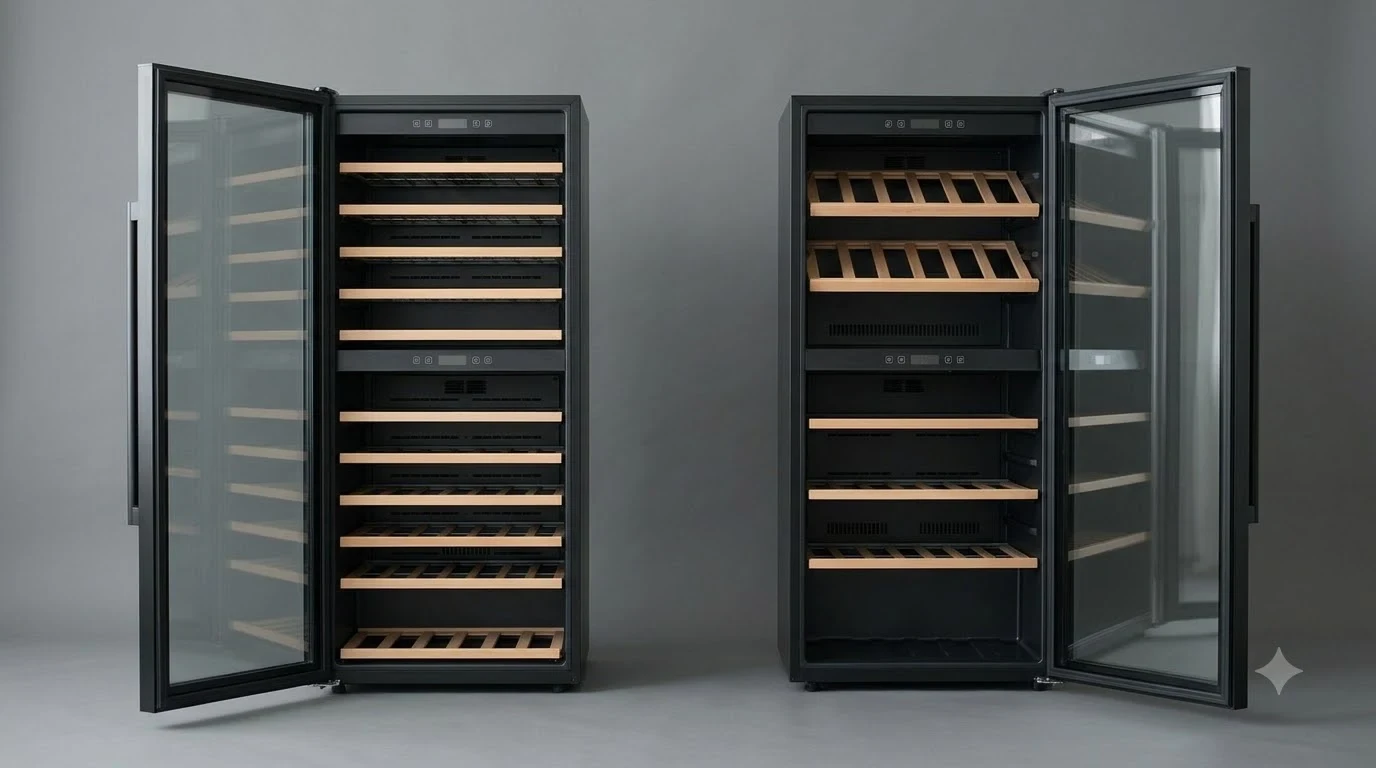
The edgestar under counter wine fridge, particularly the CWR362FD, is a 36-bottle dual-zone wine cooler designed for homeowners who want separate red and white wine storage beneath a kitchen counter. Its French doors, adjustable temperature settings, fan-assisted circulation, and built-in carbon filters make it an appealing choice for a dedicated home wine station. However, its relatively modest capacity, specific installation clearances, and one-year parts-and-labor warranty deserve careful consideration before purchasing.
EdgeStar offers several wine refrigeration configurations, but the CWR362FD stands out for combining a compact under-counter footprint with two independently adjustable storage compartments. It is designed to accommodate everyday wine collections without requiring a separate cellar or large freestanding refrigerator. This review examines its specifications, owner feedback, installation requirements, and practical limitations to help determine whether this particular model fits your kitchen and wine-drinking habits.
Specs and Key Features of the EdgeStar CWR362FD
The EdgeStar CWR362FD combines a 36-bottle rated capacity with two temperature-controlled compartments in a cabinet designed for under-counter installation. Its strongest specifications are the independently adjustable zones, French-door arrangement, and front ventilation, although the actual storage capacity depends on bottle dimensions.
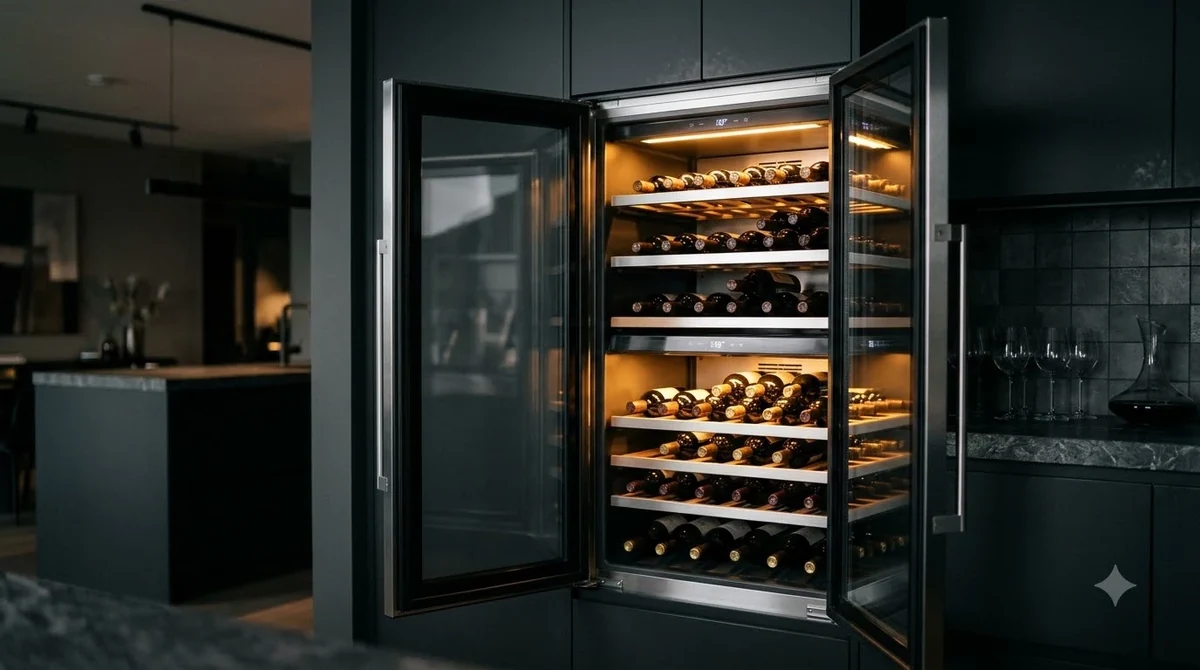
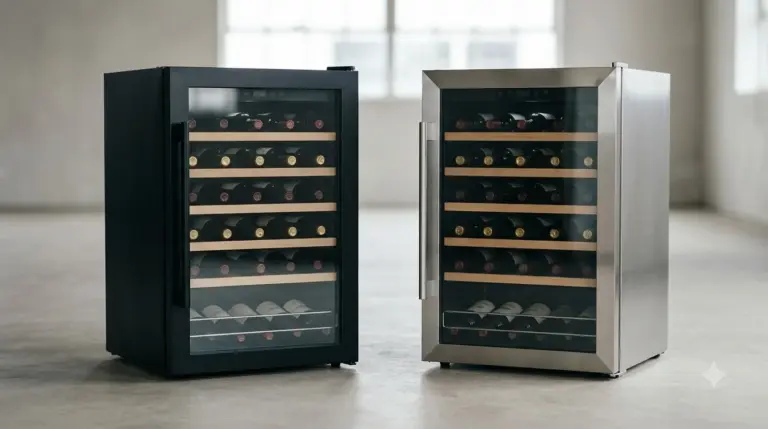
The appliance measures 33 7/8 inches high, 23 7/16 inches wide, and 24 1/2 inches deep when measured with the handle. Its black cabinet, stainless steel French doors, and wood-trimmed sliding shelves give it a more furniture-like appearance than a basic beverage refrigerator. At 110 pounds according to the owner’s manual, it is also a substantial appliance that requires a suitable supporting surface and careful installation.
The CWR362FD is particularly interesting because its two compartments can operate at different temperatures. Each zone has an adjustment range of 40°F to 65°F, giving owners flexibility to store white wines, sparkling bottles, and reds under different conditions. The control panel has separate displays and adjustment buttons for the left and right sections. Settings change in one-degree increments, making it possible to establish different storage environments without opening either door.
| Specification | EdgeStar CWR362FD |
|---|---|
| Rated capacity | 36 standard 750 ml bottles |
| Cooling configuration | Dual zone |
| Temperature range | 40°F–65°F per zone |
| Height | 33 7/8 inches |
| Width | 23 7/16 inches |
| Depth with handle | 24 1/2 inches |
| Weight | 110 pounds |
| Shelf count | 12 slide-out shelves |
| Full-depth shelves | 10 |
| Partial-depth shelves | 2 |
| Electrical requirement | 115 V, 60 Hz |
| Input power | 130 watts |
| Warranty | 1 year parts and labor |
The shelf arrangement consists of 10 full-depth metal shelves and two partial-depth shelves with wood-trimmed fronts. This configuration makes individual bottles easier to reach than a simple stacked arrangement. The manufacturer’s stated capacity is based on standard Bordeaux-style bottles, rather than an assortment of every wine bottle shape available.
Additional features include fan-assisted internal circulation, a carbon filter in each compartment, tinted glass doors, blue LED lighting, and an integrated safety lock. These features serve different purposes: the fans distribute cool air, the filters help control unwanted odors, and the doors allow owners to see the collection while limiting exposure to strong external light.
One important distinction concerns the digital temperature displays. The manual explains that they show the selected temperature for each zone, not a direct measurement of the current interior temperature. Owners who want to monitor actual storage conditions should use an independent refrigerator thermometer rather than treating the displayed setting as a verified reading.
For the complete technical details, consult the EdgeStar CWR362FD owner’s manual and installation specifications. This document is particularly useful because it includes electrical requirements, clearance diagrams, operating instructions, and troubleshooting information.
What Owners Like About the Wine Cooler
Owner feedback and product descriptions point to three recurring advantages: the two-zone arrangement, the attractive French-door design, and the ability to fit the appliance into a kitchen counter installation. These characteristics make the CWR362FD particularly appealing to households that regularly serve different wine styles.
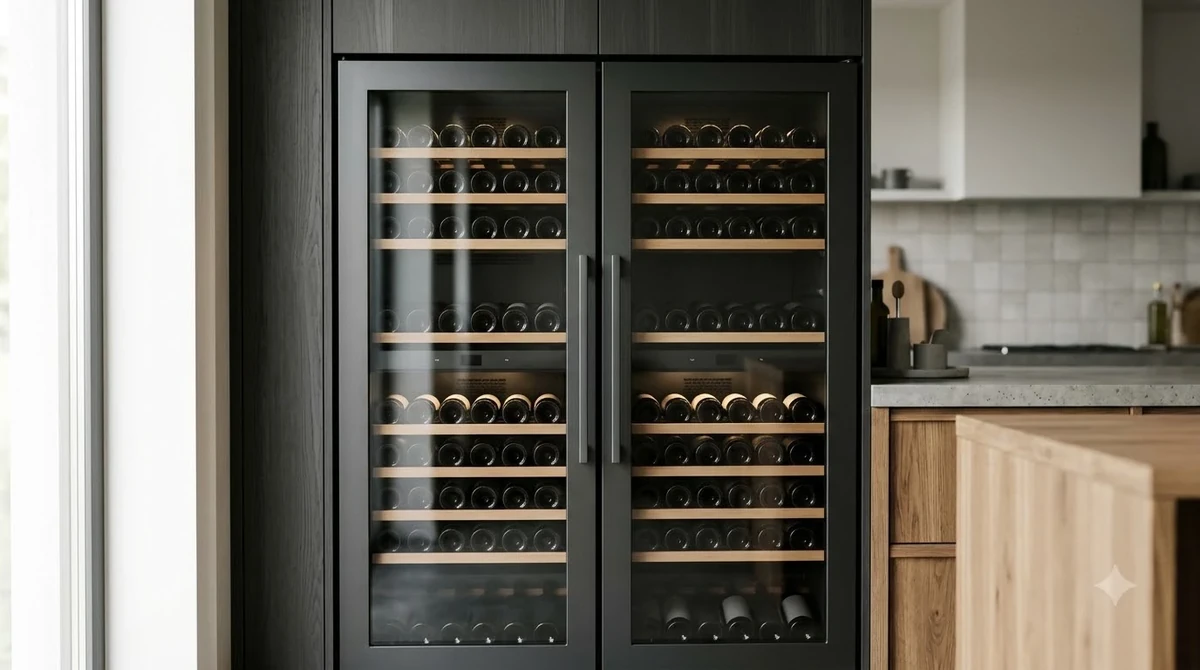
The dual-zone arrangement is arguably the most useful feature. A household that regularly drinks Cabernet Sauvignon and Chardonnay has different serving-temperature requirements for those wines. A full-bodied red generally benefits from a serving temperature around 60°F to 65°F, while a fuller-bodied white is often served around 50°F to 55°F. Having separate compartments makes it easier to prepare both styles without repeatedly changing one refrigerator’s setting.
The arrangement also works for households that enjoy sparkling wine. Sparkling bottles generally benefit from colder serving conditions, around 40°F to 50°F. A dedicated zone can therefore be configured for sparkling wine while the other compartment remains suitable for still wines. The CWR362FD’s adjustment range includes these typical serving temperatures, although long-term storage conditions and immediate serving preferences are not necessarily identical.
Appearance is another advantage. The stainless steel French doors and wood-trimmed shelves create a coordinated look that can work alongside modern kitchen appliances. The glass panels also make it easier to identify bottles without opening the cabinet, while the blue LED lighting provides interior visibility.
The French-door configuration has a practical benefit beyond appearance. Each door provides access to a separate compartment, so retrieving a bottle from one side does not require opening the other side. This arrangement can be useful during dinner parties when guests request different wine styles throughout the evening.
Storage organization is another positive feature. The 12 slide-out shelves allow bottles to be separated by producer, grape variety, or drinking occasion. For example, one section could hold Pinot Noir and Merlot, while the other contains Sauvignon Blanc, Riesling, and Chardonnay. The partial-depth shelves also provide some flexibility for arranging bottles that do not occupy a complete shelf.
Customer feedback on the CWR362FD includes positive comments about the cooling compartments and its ability to fit beneath countertops. One Walmart owner specifically appreciated the separate cooling sections and reported that the appliance held slightly more than its stated capacity. However, that experience should not be treated as a guaranteed capacity figure because bottle shape and shelf arrangement influence how many bottles fit.
Another owner described replacing a previous EdgeStar refrigerator after approximately seven years of operation, reporting that compressor components were no longer available for the older unit. This illustrates an important ownership consideration: a refrigerator can deliver several years of useful service while still becoming difficult or uneconomical to repair when replacement components are unavailable.
For households planning a dedicated kitchen wine station, these features provide a compelling combination of storage organization and visual presentation. The appliance is also more convenient than storing bottles in several separate locations around the home. Readers comparing other appliances can explore additional wine cooler and model reviews before settling on a particular installation size.
Common Complaints and Limitations
The CWR362FD has several compromises that buyers should understand, especially its 36-bottle capacity, temperature-display limitations, installation demands, and potentially noticeable operating noise. Its feature list is attractive, but it is not a substitute for a large dedicated wine cellar.
The first limitation is capacity. Although 36 bottles sounds substantial, the number is based on conventional 750 ml bottles with relatively standard dimensions. Burgundy bottles, Champagne bottles, sparkling wine bottles, and other wider formats can take up additional shelf space. A collection containing many unusually shaped bottles may therefore hold considerably fewer than the published maximum.
This issue matters particularly for collectors who purchase wines from several regions. A Bordeaux-style Cabernet Sauvignon bottle generally has a narrower profile than many Champagne bottles. Some Burgundy bottles also have wider shoulders and bodies. When the shelves are arranged closely together, accommodating these shapes may require removing a shelf or leaving some storage positions empty.
Owners should also understand the difference between the set temperature and the actual temperature. The CWR362FD displays the selected setting rather than a live measurement of the interior air. That distinction can become frustrating for someone who expects the screen to provide a direct temperature reading.
Using an independent thermometer provides a practical solution. A small refrigerator thermometer placed in each compartment can help identify whether the interior environment corresponds to the selected setting. Checking different shelf positions can also reveal whether temperatures vary between the upper and lower areas.
Operating noise deserves consideration as well. The CWR362FD uses compressor refrigeration and internal fans, so some mechanical sound is expected during cooling cycles. Specialist commentary describes generally positive impressions of operation, but also mentions occasional complaints about excessive noise. The acoustic experience can depend on the surrounding cabinetry, floor construction, and distance from living or dining areas.
Another limitation is the warranty. The owner’s manual specifies one year of parts and labor coverage from the original retail purchase. That is a relatively short coverage period for an appliance that may be integrated into a kitchen renovation. Buyers should consider the potential cost and availability of replacement components before making a long-term cabinetry commitment.
Maintenance is another responsibility. The carbon filters require periodic replacement, with the manual recommending intervals of three to six months depending on exposure to odors. A cooler installed in a busy kitchen may need more frequent attention than one placed in a dedicated wine room.
There are also practical installation concerns. A unit that fits into a nominal 24-inch kitchen opening is not automatically guaranteed to fit every cabinet arrangement. The door swing, rear ventilation space, electrical outlet position, and handle depth all need to be considered. Ignoring these details can make an otherwise suitable appliance difficult to install or service.
Finally, the 36-bottle capacity can become restrictive for growing collections. Someone who buys several cases of wine annually may quickly outgrow the appliance. Its best use is organized everyday storage rather than accommodating an extensive cellar with multiple cases of each vintage.
Who Should Buy the EdgeStar CWR362FD and Who Should Skip It?
The CWR362FD makes the most sense for homeowners with an approximately 24-inch-wide kitchen opening, a moderate collection of up to 36 standard bottles, and a genuine need for two separate temperature settings. It is less suitable for large collectors, unusually shaped bottles, or buyers who prioritize extended warranty coverage.
One strong candidate is the household that regularly serves both red and white wine. Instead of adjusting a single-zone cooler every time drinking preferences change, owners can dedicate one compartment to reds and the other to whites. The 40°F to 65°F adjustment range accommodates a broad selection of common wine-serving preferences.
For example, the left compartment might be set around 55°F for general red wine storage and the right compartment around 48°F for lighter whites and sparkling bottles. These are practical starting settings rather than universal requirements. Individual bottles may need further chilling before serving, particularly sparkling wine or delicate aromatic whites.
The appliance also suits homeowners undertaking a kitchen renovation. Its stainless steel exterior can coordinate with other kitchen appliances, while the French doors make it visually distinctive. A built-in installation keeps the floor area clear and creates a more integrated appearance than a standalone wine refrigerator.
However, the opening must be planned around the actual dimensions rather than the nominal product width. The unit is 33 7/8 inches tall and 23 7/16 inches wide, with a handle depth of 24 1/2 inches. Cabinet construction, flooring height, nearby walls, and door-opening clearance can all affect the final fit.
Another suitable buyer is someone who values organization. The 12 sliding shelves offer a structured way to separate everyday bottles, special-occasion wines, and bottles intended for upcoming dinners. This is useful for households that want to keep a smaller but carefully selected collection readily accessible.
On the other hand, collectors who regularly purchase large quantities of Champagne or Burgundy should look beyond the stated 36-bottle figure. The nominal capacity is not a promise that every bottle shape will fit. Someone with a substantial collection of sparkling wine may find the shelf spacing restrictive.
Buyers who need one consistent temperature for all their wines may also prefer a simpler single-zone model. Dual-zone refrigeration is valuable when separate settings are genuinely useful, but it adds controls and another cooling compartment that may be unnecessary for someone who mainly drinks one category of wine.
The CWR362FD is also not an ideal choice for buyers who want smart-home connectivity or detailed electronic monitoring. Its documented controls provide basic temperature selection and lighting operation, rather than app-based management or sophisticated collection tracking.
Those who prioritize long-term repairability should investigate service arrangements and replacement-part availability before purchasing. A one-year warranty provides limited protection compared with the expected ownership period of a built-in kitchen appliance.
For entertaining, the refrigerator can be a useful part of a larger serving arrangement. A compartment can hold wines for a meal featuring chicken Marsala, while the other keeps chilled white or sparkling bottles ready for guests. This is where the separate cooling sections can become more valuable than the headline bottle capacity.
How the CWR362FD Compares to Alternative Wine Storage Options
The CWR362FD occupies a middle ground between small single-zone refrigerators and larger wine-storage cabinets. Its 36-bottle capacity and dual-zone configuration make it attractive for everyday entertaining, but different storage priorities may justify considering another format.
A compact single-zone wine refrigerator is generally the simpler option. It can work well for someone with a collection consisting mainly of one wine style or for a homeowner who simply wants bottles kept at a consistent storage temperature. It may also be easier to accommodate in a smaller kitchen opening.
However, single-zone storage does not provide the same flexibility as the CWR362FD. If a household frequently alternates between Pinot Noir, Chardonnay, Sauvignon Blanc, and Champagne, separate compartments make temperature management more convenient. The decision depends on whether that flexibility is useful enough to justify a more complicated appliance.
A larger dual-zone refrigerator is another alternative. Some models prioritize maximum bottle capacity, providing more room for collectors who regularly purchase cases. Their wider cabinets or taller profiles may require more installation space, however, and the extra storage is not particularly useful if the collection remains relatively small.
Freestanding wine coolers offer a different approach. They can be placed in a dining room, office, or dedicated wine area without requiring permanent kitchen cabinetry. However, a freestanding appliance does not necessarily have the front-venting arrangement required for installation inside a cabinet enclosure.
That distinction is important. The CWR362FD is specifically designed to support built-in installation with appropriate ventilation. A conventional freestanding refrigerator should not be enclosed simply because its exterior dimensions appear suitable. Heat must be able to escape from the appliance according to its installation requirements.
Another consideration is whether a household needs a wine refrigerator or a combination wine-and-beverage center. The CWR362FD is primarily a wine-storage appliance. Someone who wants dedicated space for cans, bottled water, and soft drinks may find a combination beverage refrigerator more practical.
Collectors should also think about the distinction between serving temperature and long-term storage. A wine refrigerator can keep bottles at convenient temperatures for consumption, but its ability to hold a particular setting does not automatically make it a substitute for a carefully managed cellar intended for extended bottle aging.
For reference, common serving temperatures include approximately 45°F to 50°F for light whites and rosé, 50°F to 55°F for fuller-bodied whites, and 55°F to 60°F for lighter reds. Full-bodied reds generally benefit from approximately 60°F to 65°F. Sparkling wine is commonly served around 40°F to 50°F.
These ranges explain why the CWR362FD’s two compartments are useful. One zone can remain configured for whites and sparkling wine while the other accommodates reds. However, a bottle may still need a short period of additional chilling or warming before it reaches its preferred drinking temperature.
Ultimately, the most appropriate alternative depends on the collection rather than a manufacturer’s headline capacity. Someone with 15 bottles and limited space may prefer a compact model. Someone with 100 bottles may need a substantially larger appliance. The CWR362FD makes the most sense for the household that values two-zone flexibility in a relatively compact built-in format.
Installation, Maintenance, and Everyday Use
Proper installation is essential to getting reliable operation from the CWR362FD. The owner’s manual specifies ventilation clearances, a grounded electrical connection, and a level supporting surface, while routine filter replacement and sensible loading practices help maintain the appliance.
Before purchasing, measure the entire installation area rather than relying on the cabinet opening’s nominal width. The appliance itself measures 23 7/16 inches wide, 33 7/8 inches high, and 24 1/2 inches deep with the handle. Remember that surrounding walls and adjacent cabinet doors can interfere with the French doors even when the refrigerator physically fits into the opening.
EdgeStar’s installation instructions specify approximately one to two inches of rear clearance, one-quarter inch at the top, and one-quarter inch at the sides. Where a door opens next to a wall, the manual specifies at least 2 3/8 inches of clearance for the door swing. These requirements should be incorporated into the cabinetry plan before the refrigerator is delivered.
The manual also states that the appliance should operate in an ambient environment above 50°F and below 95°F. It should be protected from rain, direct moisture, and excessive heat. Positioning the refrigerator immediately beside an oven or grill is not recommended because elevated ambient temperatures can affect cooling performance.
Electrical planning matters too. The CWR362FD requires a grounded 115-volt, 60-Hz supply. Its stated input power is 130 watts, and the manual advises against using extension cords or power strips. A properly grounded outlet should be available before the appliance is installed.
Transport and startup require attention. The manual recommends using at least two people to move and install the cooler. After positioning it upright, leave it standing for at least 24 hours before connecting it to the power supply so the compressor oils can settle. Once operating, allow another 24 hours for the selected temperature to be reached before loading wine.
Tip: Keep an independent thermometer in each compartment and record the readings after the refrigerator has stabilized. The CWR362FD displays selected temperatures rather than live interior measurements, so independent monitoring provides a more useful picture of actual storage conditions.
Filter maintenance is equally important. Each compartment has a carbon filter intended to help prevent unwanted odors from reaching stored beverages. EdgeStar recommends replacement every three to six months, with more frequent attention appropriate in odor-heavy environments such as busy kitchens.
Cleaning should be performed carefully. Disconnect the appliance from its electrical supply before cleaning, and avoid abrasive or solvent-based products that can damage its surfaces. The door seals should remain clean and properly positioned so that the doors close securely.
Loading bottles requires some common sense. Begin with standard Bordeaux bottles to establish the intended shelf arrangement. Place wider bottles only where sufficient clearance exists, and avoid forcing shelves into positions that could damage the sliding hardware.
It is also sensible to organize bottles according to drinking schedule. Everyday wines can occupy convenient shelves, while bottles intended for special occasions can be placed in less frequently accessed positions. This approach reduces unnecessary door openings and makes it easier to keep track of the collection.
Wine should generally be stored away from strong light and excessive temperature fluctuations. Bottles intended for longer storage are commonly kept on their sides near 55°F when their closures benefit from horizontal positioning. The CWR362FD’s separate compartments can support different temperature preferences, although owners should distinguish convenient serving storage from a professionally controlled aging cellar.
For serving, a five-ounce pour is a useful standard, and a conventional 750 ml bottle provides approximately five glasses. Keeping a collection organized by style and occasion makes the appliance more practical for regular entertaining.
Finally, retain the model and serial number, purchase documentation, and warranty information. The manual specifies one year of parts and labor coverage from the original retail purchase. Keeping those records available makes it easier to discuss troubleshooting or service requirements with the appropriate support provider.
Frequently Asked Questions
Can the EdgeStar CWR362FD be installed beneath a standard kitchen countertop?
It is designed for under-counter installation, but cabinet height alone does not establish compatibility. The appliance also requires suitable rear ventilation, access for servicing, and enough room for both French doors to open. A cabinetmaker should verify the complete installation dimensions before preparing the opening.
Does the EdgeStar CWR362FD have a temperature memory function?
Yes. The owner’s manual describes a temperature memory function that saves the previously selected settings during a sudden power interruption. When electricity returns, the refrigerator is designed to resume those settings rather than requiring both compartments to be programmed again.
Can the CWR362FD display temperatures in Celsius?
Yes. The manual describes a Fahrenheit and Celsius switching function. Pressing and holding both temperature adjustment buttons simultaneously for approximately three seconds changes the displayed temperature scale.
Does the EdgeStar wine refrigerator have an automatic defrost system?
The troubleshooting section identifies an automatic defrost system. However, the manual also explains that manual defrosting may occasionally be necessary if frost accumulates under certain humidity or operating conditions. Keeping the door closed properly and limiting unnecessary openings can help reduce frost-related problems.
Can the CWR362FD be used to store food and other perishable groceries?
The owner’s manual describes the appliance as a wine cooler whose temperature range is optimized for wine storage. It specifically cautions that perishable food items may require a different storage environment. It should therefore not be treated as a general-purpose food refrigerator.
The EdgeStar CWR362FD is a practical option for homeowners who want organized, dual-zone wine storage without dedicating an entire room to a collection. Its 36-bottle capacity, French doors, and flexible temperature settings are attractive features, provided the installation and bottle-fit limitations suit the household. Confirm the cabinet dimensions, ventilation requirements, warranty, and local service availability before committing to this under-counter wine refrigerator.
More in Model Reviews
 Lanbo Dual Zone Wine Fridge Review: Features, Capacity, and DrawbacksUpdated Nov 20, 2026
 Lanbo Beverage Cooler Review: Features, Capacity and ReliabilityUpdated Nov 20, 2026
 Haier Wine And Beverage Center Review: Capacity, Cooling, and FitUpdated Nov 20, 2026
 Haier Countertop Wine Cooler Review: Features and Buying AdviceUpdated Nov 20, 2026
 KitchenAid Built In Wine Fridge Review: Features, Fit and Bottle CapacityUpdated Nov 20, 2026
 KitchenAid 24 Inch Wine Fridge: Features, Capacity, and Buying AdviceUpdated Nov 20, 2026