

We may earn a commission when you buy through links on this page, at no extra cost to you. Learn more.
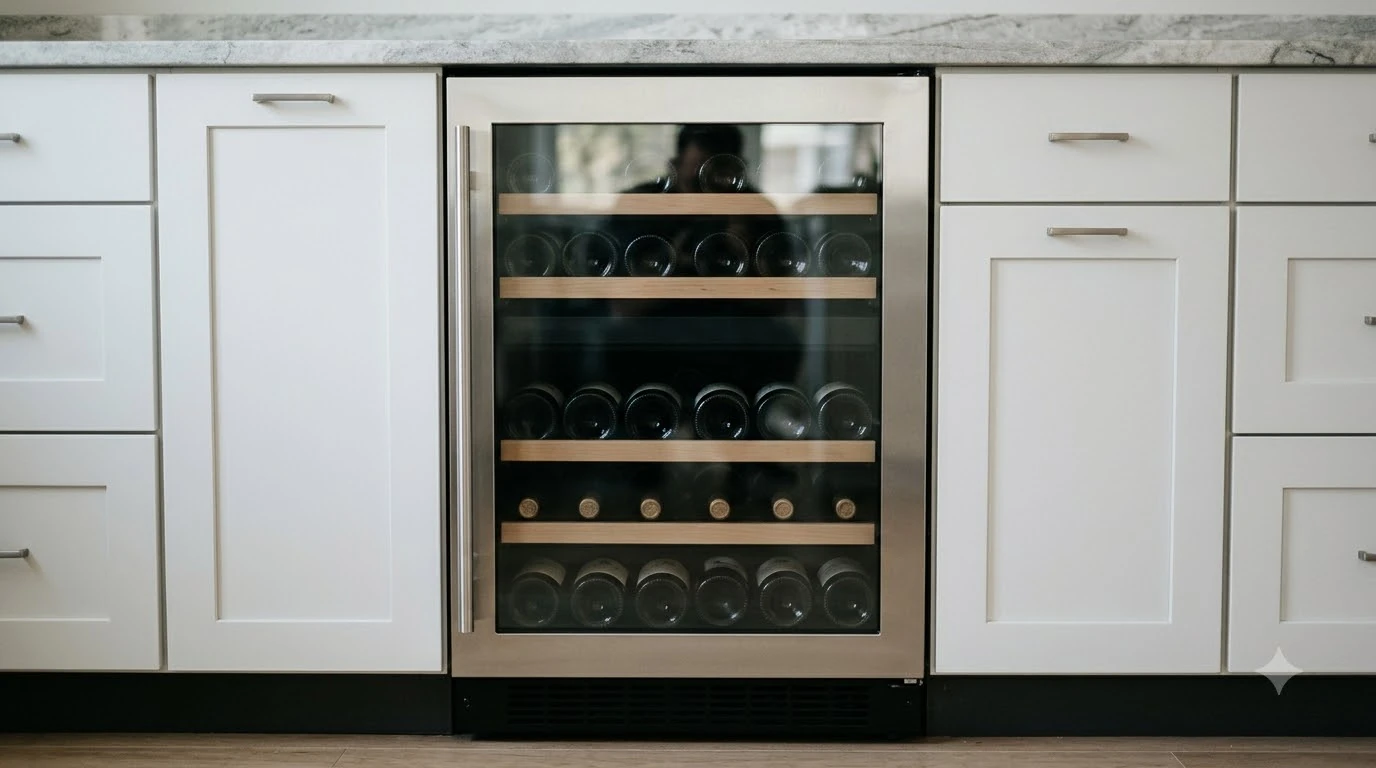
The edgestar built in wine fridge lineup is worth considering if you want undercounter wine storage with compact dimensions, stainless steel styling, and single-zone or dual-zone temperature control. Its models range from narrow wine coolers for smaller collections to larger 24-inch cabinets designed for substantial bottle storage. The main considerations are actual bottle capacity, installation clearance, temperature consistency, and long-term reliability, which deserves particular attention when comparing owner feedback.
EdgeStar offers several configurations rather than one universal built-in wine refrigerator. That distinction matters because a narrow single-zone model serves a different purpose from a larger dual-zone cabinet. This review examines the specifications, practical advantages, reported ownership experiences, and installation considerations that can help determine whether an EdgeStar cooler belongs in your kitchen, bar, or dedicated wine storage area.
Specs and Key Features
EdgeStar’s built-in wine refrigerator range includes compact single-zone cabinets and larger dual-zone models. The CWR302SZ and CWR462DZ illustrate the differences particularly well: one accommodates 25 standard bottles in a narrower cabinet, while the other holds 46 bottles across two independently controlled temperature zones.
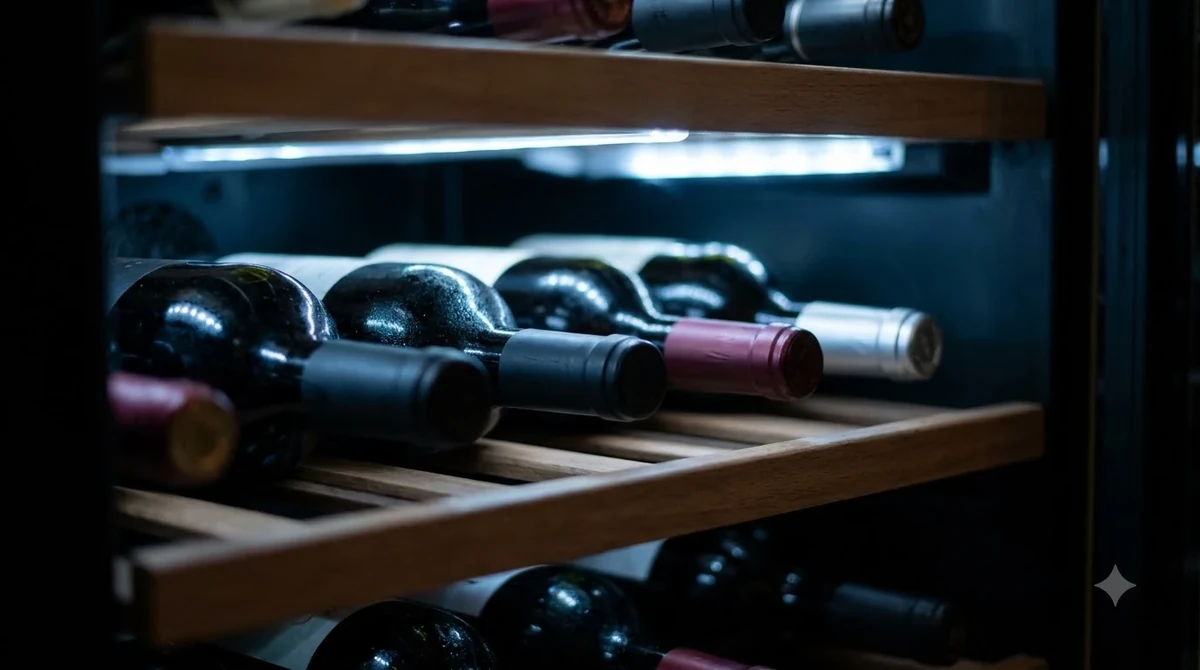
The CWR302SZ is a useful reference point for buyers looking for a smaller undercounter appliance. According to its owner’s manual, it measures 32 inches high, 15 inches wide, and 25 1/4 inches deep, including the handle. Its temperature range extends from 40°F to 65°F, making it suitable for storing different wine styles within a single temperature environment.
The CWR462DZ takes a different approach. Its 23 1/2-inch width and 46-bottle capacity make it a more substantial option, while its two temperature zones allow separate settings for wines that benefit from different serving conditions. The upper compartment operates between 40°F and 54°F, while the lower compartment operates between 54°F and 65°F.
| Specification | CWR302SZ | CWR462DZ |
|---|---|---|
| Configuration | Single zone | Dual zone |
| Rated capacity | 25 bottles | 46 bottles |
| Height | 32 inches | 33 1/2 inches |
| Width | 15 inches | 23 1/2 inches |
| Depth | 25 1/4 inches | 22 1/2 inches |
| Temperature range | 40°F–65°F | Upper: 40°F–54°F; lower: 54°F–65°F |
| Electrical supply | 115V, 60Hz | 115V, 60Hz |
| Input power | 120 watts | 120 watts |
| Weight | 83 pounds | 105 pounds |
| Exterior | Black cabinet, stainless steel door | Black cabinet, stainless steel door |
These figures come from the respective EdgeStar owner’s manuals, rather than assumptions based on the overall product family. Buyers can consult the EdgeStar CWR462DZ owner’s manual for the model’s installation, operating, and electrical specifications. Specifications can vary between model numbers, so the dimensions and electrical requirements of the exact appliance should be checked before purchasing.
Another example is the CWR181SZ, a particularly narrow model with an 18-bottle rating. Its dimensions are 34 1/4 inches high, 11 5/8 inches wide, and 22 5/8 inches deep. This format may appeal to homeowners who have limited cabinetry space but still want a dedicated wine refrigerator.
The wider CWR1552DZ demonstrates the upper end of the family’s storage ambitions. Home Depot describes it as a 24-inch built-in dual-zone wine cooler with a rated capacity of 141 bottles and 14 wire shelves. It is a substantially different proposition from a compact undercounter cabinet.
Temperature controls are another important feature. The CWR302SZ uses a digital control panel with one-degree adjustment increments and a displayed set temperature. Its manual also describes temperature memory, which allows the previous setting to return after a power interruption. However, a displayed setting should not automatically be interpreted as a continuously verified measurement of the actual temperature surrounding every bottle.
Overall, the specifications suggest that EdgeStar’s strongest selling point is variety. Buyers can choose a cabinet that suits their available space and collection rather than compromising on an oversized appliance. The challenge is matching the advertised capacity and cooling arrangement to the way wine will actually be stored.
What Owners Like
Positive owner feedback tends to focus on the appearance, storage convenience, and temperature flexibility of EdgeStar wine refrigerators. These features are particularly useful in kitchens where a wine cooler needs to function as both an appliance and part of the cabinetry design.

The stainless steel exterior is one of the more recognizable design characteristics across several models. Combined with a dark cabinet, it provides a relatively neutral appearance that works with many contemporary kitchen finishes. An undercounter installation also keeps bottles accessible without requiring a separate freestanding refrigerator elsewhere in the home.
Dual-zone cooling is another practical advantage. A household that regularly serves both white and red wines may appreciate having two temperature environments in one cabinet. For example, a cooler zone can accommodate Sauvignon Blanc, Riesling, and sparkling wine, while the warmer zone can hold Cabernet Sauvignon, Merlot, and other reds.
The CWR462DZ illustrates this arrangement with an upper range of 40°F to 54°F and a lower range of 54°F to 65°F. These overlapping boundary temperatures give buyers some flexibility when choosing settings for different collections. The two compartments can be organized according to drinking preferences rather than simply separating bottles by color.
Some customers also appreciate the appearance and relatively quiet operation of the CWR362FD. Lowe’s customer feedback describes its French-style doors, blue interior lighting, and separate temperature controls positively. Several owners also report satisfactory cooling performance during normal use.
Storage capacity can be another positive, particularly for buyers choosing a model with a realistic bottle count for their collection. A 25-bottle appliance can be adequate for someone who keeps a modest selection for everyday meals and occasional entertaining. A 46-bottle cabinet offers more room for people who regularly purchase wine in mixed cases.
There is also an organizational benefit to having a dedicated wine appliance. Bottles can be kept together rather than occupying space in a general refrigerator, where food storage requirements and frequent door openings can make organization less convenient.
For entertaining, having different wines ready at appropriate temperatures makes preparation easier. A chilled sparkling wine can be available for an Aperol Spritz recipe, while a red wine collection can remain in its own storage compartment. This is particularly useful when the kitchen or dining area doubles as a home bar.
However, positive reviews should be interpreted as individual ownership experiences rather than proof that every unit will perform identically. Model differences, installation conditions, room temperature, and the age of the appliance all influence the experience.
Common Complaints
The most important concerns surrounding EdgeStar built-in wine refrigerators involve long-term reliability, temperature monitoring, moisture management, and replacement-part availability. These issues do not establish that every model will develop problems, but they deserve consideration before committing to a permanent cabinet installation.
Cooling reliability
Some owners report that their appliances stop cooling after relatively short periods of operation. Lowe’s feedback for the CWR362FD includes reports of compressor failures and units that stopped working after months or a few years.
One owner described receiving multiple replacement units over a period of approximately two to three years. Another customer reported that a previous version had lasted considerably longer than the replacement model. These experiences are not enough to calculate a failure rate, but they demonstrate why warranty coverage and repair options should be considered before buying.
A wine refrigerator is different from a decorative cabinet because its primary purpose is maintaining a suitable environment for bottles. If the compressor or cooling system fails, the contents may be exposed to temperatures that are unsuitable for storage, especially in a warm kitchen.
Temperature display limitations
Temperature monitoring is another concern. Some customer feedback for the CWR362FD mentions differences between the displayed setting and the actual internal temperature. One reviewer specifically preferred an earlier design that displayed the measured temperature rather than only the selected target.
This distinction is important. Setting a cooler to 50°F does not necessarily mean every bottle is consistently experiencing exactly 50°F. Air circulation, shelf position, door openings, ambient temperature, and the cooling cycle can all affect the conditions inside the cabinet.
For buyers who store valuable bottles for extended periods, an independent refrigerator thermometer can provide an additional reference. Checking readings in different areas of the cabinet can help identify significant temperature differences between shelves or compartments.
Moisture and condensation
Moisture is another issue that deserves attention. A Home Depot customer review of the CWR1552DZ describes excessive condensation, wet bottle labels, and mold affecting bottles. The reviewer also reported that removing some shelves and rearranging the contents did not resolve the problem.
This is a particularly relevant complaint for collectors who keep bottles for several months or longer. Excess moisture can damage labels and make bottle identification difficult. It can also create an unpleasant storage environment if condensation persists around the interior surfaces.
It is important not to assume that all condensation indicates a defective appliance. Ambient humidity, door sealing, ventilation, and temperature differences can contribute to moisture accumulation. Nevertheless, persistent wet surfaces or visible mold should not be dismissed as ordinary operation.
Shelf access and practical capacity
Advertised bottle capacity also deserves scrutiny. A standard 750 ml Bordeaux-shaped bottle is not the same size as a wide Burgundy bottle, sparkling wine bottle, or oversized bottle. A cabinet advertised for a particular number of bottles may hold fewer when the collection contains a mixture of shapes.
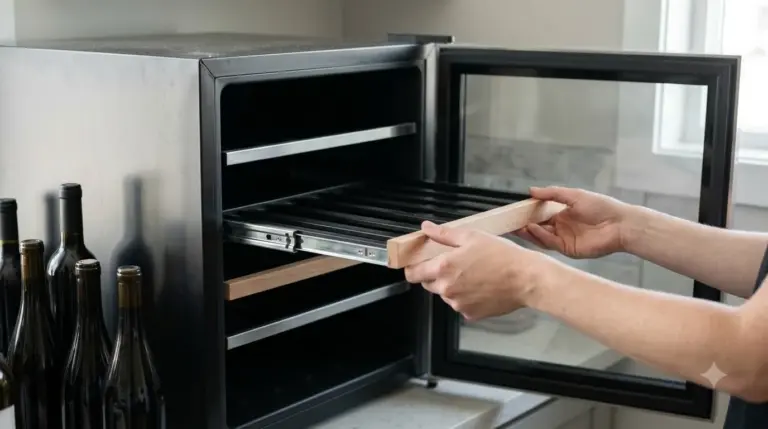
Owner feedback for other EdgeStar models has also mentioned restricted shelf extension and difficulty reaching bottles toward the back. This is a practical concern for frequently used collections because a full cabinet can become inconvenient if bottles are difficult to remove without rearranging neighboring shelves.
Tip: Before purchasing, compare the interior shelf dimensions with the bottles you own. Champagne, sparkling wine, and wider Burgundy bottles can reduce usable capacity, even when the advertised rating is based on standard 750 ml bottles.
These complaints suggest a sensible buying approach: examine the installation requirements, ask about replacement shelves and service options, and understand the return policy before placing the appliance into permanent cabinetry.
Who Should Buy and Who Should Skip
An EdgeStar built-in wine refrigerator is most appropriate for homeowners who need dedicated undercounter storage and have identified a specific model that fits their collection. Buyers who value compact dimensions, stainless steel styling, and optional dual-zone cooling may find the product range appealing.
Who should consider buying one?
Homeowners with limited kitchen space: The narrow CWR181SZ is an example of how a compact cabinet can provide wine storage without occupying the width of a conventional 24-inch appliance. Its 11 5/8-inch width makes it particularly relevant for kitchens with narrow openings.
Households that regularly serve different wine styles: A dual-zone configuration such as the CWR462DZ allows separate temperature settings for whites and reds. Someone who frequently serves chilled Sauvignon Blanc alongside lighter or fuller-bodied red wines may find this arrangement more convenient than a single-zone cooler.
Home entertainers: Dedicated wine storage can make it easier to organize bottles for dinner parties, celebrations, and casual gatherings. A collection of everyday whites, sparkling wines, and reds can be arranged in one accessible location.
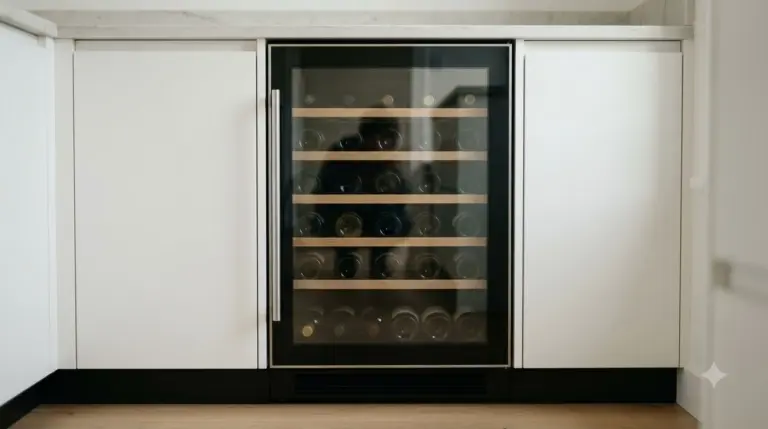
Buyers who want a built-in appearance: A properly installed undercounter unit can integrate with surrounding cabinetry and help keep the kitchen visually organized. This is particularly appealing in homes where countertop space is already limited.
People with moderate collections: A 25-bottle or 46-bottle model may be more practical than purchasing a large cabinet that remains mostly empty. Choosing a capacity based on actual purchasing habits can reduce wasted kitchen space.
Who should skip it?
Collectors seeking highly controlled long-term storage: Buyers with expensive bottles intended for extended aging may prefer to investigate premium wine-storage systems with more extensive temperature monitoring, documented environmental controls, and established service networks.
People who need guaranteed quiet operation: Compressor-based wine coolers can produce operating sounds. Even when owners describe a particular model as quiet, sound levels depend on installation, leveling, room acoustics, and proximity to living areas.
Buyers who cannot accommodate ventilation requirements: A built-in label does not mean an appliance can be enclosed in any cabinet opening. If the installation space cannot provide the required rear clearance, airflow, and service access, another configuration may be more appropriate.
Owners of unusually shaped bottles: A collection dominated by large Champagne bottles, Burgundy bottles, or oversized formats may not fit the advertised capacity. These buyers should investigate shelf spacing before choosing a model.
Buyers who require extensive local repair support: Customer complaints about compressor problems and replacement components make service availability an important purchasing consideration. If an appliance is installed inside custom cabinetry, repair access can become an additional inconvenience.
The decision should therefore be based on more than the exterior design or headline bottle count. The best match is the model that fits the opening, accommodates the collection, and offers acceptable service arrangements for the expected period of ownership.
How It Compares to Alternatives
EdgeStar competes in a category that includes compact undercounter coolers, larger dual-zone wine refrigerators, and freestanding wine cabinets. The most useful comparison is not simply between brand names, but between the installation requirements, temperature arrangements, and storage capacities of each appliance type.
Compact single-zone wine refrigerators
A compact single-zone refrigerator is generally the better choice for a small collection or a restricted installation opening. The CWR302SZ, with its 25-bottle capacity and 15-inch width, illustrates this category.
The main advantage is straightforward organization. Every bottle shares one temperature setting, making the appliance easier to manage if the collection consists primarily of wines intended for similar storage conditions.
The disadvantage is limited flexibility. Someone who frequently serves sparkling wine, crisp whites, and fuller-bodied reds may prefer separate temperature zones. A single-zone appliance also requires more planning if the owner wants to store different styles together.
Dual-zone undercounter wine coolers
Dual-zone refrigerators are more appropriate for mixed collections. The CWR462DZ offers 46-bottle storage, with a cooler upper compartment and a warmer lower compartment. This arrangement can reduce the need for separate appliances when a household regularly serves both red and white wine.
However, two zones do not automatically mean two completely independent storage environments with identical cooling performance. Buyers should review the specific temperature ranges and understand which compartment supports the temperatures they need.
A dual-zone appliance may also be less useful for someone who purchases only one type of wine. In that situation, the additional compartment flexibility may not justify the larger footprint.
Freestanding wine refrigerators
A freestanding cooler offers greater flexibility in placement because it does not need to occupy a dedicated undercounter opening. It may be suitable for a dining room, basement, home bar, or utility area.
However, installation requirements are not interchangeable. Some EdgeStar products support both built-in and freestanding configurations, while other models are designed only for freestanding use. The CWF440SZ installation sheet, for example, explicitly states that the appliance is not designed for recessed cabinet installation.
Buyers should therefore avoid assuming that every EdgeStar wine refrigerator can be installed beneath a countertop. The exact model’s installation documentation should determine the permitted arrangement.
Large-capacity wine cabinets
For collectors who regularly purchase wine by the case, a larger cabinet may offer better organizational value. The CWR1552DZ is advertised as a 141-bottle, 24-inch dual-zone appliance, making it considerably larger than the CWR302SZ or CWR462DZ.
The trade-off is the amount of available space required. A large cabinet needs suitable cabinetry, sufficient floor support, and an installation arrangement that allows access for servicing. It is also important to consider whether the bottle capacity remains practical when storing different bottle shapes.
For broader appliance comparisons, the model reviews section can help readers evaluate individual products according to their intended use rather than relying on brand recognition alone.
Overall, EdgeStar’s range makes the most sense for buyers who identify a suitable model first and compare its actual specifications against competing appliances. A compact single-zone cooler and a large dual-zone wine cabinet should not be judged by the same requirements.
Frequently Asked Questions
Does an EdgeStar wine fridge need to stand upright before use?
Yes. The CWR302SZ owner’s manual recommends leaving the appliance upright for at least 24 hours before connecting it to power. This allows compressor oil to settle after transportation and handling. Following this preparation step is especially important when the refrigerator has been moved on its side or at an angle.
How long should an EdgeStar cooler run before loading wine?
The CWR302SZ manual recommends allowing at least 24 hours for the appliance to reach its selected temperature before storing wine. This initial cooling period helps establish a more suitable environment before bottles are added. It is separate from the recommendation to leave the unit upright before its first electrical connection.
Can EdgeStar wine coolers be used in a garage?
The CWR302SZ and CWR462DZ manuals specify an ambient operating environment above 50°F and below 95°F. A garage that regularly falls outside this range may affect cooling efficiency or operation. An indoor, climate-controlled location is generally a more suitable choice for these models.
Can the door swing be changed on an EdgeStar wine refrigerator?
Some EdgeStar models include instructions for reversing the door swing, but this feature should not be assumed across the entire range. The relevant owner’s manual should identify whether the hinges and mounting hardware support the change. Door clearance is particularly important in narrow kitchens and installations beside adjoining cabinets.
What electrical outlet does an EdgeStar built-in wine cooler require?
The CWR302SZ manual specifies a properly grounded 115V, 60Hz electrical supply and recommends connecting the appliance to its own circuit. It also advises against using extension cords or power strips. Buyers should arrange the outlet before installation so the cord is not pinched behind the cabinet.
EdgeStar built-in wine refrigerators offer useful choices for homeowners who want dedicated wine storage without giving up unnecessary kitchen space. Their compact and dual-zone configurations can suit different collections, but reported reliability and moisture concerns make careful model selection particularly important. Compare the exact dimensions, temperature specifications, installation instructions, and service arrangements before buying, and choose an appliance that fits both your cabinetry and your actual wine-storage habits.
More in Model Reviews
 Lanbo Dual Zone Wine Fridge Review: Features, Capacity, and DrawbacksUpdated Nov 20, 2026
 Lanbo Beverage Cooler Review: Features, Capacity and ReliabilityUpdated Nov 20, 2026
 Haier Wine And Beverage Center Review: Capacity, Cooling, and FitUpdated Nov 20, 2026
 Haier Countertop Wine Cooler Review: Features and Buying AdviceUpdated Nov 20, 2026
 KitchenAid Built In Wine Fridge Review: Features, Fit and Bottle CapacityUpdated Nov 20, 2026
 KitchenAid 24 Inch Wine Fridge: Features, Capacity, and Buying AdviceUpdated Nov 20, 2026