


We may earn a commission when you buy through links on this page, at no extra cost to you. Learn more.
Crate and barrel wine glasses offer a versatile selection of attractive everyday stemware, specialized wine glasses, and more durable crystal options for entertaining. The Marin collection is a strong choice for classic styling and casual use, while Schott Zwiesel Montrose glasses appeal to shoppers who want lead-free Tritan crystal and a more refined appearance. The best choice depends on your preferred wine styles, glass capacity, dishwasher habits, and whether you prioritize affordability or durability.
Crate & Barrel carries considerably more than one signature wine glass design. Its selection includes traditional long-stem glasses, oversized red wine bowls, compact white wine glasses, stemless options, and sparkling wine glassware. That variety makes the retailer worth considering when furnishing a home bar, replacing mismatched stemware, or choosing a coordinated set for a dining room. However, the collections differ in materials, construction, proportions, and intended use. Understanding those differences is more useful than choosing a glass based on appearance alone.
Specs and Key Features
Crate & Barrel’s wine glass assortment covers several distinct styles, from straightforward machine-made glasses to premium crystal stemware. The Marin and Schott Zwiesel Montrose collections illustrate two particularly different approaches: accessible classic styling and more specialized crystal construction.

The Marin collection is a useful starting point for shoppers who prefer traditional glassware. Crate & Barrel describes its design as featuring pulled stems and fire-polished rims. The glasses are machine-made, with manufacturing techniques intended to create the appearance of handmade stemware. They are dishwasher-safe, making them practical for households that use wine glasses frequently rather than reserving them for special occasions.
The Schott Zwiesel Montrose collection takes a different approach. Its glasses have thin walls, fine stems, and a handmade appearance, but the material is Tritan crystal. Crate & Barrel identifies this material as lead-free and resistant to breaking, chipping, and scratching. The collection includes dedicated white wine, red wine, and all-purpose designs, allowing shoppers to choose a shape according to their preferred wines.
Other collections broaden the selection further. Nattie offers separate red and white wine capacities, Hip includes particularly large bowls, and Aspen provides stemless alternatives. Tour, meanwhile, gives shoppers access to Schott Zwiesel stemware in multiple sizes.
| Collection or glass | Capacity | Configuration | Notable feature |
|---|---|---|---|
| Marin White Wine | 16 oz. | Individual glass | Classic rounded design |
| Montrose White Wine | 13.5 oz. | Set of 6 | Tritan crystal |
| Montrose All-Purpose | 23 oz. | Set of 6 | Lead-free Tritan crystal |
| Montrose Red Wine | 25 oz. | Set of 6 | Large red wine bowl |
| Nattie White Wine | 12 oz. | Individual or set of 8 | Compact white wine shape |
| Nattie Red Wine | 18 oz. | Individual or set of 8 | Traditional red wine capacity |
| Hip White Wine | 14 oz. | Individual glass | Everyday white wine option |
| Hip Large Red Wine | 31 oz. | Individual glass | Oversized red wine bowl |
| Aspen Stemless | 11.75 oz. or 17 oz. | Individual or multi-piece sets | Stemless construction |
| Schott Zwiesel Tour Red Wine | 24 oz. | Individual or boxed sets | Large traditional stemware |
These capacities are useful starting points, but they describe the maximum volume of each glass rather than the amount of wine that should be poured. A standard serving is approximately 5 ounces. A 23-ounce bowl therefore provides considerable room above the wine for swirling and releasing aromas, while a 12-ounce glass has a more compact footprint and requires less cupboard space.
Material is another important distinction. A standard glass vessel and a Tritan crystal vessel should not automatically be treated as equivalent purchases. The Montrose collection’s documented material specifications make it especially interesting for shoppers who want crystal clarity with additional resistance to everyday wear.
What Owners and Independent Reviewers Like
The strongest appeal of Crate & Barrel’s wine glass selection is its balance of recognizable styling, practical capacities, and several levels of construction. Shoppers can choose a straightforward glass for casual dinners or a more refined crystal option for regular entertaining.
The Marin collection is particularly appealing because its design is familiar without looking overly basic. Pulled stems and fire-polished rims provide traditional visual details, while machine production helps keep the overall design consistent. The result suits a dining table where glassware needs to look appropriate alongside both everyday plates and more formal dinner settings.
An independent Yahoo review of the Marin White Wine Glass provides useful additional context. The reviewer identifies its 16-ounce capacity, lightweight feel, rounded bowl, and traditional appearance as positive qualities. The glass is described as comfortable to hold and large enough for enjoying wine without feeling unwieldy during social gatherings.
The same review notes that the Marin glass is made by Rona. This is an important distinction for shoppers who want to understand the manufacturer behind a retailer’s house assortment. A Crate & Barrel product name does not necessarily mean that every glass is manufactured directly by Crate & Barrel.
Montrose offers a different set of advantages. Its Tritan crystal construction, lead-free material, and dishwasher-safe designation are attractive specifications for households that regularly entertain. The 13.5-ounce white wine glass is more restrained than the larger red wine and all-purpose options, so buyers can assemble a selection with different capacities instead of relying on one oversized design.
The Schott Zwiesel name also gives the Montrose collection a more clearly identified manufacturing connection. Crate & Barrel describes the glassware as made in Germany and identifies Schott Zwiesel’s history in glassmaking as dating to 1872. Those details may appeal to shoppers who prefer knowing more about the glassmaker rather than buying solely on appearance.
Another advantage is the selection of coordinated options. A household that prefers traditional stemware can choose Marin, while someone who wants crystal construction can explore Montrose or Tour. Shoppers who need additional glasses for informal parties can also consider the stemless Aspen range.
For broader comparisons, our guide to wine glasses explains why bowl shape, rim design, capacity, and materials matter when choosing stemware.
Common Complaints and Potential Drawbacks
Despite the attractive designs, not every Crate & Barrel wine glass will suit every household. The main trade-offs involve delicate-looking construction, oversized capacities, storage requirements, and differences between individual collections.
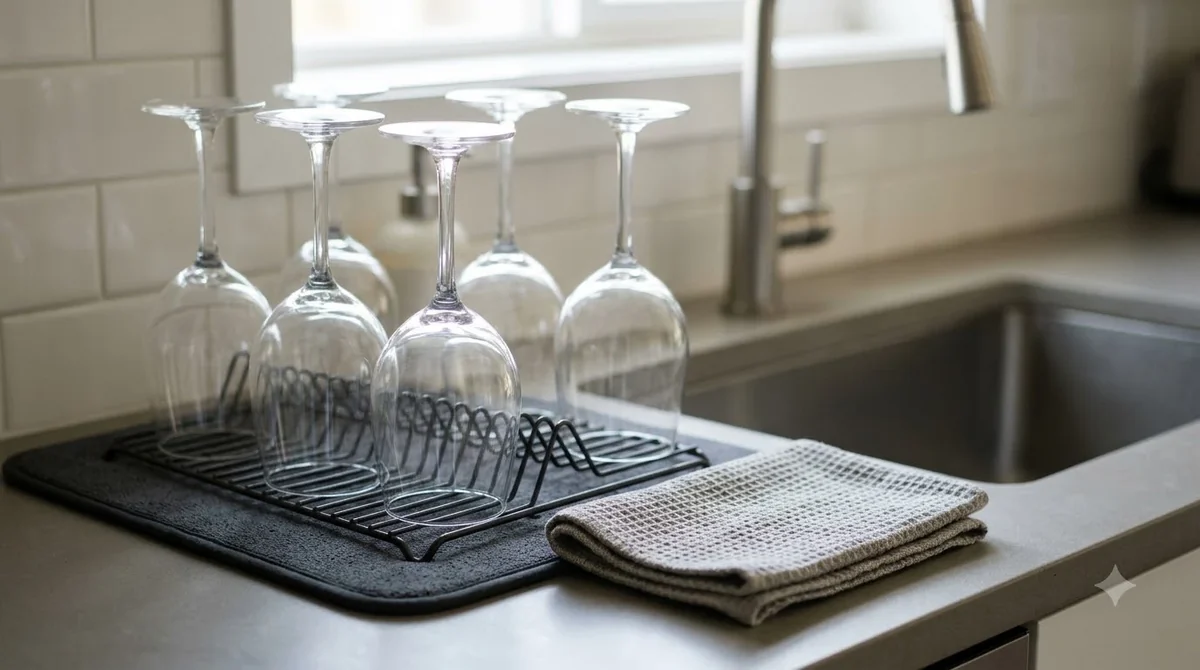
One minor criticism of the Marin White Wine Glass comes from the independent Yahoo review. The reviewer describes a slight roll at the rim that can interfere somewhat with the flow of wine when drinking. This is a relatively small concern, but it demonstrates why shoppers should consider the drinking experience as well as the visual design.
The Marin collection’s machine-made construction may also disappoint buyers who specifically want mouth-blown or individually crafted glassware. Crate & Barrel presents the collection as an affordable interpretation of handmade stemware, not as a fully handmade product. That distinction matters to collectors who place a high value on traditional glassmaking techniques.
Capacity can create another problem. A 31-ounce red wine glass looks dramatic, but it may be unnecessarily large for someone who prefers compact stemware. Oversized bowls also take up more cupboard space and can be awkward to arrange in a crowded dishwasher.
The Montrose collection has its own practical limitations. Tritan crystal is designed to offer additional resistance to breaking, chipping, and scratching, but that does not make it unbreakable. Thin walls and fine stems still require sensible handling. A glass that is resistant to everyday wear can nevertheless crack if it strikes a hard surface or experiences a sudden temperature change.
Availability is another consideration. Crate & Barrel’s product pages and catalog can change, and individual sizes or sets may become unavailable. For example, its listed 23-ounce Montrose all-purpose set has appeared with an unavailable status. Buyers planning a complete matching set should confirm that the specific shapes they want can be purchased together.
Finally, dishwasher-safe does not mean that every washing method is equally suitable. Even durable crystal can become scratched if glasses knock against one another or other dishes. Households that regularly overload their dishwashers may get better results by handwashing their more delicate stemware.
Tip: Before choosing a large wine glass, compare its capacity with the space available in your cupboards and dishwasher. A 31-ounce bowl may look impressive on a table, but a 14- to 18-ounce design can be easier to store, wash, and use for everyday meals.
For additional care guidance, Zwiesel’s glassware care instructions recommend keeping glasses separated in the dishwasher, using suitable wash temperatures, and avoiding sudden temperature changes. These precautions are useful for protecting fine stemware, including crystal designs, from preventable damage.
Who Should Buy and Who Should Skip
Crate & Barrel wine glasses are a good fit for shoppers who want coordinated designs across several wine styles without being restricted to one construction or shape. The best collection depends on how frequently you entertain, the types of wine you drink, and how much attention you want to give glassware maintenance.
Who should consider Marin?
Marin is a sensible option for households that want familiar, long-stem wine glasses with an attractive appearance. Its classic styling works with traditional and contemporary table settings, and its dishwasher-safe construction is useful for routine entertaining.
The 16-ounce white wine glass is especially interesting for people who drink Sauvignon Blanc, Pinot Grigio, Chardonnay, or sparkling wine. Its rounded but relatively controlled shape offers versatility without requiring the space of a very large red wine bowl.
It also makes sense for shoppers who prefer simple glassware that can be used for several occasions. Rather than maintaining separate collections for casual dinners and small gatherings, they can use the same traditional style across much of their entertaining.
Who should consider Montrose?
Montrose is a stronger candidate for shoppers who specifically want Tritan crystal, lead-free construction, and a refined appearance. Its separate capacities make it possible to choose a glass for a particular wine category while maintaining a coordinated look.
The 13.5-ounce white wine glass is particularly suitable for people who prefer smaller pours and more compact stemware. The 25-ounce red wine option provides more room for swirling fuller-bodied wines, while the 23-ounce all-purpose version offers flexibility for households that do not want separate glasses for every grape variety.
Montrose also makes sense for frequent hosts who want a more durable alternative to particularly delicate crystal. Its resistance to breaking, chipping, and scratching is a practical advantage, although careful handling remains necessary.
Who should consider other collections?
Shoppers who prioritize convenience over traditional stemware should consider Aspen stemless glasses. Without a long stem, they are easier to handle in informal settings and can be a practical choice for outdoor meals, casual gatherings, and smaller storage areas.
Those who prefer larger bowls for Cabernet Sauvignon, Merlot, or Syrah can investigate Hip, Tour, or the Montrose red wine design. However, shoppers who have limited cabinet height or prefer lightweight, compact glassware may find these larger options inconvenient.
People who want handmade or mouth-blown pieces should also compare other manufacturers rather than assuming that every premium-looking Crate & Barrel glass has been individually crafted. Construction details are more meaningful than a handmade appearance alone.
How It Compares to Alternatives
Crate & Barrel’s assortment is best understood as a collection of different glassware approaches rather than a single product competing against every other wine glass. Marin emphasizes classic everyday styling, Montrose emphasizes Tritan crystal, and the wider catalog provides alternatives for different capacities and occasions.
One useful comparison is between Marin and Montrose. Both have traditional stemmed designs, but their construction and intended appeal differ. Marin uses machine-made glass with pulled stems and fire-polished rims. Montrose uses Tritan crystal with documented resistance to breaking, chipping, and scratching.
The Yahoo review of Marin adds an independent perspective on its appearance and handling. Its reviewer describes the glass as lightweight and balanced, while also noting the minor rolled-rim issue. That information is useful because a manufacturer’s description alone cannot fully communicate the drinking experience.
Montrose is more attractive to shoppers who place greater importance on documented material specifications. Its lead-free crystal construction and dishwasher-safe designation make it a particularly interesting option for people who want an upgraded everyday glass rather than a purely decorative piece.
The Schott Zwiesel Tour collection offers another alternative within the retailer’s catalog. Its 24-ounce red wine glass is a large format suited to people who enjoy generous bowl space. The 15-ounce white wine glass provides a more compact counterpart. Tour is therefore worth comparing with Montrose when shoppers want Schott Zwiesel glassware in different capacities.
For shoppers who prefer a more traditional, varietal-specific approach, the Nattie collection offers 18-ounce red wine glasses and 12-ounce white wine glasses. This is a useful distinction for households that want different shapes and capacities without moving into particularly oversized stemware.
The choice between these collections should not depend on capacity alone. The bowl shape, rim, stem thickness, and overall proportions influence how a glass feels and how easily it can be used. A larger bowl does not automatically make a glass better for every wine.
For example, a 5-ounce pour in a 13.5-ounce white wine glass leaves substantial space for aromas while keeping the glass relatively manageable. The same pour in a 31-ounce red wine glass leaves much more empty space and may feel disproportionate unless the drinker particularly likes oversized stemware.
Shoppers comparing the wider market should also look at red wine glasses and stemless wine glasses. Those comparisons are particularly useful when deciding whether a dedicated wine glass or a multipurpose design better suits a household.
For another perspective on the retailer’s wider glassware selection, the Glassware Brands overview provides additional context about different manufacturers and glassware styles.
Frequently Asked Questions
Are Crate & Barrel wine glasses made in the United States?
Manufacturing locations vary by collection and supplier. Crate & Barrel identifies the Montrose Tritan crystal glasses as made in Germany, while the Marin product description identifies its machine-made construction without specifying a country of manufacture. It is therefore not accurate to assume that the entire assortment comes from one country.
Does Tritan crystal mean the same thing as ordinary glass?
No. Schott Zwiesel uses Tritan as the name of its specialized crystal glass material. Its formulation is intended to provide clarity alongside increased resistance to breakage, scratches, and dishwasher use. It is not the same material as the Tritan plastic commonly used in reusable drink containers.
Can wine glasses be used for cocktails and other drinks?
Yes. A wine glass can also serve chilled cocktails, spritzes, and nonalcoholic drinks, provided the vessel is suitable for the beverage. A 16-ounce Marin glass, for example, offers enough room for a variety of mixed drinks. Avoid using specialized wine glasses for hot beverages unless the manufacturer explicitly approves that use.
Why do some wine glasses have a much wider bowl than others?
A wider bowl provides more surface area between the wine and the surrounding air. It also creates room to swirl the wine without immediately spilling it. However, bowl size is only one design consideration; the opening diameter, bowl height, and overall shape also influence how aromas reach the drinker.
Should matching wine glasses always be stored together?
Matching glasses are easier to organize when stored in a dedicated cupboard area, but they should not be stacked directly inside one another. Contact between rims can cause scratches, chips, or breakage. Keep sufficient space between individual pieces, and store stemware where it cannot easily tip over.
Crate & Barrel provides a useful range of wine glasses for households that want attractive designs, practical everyday options, and more refined crystal stemware. Marin is a good starting point for classic styling, while Montrose deserves attention for its Tritan crystal construction and dedicated wine shapes. Compare capacities, construction, and storage requirements before choosing, and the right collection can serve both ordinary dinners and special occasions for years.
More in Wine Glasses
 Zwiesel Glas Champagne Flutes for Durable Everyday Sparkling WineUpdated Nov 20, 2026
 Vera Wang Crystal Wine Glasses: Design, Quality and Buying AdviceUpdated Nov 20, 2026
 West Elm White Wine Glasses: Compare Designs for Better Everyday Wine ServiceUpdated Nov 20, 2026
 Zalto Stemless Wine Glasses: Discover Their Distinctive DesignsUpdated Nov 20, 2026
 Viski Champagne Glasses That Match Your Style and Sparkling WineUpdated Nov 20, 2026
 Vista Alegre Decanter Review: Crystal Style and Wine ServiceUpdated Nov 20, 2026