


We may earn a commission when you buy through links on this page, at no extra cost to you. Learn more.
Crate and barrel white wine glasses are a worthwhile choice for shoppers seeking attractive, functional stemware with options for everyday dining and more formal occasions. The selection includes traditional glass designs, contemporary shapes, and Schott Zwiesel Tritan crystal options. Montrose is a particularly appealing choice for shoppers who want refined-looking, durable stemware, while Clair suits contemporary tables and Marin and Aspen offer practical alternatives for regular use.
Choosing the right white wine glass involves more than matching its appearance to the rest of the dinnerware. Bowl dimensions, rim thickness, material, capacity, and cleaning requirements all affect how comfortable a glass is to use. Crate & Barrel carries several designs that address different priorities, so comparing individual collections is more useful than treating every glass in its catalog as interchangeable. This review examines the main options, their documented specifications, their practical strengths, and the details worth considering before buying.
Specs and Key Features of Crate & Barrel White Wine Glasses
Crate & Barrel offers several distinct approaches to white wine stemware, ranging from traditional pulled-stem designs to modern crystal shapes. Montrose and Clair stand out for their Schott Zwiesel Tritan construction, while Marin and Aspen offer more conventional everyday glassware.
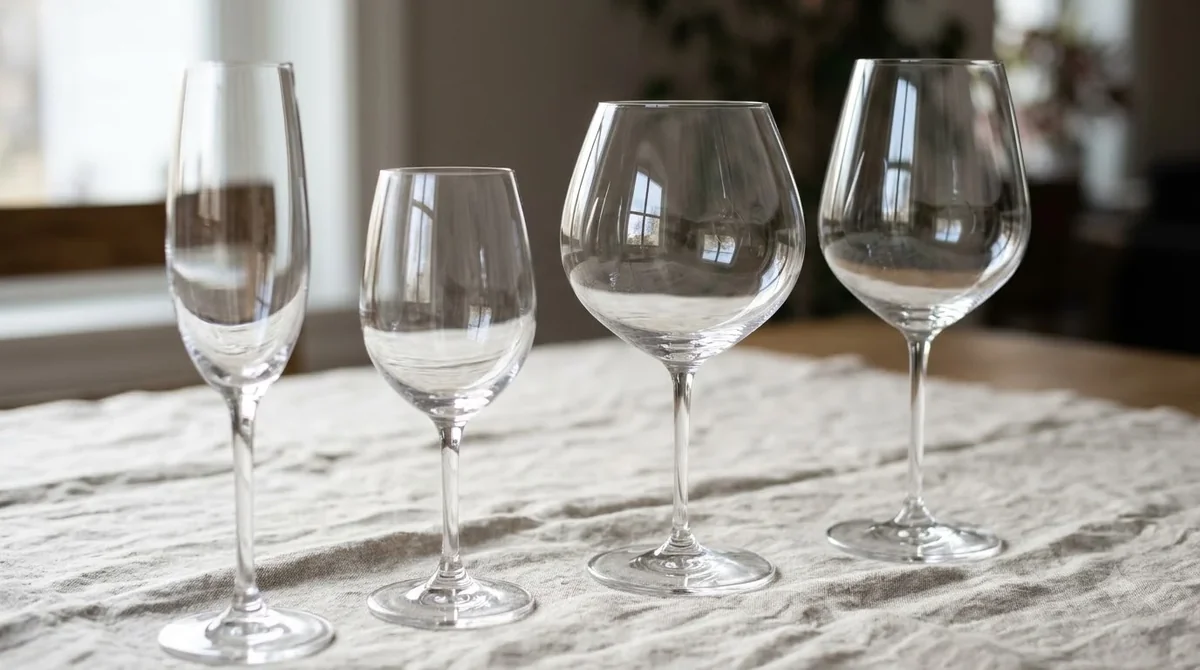
The differences become clearer when the specifications are compared side by side. Capacity is a useful starting point, but the material and cleaning instructions can be just as important. A glass that looks particularly elegant may require more careful maintenance than a straightforward dishwasher-safe everyday option.
| Collection | Capacity | Set size | Material | Care |
|---|---|---|---|---|
| Montrose | 13.5 oz. | 6 | Schott Zwiesel Tritan crystal | Dishwasher-safe |
| Clair | 12.75 oz. | 4 | Schott Zwiesel Tritan glass | Hand wash |
| Marin | 16 oz. | Individual | Glass | Dishwasher-safe |
| Aspen | 13 oz. | 8 | Glass | Dishwasher-safe |
These specifications are drawn from the individual Crate & Barrel product descriptions. They should not be interpreted as a direct ranking of quality. For example, the 12.75-ounce Clair and 13.5-ounce Montrose have relatively similar capacities, but their visual designs and cleaning requirements are different.
Montrose: Traditional elegance with Tritan crystal
The Montrose collection is one of the more interesting options for shoppers who want traditional white wine stemware without giving up the benefits of modern glass technology. Its 13.5-ounce bowl, fine stem, and thin walls create a relatively delicate appearance. Crate & Barrel describes the glasses as having a handmade look, although the important distinction is that the product listing identifies the construction material as Schott Zwiesel Tritan glass.
The manufacturer describes this material as resistant to breaking, chipping, and scratching. Montrose is also identified as lead-free and dishwasher-safe. Those characteristics make the collection appealing for households that regularly entertain but do not want to reserve their nicer-looking stemware exclusively for special occasions.
The six-glass configuration is another practical advantage. It provides enough matching pieces for a small dinner gathering without requiring a particularly large storage space. See the Montrose product specifications for its full material and construction details.
Clair: A contemporary alternative
Clair takes a noticeably different design approach. Its wide, square-shaped bowl and angled profile give the collection a more architectural appearance than traditional rounded stemware. The tapered walls are intended to help direct aromas toward the nose when drinking.
Each glass has a listed capacity of 12.75 ounces, and the collection comes as a set of four. The Tritan glass has a reflective finish, and the product description identifies Germany as its manufacturing location. It is also listed as free from PFOA, PFAS, PVC, and phthalates.
The most important practical distinction is cleaning. Unlike Montrose, Clair is designated for hand washing. That is a meaningful consideration for households that prefer to put all their dinnerware through the dishwasher. Its distinctive silhouette may justify the additional maintenance for shoppers who prioritize presentation and contemporary design.
Marin and Aspen: Practical everyday alternatives
Marin is a traditional, machine-made glass with a pulled stem and fire-polished rim. Its 16-ounce version provides more bowl capacity than the Montrose, Clair, or Aspen white wine designs. A 22-ounce option is also available in the collection, offering another size for shoppers who prefer a more generous glass shape.
Aspen takes a straightforward approach to everyday stemware. Its 13-ounce capacity, pulled stem, and smooth fire-polished rim make it suitable for ordinary dinners and casual entertaining. The eight-piece set is particularly useful for households that want several matching glasses without purchasing multiple smaller sets.
Neither collection should be confused with the Tritan construction used in Montrose and Clair. The product descriptions identify Marin and Aspen as glass, with dishwasher-safe care instructions. That difference is important for shoppers comparing material claims rather than appearance alone.
What Owners Like About These Glasses
The strongest reasons to consider Crate & Barrel white wine stemware are the range of available designs, the availability of practical capacities, and the combination of everyday and more formal options. The retailer’s selection includes glasses for households that prefer conventional stemware as well as people who want a more distinctive table setting.

Another advantage is the presence of established glassware manufacturers in the assortment. Schott Zwiesel products provide an alternative to buying an unfamiliar glassware brand, particularly for shoppers interested in Tritan crystal. The difference between the collections is not simply decorative: construction material and care requirements can influence long-term satisfaction.
Attractive designs for different occasions
Montrose is a good example of how traditional glassware can look refined without becoming excessively ornate. The thin walls and fine stem make it appropriate for a more formal dinner, while the 13.5-ounce capacity remains practical for regular white wine service. It can complement classic table settings, neutral dinnerware, and more modern serving pieces.
Clair offers a more noticeable design statement. Its angular bowl can provide visual contrast against rounded plates, simple white ceramics, and minimalist flatware. For people who enjoy coordinating glassware with their dining room or entertaining style, this design distinction is meaningful.
Marin and Aspen are less focused on distinctive silhouettes. Their traditional forms make them easier to incorporate into an existing glassware collection. A household that uses different wine styles throughout the week may prefer these familiar designs over a more specialized shape.
Useful capacities for ordinary wine servings
Capacity determines how much room remains for swirling after wine has been poured. It does not indicate how much wine should be served. A standard serving is approximately five ounces, which is considerably less than the full capacity of any of the four glasses compared here.
For example, the 13-ounce Aspen has enough space for a five-ounce pour and some room above the liquid. Montrose provides a similar amount of working space at 13.5 ounces. The larger 16-ounce Marin offers additional room, which can be useful for people who prefer a more generous bowl.
A glass should not be filled to its maximum capacity during normal wine service. Leaving space above the wine allows the drinker to swirl gently and assess the aromas without spilling. This is especially useful for aromatic varieties such as Sauvignon Blanc and Riesling.
The appeal of Tritan crystal
Material is a major selling point for Montrose and Clair. Schott Zwiesel’s Tritan crystal is designed to combine clarity with increased resistance to breakage and dishwasher wear. The company also identifies a fine rim, thin walls, and a stable base among the characteristics of its glassware.
These properties are relevant because wine glasses need to balance visual appeal with practical handling. A thin rim creates a refined drinking experience, while a stable base helps the glass stand securely on a dining table. Better resistance to everyday wear can also make crystal stemware more appealing for frequent use.
However, increased resistance does not mean that crystal glasses are unbreakable. Contact with other glassware, hard surfaces, and metal objects can still cause damage. Careful storage and sensible handling remain important, even for products marketed as especially durable.
Common Complaints and Potential Drawbacks
The main drawbacks to consider are the different cleaning requirements, the possibility of breakage, and the fact that a larger capacity does not necessarily produce a better white wine experience. A design that works beautifully for one household may be inconvenient for another.
There is also a difference between the claims made for individual products and the general reputation of a manufacturer. Schott Zwiesel’s Tritan material has specific durability characteristics, but those claims should not automatically be applied to every glass sold through Crate & Barrel.
Dishwasher instructions are not universal
One of the easiest mistakes is assuming that every white wine glass from the same retailer can be cleaned in the same way. Montrose, Marin, and Aspen are listed as dishwasher-safe. Clair is specifically identified as hand-wash-only.
This distinction can become inconvenient in a household where multiple people share kitchen duties. A guest or family member may place a delicate hand-wash-only glass in the dishwasher simply because other glasses from the same retailer are dishwasher-safe.
The best approach is to organize glassware by care requirements. Keep hand-wash-only pieces separate from everyday dishwasher-safe stemware, and make the distinction clear to anyone helping with cleanup.
Durability is not the same as breakproof construction
Schott Zwiesel describes Tritan crystal as particularly resistant to breakage and scratching. That is a useful material characteristic, but it should not be interpreted as a guarantee against accidents. A glass can still break if it is knocked against a countertop, dropped on a hard floor, or pressed against another glass during storage.
Thin walls and fine stems also require sensible handling. Even when the bowl is made from a durable material, a narrow stem remains a component that can be damaged by twisting or uneven pressure.
For households with young children, frequent outdoor dining, or a busy kitchen, traditional crystal stemware may not be the most practical choice. A dedicated everyday glass or a more impact-tolerant alternative may be better suited to those circumstances.
Large bowls are not automatically better
Capacity is sometimes treated as a sign of quality, but white wine does not always benefit from the largest available bowl. A smaller tulip-shaped design can help preserve delicate aromas and limit the wine’s exposure to air while it is being served.
For Sauvignon Blanc, Pinot Grigio, and Riesling, a relatively compact bowl is generally practical. These wines often emphasize fresh fruit, floral aromas, and acidity. A larger bowl can still work, but it may be less aligned with the traditional serving style for crisp white wines.
Chardonnay is a useful exception to a strict small-bowl rule. Fuller-bodied styles, especially wines with oak influence, can benefit from a little more room for aromas to develop. The best choice therefore depends on the wine and the drinker’s preferences rather than capacity alone.
Who Should Buy and Who Should Skip
Crate & Barrel’s selection makes the most sense for shoppers who want recognizable styles, clearly documented product specifications, and the flexibility to choose between traditional and contemporary stemware. The ideal collection depends on how frequently the glasses will be used and how much maintenance the owner is willing to accept.
There is no single option that works equally well for every household. A person who entertains regularly may prioritize durability and matching quantities, while someone buying glasses for a small apartment may care more about storage and versatility.
Who should consider Montrose
Montrose is a strong candidate for people who want elegant white wine glasses that can also handle regular dining. Its six-piece configuration works well for small gatherings, and the 13.5-ounce capacity offers sufficient room for a normal wine serving and gentle swirling.
The Schott Zwiesel Tritan construction is another reason to consider this collection. Its stated resistance to breakage, chipping, and scratching makes it attractive to people who want crystal-style stemware without choosing an especially delicate-looking product.
It is particularly appropriate for households that use their wine glasses several times a week and want something that looks appropriate for both casual and more formal meals.
Who should consider Clair
Clair is better suited to shoppers who place design high on their priority list. Its angular bowl and reflective Tritan finish give it a more contemporary appearance than conventional wine stemware. A four-piece set is also convenient for couples and smaller households.
The important compromise is hand washing. People who strongly prefer dishwasher-safe glassware may find this collection less convenient than Montrose, Marin, or Aspen. It is a more suitable choice for someone who enjoys distinctive tableware and is comfortable spending extra time cleaning it.
Who should consider Marin or Aspen
Marin and Aspen are sensible options for shoppers who want familiar, uncomplicated white wine glasses. Marin’s 16-ounce capacity is useful for those who prefer a roomier bowl, while Aspen’s 13-ounce shape and eight-piece configuration suit households that need more matching glasses.
These collections are also worth considering for people who prioritize easy cleanup. Both are listed as dishwasher-safe, and their conventional designs make them relatively straightforward to combine with other everyday glassware.
Who should skip these options
Shoppers who need genuinely shatterproof glassware should look beyond conventional glass and crystal stemware. Tritan crystal has enhanced resistance characteristics, but it is still glassware and can break under sufficient impact.
People who want every glass to be hand-blown, highly specialized, or designed for a particular wine appellation may also prefer a dedicated specialist glassware collection. Crate & Barrel’s selection is more appropriate for general household use and entertaining than for someone building an extensive professional tasting setup.
Finally, anyone who dislikes hand washing should avoid Clair unless its appearance is compelling enough to justify that maintenance requirement. Choosing the wrong care category can become more frustrating over time than choosing a slightly different bowl shape.
How It Compares to Alternatives
Crate & Barrel’s white wine assortment is not a single manufacturer range. It combines exclusive everyday designs with products from established glassware makers, which gives shoppers more flexibility than a collection built around one material or silhouette.
The most useful comparison is between individual styles rather than treating all the retailer’s glasses as one product. Montrose and Clair are particularly relevant to shoppers considering Schott Zwiesel, while Marin and Aspen address more conventional everyday needs.
Montrose versus Clair
Both collections use Schott Zwiesel Tritan glass, but they offer different experiences. Montrose has a 13.5-ounce capacity and a traditional stemmed appearance with thin walls and a fine stem. Clair has a 12.75-ounce capacity and a distinctive angled bowl with a reflective finish.
Cleaning is the clearest practical difference. Montrose is dishwasher-safe, while Clair is designated for hand washing. This gives Montrose an advantage for households that want crystal glassware without adding a separate hand-washing routine.
Clair makes more sense for shoppers who prefer a contemporary table setting and do not mind the additional maintenance. Neither is automatically superior; the choice depends on whether convenience or distinctive design matters more.
Marin versus Aspen
Marin and Aspen both emphasize straightforward everyday usability. Marin has a 16-ounce capacity in the version compared here, whereas Aspen has a 13-ounce bowl. The larger Marin is useful for someone who likes more room for swirling, while Aspen offers a more compact traditional white wine shape.
The set configuration also matters. Aspen is available in an eight-piece set, making it a practical option for larger households or people who regularly entertain. Marin’s individual-glass format offers more flexibility when replacing a broken glass or building a collection gradually.
Both are listed as dishwasher-safe. The decision is therefore primarily about capacity, quantity, and appearance rather than a major difference in care requirements.
Specialist crystal versus everyday glass
Montrose and Clair appeal to people who specifically want Schott Zwiesel Tritan construction. The material is promoted for its clarity and increased resistance characteristics. Marin and Aspen use conventional glass construction and focus more directly on practical household stemware.
This distinction is important because a higher level of material engineering does not necessarily improve every part of the drinking experience. A person who mostly serves casual Sauvignon Blanc may be perfectly satisfied with a straightforward 13-ounce glass. Another shopper may appreciate the refinement and material characteristics of Tritan crystal enough to choose Montrose.
For additional comparisons, the broader white wine glasses guide can help establish what bowl shapes and capacities are suitable for different varieties. Shoppers considering a mixed collection can also consult the wine glasses guide to compare universal and wine-specific designs.
Frequently Asked Questions
Are Crate & Barrel white wine glasses made in the United States?
Not all of them. The Montrose product listing identifies its manufacturer as Schott Zwiesel, and the Clair listing states that the glasses are made in Germany. Marin is identified as made in Slovakia. Manufacturing location therefore depends on the individual collection rather than the retailer selling it.
Can white wine glasses be used for sparkling wine?
Yes, a conventional white wine glass can serve sparkling wine, although a dedicated sparkling wine glass may preserve the visual presentation of bubbles more effectively. A tulip-shaped glass offers a useful compromise because it provides room for aromas while maintaining a relatively narrow opening. For casual meals, a suitable white wine glass is a practical alternative to buying separate stemware.
Does Tritan crystal contain lead?
Zwiesel describes its Tritan crystal as lead-free and identifies it as free from lead, cadmium, and BPA. That is different from saying that every glass product sold by Crate & Barrel uses Tritan material. The Montrose and Clair product descriptions specifically identify Tritan construction, while other collections have different material specifications.
Should wine glasses be polished immediately after washing?
Glasses can be polished once they are clean and ready for drying, using a clean lint-free cloth. Zwiesel recommends linen or microfiber towels and advises handling thin-walled glasses carefully. When polishing, holding the bowl and foot separately helps avoid placing unnecessary twisting pressure on the stem.
Can wine glasses develop cloudy marks after repeated dishwasher cycles?
Yes. Mineral deposits and glass corrosion can both contribute to a cloudy appearance. Water quality, detergent choice, washing temperature, and contact with other dishes can influence the condition of glassware. Keeping glasses separated and using appropriate dishwasher settings can help reduce avoidable wear.
Crate & Barrel offers several appealing white wine glass options, but the best choice depends on the balance between appearance, capacity, material, and maintenance. Montrose is the strongest all-around candidate for shoppers who want traditional Tritan crystal stemware, while Clair is more appropriate for contemporary design enthusiasts. Marin and Aspen provide straightforward alternatives for everyday dining, especially when convenient cleanup and practical quantities matter most.
More in Wine Glasses
 Zwiesel Glas Champagne Flutes for Durable Everyday Sparkling WineUpdated Nov 20, 2026
 Vera Wang Crystal Wine Glasses: Design, Quality and Buying AdviceUpdated Nov 20, 2026
 West Elm White Wine Glasses: Compare Designs for Better Everyday Wine ServiceUpdated Nov 20, 2026
 Zalto Stemless Wine Glasses: Discover Their Distinctive DesignsUpdated Nov 20, 2026
 Viski Champagne Glasses That Match Your Style and Sparkling WineUpdated Nov 20, 2026
 Vista Alegre Decanter Review: Crystal Style and Wine ServiceUpdated Nov 20, 2026