

We may earn a commission when you buy through links on this page, at no extra cost to you. Learn more.
The circle joy wine aerator is a rechargeable electric dispenser that aerates wine as it pours, making a quick glass easier to serve without decanting the whole bottle. The manufacturer’s standalone model combines a switchable aeration function with a three-section extendable stainless-steel tube and a lithium battery that takes 2.5 hours to charge by micro-USB. Its main drawback is a lack of published details about runtime, pour speed and exact bottle-neck dimensions, while similarly named Circle Joy versions use different power systems.
Circle Joy sells several wine accessories under closely related names, so the exact device matters. This review focuses on the manufacturer’s standalone Electric Wine Aerator and Dispenser, not on a passive pour-through aerator or a multi-piece opener kit. A separate retailer listing identifies the rechargeable standalone design as CJ-XFJQ01, while another Circle Joy electric pourer, the KD-3-BL, uses four AAA batteries. Those are different configurations, and their specifications and owner comments should not be treated as interchangeable.
Specs and Key Features
The standalone Circle Joy unit is designed to aerate and dispense in one operation, with a switch that lets the user choose whether the aeration function is active. Its most distinctive practical detail is the three-phase stainless-steel tube, which extends for use and retracts for storage.
| Feature | Published detail | What it means |
|---|---|---|
| Device type | 2-in-1 electric aerator and dispenser | Moves wine from the bottle while adding air during the pour. |
| Aeration control | On/off switch | Lets you serve with the aeration function enabled or disabled. |
| Tube | Three extendable sections; stainless steel | Extends into the bottle for dispensing and contracts for storage. |
| Battery | Lithium battery | Rechargeable rather than dependent on disposable cells. |
| Full charge time | 2.5 hours | Plan to charge before a dinner or tasting rather than at the table. |
| Charging connection | Micro-USB cable | Check the included cable and your charging setup before purchase. |
| Bottle compatibility | Fits most wine bottles | The manufacturer does not publish a precise neck-diameter range. |
| Materials statement | Food-grade materials | The product page does not itemize every component’s material. |
The brand describes the product as a patented 2-in-1 design that aerates while dispensing. Its three extendable stainless-steel sections are intended to make the tube easier to position at the bottle and less awkward to store. The micro-USB connection matters because some newer Circle Joy gift sets use USB-C; not every device in the range takes the same cable.
The product page does not state bottle capacity per charge, exact flow rate, a measured serving option, operating noise, full dimensions or a bottle-neck measurement range. Retailer details identify the matching rechargeable standalone design as CJ-XFJQ01, with a built-in battery and micro-USB port. Expect functional convenience rather than quantified, commercial-style dispensing performance.
Tip: Match the product photo, charging port and tube assembly to the exact listing before ordering. The CJ-XFJQ01 rechargeable unit is not the same specification set as the KD-3-BL model, which a retailer describes as taking four AAA batteries.
For the manufacturer’s feature list, see the Circle Joy Electric Wine Aerator and Dispenser product page. The listing is useful for confirming the core functions, but it is not a substitute for a detailed user manual: it leaves several everyday questions, including cleaning specifics and battery runtime, unanswered for this exact standalone model.
What Owners Like
The available owner feedback points to the appeal of combining an aerator and a powered pourer in one small accessory. Users commenting on a retailer’s Circle Joy KD-3-BL listing mention convenience, appearance, perceived aeration and simple cleanup, although that version uses replaceable batteries and is not confirmed to be identical to the rechargeable CJ-XFJQ01.
One positive theme is convenience during service. An owner using the KD-3-BL version with white wine in an ice bucket liked dispensing a glass without repeatedly lifting the cold, wet bottle out of the bucket. That is a practical use case for a powered dispenser: it reduces handling while serving several glasses over a meal.
Other comments on that model’s retailer listing describe an attractive appearance, easy cleaning and gift appeal; one owner felt the aeration met expectations and improved the wine’s flavor. These are subjective reports, not controlled tasting results or proof that every style benefits equally. Aeration can help a young, structured red open sooner, but it cannot transform an ordinary bottle or replace careful wine selection.
Because these comments refer to the KD-3-BL, not the rechargeable CJ-XFJQ01, they show interest in the concept rather than verified satisfaction with the exact standalone model. The KD-3-BL listing advertises service for up to 30 standard 750 ml bottles with new batteries, but that claim belongs to its four-AAA setup and should not be used to estimate the rechargeable unit’s endurance. The retailer’s Circle Joy electric aerator listing and owner feedback is useful for spotting the positives, but check the model and power source before applying those comments to another version.
Common Complaints
The clearest caution in the available owner comments is bottle fit. Users of the KD-3-BL listing described a loose connection, wine leaking from the aeration opening and drips after pouring; one reviewer said the device did not work. The KD-3-BL has an 11.8-inch silicone tube and a seal designed for specific neck dimensions, but these comments are not verified failure rates for the rechargeable standalone model.
Fit matters because the aerator has to sit securely at the opening while its tube reaches into the wine. For the KD-3-BL, the retailer specifies an inner bottle-mouth diameter of 18–19 mm and an outer diameter up to 35 mm; those measurements are not published as compatibility limits for the CJ-XFJQ01. A loose connection can be awkward when the bottle is moved or kept in an ice bucket, and a dripping spout can mark a tablecloth. Test the assembly over a sink and keep a cloth or drip mat nearby for the first pour. One owner also wanted a tighter seal so the device could stay on an unfinished bottle, but an aerator is a serving accessory, not automatically a preservation stopper; remove it after pouring and close the bottle with a proper stopper.
Cleaning is another point to check. The KD-3-BL listing says not to wash its electronic body and recommends running clean water through the dispensing path until clear; that direction is not a confirmed manual for every Circle Joy model. Wine left in a tube or nozzle can dry around the dispensing path if it is put away without cleaning, so check whether the exact model has a removable tube and which parts may be rinsed. Follow the instructions included with the unit and do not immerse its electronic housing. The standalone product page also omits flow rate, battery endurance and a full compatibility chart, so buyers who need precise portioning or a published duty cycle may prefer a model that documents those figures.
Who Should Buy and Who Should Skip
The Circle Joy electric aerator suits someone who often pours one glass at a time and values easy service over a traditional decanting ritual. It may work well for a host serving a bottle from an ice bucket, a couple sharing wine over dinner or a small home bar where a rechargeable accessory gets regular use.
It is most plausible with a young, firm red such as Cabernet Sauvignon or Syrah when the goal is to soften the first impression without waiting through a long decant. Full-bodied reds are generally served around 60–65°F, and aeration can be a useful extra step at pouring. It does not remove tannin or guarantee a better taste; taste a small pour first, then switch aeration on only when it improves the glass. The switchable setting is also useful for buyers who want to choose between regular dispensing and aeration.
Skip it if you want a measured serving, a published bottle count per charge or a verified fit for an unusual bottle neck. A decanter and a 30–60 minute rest are better for a young, full-bodied red that needs more time to develop, while careful decanting is preferable for an older bottle with sediment. People who prefer a traditional pour and minimal electronics may be happier with a manual aerator; for a fuller home setup, the device can sit with glassware and a corkscrew on a bar cart, while the site’s wine accessories collection is a better starting point for comparing simpler tools. It is also sensible to skip the powered model if charging another accessory would make service less convenient. The key purchase question is whether the one-touch dispensing function solves a recurring problem in your home, not whether an aerator is an essential item in every wine setup.
How It Compares to Alternatives
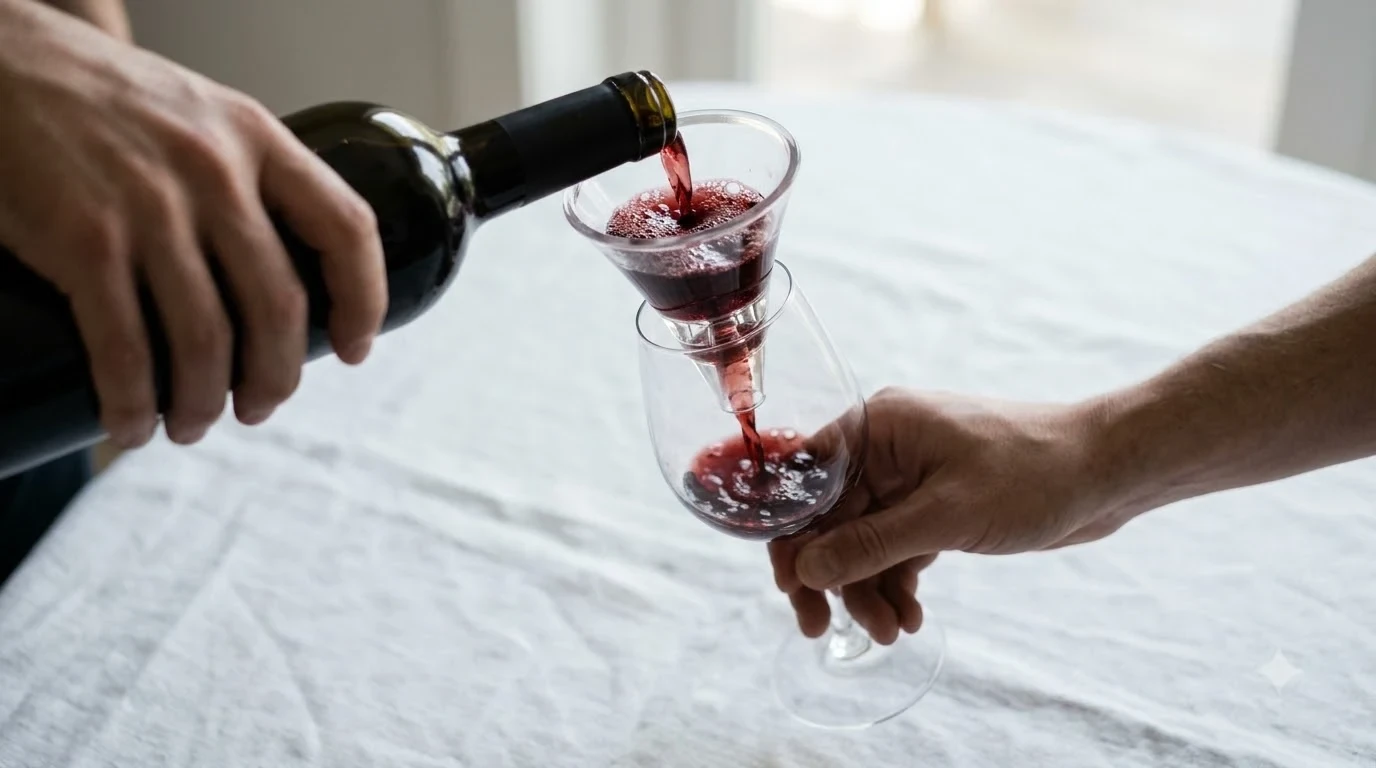
Circle Joy’s main advantage over a manual pour-through aerator is powered dispensing. A conventional pour-through piece sits in or over the bottle neck and aerates wine as gravity carries it through; Circle Joy adds a motor and a switchable aeration setting. The appeal is the combination of serving and aerating, not a wholly different principle of oxygen exposure.

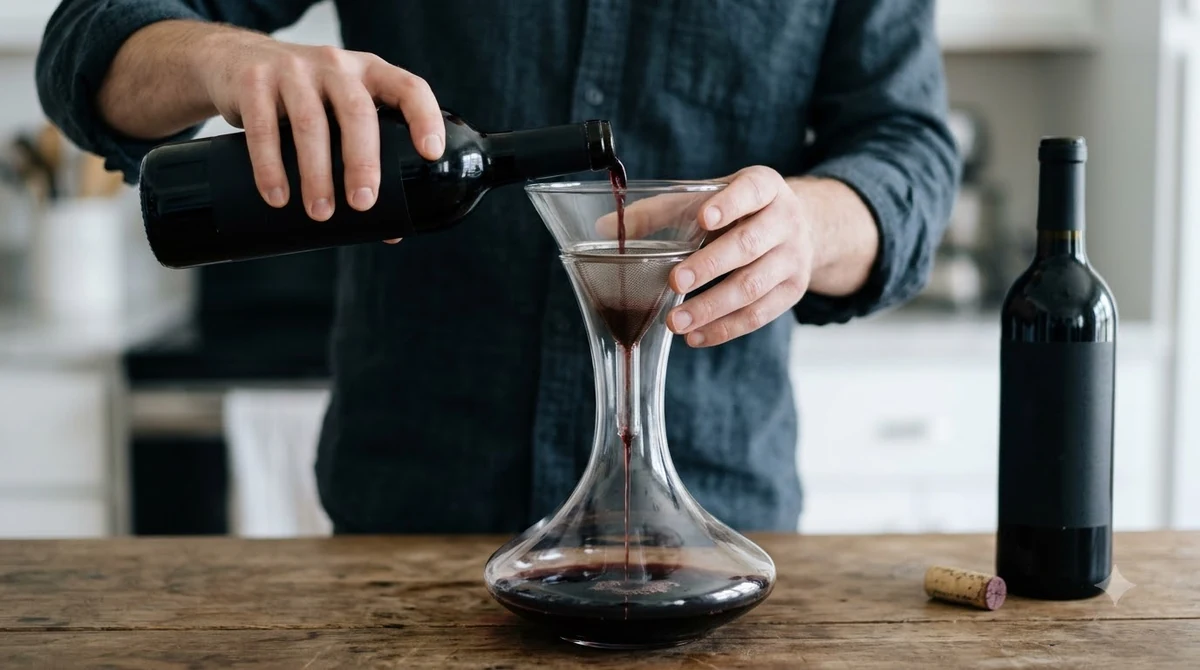
For a quick glass of a young tannic red, a pour-through aerator can be a reasonable shortcut because it exposes wine to air as it passes through a chamber. A decanter is better for a bottle intended to develop over an evening, since the wine continues changing in the vessel. A decanter with aerator combines bottle transfer and an aerating pour, while a plain decanter gives the wine time in a broad vessel; neither needs a charged battery, though both involve more handling and cleanup.
The powered Circle Joy is more specialized for quick glass-by-glass service. A manual aerator is simpler to pack and does not need charging, while a decanter suits the whole-bottle experience. A delicate Pinot Noir, mature red or bottle with sediment may call for gentler handling than a young tannic Cabernet Sauvignon. Circle Joy also sells a separate passive Wine Pourer & Aerator, which it describes as portable and able to save 15–20 minutes while pouring; that accessory is not the rechargeable electric dispenser reviewed here.
For a dinner with four or five guests sharing the same bottle, a decanter also lets everyone pour from a central vessel and gives the wine a consistent period of air contact. For an evening when people want different amounts at different times, the electric dispenser’s convenience may matter more. Think about the pattern of use: a gadget that saves a minute at every glass is valuable only when the household pours often enough to notice that time savings.
Frequently Asked Questions
These answers cover serving details that are separate from the device’s core electrical specifications. They can help determine whether an electric aerator fits the wine and the way it will be served.
Does the Circle Joy aerator remove sediment?
No sediment-filtering function is listed for the stainless-steel tube, so it should not be treated as a filter. Older bottles can throw sediment as they age; stand one upright for several hours before opening, then pour slowly and stop before the sediment reaches the glass.
What is a standard serving size of wine?
A standard pour is about 5 ounces. A 750 ml bottle contains roughly five such glasses, although the number of pours changes with glass size and how generously each serving is measured.
Does aeration replace serving wine at the right temperature?
No. Aeration and temperature affect different parts of the serving experience: sparkling wine is generally served around 40–50°F, while light whites and rosé are usually served around 45–50°F. A powered pourer does not chill wine or correct a bottle that has been served too warm.
How long can an opened bottle keep after using the aerator?
The aerator does not preserve wine. For still wine, a practical general window is about 3–5 days in the refrigerator after opening; sparkling wine is shorter, usually around 1–3 days with a proper sparkling-wine stopper.
Can it be used for every type of wine?
The manufacturer describes the device for wine generally, but it does not publish a separate aeration program for each style. Delicate rosé, aromatic whites and sparkling wines often need less deliberate aeration than a young, tannic red, so use the non-aerating setting when the extra air does not improve the glass.
The Circle Joy standalone aerator is best viewed as a convenience-first serving tool with a useful aeration option, not a replacement for a decanter or a wine-preservation stopper. Confirm the exact model and charging setup, check the seller’s return terms for fit issues, and choose it when quick glass-by-glass dispensing is the feature you will use most.
More in Wine Accessories
 Coravin Vs Vacu Vin: Choose the Right Wine Saver for Your BottlesUpdated Nov 21, 2026
 Zwilling Wine Stopper Review: Preserve Open Bottles LongerUpdated Nov 21, 2026
 Wine Enthusiast Wine Preserver Review: Features, Benefits and LimitationsUpdated Nov 21, 2026
 Wine Enthusiast Wine Stopper: An Easier Way to Reseal Open BottlesUpdated Nov 21, 2026
 Vintorio Wine Opener: Two-Step Cork RemovalUpdated Nov 21, 2026
 Zwilling Wine Aerator Review: Aerate, Pour, and Seal With One ToolUpdated Nov 21, 2026