

We may earn a commission when you buy through links on this page, at no extra cost to you. Learn more.
The Chianti Classico region is the historic heart of Chianti, a hilly area in central Tuscany between Florence and Siena where Sangiovese is the main grape. The region covers about 260 square kilometers, and its wines carry a black rooster seal on the bottle neck that marks producers who belong to the Chianti Classico Consortium. Knowing the region’s boundaries and blend rules helps you tell a true Classico from a wine that only uses the wider Chianti name.
This guide explains where the Chianti Classico region sits, how its soils and altitude shape the wines, what the blend rules require, and how the black rooster seal works. It also covers how to choose a bottle from the area.
Where the Chianti Classico region sits
Chianti is a wider name that covers several zones, and Chianti Classico is the most historic of them. According to the Chianti Classico entry on Wikipedia, the region is one of eight Chianti sub-zones and lies in central Chianti, across the provinces of Florence and Siena. It covers roughly 260 square kilometers. Four communes lie entirely within it: Castellina, Gaiole, Greve, and Radda in Chianti.
The boundaries set in 1716 by Cosimo III de’ Medici are considered the historic heart of the area, and that old delimitation still shapes how people think about the region. The consortium’s own website describes a territory of about 70,000 hectares spanning the provinces of Florence and Siena, with Florence and Siena acting as the area’s two main centers.
Soils, altitude, and climate
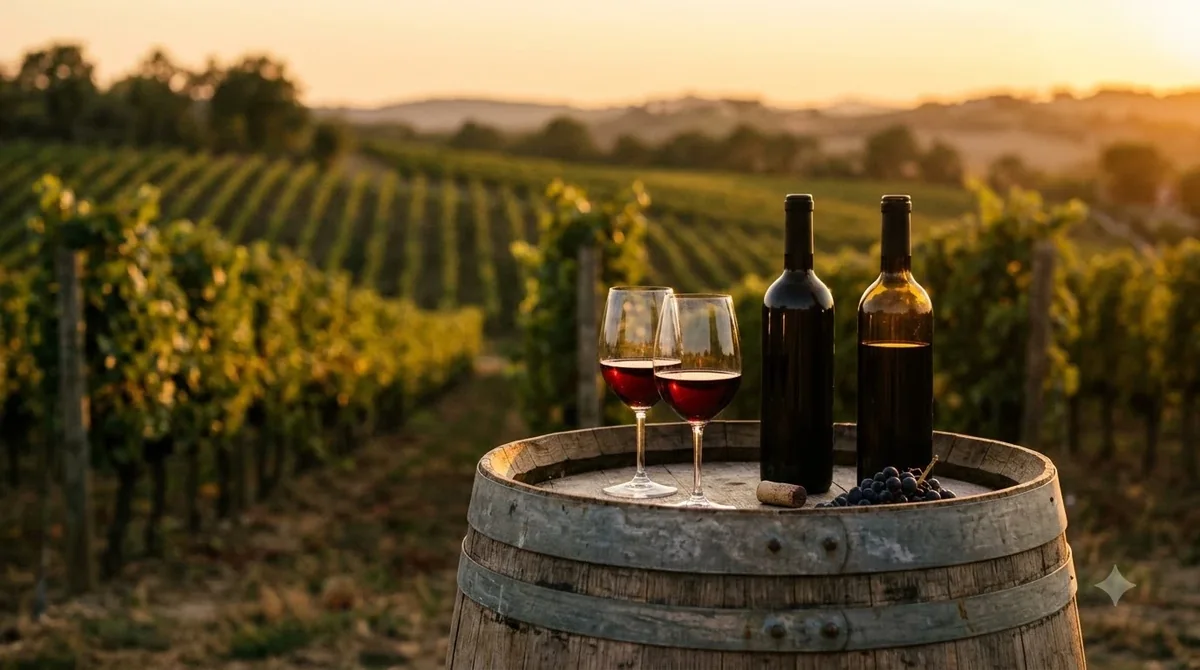
The region’s wines are shaped by its ground and its height. Vineyards range from about 250 to 610 meters above sea level, and the two main soils are alberese and galestro. Alberese is a weathered sandstone, while galestro is a bluish-gray, chalky marlstone. Galestro tends to be more common in the north, and the southern soils are harder and stonier, with more alberese.
Climate changes across the area as well. The Arno River cools the northern part of the region, and that cooling effect fades as you move south. The result is a patchwork of microclimates, so two vineyards a few kilometers apart can produce wines with different textures. The consortium notes that harvest runs from the first half of September to the second half of October, and timing varies with each vineyard’s location and altitude.
Sangiovese and the blend rules
Sangiovese is the grape that defines Chianti Classico. Under the rules in place since 1996, the Classico blend is 75 to 100 percent Sangiovese, with up to 10 percent Canaiolo and up to 20 percent other approved red varieties. Since 2006, white varieties such as Malvasia and Trebbiano have been prohibited in the Classico blend, so a bottle from the region is a red wine built around Sangiovese.
The rules also set minimum requirements for the finished wine. Classico must reach at least 12 percent alcohol and spend at least seven months in oak. A Riserva must age for 24 months at the winery and reach at least 12.5 percent alcohol. Those figures are useful when you compare labels, because they tell you the minimum a Classico has to meet before it reaches the shelf.
| Category | Key requirement |
|---|---|
| Blend | 75 to 100 percent Sangiovese, up to 10 percent Canaiolo, up to 20 percent other approved reds |
| Classico | At least 12 percent alcohol and at least seven months of oak aging |
| Riserva | 24 months at the winery and at least 12.5 percent alcohol |
| White grapes | Prohibited in the Classico blend since 2006 |
These rules explain why most Classico wines taste of red cherry, dried herbs, and firm acidity. The exact flavor depends on the producer, the vineyard, and the time in oak, so the table is a starting point rather than a promise.
The black rooster seal
The black rooster, known as Gallo Nero, is the region’s most recognizable symbol. Only Classico wines may display the seal on the bottle neck, and it signals that the producer belongs to the Chianti Classico Consortium. The consortium describes the rooster as a symbol of the producers’ shared territorial identity, and it links the seal to a history that it dates to 14 May 1924 in Radda in Chianti. The official Chianti Classico website covers the consortium and the area’s production zones.
The seal is a useful check when you are shopping, but it is not the only thing to read. A bottle from the wider Chianti zone can be good, and a Classico can still vary in style. Use the seal as a first filter, then read the label and the producer’s notes for details about the vineyard and the wine.
Why the consortium matters
The consortium is a union of Classico producers that was founded to promote the wines, improve quality, and prevent wine fraud. Since the 1980s it has funded viticultural and winemaking research, especially clonal research. Over the past three decades, more than half of the region’s vineyards were replanted with improved Sangiovese clones under the Chianti 2000 project, which changed the way many local wines are grown and made.
For a buyer, that history means the seal carries some weight. It tells you the producer has accepted the consortium’s rules and participates in its shared standards. That does not replace your own taste, but it gives you a clear point of reference when you compare bottles.
How to choose a Chianti Classico
Start with the label. Look for the black rooster seal and the word Classico, and then check the grape blend and the aging information if it is listed. A Riserva will show a longer aging period, which often means a wine with more structure. If you want a lighter, fresher style, a standard Classico made in a younger style may suit you better.
Pair the wine with food that matches its acidity and tannin. Sangiovese’s bright acidity handles tomato sauces, roasted meats, and aged cheeses well. Price is not a reliable guide on its own, because a Classico can be expensive or modest depending on the producer. For more background on wine regions and how they differ, the Wine Regions section explains the basics, and the same hub can help you compare other areas with the Chianti style.
Frequently Asked Questions
What is the difference between Chianti and Chianti Classico?
Chianti is the wider name, covering several zones. Chianti Classico is the historic central zone between Florence and Siena, with its own consortium, seal, and blend rules.
What does the black rooster on a Chianti bottle mean?
The black rooster, or Gallo Nero, appears only on Chianti Classico wines. It shows that the producer belongs to the Chianti Classico Consortium.
What grape is used in Chianti Classico?
Sangiovese is the main grape. The Classico blend is 75 to 100 percent Sangiovese, with up to 10 percent Canaiolo and up to 20 percent other approved red varieties.
What is a Chianti Classico Riserva?
A Riserva is a Classico that must age for 24 months at the winery and reach at least 12.5 percent alcohol. It is usually more structured than a standard Classico.
The Chianti Classico region combines a historic boundary, a Sangiovese-based blend, and a clear symbol on the bottle. Read the seal, check the blend, and decide whether you want a fresh or a structured style. The Wine Regions guides are a good next step if you want to compare Tuscany with other wine areas. Reading a few regional profiles side by side makes it much easier to see why Sangiovese tastes different in Tuscany than it does in other places. For a warmer climate to compare against, the Calistoga vineyards guide offers a useful contrast with the cooler, higher sites of Chianti Classico.
More in Wine Regions
 Willcox Wine Trail: Discover Arizona’s High-Elevation Wine CountryUpdated Nov 20, 2026
 Yakima Valley Wine Region: Find the Best Styles to TryUpdated Nov 20, 2026
 Vosne Romanee Wine Tasting: Identify Aromas and Choose Better PairingsUpdated Nov 20, 2026
 Yakima Valley Wine Festival: Find the Best Seasonal Wine EventsUpdated Nov 20, 2026
 Wales Vineyards: Discover Cool-Climate Wines and Where to VisitUpdated Nov 20, 2026
 Yountville Wine Festival: Discover Napa Wines and Local FoodUpdated Nov 20, 2026