
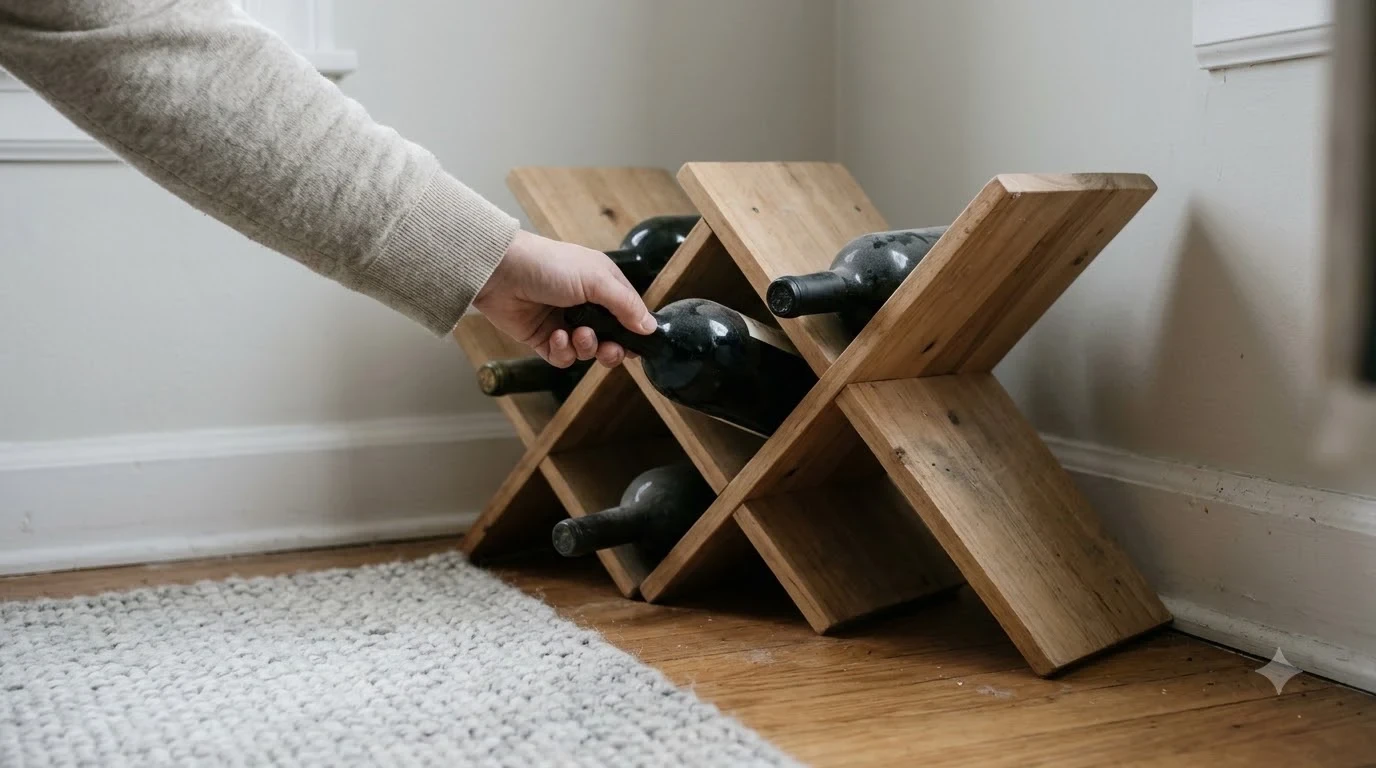

We may earn a commission when you buy through links on this page, at no extra cost to you. Learn more.
The best cheap wine glass rack is a simple metal rail that holds each stem by its base, keeps the rims at least half an inch apart, and installs without special tools. Renters and small kitchens usually get the most value from clip-on or freestanding racks, while households with a full set of stemware benefit from a multi-row hanging rail. Whichever style you choose, the glasses should be clean, polished, and fully dry before they go on the rack, because storage guidance from wine writers consistently names moisture as the main cause of spots and odors.
Stemware takes up a surprising amount of room in a kitchen cupboard, and glasses stacked on top of one another chip rims and scratch bowls. A wine glass rack solves that problem by holding each glass in the air so the bowls never touch. A budget rack can do the same job as a costly cabinet unit if it spaces the glasses correctly and fits the space you actually have. This guide covers the main styles, what each one handles well, and the features that matter most when you shop on a limited budget.
Quick Comparison
Each rack style solves a different problem. Some free up shelf space, some display a favorite set, and some keep a few glasses within reach of a bar cart. The table below compares the common options by how they mount and what they hold.
| Rack Style | How It Mounts | Best Fit | Capacity Noted in Examples |
|---|---|---|---|
| Hanging metal rail | Steel chains or hooks from a ceiling or island edge | Heavy stemware with thick bases | Glasses hang by the base; no count given |
| Wall-mounted rack | Fixed to a wall with hardware | Displaying a favorite set | Six glasses in one published example |
| Under-cabinet rail | Screwed or adhered to the cabinet underside | Tight kitchens with little counter room | Depends on rail length |
| Clip-on shelf rack | Clamps over a shelf edge without drilling | Renters and bar carts | Depends on rack size |
| Bar cabinet insert | Built into the cabinet interior | Keeping glasses behind doors | Up to 14 to 18 glasses in examples |
Best for Tight Kitchens: Under-Cabinet Rails
Under-cabinet rails are the most common budget choice for kitchens where counter and shelf space is scarce. They attach to the underside of an upper cabinet, which leaves the shelves free for plates and bowls.
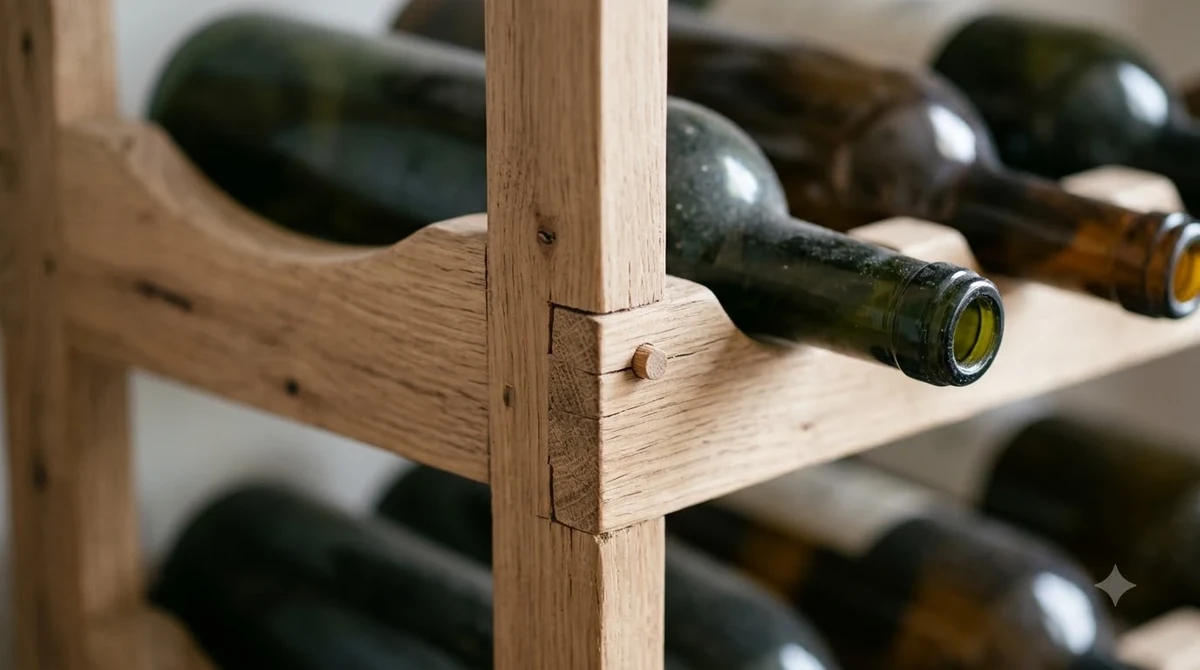
Why it stands out: A rail uses the vertical space that most kitchens leave empty. A single rail can hold a row of stemware with the bases resting on a bar or pegs, and the rims stay clear of the cabinet door. Because the rail is thin, it fits alongside existing dishes without crowding them. A long rail with evenly spaced pegs is usually the most practical format for everyday wine glasses.
Keep in mind: The rail is only as sturdy as the surface it attaches to. Solid wood or thick plywood gives the most secure hold, while thin laminate panels may need extra screws or a longer mounting bracket. Check the spacing between pegs before you buy, because the half-inch gap recommended by storage guides is easy to lose when pegs sit too close together.
Best for Renters: Clip-On and Freestanding Racks
Clip-on and freestanding racks suit anyone who cannot drill into cabinetry. They sit on a counter or clamp over a shelf edge, and they can move with you when you change apartments.
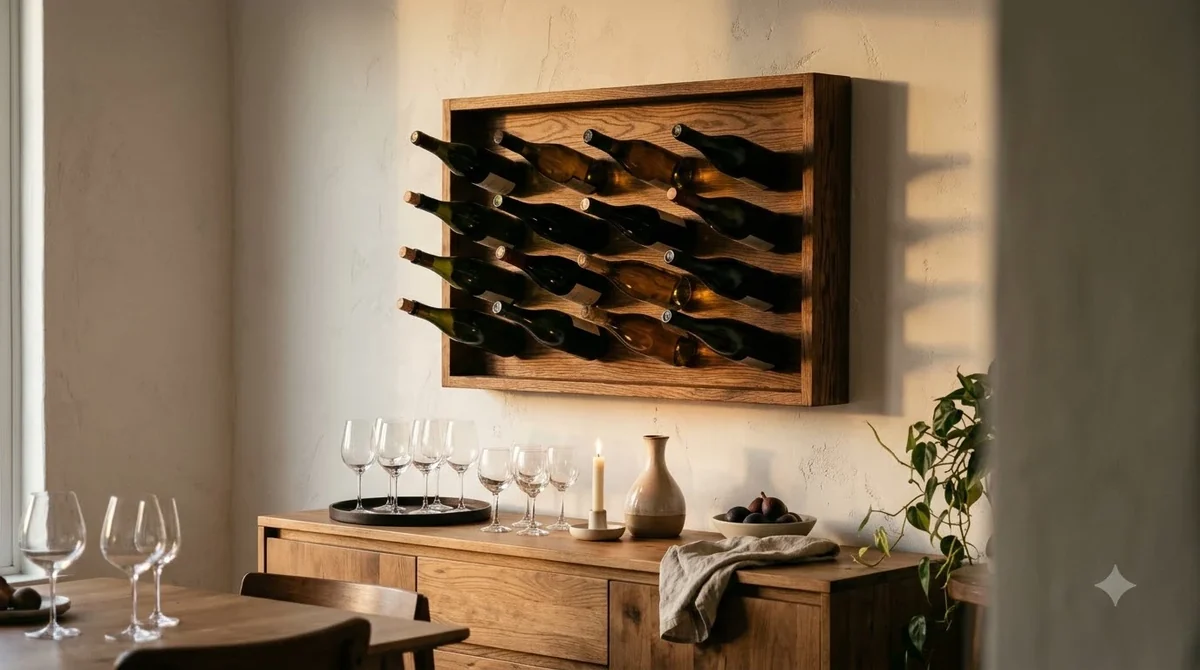
Why it stands out: No tools are needed, and the rack can be removed without damaging a wall or cabinet. Freestanding designs are often sized for a single shelf or a counter corner, which makes them a good fit for studio kitchens. Because they do not depend on a fixed mounting point, they can be placed exactly where the glasses are used.
Keep in mind: Clip-on racks usually hold fewer glasses than a fixed rail, and the clamp must fit the shelf lip. A shelf without a lip cannot support a clip-on design. Freestanding racks also take up counter room, so measure the footprint before ordering.
Best for Heavy Stemware: Hanging Metal Racks
Hanging racks made from heavy-gauge metal suit households with thick crystal or large-bowled glasses. The glasses hang from their bases, so the weight is spread across the rack rather than resting on the rims.
Why it stands out: A heavy-gauge metal frame hung from steel chains is one of the sturdiest storage formats for stemware. Hanging by the base lets a rack hold more glasses in a small footprint, because the glasses do not need a flat shelf. Wine Enthusiast’s storage guide notes that hanging glasses by their bases “allows you to fit many more in one place,” which is why this style often suits island or ceiling-mounted setups.
Keep in mind: Hanging racks need overhead clearance and a secure anchor point. The published guidance does not list load ratings or installation hardware, so check the weight rating on any product you consider. Thin-rimmed glasses should stay upright on a hanging rack, while glasses with heavy rims or feet can be stored upside down.
Best for Bar Carts and Small Spaces: Clip-On Shelf Racks
A bar cart or a narrow shelf is often the only place for everyday wine glasses. Clip-on shelf racks keep those glasses off the cart surface and easy to reach.
Why it stands out: A shelf rack lifts glasses above the cart, which reduces clatter and leaves the cart top free for bottles and mixers. Many designs hold a small set of everyday glasses, and they work well for one or two people who use the same glasses most evenings.
Keep in mind: A bar cart moves, and a rack that works on a stable shelf may tip on a rolling cart. Choose a broad base or a rack with a secure clamp, and keep the heaviest glasses on the lowest tier. A set of cheap wine glasses also benefits from a rack that keeps the bowls separated, since thin glass can chip when it touches.
Best for Large Collections: Multi-Row Wall Racks
Households with a large collection of glasses need a rack that stores several rows without crowding. Multi-row wall racks spread the glasses across a wider area and keep each row separate.
Why it stands out: A wall-mounted rack gives a fixed, display-style storage point, and it can be arranged by glass type. One published example holds six wine glasses and twelve bottles, which shows how a wall rack can combine stemware and wine storage in one unit. Bar cabinets with built-in racks are another option, and examples list capacities of 14 and 18 glasses.
Keep in mind: Multi-row racks take more wall space and require careful installation. The row spacing matters: glasses need room to rest without touching. Mount the rack into a stud or a solid wall anchor, and use the manufacturer’s stated weight limit as the upper bound rather than the bottle count.
How to Choose a Cheap Wine Glass Rack
Price is only one part of the decision. Start with the space you have, the number of glasses you own, and whether you can drill into the wall or cabinet. The table below lists the factors that most often decide which rack works in practice.
| Factor | What to Check | Why It Matters |
|---|---|---|
| Mounting | Drill, clip, or freestanding | Renters usually need a no-drill option |
| Glass shape | Bowl width and stem thickness | Wide bowls need more clearance |
| Spacing | Gap between glasses | Storage guides recommend half an inch to an inch |
| Surface | Cabinet, shelf, or cart material | Thin laminate may not hold screws well |
| Weight | Stated load rating | Crystal and thick bases add weight quickly |
The spacing row deserves extra attention. Storage guidance from Wine Enthusiast recommends leaving between half an inch and an inch between glasses, regardless of type. Clean and fully dry glasses before storing, since moisture trapped between glasses can leave marks and odors. A rack that makes this spacing easy is worth more than a rack with extra decoration.
Frequently Asked Questions
How many glasses fit on a cheap wine glass rack?
It depends on the style and size. Published examples range from six glasses on a wall-mounted rack to fourteen or eighteen in bar cabinet inserts. Measure your glasses and the rack spacing before buying.
Can wine glasses be stored upside down on a rack?
Glasses with thicker rims or feet can usually be stored upside down. Thin-rimmed, delicate glasses should be stored right-side up so they do not topple or break. Always dry them completely before storing.
Do I need separate racks for red and white wine glasses?
Not usually. VinePair’s wine glass guide notes that specific glasses are not necessary for each wine, and that two sets are enough for most homes: sparkling flutes and all-purpose glasses for red and white. One rack for the all-purpose set is often enough.
Is a no-drill rack a good choice for heavy crystal glasses?
A no-drill rack can work for lighter glasses, but heavy crystal needs a secure surface and a stated load rating. Check the weight limit on the packaging, and move heavy glasses to the lowest, most stable tier.
A good cheap wine glass rack keeps stemware separated, dry, and easy to reach without taking over the kitchen. Start with the mounting method your home allows, then match the rack to the number of glasses you own. For related storage ideas, see the wine glass rack guide, the wine glass dishwasher rack options, or the Accessories Library for other wine gear.
For background on glass shape and why a set of two glass types is usually enough, VinePair’s wine glass guide explains that the wine matters more than the glass. The storage advice above follows the spacing and orientation notes in Wine Enthusiast’s storage guide.
More in Wine Accessories
 Coravin Vs Vacu Vin: Choose the Right Wine Saver for Your BottlesUpdated Nov 21, 2026
 Zwilling Wine Stopper Review: Preserve Open Bottles LongerUpdated Nov 21, 2026
 Wine Enthusiast Wine Preserver Review: Features, Benefits and LimitationsUpdated Nov 21, 2026
 Wine Enthusiast Wine Stopper: An Easier Way to Reseal Open BottlesUpdated Nov 21, 2026
 Vintorio Wine Opener: Two-Step Cork RemovalUpdated Nov 21, 2026
 Zwilling Wine Aerator Review: Aerate, Pour, and Seal With One ToolUpdated Nov 21, 2026