
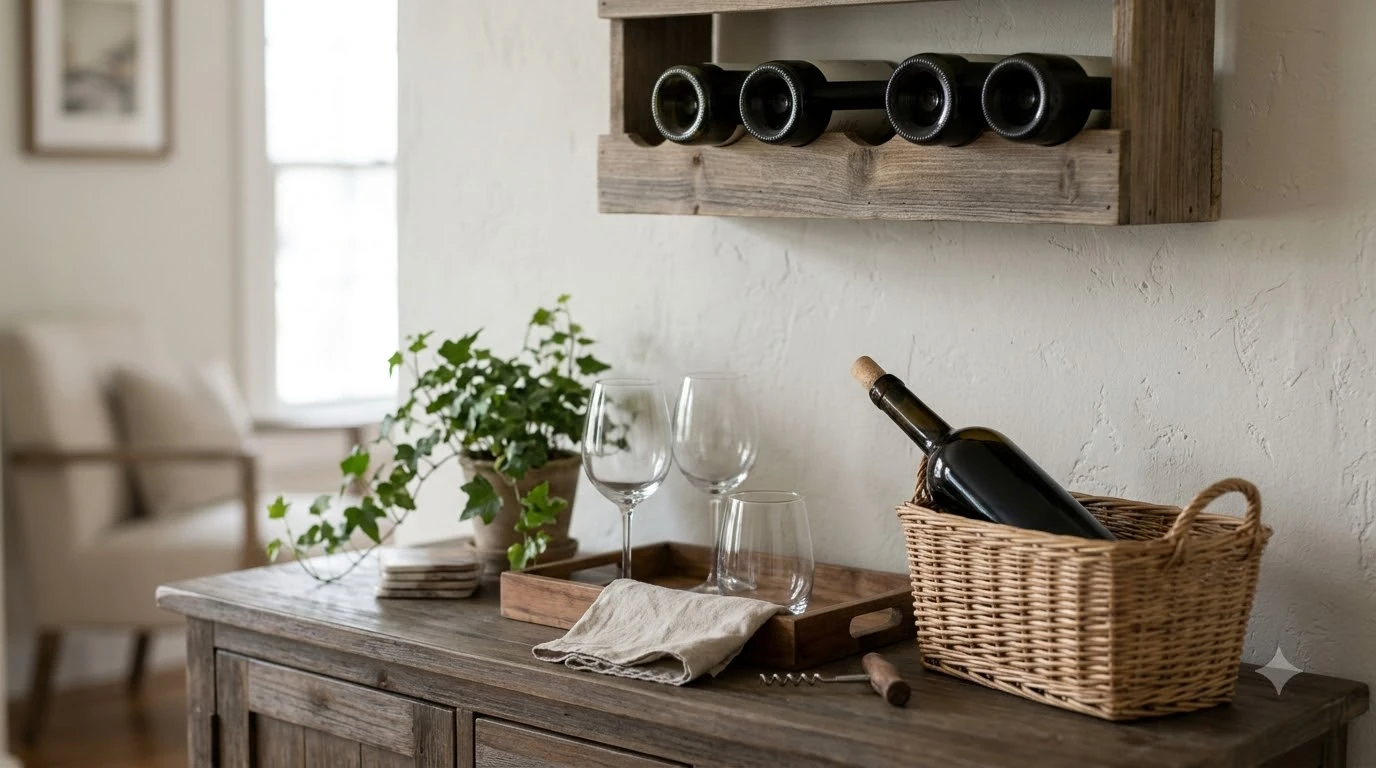

We may earn a commission when you buy through links on this page, at no extra cost to you. Learn more.
The best cheap wine bar cabinet is a compact, freestanding storage cabinet with a dedicated wine rack, enclosed shelves, and a sturdy serving surface. The right choice organizes wine bottles, glasses, and bar accessories without requiring a large room or an elaborate built-in installation. For a budget-friendly purchase, prioritize usable storage, appropriate dimensions, stable construction, and a design that works with your existing furniture.
A home bar does not need expensive custom cabinetry to look organized and inviting. A modest wine cabinet can turn an unused dining room corner, apartment wall, or small living room area into a practical serving station. The challenge is choosing furniture that offers genuine storage rather than paying for decorative details that take up space without adding much functionality.
Best for Small Apartments: Compact Wine Bar Cabinets
A compact wine bar cabinet is a practical choice for apartments, smaller dining rooms, and homes without a dedicated entertaining area. Look for a narrow footprint, enclosed storage, and enough room for everyday bottles and glassware.
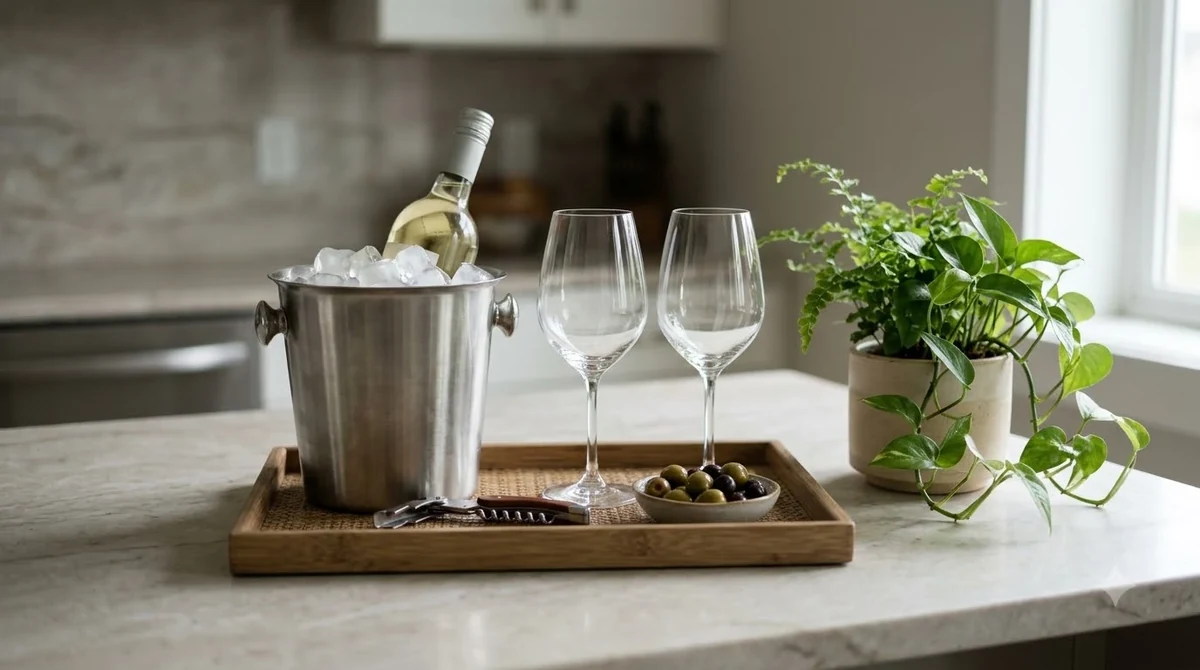
Compact furniture works particularly well when it combines several storage functions. A cabinet with a small countertop, one or two interior shelves, and a lower wine rack can keep the essential parts of a home bar together. Instead of spreading bottles, corkscrews, and glasses across kitchen counters, everything has a designated location.
Dimensions matter more than the appearance of a product photograph. HOMSEE’s bar cabinet buying guide identifies approximately 16–20 inches as a typical cabinet depth and 34–42 inches as a common height range. These measurements provide a useful starting point, although individual compact models may be smaller or larger.
For a narrow apartment, compare the cabinet’s total width with the available wall space and allow room for opening doors. Measure the distance between the cabinet and nearby furniture, particularly dining chairs, before choosing a location. A cabinet that fits against the wall but blocks a frequently used walkway is not a practical purchase.
Prioritize the following features:
- A relatively shallow cabinet that does not interfere with walking space.
- At least one enclosed compartment for glasses and bar tools.
- A stable top surface for serving bottles and preparing drinks.
- Adjustable shelves if the interior needs to accommodate different bottle shapes.
- A wine rack or dedicated bottle compartment that keeps bottles from rolling.
A compact cabinet is especially useful for a collection of everyday wines rather than a large cellar. If you regularly entertain only a few guests, storage for several bottles, a modest selection of glasses, and basic accessories may be sufficient. For a more flexible arrangement, compare a compact cabinet with a cheap bar cart, particularly if you want to move your drinks station between rooms.
The main compromise is capacity. Small cabinets can become crowded when oversized bottles, champagne bottles, decanters, and cocktail equipment share the same shelves. Choose a design around the items you actually intend to store instead of relying entirely on the advertised bottle capacity.
Best for Wine and Glassware: Cabinets with Dedicated Bottle Racks
A wine bar cabinet with an integrated bottle rack is a strong choice for households that want separate spaces for wine, stemware, and serving accessories. Dedicated compartments make the furniture more useful than an ordinary storage cupboard with a decorative bar theme.
Look for a combination of horizontal bottle storage, open serving space, and enclosed shelving. Horizontal slots can help prevent natural-cork bottles from rolling and make the collection easy to identify. A separate glassware section keeps delicate wine glasses away from heavier bottles and equipment.
Capacity should be evaluated carefully. A manufacturer might advertise a cabinet’s bottle capacity without accounting for larger bottles or the space occupied by other accessories. Standard 750 ml bottles are useful reference objects, but sparkling wine, Burgundy, and wider-format bottles can require more room.
Before choosing a rack, consider these practical details:
- Whether the slots accommodate standard 750 ml bottles.
- Whether wider sparkling wine bottles fit without forcing them into position.
- Whether the rack holds bottles securely when the cabinet door opens.
- Whether glasses have enough clearance to hang or stand without touching other items.
- Whether shelves can be removed to accommodate a decanter or larger serving pieces.
Glass storage deserves particular attention. Hanging stemware racks can make efficient use of the upper interior space, while flat shelves provide more flexibility for tumblers and cocktail glasses. A cabinet with both arrangements can serve different types of entertaining without needing additional furniture.
There is also an important distinction between organizing wine and preserving wine for extended aging. According to Liebherr’s wine-storage guidance, stable temperature, appropriate humidity, protection from light, and limited vibration all contribute to suitable storage conditions. A regular furniture cabinet does not automatically provide these conditions.
Tip: Measure your tallest wine bottle and widest sparkling bottle before purchasing. A cabinet that accommodates standard bottles but cannot hold your preferred sparkling wines may provide less useful capacity than expected.
For a mixed collection of wine and spirits, a dedicated rack is often more practical than a cabinet filled entirely with wine slots. Keep frequently used bottles accessible and reserve enclosed shelves for glasses, cocktail tools, napkins, and other smaller items.
Best for Extra Storage: Sideboard-Style Wine Bar Cabinets
A sideboard-style wine bar cabinet is ideal for households that want a piece of furniture that serves more than one purpose. It can function as a dining room buffet, serving station, glassware cupboard, and wine organizer without requiring separate purchases.
These cabinets typically provide a wider top surface and a combination of drawers, shelves, and doors. HOMSEE describes common sideboard-style furniture as approximately 30–36 inches tall, making it suitable for use as a serving surface in many dining rooms.
The extra surface area is particularly useful during gatherings. You can arrange wine glasses, an opened bottle, a water pitcher, and serving accessories on top while keeping spare bottles and equipment inside. Drawers provide a convenient location for corkscrews, bottle stoppers, coasters, cocktail picks, and bar towels.
However, not every sideboard is designed to store wine bottles horizontally. Some have wide, uninterrupted shelves intended for dinnerware, while others include bottle-specific compartments. Check the internal layout rather than assuming that a large cabinet will automatically accommodate a wine collection.
Consider these configurations:
- Two-door sideboard: Useful for larger interior compartments and general-purpose storage.
- Drawer-and-door combination: Suitable for separating small accessories from bottles and glassware.
- Open-center design: Provides an accessible display area while keeping less attractive supplies enclosed.
- Sideboard with wine rack: Combines general storage with designated horizontal bottle compartments.
One advantage of this style is that it can remain useful even if your entertaining habits change. A cabinet initially used for wine and cocktail equipment can later store dining accessories, table linens, or everyday kitchen supplies.
Its main disadvantage is its footprint. A wide sideboard may be a poor choice for a narrow apartment, and deeper models can interfere with chair movement around a dining table. Measure both the cabinet and the surrounding traffic area before ordering.
For buyers comparing several furniture categories, the broader selection of cheap wine bar furniture can help identify alternatives that provide similar storage without requiring a dedicated wine cabinet.
Best for Decorative Display: Open-Shelf and Glass-Door Cabinets
Open-shelf and glass-door wine cabinets suit buyers who want their collection to contribute to the room’s appearance. These designs provide visible access to bottles and accessories, while glass panels can offer some separation from household dust.
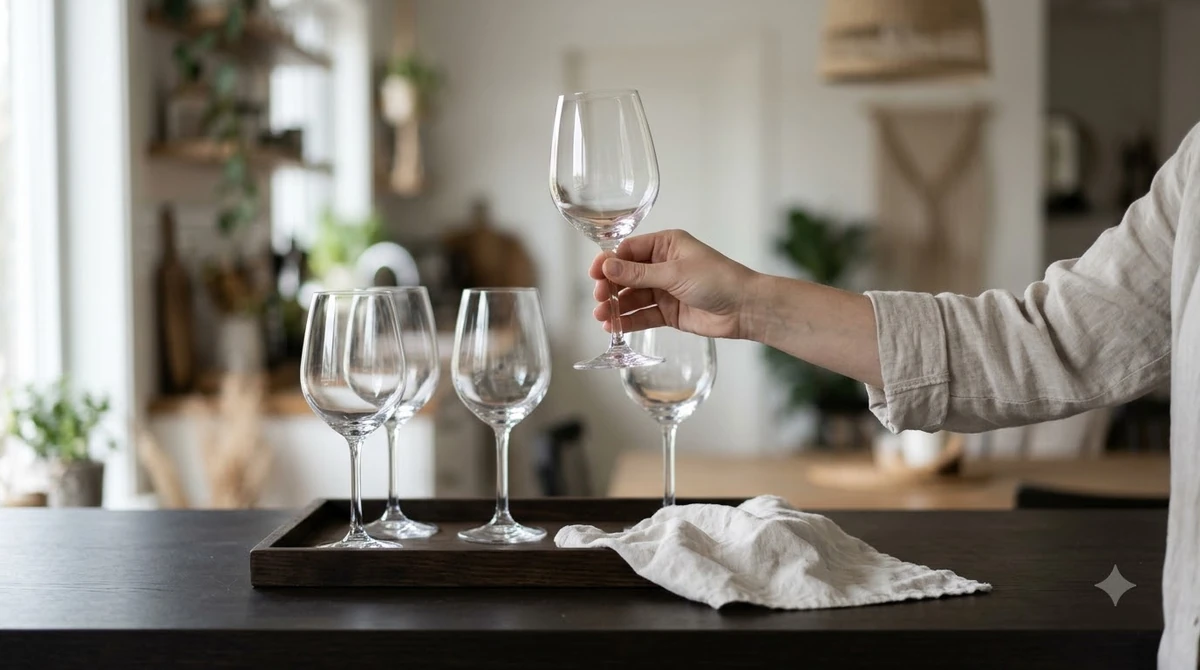
Open shelving is usually the simplest design. It provides direct access to bottles, glasses, and decorative objects, and it can make a small room feel less crowded than a large enclosed cupboard. The trade-off is that everything remains visible, so organization becomes especially important.
Glass-door cabinets provide a more contained display. They can make an inexpensive piece of furniture appear more refined, particularly when paired with coordinated glassware and restrained decorative lighting. However, ordinary glass doors should not be assumed to provide UV protection.
Wine preservation requires more than attractive presentation. Liebherr identifies ultraviolet exposure as a potential cause of unwanted chemical changes in wine, and recommends protection from light. A display cabinet positioned directly beside a sunny window is therefore a poor choice for bottles intended to remain stored for extended periods.
When comparing these designs, look at:
- Door construction and whether hinges feel properly supported.
- Glass thickness and the security of the glass panels.
- Whether shelves are fixed or adjustable.
- Whether lighting is optional or permanently illuminated.
- Whether the cabinet can be positioned away from direct sunlight.
LED lighting can be useful for displaying glasses and decorative objects because it produces relatively little heat compared with many traditional lighting options. Vinotemp also identifies LED lighting as a preferable choice for wine display environments.
Still, decorative lighting should not remain unnecessarily bright around bottles. If you want to display collectible wine, consider keeping the bottles in darker compartments and using the visible shelves for glasses, decanters, and accessories instead.
Another practical consideration is cleaning. Open shelves collect dust more quickly than closed compartments, particularly around bottle necks and glassware. Glass doors reduce direct exposure but require occasional cleaning to maintain a neat appearance.
These designs work best when the cabinet’s appearance is as important as its everyday function. They are less suitable for households that want to conceal a large assortment of bottles, mixers, and miscellaneous entertaining supplies.
Best for Flexible Entertaining: Bar Cabinets with Serving Surfaces
A wine bar cabinet with a usable serving surface is a sensible option for people who regularly entertain guests. It provides a fixed location for preparing drinks, arranging glasses, and organizing accessories without occupying the entire kitchen counter.
The top surface is one of the most important features to evaluate. A narrow decorative top might look attractive but leave little room for actual preparation. A wider surface can accommodate a wine bottle, several glasses, a small serving tray, and a bottle opener without becoming cluttered.
Consider the relationship between the cabinet’s height and how you plan to use it. HOMSEE identifies approximately 34–42 inches as a common height range for bar cabinets, while traditional bar-height furniture is around 42 inches. Sideboard-style furniture is often shorter, making it useful for serving food as well as drinks.
Storage layout is equally important. A practical entertaining cabinet should have clearly separated areas for bottles, glassware, and accessories. For example, lower shelves can hold heavier bottles, while drawers can accommodate corkscrews and stoppers. The serving surface should remain relatively clear for preparation.
Useful features include:
- A sturdy top that can support bottles and serving trays.
- Enclosed storage for spare glasses and cocktail equipment.
- Dedicated compartments for wine bottles.
- Drawers that open smoothly without catching nearby furniture.
- Doors that can open fully without hitting walls or dining chairs.
Do not overlook stability. A cabinet with a large serving surface may experience additional movement when guests lean against it or when heavy bottles are placed near the edge. Look for solid construction, well-supported shelves, and properly secured hardware.
Wall anchoring is another consideration, especially for tall cabinets or furniture placed in homes with children or pets. Follow the manufacturer’s installation instructions and use appropriate anchoring hardware where supplied or required.
If mobility is more important than enclosed storage, a separate bar cart may be more appropriate. A cart can move between a dining room and living room, while a stationary cabinet generally offers more concealed storage and a larger permanent serving area.
The best arrangement depends on your entertaining routine. A stationary wine cabinet works well for a permanent home bar, while a cart is useful when the drinks station needs to move around the home.
How to Choose an Affordable Wine Bar Cabinet
The most reliable way to choose an inexpensive wine cabinet is to compare its dimensions, usable capacity, materials, storage layout, and installation requirements. A lower purchase cost is only useful if the cabinet fits your room and performs the tasks you expect.
Start by deciding how many bottles you need to store. A small collection of everyday wine requires a different arrangement from a household that keeps multiple bottles of red, white, sparkling, and fortified wine. Allow some additional capacity so that the furniture does not become overcrowded as your collection grows.
The following comparison provides a practical starting point. Dimensions are general reference ranges from HOMSEE’s bar cabinet buying guide, not specifications for every cabinet in each category.
| Cabinet type | Typical dimensions or capacity | Storage arrangement | Best use |
|---|---|---|---|
| Compact bar cabinet | Approximately 16–20 inches deep | Enclosed shelves and small bottle compartments | Small rooms and apartments |
| Sideboard-style cabinet | Approximately 30–36 inches tall | Drawers, doors, and wide shelves | Dining room storage and serving |
| Bar-height cabinet | Approximately 42 inches tall | Serving surface and organized compartments | Dedicated home bar areas |
| Open bar cart | Approximately 30–36 inches tall; often 2–3 tiers | Open shelves and rolling wheels | Portable entertaining |
| Small bar cart | Approximately 6–12 bottles | Open bottle and accessory storage | Small collections and occasional use |
1. Measure the available space
Measure the intended cabinet location in three directions: width, depth, and height. Then account for door movement, drawer extension, nearby furniture, electrical outlets, and baseboards. A cabinet that fits the available wall width may still be difficult to use if its doors collide with a dining table.
For a compact room, depth is particularly important. A cabinet that projects too far into the room can reduce walking space and make an otherwise attractive arrangement inconvenient. Compare the listed dimensions with your actual floor plan rather than relying on product photographs.
2. Calculate usable bottle capacity
Advertised capacity is not necessarily practical capacity. Bottle racks may be designed around standard wine bottles, while larger sparkling bottles or unusual shapes require additional clearance. Also consider whether the advertised capacity assumes that every rack position is filled without storing glassware or accessories.
A useful starting point is to list your usual bottle count and reserve separate space for the items that must remain inside the cabinet. This gives you a more realistic picture of how much room you need.
3. Compare construction materials
Budget furniture commonly uses engineered wood, laminate finishes, metal framing, or combinations of these materials. None is automatically unsuitable, but construction quality varies considerably.
Inspect shelf support, door alignment, edge finishing, and hardware. Engineered wood can be practical for ordinary household storage, while metal framing may provide useful structural support. The most important factor is whether the finished cabinet feels stable under its intended load.
4. Check the assembly and delivery details
Many affordable cabinets arrive flat-packed and require home assembly. Check the assembly instructions, package dimensions, number of components, and whether the manufacturer supplies all necessary hardware.
Also verify the return policy and the process for reporting damaged panels or missing parts. Large furniture can be inconvenient to return, particularly when assembly has already begun.
5. Compare the complete storage arrangement
Do not select a cabinet based on the number of shelves alone. Consider whether the interior supports the way you organize your collection. A cabinet with a bottle rack, two adjustable shelves, and a drawer may be more useful than a larger unit with only fixed shelves.
For more ideas, the Accessories Library offers a broader starting point for organizing a home bar and choosing practical wine-related equipment.
6. Separate furniture storage from wine preservation
This distinction is essential. A wooden or metal wine bar cabinet provides organization and convenience, but it does not automatically regulate temperature or humidity.
According to Vinotemp’s wine refrigerator buying guide, approximately 55 degrees Fahrenheit is a desirable wine-storage temperature, and limiting temperature fluctuations is important. Its guidance also discusses protection from UV light, suitable humidity, and horizontal bottle storage for longer-term natural-cork storage.
For bottles you plan to drink relatively soon, a suitable dark and cool storage location may be sufficient. For valuable wines intended for extended aging, a dedicated temperature-controlled wine refrigerator or properly designed cellar is a more appropriate investment than ordinary decorative furniture.
Frequently Asked Questions
What is the difference between a wine bar cabinet and a liquor cabinet?
A wine bar cabinet typically gives greater attention to horizontal bottle storage and wineglass organization. A liquor cabinet may prioritize upright spirit bottles, mixers, and cocktail equipment. Many modern furniture designs combine both functions, so the internal layout matters more than the product name.
Can a wine bar cabinet hold champagne bottles?
Some can, but champagne bottles are generally wider than standard still-wine bottles. Their larger diameter may prevent them from fitting into tightly spaced individual wine slots. Look for flexible shelves or a larger open compartment if you regularly store sparkling wine.
How much space should be left behind a wine cabinet?
The required clearance depends on the cabinet’s design and whether it contains an electrical appliance. Ordinary furniture usually needs enough room for doors, drawers, and ventilation around the surrounding area. For a cabinet containing a wine refrigerator, follow the appliance manufacturer’s specific ventilation and installation requirements.
Can a wine cabinet be used to store wine glasses upside down?
Yes, provided the shelf is clean, dry, and sufficiently spacious. Some stemware racks hold glasses upside down by their stems, while ordinary shelves can accommodate glasses standing upright. The correct arrangement depends on the glass shape, shelf clearance, and the stability of the cabinet.
Does a wine bar cabinet need adjustable feet?
Adjustable feet are useful on uneven flooring because they help reduce rocking and improve stability. This feature is particularly helpful in older homes where floors may not be perfectly level. If the cabinet does not include adjustable feet, suitable furniture leveling solutions may help, provided they are compatible with its construction.
The best cheap wine bar cabinet is one that fits your available space, accommodates your actual bottle collection, and provides convenient storage for glasses and accessories. Prioritize stable construction and a useful interior layout over decorative extras that do not improve everyday use. With careful measurements and realistic storage requirements, an affordable cabinet can create an organized, attractive home bar without requiring custom furniture or a dedicated room.
More in Wine Accessories
 Coravin Vs Vacu Vin: Choose the Right Wine Saver for Your BottlesUpdated Nov 21, 2026
 Zwilling Wine Stopper Review: Preserve Open Bottles LongerUpdated Nov 21, 2026
 Wine Enthusiast Wine Preserver Review: Features, Benefits and LimitationsUpdated Nov 21, 2026
 Wine Enthusiast Wine Stopper: An Easier Way to Reseal Open BottlesUpdated Nov 21, 2026
 Vintorio Wine Opener: Two-Step Cork RemovalUpdated Nov 21, 2026
 Zwilling Wine Aerator Review: Aerate, Pour, and Seal With One ToolUpdated Nov 21, 2026