

We may earn a commission when you buy through links on this page, at no extra cost to you. Learn more.
Should cabernet sauvignon be chilled? Not fully, but it should never be served warm. Cabernet sauvignon tastes best a little cooler than most people’s living rooms, around 60 to 68°F (15 to 20°C), according to Wine Folly’s cabernet sauvignon grape profile. A short stay in the refrigerator or a few minutes in an ice bucket can soften the grip of tannin and alcohol. Serving it cold, though, mutes the blackcurrant, cedar and dark fruit the wine is known for.
Cabernet sauvignon is one of the most recognized red wines in the world, and it is also one of the most often served at the wrong temperature. This guide explains why the grape prefers a cooler serving than many people expect, how to chill it safely, and what to do with a bottle after it has been opened. It also covers storage, decanting and glassware, so you can get more from each pour.
Why Cabernet Sauvignon Is Served Cooler Than Room Temperature
The phrase “serve at room temperature” comes from older homes and cellars that stayed around 55 to 65°F. A modern living room often sits near 70 to 75°F, which is warmer than most red wine prefers. At that level, alcohol can taste hot and tannins can feel drying, so the wine seems heavier than it really is.
Cabernet sauvignon is a full-bodied red with firm tannins, moderate acidity and a lot of concentrated fruit. Those traits need a moderate temperature to show their balance. The range of 60 to 68°F that Wine Folly lists for the grape gives the fruit room to show, keeps the alcohol in check and leaves enough tannin structure for the wine to feel complete.
| Serving temperature | What you usually notice |
|---|---|
| Below about 55°F (13°C) | Aromas are muted, and tannins can taste tight and grippy |
| 60 to 68°F (15 to 20°C) | Fruit, acidity and tannin feel balanced, which is the usual target |
| Above about 72°F (22°C) | Alcohol feels hot, and the wine can taste flat and heavy |
How to Chill Cabernet Sauvignon Without Ruining It
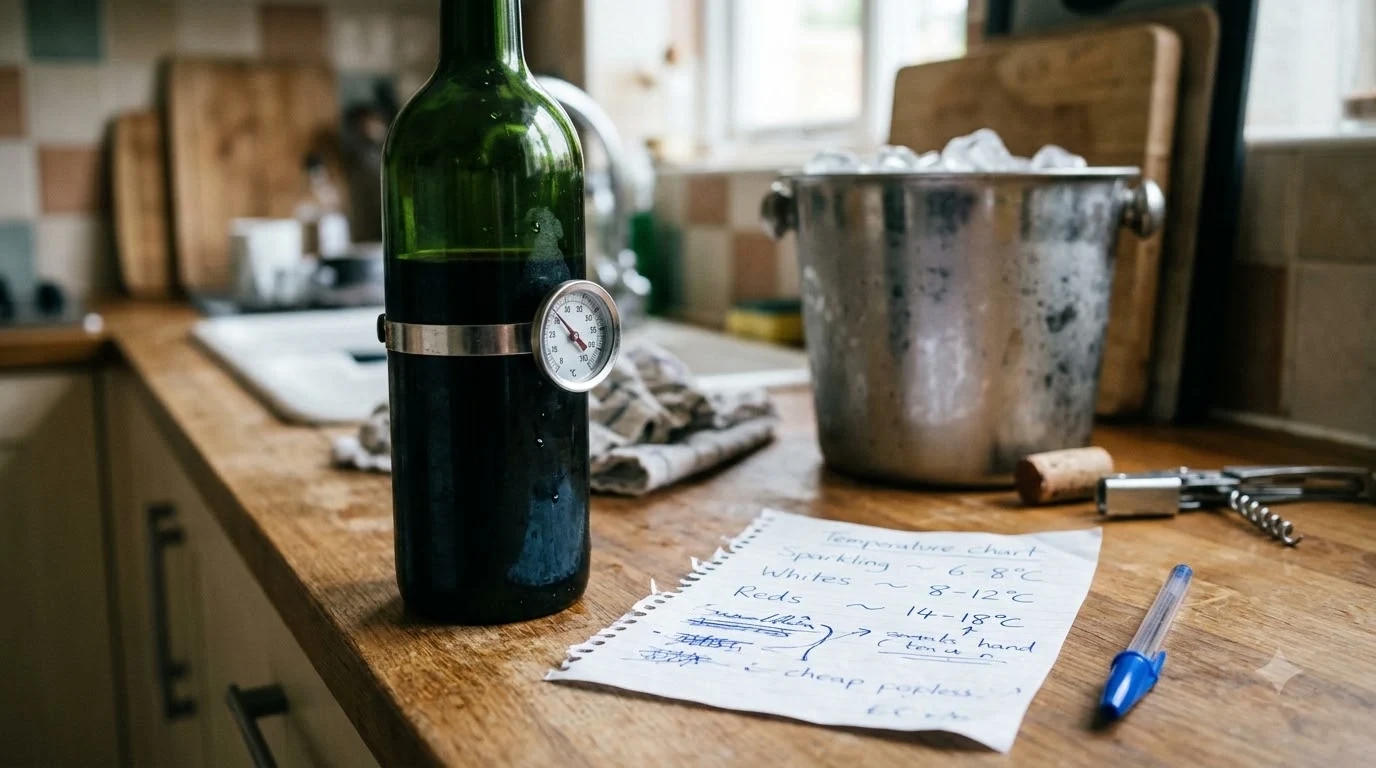
If the bottle has been stored in a warm kitchen or a car, a brief chill can bring it into range. Place the bottle in the refrigerator for 15 to 20 minutes, or stand it in a bucket of cool water for a few minutes. Check the bottle by touch or with a thermometer rather than guessing.
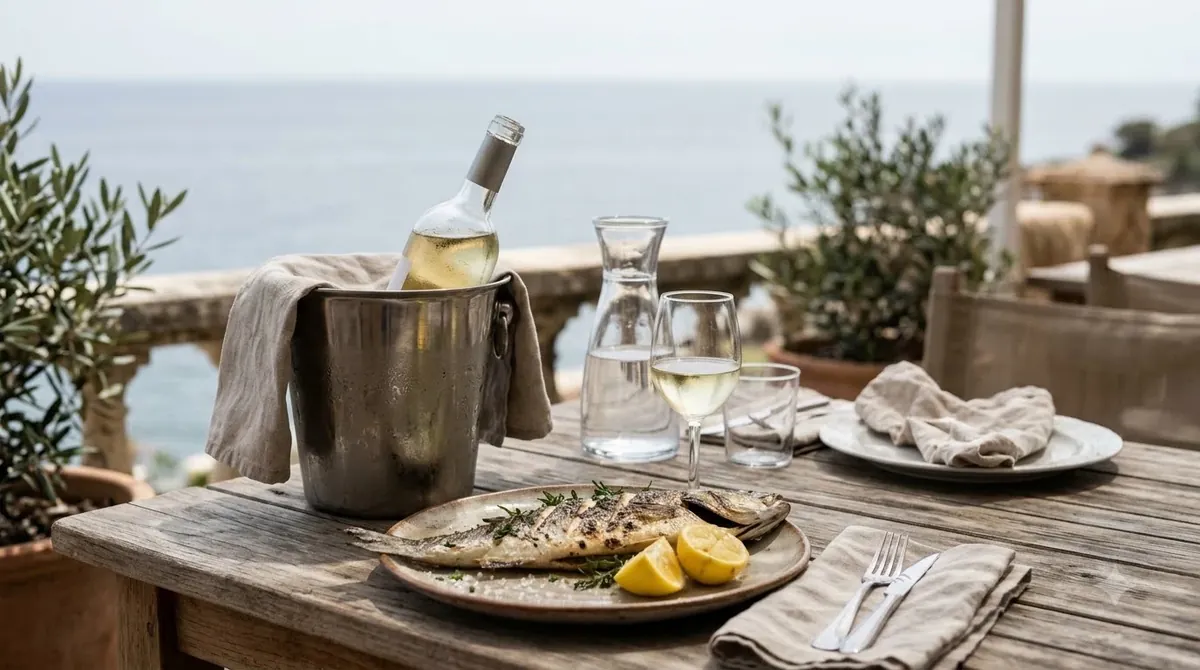
Avoid the freezer, and avoid leaving the bottle in an ice bucket for a long stretch. Cold that goes too far locks up the aromas, and the wine can seem thin once it warms in the glass. Red wines also warm up quickly in a room, so a glass poured from a cool bottle will drift upward over the course of a meal.
The same logic applies at a dinner table. A bottle opened at the start of a meal will warm up as the evening goes on, so a cabernet poured at 60 degrees can reach the upper end of the range by dessert. Many people pour a first glass slightly cool and leave the rest of the bottle on the table, where it drifts warmer. Keeping the bottle in a cooler or a bucket with a little water is a simple way to hold the temperature steady through a long meal.
How to Store Cabernet Sauvignon Before Opening
Unopened cabernet sauvignon is best kept in a dark place where the temperature stays steady. Consistent conditions matter more than cold alone, because swings in temperature can stress the cork over time. Bottles kept on their sides keep the cork moist, which helps prevent air from getting into the bottle.
A closet or cabinet away from the stove, the dishwasher and direct sunlight works well for most people who do not have a wine fridge. A wine fridge is useful if the bottles will be kept for many months, or if the home runs hot in summer.
How Long Cabernet Sauvignon Lasts After Opening
Once a bottle is opened, oxygen begins to change the wine. The fruit fades and the wine tastes flatter with each day. Most people notice the change within a few days, and the rate depends on how much air is left in the bottle and how the wine was stored afterward.
To slow the change, recork the bottle tightly or use a vacuum stopper, then store it in the refrigerator. Cold storage keeps the wine fresher, even though red wine is usually served a little warmer than it is kept. Take the bottle out about 20 to 30 minutes before pouring if it has been in the refrigerator for a long time.
A half-empty bottle is more affected than a nearly full one. If the wine has lost its fruit but still tastes clean, it can still work in a pan sauce or a slow braise, which is a good use for leftover cabernet. For more on that, see cooking with cabernet sauvignon.
Does Cabernet Sauvignon Need to Breathe?
Many cabernets benefit from air, and the gentlest way to give it is to pour the glass and let it sit for 15 to 30 minutes. Younger, tannic bottles benefit more than older ones. Wine Folly suggests decanting the wine for about one hour before serving, which gives the tannins time to soften and lets any closed aromas open.
Older cabernets with a lot of sediment should be decanted carefully and sometimes only shortly before the meal. Very old bottles can fade quickly once exposed to air, so for those a short time is enough.
What Glass to Use for Cabernet Sauvignon
A large glass with a wide bowl gives cabernet sauvignon room to release its aromas. Wine Folly describes an oversized glass as the recommended shape for the grape. The extra surface area lets the wine breathe in the glass and gives the aromas space to reach your nose.
When a glass is filled only partway, the wine has more room to open, and the swirl you give it does more work. Most of the aromatic volume of a cabernet sits above the liquid, so a pour that fills the bowl to its widest point is usually too much for this grape. A third to half of the glass is a common guideline among serious drinkers.
A narrow glass concentrates the alcohol and can make the wine seem sharper. You do not need an expensive set to enjoy the wine, but a larger bowl and a thin rim make a clear difference with this style.
Frequently Asked Questions
Is it normal to serve cabernet sauvignon slightly chilled?
Yes, a short chill is common for cabernet sauvignon, especially in warm weather or after the bottle has sat in a hot room. The aim is to reach the cooler end of the usual range, not to serve the wine cold from the refrigerator.
How long should I chill cabernet sauvignon in the fridge?
A period of 15 to 20 minutes is usually enough to bring a warm bottle into a good serving range. Check the temperature by touch, and do not leave the wine so long that the aromas go quiet.
Can I put cabernet sauvignon in the freezer to chill it fast?
It is better not to. A freezer can cool the wine too much in a short time, and a forgotten bottle may crack or push out its cork. A cool water bath or a short stay in the fridge is a safer way to reach serving temperature.
Does cabernet sauvignon taste better after it breathes?
For many young bottles, yes. Tannins soften and the fruit becomes easier to notice. Older bottles may need only a brief exposure to air, since they can fade once opened.
Serving cabernet sauvignon in the right range is one of the simplest ways to improve the glass in front of you. Keep the bottle cool but not cold, give it a short time to open up, and pour it into a large glass. For more background on the style, you can browse wine by type or check how to pronounce cabernet sauvignon before your next dinner.
More in Wine Types & Grapes
 Zinfandel Sugar Content: Dry Red vs. White Zinfandel GramsUpdated Nov 21, 2026
 Best Zinfandel Substitute Options for Sipping and CookingUpdated Nov 21, 2026
 Zweigelt Food Pairing: Best Dishes, Cheeses, and Serving TipsUpdated Nov 21, 2026
 Zinfandel Tannins Explained: How Structure Shapes Every BottleUpdated Nov 21, 2026
 Zinfandel Sweetness Level: Dry Red vs. Sweet White Zin ExplainedUpdated Nov 21, 2026
 Xinomavro Food Pairing: Best Dishes, Styles, and Serving TipsUpdated Nov 21, 2026