

We may earn a commission when you buy through links on this page, at no extra cost to you. Learn more.
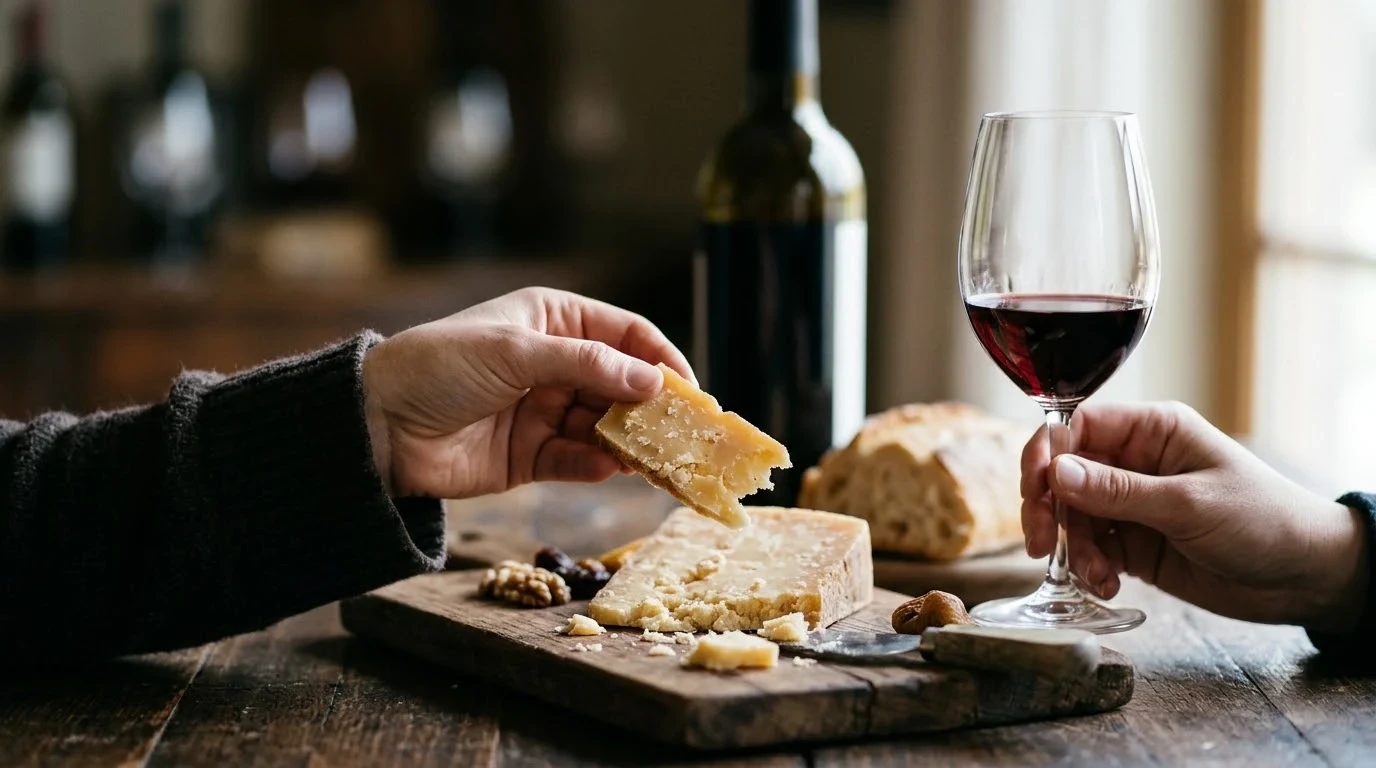
Cabernet sauvignon with cheese works best when you choose aged, firm varieties such as cheddar, Gouda, Manchego, and Parmigiano-Reggiano. The wine’s firm tannins soften when they meet fat and salt in the cheese, while the dark fruit and oak notes stay in balance. Soft, mild cheeses are a weaker match, because they do little to tame the tannins.
This guide explains why cabernet sauvignon works with cheese, which styles of cheese suit different bottles, how to build a simple cheese board, and which combinations to avoid. It is meant for home hosts who want a dependable pairing without needing a sommelier’s training.
Why cabernet sauvignon pairs with cheese
The main reason these two work together is tannin. Cabernet sauvignon has thick skins and small berries, which give the wine high levels of tannin, and tannin can feel drying or bitter on its own. Fat and salt in cheese coat the mouth and soften that drying feeling, so the wine tastes smoother and fruitier when eaten with the right cheese.
Acidity also plays a role. The grape has noticeable acidity, which helps it cut through rich, creamy textures. A wine with that balance can stand up to a sharp, aged cheese without tasting thin, and the cheese can carry the wine’s dark fruit forward.
The pairing works best when the flavors complement each other. Dark fruit, oak, and cedar notes in the wine match the nutty, caramel, and savory flavors that develop in aged cheeses. When a cheese is too mild, the wine simply overpowers it, which is why the age and firmness of the cheese matter so much.
Best cheeses for cabernet sauvignon
Hard and aged cheeses are the most reliable choice. Their dense texture and deeper flavor match the wine’s structure, and they handle its tannins without fading. Most cheese boards can start with two or three of the options below, chosen to show different levels of richness.
| Cheese | Why it works | Serve with |
|---|---|---|
| Aged cheddar | Sharp and salty, cuts through tannin | Cabernet from Napa or Sonoma |
| Parmigiano-Reggiano | Nutty and crystalline, with savory depth | Cabernet with a bit of Italian style |
| Gouda, aged | Caramel notes that echo oak | Medium-bodied bottles with soft oak |
| Manchego | Firm, nutty, and slightly tangy | Cabernet from Spain or Chile |
| Gruyere | Rich, nutty, and smooth | Structured bottles from Bordeaux |
Blue cheeses are a more personal choice. A strong blue such as Stilton or Roquefort can pair well with a very ripe, fruit-forward cabernet, because the salt and funk balance the wine’s sweetness. With a leaner, more tannic bottle, a strong blue can taste harsh, so taste a small piece with a small pour first.
Cheeses that do not pair well
The mistake most hosts make is choosing cheese by popularity alone. A soft, creamy brie can be delicious, but with a young, tannic cabernet it often leaves the wine tasting dry and metallic. The rule of thumb is simple: the bigger and more tannic the wine, the more fat, salt, and age the cheese needs.
Very mild, fresh cheeses are the weakest match. Mozzarella, fresh goat cheese, and young cream cheese have little flavor, so the wine overwhelms them and leaves them tasting flat. The tannins can also feel stronger when they meet a cheese with no fat or salt to soften them.
Very pungent, smoky, or heavily spiced cheeses can clash with the wine’s oak and fruit. A strong smoked cheese or a cheese with chili can make the wine taste bitter. If you want to include them, pair them with a fruitier red or serve them on a separate plate.
How to build a cabernet sauvignon cheese board
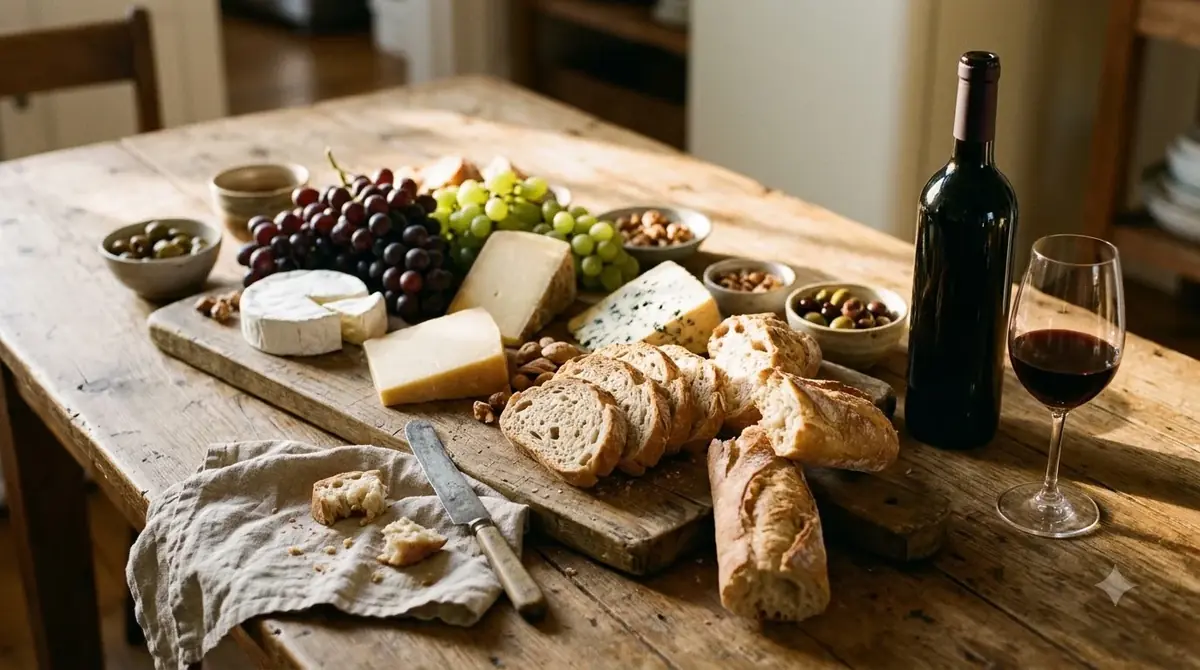
A balanced cheese board for cabernet sauvignon usually includes three cheeses: one firm aged cheese, one nutty or sharp cheese, and one richer option such as a creamy Gruyere or a mild blue. Choosing a range of textures gives guests a clear comparison and keeps the board interesting.
Add foods that complement the wine. Dried fruit such as figs, apricots, or dates echo the wine’s dark fruit, while toasted nuts pick up the oak. Dark chocolate is another strong match, especially with a cabernet that shows cocoa and spice. Crackers should be plain and sturdy, so they do not compete with the cheese.
Plan the order of tasting. Start with the mildest cheese, then move to the richer and sharper ones. Leave the strongest blue cheese for last, because it can overpower the next taste if served early.
Tip: Serve the cabernet at about 60 to 68 degrees Fahrenheit, the range given in the Wine Folly cabernet sauvignon guide. A slightly cooler red keeps the tannins smooth, so the cheese does not have to work as hard to soften them.
How to choose the right cabernet for cheese
If you are shopping for a bottle to serve with cheese, read the label for the region and vintage. A bottle from a warm vintage often tastes softer, which suits a broad range of cheeses. A bottle from a cooler year or a cooler site tends to be leaner, so pair it with a firmer, saltier cheese that can match its structure.
Style matters more than price when you pick a bottle for cheese. Cabernet sauvignon made in a cooler climate usually has more herbal and green notes, which suit sharp cheddar and nutty Manchego. Warmer-climate bottles show riper fruit and softer tannins, which pair well with creamy Gouda or a mild blue.
Oak is another factor. A cabernet that is heavily oaked can taste bitter next to a very sharp cheese, while a moderately oaked bottle pairs more smoothly. If you are unsure, choose a cabernet with balanced fruit and medium tannins, which will work with most aged cheeses.
The wine’s own structure can guide your choice. Young, firm bottles need more fat and salt in the cheese to feel soft, so choose a richer cheese. Older bottles, which have softer tannins, can handle lighter or sharper cheeses, and the match feels more relaxed.
Serving order for a cheese and wine tasting
If you are hosting a tasting, serve the cheeses in order of intensity. Begin with the youngest, mildest firm cheese, such as a gentle aged Gouda, then move to aged cheddar and Manchego, and finish with the strongest blue. This order lets the palate adjust gradually, and it shows guests how the wine reacts to each new flavor.
Pour the cabernet in small amounts for each cheese, so the comparison stays clear. A small glass of water between tastings helps reset the palate. Keep the room cool, and take the cheese out of the refrigerator about thirty minutes before serving so the flavors and textures open up.
Frequently Asked Questions
What cheese is the best with cabernet sauvignon?
Aged cheddar, aged Gouda, Manchego, and Parmigiano-Reggiano are reliable choices. Their firm texture and savory flavor match the wine’s structure and soften its tannins.
Can you pair cabernet sauvignon with blue cheese?
Yes, a strong blue such as Stilton or Roquefort can work well with a ripe, fruit-forward cabernet. With a leaner, more tannic bottle, the blue can taste harsh, so test a small portion first.
Is cabernet sauvignon good with goat cheese?
Fresh goat cheese is a weak match because it is mild and light. A slightly aged goat cheese with more texture pairs better, especially with a cabernet that is not too tannic.
Should cabernet sauvignon be served with cheese before or after dinner?
Cheese works well as a pairing course on its own or with the main meal. Many hosts serve cheese after dinner with the same bottle that was poured with the main course, because the wine has time to open up.
Cabernet sauvignon and cheese make a simple, satisfying pairing when you match the cheese to the wine’s structure. Start with aged, firm cheeses, add dried fruit and nuts, and adjust the choice to the style of your bottle. For more background on how this grape’s style changes with place, the Wine Folly guide is a useful reference. For a board built around another firm red, the brunello di montalcino grape page explains how Sangiovese-based wines suit aged Italian cheese, and the chardonnay alcohol content page helps if you want a lighter option for the same board. The Wine by Type section can help you compare other reds.
More in Wine Types & Grapes
 Zinfandel Sugar Content: Dry Red vs. White Zinfandel GramsUpdated Nov 21, 2026
 Best Zinfandel Substitute Options for Sipping and CookingUpdated Nov 21, 2026
 Zweigelt Food Pairing: Best Dishes, Cheeses, and Serving TipsUpdated Nov 21, 2026
 Zinfandel Tannins Explained: How Structure Shapes Every BottleUpdated Nov 21, 2026
 Zinfandel Sweetness Level: Dry Red vs. Sweet White Zin ExplainedUpdated Nov 21, 2026
 Xinomavro Food Pairing: Best Dishes, Styles, and Serving TipsUpdated Nov 21, 2026