

We may earn a commission when you buy through links on this page, at no extra cost to you. Learn more.
The cabernet sauvignon sweetness level is typically dry, meaning this popular red wine contains little residual sugar rather than noticeable sweetness. Its ripe blackberry, blackcurrant, and plum flavors can create an impression of sweetness, but those fruity aromas do not mean the wine contains much sugar. Firm tannins, substantial body, and refreshing acidity give Cabernet Sauvignon its characteristic structured, dry finish.
Cabernet Sauvignon is one of the most recognizable red wine varieties, but its rich fruit flavors often cause confusion about sweetness. A glass can smell like ripe blackberries, taste like dark cherries, and have a velvety texture while remaining completely dry. Understanding the difference between fruitiness and actual sugar makes it easier to choose a bottle, compare growing regions, and find the right food pairing. Here is what to expect from Cabernet Sauvignon and how to recognize its sweetness in the glass.
Is Cabernet Sauvignon Sweet or Dry?
Cabernet Sauvignon is normally a dry red wine with little residual sugar. Its naturally concentrated fruit flavors, high tannin structure, and full body create richness without the sugary taste associated with dessert wines.
During fermentation, yeast converts the natural sugars in grape juice into alcohol. When fermentation is allowed to proceed until nearly all fermentable sugar has been consumed, the finished wine is classified as dry. Cabernet Sauvignon is generally made in this style because its bold fruit, substantial tannins, and acidity work particularly well together without additional sweetness.
Dry does not mean that a wine has absolutely no sugar. Many dry wines retain small amounts of residual sugar after fermentation, but the concentration is low enough that the wine does not taste noticeably sweet. The important distinction is whether the remaining sugar creates a perceptible sweet sensation rather than simply contributing to the wine’s overall balance.
Cabernet Sauvignon is commonly placed alongside other dry reds such as Nebbiolo, Tempranillo, and Sangiovese. These wines may have very different aromas and textures, but they generally do not deliver the obvious sweetness found in dessert wines or sweet fortified reds.
According to Total Wine’s red wine sweetness classification, Cabernet Sauvignon belongs in the dry, savory category. That classification makes it a suitable starting point for anyone who wants a substantial red wine without pronounced sugary sweetness.
There are exceptions. A winemaker can retain more natural grape sugar by interrupting fermentation or produce a specially styled sweet wine from Cabernet Sauvignon grapes. However, these examples are not representative of the usual Cabernet Sauvignon found in wine shops and restaurants.
Residual Sugar and What the Numbers Mean
Residual sugar is the amount of sugar remaining in wine after fermentation. Measuring it in grams per liter provides a more reliable indication of sweetness than judging a bottle by its fruit aromas or the richness of its color.
Grapes naturally contain glucose and fructose. Yeast consumes these sugars during fermentation and produces alcohol and carbon dioxide. When fermentation finishes, some sugar can remain in the wine. The quantity depends on the grape composition, fermentation conditions, and decisions made by the winemaker.
For a general reference, Total Wine’s sweetness guide uses the following approximate categories. These are broad educational ranges rather than a universal classification specifically for Cabernet Sauvignon.
| Sweetness category | Residual sugar | Typical perception |
|---|---|---|
| Dry | 0–17 g/L | Little or no noticeable sweetness |
| Off-dry | 17–35 g/L | Light but perceptible sweetness |
| Sweet | 35–120 g/L | Clearly sweet on the palate |
| Very sweet | More than 120 g/L | Intense, lingering sweetness |
These figures help explain why most Cabernet Sauvignon tastes dry. Its traditional winemaking style emphasizes fermentation that converts most of the grape sugar into alcohol rather than preserving a sweet finish.
Residual sugar is only one part of the tasting experience. Acidity and tannins influence how sweetness is perceived, and a wine with considerable structure can seem particularly dry even when a small amount of sugar remains.
For example, a Cabernet Sauvignon with ripe blackcurrant aromas might seem sweeter than a leaner red wine with earthy or herbal aromas. However, if both wines contain similarly low residual sugar, their technical sweetness can be nearly identical.
Tip: Separate aroma from sweetness when tasting. Smell the wine first, then take a small sip and pay attention to whether the finish feels sugary or dry. A strong blackberry aroma does not automatically indicate high residual sugar.
Why Cabernet Sauvignon Tastes Fruity Without Being Sweet
Cabernet Sauvignon can taste rich, ripe, and almost jammy while remaining a dry wine. Its fruit aromas come from grape characteristics and winemaking influences rather than necessarily from sugar left in the finished bottle.
Blackcurrant is one of the grape’s signature characteristics. Depending on ripeness and growing conditions, the wine may also show blackberry, black cherry, dark plum, and concentrated cassis. These aromas can remind drinkers of fruit preserves, ripe berries, or even blackcurrant jam.
However, the brain often associates ripe fruit aromas with sweetness. Smelling blackberry preserves can create an expectation of sugar before the wine even reaches the palate. When the actual wine is dry and tannic, the difference between aroma and taste can be surprising.
Oak maturation adds another layer of complexity. Cabernet Sauvignon has a natural affinity for oak, and barrel aging can contribute aromas of vanilla, cedar, sandalwood, tobacco, coffee, and spice. Vanilla and sweet-smelling baking spices may reinforce the impression that a wine is sweet, even when its residual sugar remains low.
Climate also influences the fruit profile. Grapes grown in warmer conditions can develop riper fruit characteristics, while cooler conditions can produce wines with more pronounced herbal and savory qualities. Neither profile automatically determines whether the finished wine is dry or sweet.
Decanter describes Cabernet Sauvignon as a grape that can show capsicum and grassy notes when less ripe, developing blackcurrant and cassis characteristics as ripeness increases. California and Chilean examples can also display mint and eucalyptus, while oak contributes additional secondary aromas. Its detailed Cabernet Sauvignon grape variety profile explains these regional and winemaking influences.
These differences are useful when comparing bottles. A wine with intense black cherry and vanilla may appear sweeter than one with blackcurrant, cedar, and herbal notes, but aroma intensity should not be confused with residual sugar.
How Growing Regions Influence Perceived Sweetness
Growing region influences the flavors, ripeness, and overall structure of Cabernet Sauvignon. Warmer and cooler climates can produce noticeably different fruit profiles, although traditional Cabernet Sauvignon from both environments is generally dry.
Bordeaux in France is one of the grape’s historic homes. Cabernet Sauvignon performs particularly well in the Médoc, where warm conditions and gravelly soils support its late-ripening growing cycle. Bordeaux wines often combine Cabernet Sauvignon with Merlot, Cabernet Franc, and Petit Verdot, creating blends with varying proportions of fruit, acidity, and tannin.
These wines can show blackcurrant, herbal notes, cedar, and savory characteristics. Compared with very ripe expressions from warmer regions, some Bordeaux examples may seem less fruit-forward and more restrained. That difference can make them appear less sweet even though both styles are typically dry.
California, particularly Napa Valley, is another important source of Cabernet Sauvignon. The region is associated with concentrated red wines that can feature ripe blackberry, black cherry, cassis, and plum. Oak aging may add vanilla, toast, and spice, creating an impression of richness that some drinkers mistake for sweetness.
Chile is another significant producer. Depending on the vineyard’s climate and location, Chilean Cabernet Sauvignon can show ripe dark fruit alongside herbal, minty, and sometimes eucalyptus characteristics. Australian Cabernet Sauvignon can also display a combination of dark fruit and savory flavors.
Wine Enthusiast identifies Bordeaux, California, Washington State, Australia, and Chile among the major Cabernet Sauvignon growing regions. These locations demonstrate how widely the variety adapts to different environments.
When comparing regional styles, focus on fruit ripeness, acidity, tannin, and oak rather than assuming that a particular country produces sweet Cabernet Sauvignon. A warmer-climate bottle may taste fruitier, but it can still have a distinctly dry finish.
Cabernet Sauvignon Compared with Other Red Wines
Cabernet Sauvignon is generally drier in perception than many softer, fruit-forward red wines, although actual residual sugar depends on the individual wine. Comparing tannin, acidity, and fruit characteristics helps explain why two dry wines can seem quite different.
Merlot is a useful comparison. Both varieties are commonly made as dry red wines, but Merlot usually has softer, more approachable tannins. Its plum, cherry, and blackberry flavors can therefore seem more immediately fruity and rounded. Cabernet Sauvignon generally has firmer tannins and a more structured finish.
Pinot Noir offers a different contrast. It usually has lighter body, low to medium tannins, and higher acidity than Cabernet Sauvignon. Its red cherry, raspberry, and earthy flavors can feel fresher and less concentrated.
Malbec is another popular alternative. Many examples have generous dark fruit characteristics, including blackberry and plum, with substantial body and noticeable tannins. The impression of sweetness can vary according to ripeness, oak treatment, and winemaking choices.
For white wine drinkers, Sauvignon Blanc provides an interesting contrast. It is typically dry but has high acidity and citrus, herb, and green fruit characteristics. Someone who prefers crisp wines may enjoy its refreshing profile more than the weight and tannin of Cabernet Sauvignon. For more details, see our article about sauvignon blanc sweetness level.
The following comparison summarizes the typical differences:
| Wine | Typical sweetness | Tannin | Common flavor profile |
|---|---|---|---|
| Cabernet Sauvignon | Dry | High | Blackcurrant, blackberry, cedar |
| Merlot | Dry | Medium | Plum, cherry, chocolate |
| Pinot Noir | Dry | Low to medium | Red cherry, raspberry, earth |
| Malbec | Usually dry | Medium to high | Blackberry, plum, violet |
| Syrah | Usually dry | Medium-plus to high | Black fruit, pepper, spice |
Remember that these are typical characteristics, not fixed rules for every bottle. A particularly ripe Merlot may taste fruitier than a restrained Cabernet Sauvignon, while different winemaking approaches can change the balance of individual wines.
Food Pairings for Dry Cabernet Sauvignon
Dry Cabernet Sauvignon works especially well with rich foods, grilled meats, and dishes containing enough fat and protein to balance its firm tannins. Its dark fruit, acidity, and structured finish make it a natural companion for substantial meals.
Steak is one of the classic pairings. Ribeye, strip steak, and grilled sirloin provide enough fat and protein to soften the drying sensation created by Cabernet Sauvignon’s tannins. The wine’s dark fruit and oak characteristics also complement the browned exterior and savory flavors produced during grilling.
Lamb is another excellent choice. Roasted leg of lamb, herb-crusted lamb chops, and slow-cooked lamb shoulder work well with Cabernet Sauvignon’s concentrated fruit and structure. Rosemary, thyme, black pepper, and roasted garlic can complement its herbal and savory notes.
For a meat-free meal, try a grilled portobello mushroom, lentil shepherd’s pie, or a substantial mushroom-based dish. The earthy flavors and hearty textures can stand up to a full-bodied red wine. Aged cheddar and mature Gouda are also useful cheese pairings because their concentrated flavors complement Cabernet Sauvignon’s intensity.
Not every dish works equally well. Very spicy food can make the alcohol and tannins seem more aggressive, while oily fish can clash with the substantial tannin structure of Cabernet Sauvignon. Delicate seafood dishes generally work better with lighter wines.
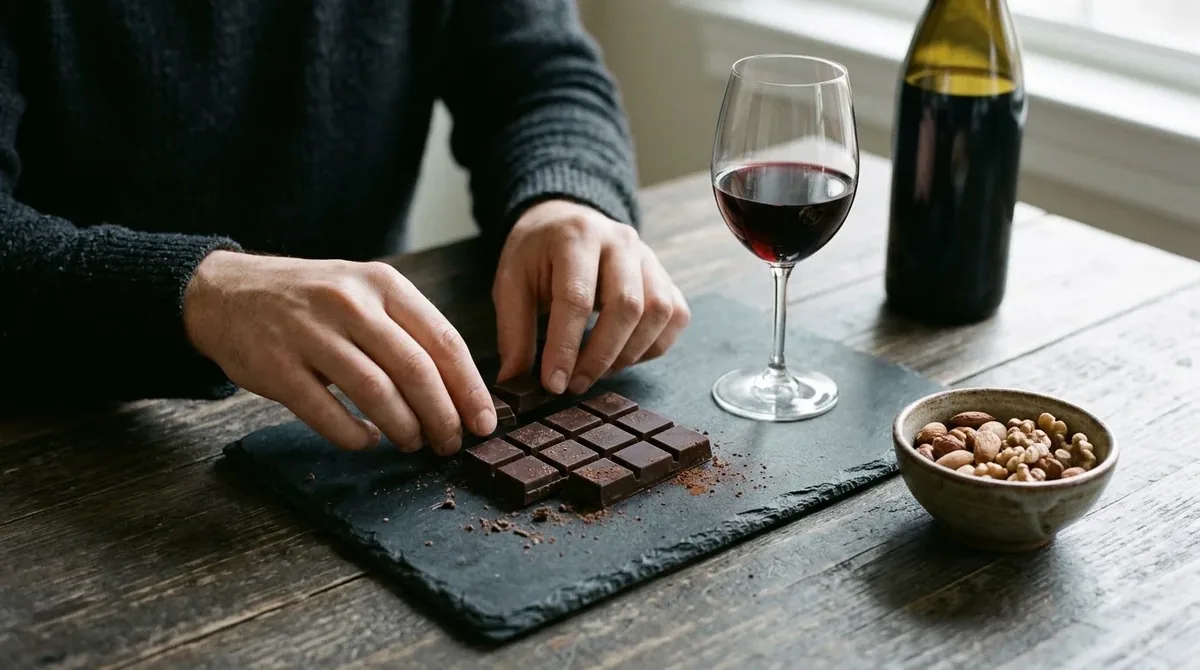
Sweet foods require particular care. A dessert should be at least as sweet as the wine, otherwise the wine may taste harsh or bitter beside it. Traditional dry Cabernet Sauvignon is usually better served with savory main courses than sugary desserts.
For a balanced meal, consider the following combinations:
- Grilled ribeye: Fat and protein soften Cabernet Sauvignon’s firm tannins.
- Roasted lamb: Rosemary, garlic, and dark fruit flavors create a complementary combination.
- Beef short ribs: Slow cooking creates a rich texture that matches the wine’s body.
- Grilled portobello mushrooms: Earthy flavors complement the wine’s savory characteristics.
- Aged cheddar: Concentrated cheese flavors stand up to the wine’s structure.
Serving and Storing Cabernet Sauvignon Correctly
Serving temperature, aeration, and storage conditions can influence how Cabernet Sauvignon smells and tastes. A suitable serving temperature helps balance alcohol, fruit, and tannin, while proper storage protects the wine’s quality over time.
Full-bodied Cabernet Sauvignon is generally best served between 60 and 65 degrees Fahrenheit. Serving it too warm can make the alcohol seem more prominent and the wine feel heavier. Serving it too cold can make tannins seem harder and reduce the expression of its fruit aromas.
If the bottle has been stored at normal room temperature, briefly chilling it before serving can help bring it into the recommended range. A thermometer is useful when precision matters, but a short period in a cool environment can also help.
Decanting is another useful technique, especially for young, full-bodied Cabernet Sauvignon. Allowing the wine to breathe for approximately 30 to 60 minutes can soften its initial impression and make its aromas easier to appreciate. Older bottles may require a gentler approach because excessive exposure to air can diminish delicate aromas.
For more detailed instructions, see our guide to how long to decant cabernet sauvignon. The right approach depends on the wine’s age, structure, and condition.
Storage is equally important. Unopened bottles should be kept in a cool, dark environment, ideally around 55 degrees Fahrenheit, with consistent temperature and limited exposure to light. Bottles sealed with natural cork are generally stored on their sides to help maintain cork contact with the wine.
After opening, recork the bottle and keep it in the refrigerator. Most opened still wines retain their best qualities for approximately three to five days, although their condition depends on oxygen exposure and the wine’s original structure.
For unopened bottles, aging potential varies considerably. Everyday Cabernet Sauvignon is not necessarily intended for extended cellaring, while structured examples from recognized regions can develop additional complexity over many years. Read our guide to how long does cabernet sauvignon last unopened for more information about bottle longevity and storage.
Frequently Asked Questions
Does Cabernet Sauvignon contain more sugar than Merlot?
There is no universal rule that Cabernet Sauvignon contains more residual sugar than Merlot. Both varieties are commonly fermented into dry red wines, and their actual sugar content depends on the producer’s fermentation decisions. A softer Merlot can seem sweeter because its tannins are generally less assertive, even when its residual sugar is similarly low.
Can Cabernet Sauvignon be used to make dessert wine?
Yes. Cabernet Sauvignon grapes can be used in specialty dessert-style wines, including certain late-harvest or sweet red wine preparations. Wine Enthusiast also recognizes Cabernet Sauvignon among the grapes used for dessert wine production. These styles are exceptions to the familiar dry Cabernet Sauvignon profile.
Does Cabernet Sauvignon become sweeter as it ages?
Not necessarily. Bottle aging does not normally create additional residual sugar. Instead, tannins can become softer and aromas can evolve toward dried fruit, leather, tobacco, and earthy characteristics. These changes may make the wine seem rounder or more approachable, but they do not mean its sugar content has increased.
Is Cabernet Sauvignon suitable for someone who dislikes sweet drinks?
Traditional Cabernet Sauvignon is generally a suitable option for someone who prefers dry drinks. Its firm tannins and savory finish distinguish it from sweet red wines and fruit-forward beverages. However, its intense dark-fruit aromas can still create an impression of ripe fruit sweetness.
Why does Cabernet Sauvignon sometimes leave a dry feeling on the gums?
That sensation comes primarily from tannins interacting with proteins in saliva and oral tissues. Cabernet Sauvignon’s thick grape skins contribute substantial tannin to the wine during fermentation and extraction. This astringent sensation is different from dryness caused by low residual sugar, although both characteristics commonly appear together in Cabernet Sauvignon.
Cabernet Sauvignon is best understood as a dry, full-bodied red wine whose ripe dark fruit aromas can sometimes suggest sweetness. Its residual sugar is generally low, while firm tannins, acidity, and oak-derived flavors create its recognizable structure. Once you understand the difference between fruitiness and actual sugar, choosing Cabernet Sauvignon becomes much easier, whether you prefer a savory Bordeaux expression or a richer, fruit-forward California style.
More in Wine Types & Grapes
 What Does Mourvèdre Taste Like? Flavor Profile, Regions, and PairingsUpdated Nov 20, 2026
 What Does Marsanne Taste Like? Flavors, Styles, and Food PairingsUpdated Nov 20, 2026
 What Does Malvasia Taste Like? Styles, Flavors, and Food PairingsUpdated Nov 20, 2026
 What Does Grenache Blanc Taste Like? Flavor Profile, Styles, and PairingsUpdated Nov 20, 2026
 What Does Garnacha Taste Like? Key Flavors, Styles, and Pairing TipsUpdated Nov 20, 2026
 What Does Fruit Wine Taste Like? A Complete Flavor and Style BreakdownUpdated Nov 20, 2026