

We may earn a commission when you buy through links on this page, at no extra cost to you. Learn more.
The Bormioli Rocco decanter is a stylish, practical choice for serving and aerating red wine, with the Premium 65.25-ounce model offering generous capacity and a classic, wide-bodied design. Its soda lime glass construction, handmade Slovakian production, and dishwasher-safe specification make it appealing for regular home entertaining. However, its relatively large footprint and the need to handle glass carefully are important considerations before choosing it.
Bormioli Rocco offers several decanters rather than one universal design, including the Premium, Electra, Loto, Capitol, and Selecta collections. The Premium is particularly interesting for wine drinkers who want a dedicated serving vessel with enough room for a standard 750 ml bottle and additional space for swirling and aeration. This review examines its construction, practical strengths, limitations, care requirements, and the differences between other Bormioli Rocco options.
Specs and Key Features
The Premium is a large wine decanter designed around a broad, rounded shape and a flowing neck. Its 65.25-ounce capacity, approximately 1.93 liters, provides considerably more room than a standard 750 ml wine bottle, making it suitable for serving a bottle of red wine with ample space for air contact.
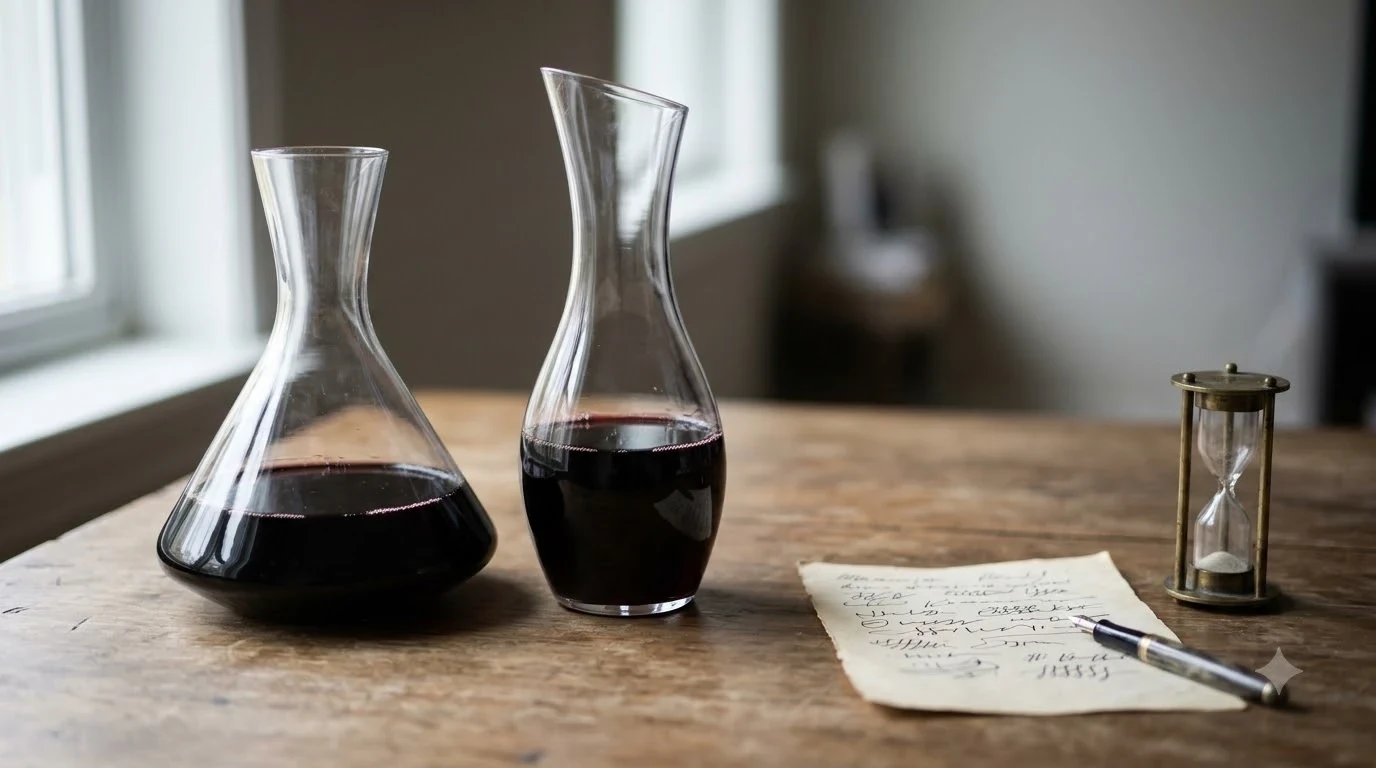
According to Bormioli Rocco’s US product listing, the Premium measures 8.5 inches across and 9.5 inches tall, with a listed weight of 1.62 pounds. It is made from soda lime glass and handmade in Slovakia. These specifications position it as a substantial piece of serving glassware rather than a compact storage bottle.
One notable detail is the collection’s collaboration with AIS, the Italian Association of Sommeliers. Bormioli Rocco describes the Premium collection as having shapes designed to complement different wines and beverages. The decanter’s classic outline and flowing contours are intended to help wine oxygenate and release its aromatic characteristics.
| Specification | Premium Wine Decanter |
|---|---|
| Brand | Bormioli Rocco |
| Collection | Premium |
| Capacity | 65.25 US fl oz |
| Approximate capacity in liters | 1.93 L |
| Diameter | 8.5 inches |
| Height | 9.5 inches |
| Weight | 1.62 lb |
| Material | Soda lime glass |
| Manufacturing location | Slovakia |
| Manufacturing method | Handmade |
| Dishwasher safe | Yes, according to the manufacturer |
| Package quantity | One decanter |
The material deserves particular attention. Soda lime glass is different from lead crystal and should not be purchased under the assumption that it has the same composition or optical characteristics as traditional crystal glassware. The Premium’s appeal instead comes from its shape, substantial capacity, and practical construction.
The manufacturer also lists dishwasher compatibility, which is useful for households that prefer not to hand-wash every serving accessory. However, dishwasher-safe does not mean indestructible. A large glass vessel can still chip or break if it contacts other dishes or experiences sudden temperature changes.
Another practical point is the absence of a clearly specified included stopper in the US Premium product description. Buyers who want an airtight closure for storing unfinished wine should confirm the package contents before purchasing rather than assume that a stopper is included.
For the manufacturer’s complete specifications, see the Bormioli Rocco Premium product listing.
What Owners Like
The Premium’s strongest advantages are its generous capacity, recognizable silhouette, and straightforward cleaning specification. These features make it a sensible option for people who regularly serve full bottles of red wine, entertain guests, or want a dedicated decanter that looks appropriate on a dining table.
Room for a complete bottle. A standard wine bottle contains 750 ml, or approximately 25.4 US fluid ounces. With a stated capacity of 65.25 fluid ounces, the Premium offers considerably more room than the amount required for one bottle. This leaves space for pouring and moving the wine without immediately filling the vessel to its opening.
That extra capacity can also be useful when serving wine to several people. A standard 750 ml bottle provides approximately five traditional 5-ounce glasses. Transferring the bottle into one larger decanter creates a convenient central serving point, rather than requiring guests to handle the original bottle throughout dinner.
A traditional wine-service appearance. The Premium has a broad, rounded body and an elegant neck. This familiar decanter shape works well with conventional dining settings, formal dinners, and wine-focused gatherings. It can also be displayed on a sideboard between occasions, although its large body requires sufficient storage space.
The design is functional as well as decorative. A broad wine surface can expose more liquid to air than a narrow-necked bottle. This is particularly useful for young, structured red wines that benefit from controlled exposure to oxygen before serving.
Practical glass construction. The use of soda lime glass makes the product a straightforward option for buyers who do not specifically require crystal. Its handmade Slovakian production is an additional manufacturing detail for shoppers who value where their glassware is made.
The dishwasher-safe specification is another useful advantage. Many people use decanters only occasionally because cleaning them can be inconvenient. Having a manufacturer-listed dishwasher-safe option makes routine maintenance easier, although careful loading remains important because the vessel is large and fragile.
Association with professional wine service. The Premium collection’s collaboration with AIS provides a recognizable connection to wine education and sommelier culture. It does not mean that the decanter guarantees better wine or replaces proper serving technique, but it does give the collection a clear wine-service identity.
For shoppers comparing the Premium with other pieces of wine glasses, the distinction is straightforward: glasses are designed for individual drinking and aroma evaluation, while a decanter serves the entire table and prepares wine before pouring.
Common Complaints
The Premium has several practical limitations that buyers should consider, particularly its size, glass construction, and lack of clearly documented stopper details. None of these issues automatically makes it a poor purchase, but they can affect how convenient it is for everyday use.

It occupies considerable counter space. At 8.5 inches in diameter and 9.5 inches tall, the Premium is not a small accessory. Its broad body requires a stable, reasonably spacious surface. A crowded kitchen counter or narrow dining table may not provide enough room for comfortable pouring and handling.
Storage can also be challenging. The body is considerably wider than the neck, so it may not fit inside a narrow cabinet compartment or alongside tightly arranged glassware. Buyers with limited cupboard space should measure their available storage area before selecting this model.
Glass requires careful handling. Soda lime glass is suitable for everyday glassware, but it remains vulnerable to impact. The manufacturer specifically advises handling glass products carefully to prevent chips and breakage. A heavy contact point against a sink, metal tap, or another glass vessel can cause damage.
The 1.62-pound listed weight also matters when the decanter contains wine. Although the vessel is manageable for many adults, lifting and pouring a filled decanter requires a secure grip and a stable position. Its wide body may make it less comfortable for people who prefer smaller serving vessels.
Stopper information needs confirmation. A stopper is a useful feature for decanters that double as temporary wine containers. However, the Premium’s product description does not clearly identify an included stopper. This is an important distinction for buyers who expect to close the vessel after serving.
Without a confirmed stopper, the Premium should be considered primarily a serving and aeration vessel rather than a long-term storage solution. Opened wine is generally better stored in a suitable sealed container in the refrigerator than left uncovered in a decanter.
Dishwasher compatibility does not eliminate cleaning difficulties. Even if a vessel is dishwasher safe, its dimensions may make loading awkward. A wide body can take up substantial rack space, and careless placement can result in contact with plates or other glasses.
There is also the question of residue. Red wine pigments and dried wine deposits can remain inside a vessel if it is left unwashed after use. Regular rinsing and careful cleaning are important, particularly around the transition between the body and neck.
Finally, buyers looking for a very lightweight, compact decanter may find the Premium unnecessarily large. A smaller model can be easier to handle for occasional single-bottle service, especially if storage space is a priority.
Who Should Buy and Who Should Skip
The Bormioli Rocco Premium is best suited to wine drinkers who want a spacious, attractive decanter for serving full bottles and preparing red wines before dinner. It is less appropriate for people who need a compact storage container, an airtight stopper, or an exceptionally lightweight design.
Who should consider buying it?
Regular red wine drinkers: People who frequently serve Cabernet Sauvignon, Syrah, or young Bordeaux-style blends can benefit from the Premium’s broad body. These wines often have substantial tannin and can benefit from 30 to 60 minutes of decanting when young and full-bodied.
Hosts who serve several guests: The 65.25-ounce capacity makes it suitable for transferring a full 750 ml bottle while leaving ample room for pouring. For a dinner with four or five guests, presenting the wine in one central vessel can make service more organized.
People who appreciate traditional tableware: Its classic outline is appropriate for formal dining rooms, special occasions, and wine-focused tables. The design also complements conventional stemmed glassware rather than competing with it.
Buyers who prefer dishwasher-safe accessories: The manufacturer’s dishwasher-safe specification is useful for people who value convenient cleaning. It reduces the need to rely exclusively on manual washing, provided the decanter can be loaded securely.
Who should skip it?
People with limited storage: The 8.5-inch diameter can be inconvenient in small kitchens. A narrower model may be a better choice if cupboard space is limited or the decanter needs to fit alongside other glassware.
Buyers who need a sealed storage vessel: Anyone planning to keep leftover wine in the decanter should first establish whether a compatible stopper is included or available separately. A serving vessel without a confirmed airtight closure is not the ideal solution for storing unfinished bottles.
People who mainly drink sparkling wine: Sparkling wines are generally served directly from the bottle because preserving carbonation is important. A large red-wine decanter is not a necessary purchase for someone whose regular selections are Champagne, Cava, or Prosecco.
Occasional drinkers who want a multifunctional vessel: A compact carafe may be more practical for serving water, juice, and wine in a household that rarely decants red wine. The Premium is more clearly positioned as dedicated wine-serving glassware.
For a complete wine-serving setup, consider pairing a decanter with suitable red wine glasses. The decanter prepares and presents the wine, while the shape of each glass helps direct aromas toward the drinker.
How It Compares to Alternatives
Bormioli Rocco offers several different decanter designs, so the Premium is not automatically the right choice for every buyer. The Electra is a particularly relevant alternative for those who prefer a contemporary shape, while the Loto, Capitol, and Selecta provide different dimensions and closure arrangements.
The Premium is the largest of the two main wine-service models discussed here, with a capacity of 65.25 fluid ounces compared with Electra’s 54.5 fluid ounces. Both are made from soda lime glass, handmade in Slovakia, and listed as dishwasher safe by the US manufacturer.
| Model | Capacity | Height | Design or intended use |
|---|---|---|---|
| Premium | 65.25 fl oz | 9.5 in | Classic wine decanter |
| Electra | 54.5 fl oz | 8.3 in | Contemporary wine decanter |
| Loto | 42.25 fl oz | 9.75 in | Decanter with lid |
| Capitol | 26.25 fl oz | 8 in | Compact decanter with stopper |
| Dedalo | 26.25 fl oz | 7.25 in | Faceted decanter with stopper |
| Selecta | 34.25 fl oz | 7.75 in | Square bottle with stopper |
Capacities and dimensions are drawn from the manufacturer’s professional catalog and product descriptions. Some catalog measurements refer to maximum or brimful capacity, so they should not automatically be interpreted as recommended serving volumes.
Premium vs. Electra
The Electra is the closest alternative for buyers who want a dedicated wine decanter. Its 54.5-ounce capacity is smaller than the Premium’s 65.25 ounces, and its listed dimensions are 7.3 inches in diameter and 8.3 inches in height.
Its angled, contemporary silhouette creates a different visual impression. The Electra is also lighter at 1.23 pounds, compared with the Premium’s 1.62 pounds. This makes it an interesting option for buyers who prefer a somewhat lighter serving vessel with a modern appearance.
Both models are described as handmade in Slovakia and made from soda lime glass. Both are also listed as dishwasher safe. The deciding factor is therefore more about capacity, weight, and design than a fundamental difference in the stated material.
Premium vs. Loto
The Loto is a useful alternative for someone who wants a more compact vessel with a lid. Bormioli Rocco’s professional catalog lists it at 125 cl, approximately 42.25 US fluid ounces, with a height of 9.75 inches.
Its narrower proportions make it a different proposition from the wide-bodied Premium. Buyers who prefer a stopper or lid arrangement may find Loto more appealing, although the smaller capacity provides less room for a large volume of wine.
Premium vs. Capitol and Dedalo
Capitol and Dedalo are smaller alternatives with more decorative presentations. The professional catalog lists both at approximately 26.25 fluid ounces, making them more compact than the Premium.
Capitol has a geometric body and stopper, while Dedalo features a distinctive faceted design. These are useful options for buyers interested in spirits service or smaller-volume presentation rather than a large vessel for aerating an entire bottle of red wine.
Premium vs. Selecta
Selecta is another option worth understanding, particularly because it has a different intended use. Its square bottle format and closing cap make it suitable for whiskey, bitters, grappa, and homemade liqueurs. The manufacturer lists a 1-liter capacity, a 9.4 cm diameter, and a height of 23.7 cm.
That design is more appropriate for storing and presenting certain spirits than for aerating a large quantity of red wine. It should not be treated as a direct replacement for the broad-bodied Premium if wine aeration is the primary goal.
Buyers comparing these collections with other glassware manufacturers can also explore Glassware Brands for a broader look at wine-serving equipment and complementary pieces.
Care, Cleaning, and Wine-Service Tips
The Premium is designed to be dishwasher safe, but proper handling is still essential for maintaining its appearance and condition. Cleaning it promptly after use, avoiding sudden temperature changes, and storing it securely can help prevent common glassware problems.
Wash before the first use. Bormioli Rocco specifically recommends washing its glass products before using them. This removes any dust or packaging residue that may remain after shipping and storage.
Rinse promptly after serving wine. Red wine can leave colored deposits if it dries inside the vessel. Rinsing with clean water soon after pouring makes subsequent cleaning easier. If residue remains, use an appropriate glass-cleaning method that does not scratch or damage the surface.
Use the dishwasher carefully. The manufacturer lists the Premium as dishwasher safe. However, make sure the decanter is stable and does not touch other glass items during the wash cycle. A wide vessel should not be forced into a rack position that leaves it vulnerable to movement.
Avoid sudden temperature changes. The manufacturer advises against exposing glass products to abrupt temperature differences unless they are specifically designed for thermal use. Avoid pouring hot water into a cold decanter or moving a recently heated vessel into cold water.
Store it securely. A cabinet shelf with adequate clearance is preferable to a crowded area where the decanter could be knocked against other items. Because the Premium has a wide body, allow enough room for both its diameter and height.
Tip: For a young, full-bodied red wine such as Cabernet Sauvignon, start with approximately 30 to 60 minutes of decanting before serving. Pour slowly and avoid filling the decanter to its maximum capacity. The goal is to provide sufficient contact with air while leaving enough room to handle and serve the wine comfortably.
Choosing the right wine
Not every wine needs extensive aeration. Young Cabernet Sauvignon, Syrah, and structured Bordeaux blends are common candidates for decanting. Their tannin and concentrated structure can benefit from exposure to oxygen before serving.
Pinot Noir is generally lower in tannin and higher in acidity than Cabernet Sauvignon. Some examples benefit from a short period in a decanter, but long aeration is not automatically necessary. The same principle applies to Merlot, which usually has softer tannins than Cabernet Sauvignon.
Older wines require a different approach. Decanting can help separate sediment from the clear wine, but excessive oxygen exposure can cause delicate aromas to fade. Rather than automatically giving every bottle an hour in the Premium, consider the wine’s age, structure, and condition.
Serving temperature matters
A decanter cannot compensate for wine served at the wrong temperature. Full-bodied reds are generally best served around 60 to 65 degrees Fahrenheit, while lighter reds such as Pinot Noir are often more expressive around 55 to 60 degrees Fahrenheit.
Full-bodied white wines are generally served around 50 to 55 degrees Fahrenheit, while lighter whites and rosé are typically served around 45 to 50 degrees Fahrenheit. Sparkling wine is best served colder, around 40 to 50 degrees Fahrenheit.
For sparkling wine, a dedicated champagne flute is generally more appropriate than transferring the wine into a large red-wine decanter. Maintaining carbonation is usually more important than increasing oxygen exposure.
Finally, remember that a decanter is a serving accessory, not a substitute for proper wine storage. Unopened bottles should generally be stored on their sides in a cool, dark environment near 55 degrees Fahrenheit. Opened still wine is better sealed and refrigerated, where it commonly remains enjoyable for approximately three to five days, depending on the wine and storage conditions.
Frequently Asked Questions
These answers address practical details that can affect whether the Premium is the right purchase, including bottle capacity, glass composition, and the differences between serving and storage equipment.
Is the Bormioli Rocco Premium decanter large enough for a magnum bottle?
A standard magnum contains 1.5 liters of wine, approximately 50.7 US fluid ounces. The Premium’s stated 65.25-ounce capacity is larger than that volume, but the remaining headspace is relatively limited compared with a standard bottle. For easier handling and aeration, a larger vessel may be preferable when serving a magnum.
Does soda lime glass contain lead?
Soda lime glass is a different glass composition from traditional lead crystal, which uses lead oxide as part of its formulation. The Premium is identified by its manufacturer as soda lime glass rather than lead crystal. Buyers seeking specific material compliance documentation should request the relevant product information from the manufacturer.
Can a wine decanter be used for nonalcoholic beverages?
Yes. A clean glass decanter can also be used to present nonalcoholic beverages such as water or grape juice. However, strongly colored drinks can leave residue, so washing the vessel promptly after use is a sensible precaution.
Should a decanter be stored upside down?
It is generally preferable to store a completely dry decanter upright on a stable shelf. Storing it upside down can place pressure on the rim and may cause damage if the supporting surface is uneven. Allowing the interior to dry fully also helps prevent lingering moisture and odors.
Can the Premium decanter remove sediment from vintage Port?
Yes, the decanting process can help separate sediment from vintage Port when the wine is transferred carefully. Stand the bottle upright before opening so sediment can settle, then pour slowly and stop when sediment approaches the neck. A clean decanter can hold the clearer wine for immediate service.
The Bormioli Rocco Premium is a strong option for buyers who want a generously sized, traditional wine decanter with handmade soda lime glass construction and a dishwasher-safe specification. Its 65.25-ounce capacity and classic design make it particularly suitable for serving full bottles of structured red wine, although its large footprint and unconfirmed stopper inclusion deserve consideration. Choose Premium for spacious wine service, Electra for a lighter contemporary alternative, or a smaller Bormioli Rocco design if compact storage and closure features matter more.
More in Wine Glasses
 Zwiesel Glas Champagne Flutes for Durable Everyday Sparkling WineUpdated Nov 20, 2026
 Vera Wang Crystal Wine Glasses: Design, Quality and Buying AdviceUpdated Nov 20, 2026
 West Elm White Wine Glasses: Compare Designs for Better Everyday Wine ServiceUpdated Nov 20, 2026
 Zalto Stemless Wine Glasses: Discover Their Distinctive DesignsUpdated Nov 20, 2026
 Viski Champagne Glasses That Match Your Style and Sparkling WineUpdated Nov 20, 2026
 Vista Alegre Decanter Review: Crystal Style and Wine ServiceUpdated Nov 20, 2026