

We may earn a commission when you buy through links on this page, at no extra cost to you. Learn more.
The best wine skin depends on where you plan to use it, since leather, synthetic bladder, and bag-style designs each suit a different setting. Traditional leather skins carry a classic look and suit display or ceremony, synthetic bladders resist moisture and are easier to clean, and soft carry bags with a spout fit picnics and hikes. Each type holds wine in a flexible container that is light to carry and hard to break.
A wine skin is a flexible container for carrying and serving wine. The concept is very old. The Wikipedia entry on wineskins describes them as “an ancient type of bottle made of leathered animal skin, usually from goats or sheep,” and notes that they were used to store and transport wine across long distances. Modern versions still follow that basic idea but use a range of materials. This guide compares the main styles and explains what to check before buying one for a party, a trip, or a display.
Quick Comparison of Wine Skin Types
Most wine skins fall into three groups, with a fourth category for decorative pieces. The table below compares them on the points that usually decide the purchase: the material, how easy the skin is to clean, and where it fits best.
| Skin type | Material | Cleaning | Best use |
|---|---|---|---|
| Traditional leather skin | Goat or sheep leather | Needs careful drying and sealing | Display, ceremony, and tradition |
| Synthetic bladder | Food-safe plastic or lined material | Rinses easily | Everyday carrying and travel |
| Soft carry bag with spout | Fabric shell with an inner bladder | Inner bladder removable on some models | Picnics, hikes, and outdoor events |
| Decorative skin | Leather or fabric, often unlined | Surface wipe only | Décor and gifts |
Best for Traditional Leather Display
Leather skins are the closest modern match to the original design. They are usually made from goat or sheep hide, which the Wikipedia article identifies as the typical source. Leather skins suit a home bar, a themed table, or a gift for someone who appreciates the history. They look striking on a shelf, but they are not always the best choice for frequent use, because leather needs careful drying and conditioning to stay supple.
Why it stands out: It has a distinctive shape and a link to the long history of wine storage. A well-made leather skin can become a conversation piece.
Keep in mind: Leather is sensitive to moisture and can develop odors if it is not dried fully. Check the seams and the sealing before filling, and confirm the maker explains how the skin should be cleaned.
Best for: Display, themed events, and collectors who want a traditional piece.
Best for Everyday Carrying and Travel
Synthetic bladders are built for use. They are lighter than leather, resist moisture, and can be rinsed without much effort. Many designs include a spout and a grip so the wine can be poured or sipped directly. For travel or outdoor use, a bladder with a secure cap keeps the wine contained and reduces the risk of leaks in a bag or pack.
Why it stands out: It is durable, light, and simple to clean. It does not need the same conditioning as leather.
Keep in mind: Plastic can pick up odors if it is not rinsed well after use. Choose a food-safe material and dry the bladder completely before storing it.
Best for: Travelers, daily carrying, and anyone who wants a practical container.
Best for Picnics, Hikes, and Outdoor Events
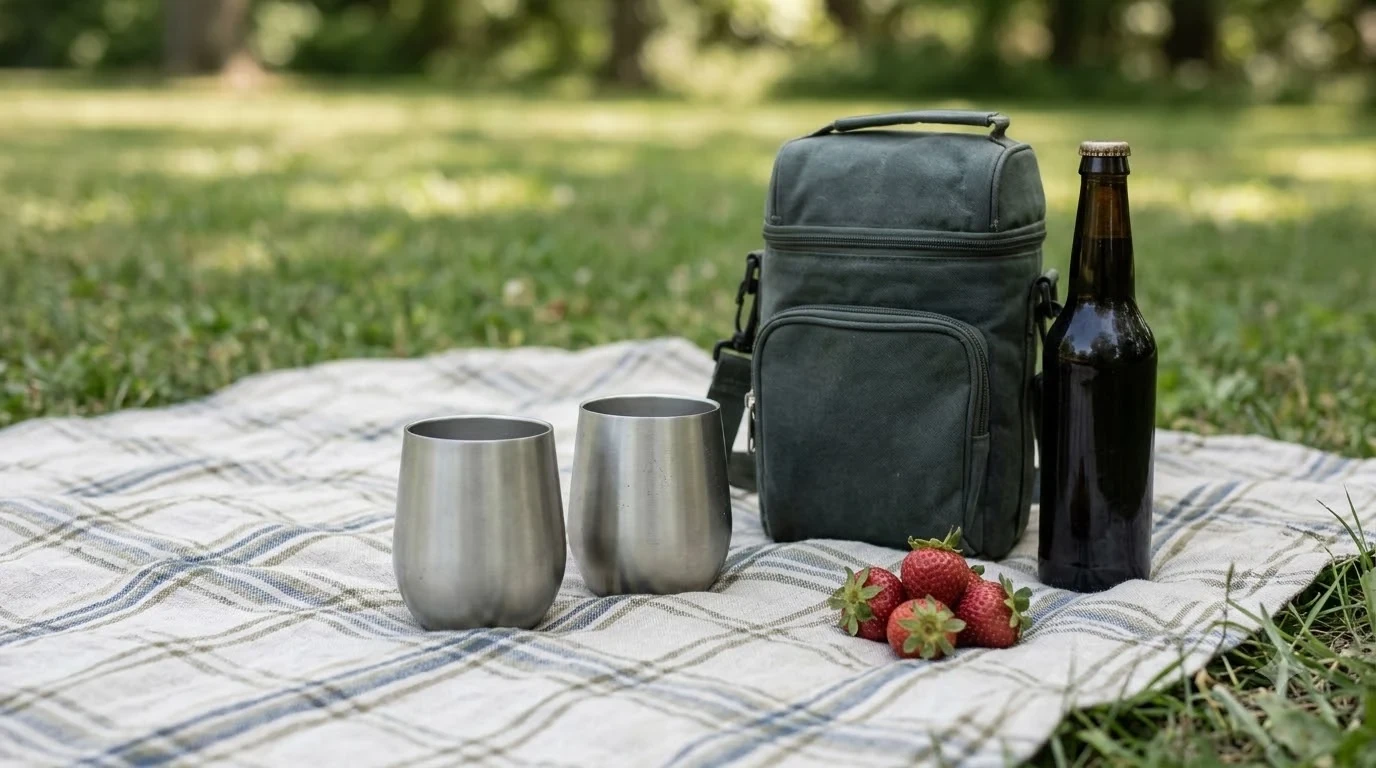
Soft carry bags combine an outer fabric shell with an inner bladder. The shell protects the bladder and makes it easy to carry on a shoulder or across the body. Many have a spout near the top and a strap that keeps the bag upright when set down. They suit picnics, hikes, and events where glass bottles are not allowed or are impractical.
Why it stands out: It is easy to carry and hard to break. The fabric shell adds protection and makes the bag comfortable to hold.
Keep in mind: The inner bladder is the part that holds the wine, so check whether it can be removed for cleaning. A bag with a sealed inner bladder can be harder to dry thoroughly.
Best for: Outdoor gatherings, sports events, and trips where glass should be avoided.
Best for Gifts and Decorative Pieces
Decorative skins focus on looks. They come in leather or fabric and often include tooled designs, embossed patterns, or colored finishes. Many are not lined, which means they are better for display than for holding wine over long periods. A decorative skin can still hold a small amount of wine for a short time, but it is not designed for storage or frequent use.
Why it stands out: It is a distinctive gift that suits a wine lover, a themed party, or a home decor project.
Keep in mind: Unlined skins can leak or absorb odors, and they are not always food-safe. Check the product description before using one for wine.
Best for: Gifts, décor, and themed events where the look matters more than storage.
Best for Lined Storage and Longer Trips
For storing wine over several days, a lined skin is the safer choice. The lining slows contact between the wine and the outer material, and a sealed cap helps keep air out. Lined skins are often made from leather with a bladder inside, or from synthetic material with a reinforced seam. The aim is to keep the wine stable and the container intact during transport.
Why it stands out: A lined design gives better containment and a more reliable seal than an unlined one.
Keep in mind: Wine should not be stored in a skin for long periods unless the maker says it is suitable. Opened wine changes over time, so it is best consumed within a short window.
Best for: Multi-day trips, camping, and anyone who needs a container that holds wine securely.
How to Choose a Wine Skin
Start with the use. A display piece suits a traditional leather skin. A daily or travel container suits a synthetic bladder. An outdoor event calls for a soft carry bag with a spout. A gift or décor item can be a decorative skin, provided it is not expected to hold wine for long.
Next, check the material and sealing. Look for a secure cap and a spout that closes tightly. Leather should be sealed and dried well, and synthetic material should be food-safe. Inspect the seams for loose stitching, and avoid skins with visible cracks or sharp edges.
Finally, plan for cleaning and storage. Rinse the skin with clean water after each use, and dry it completely before putting it away. Store it in a cool, dry place with the cap open so air can circulate. Replace any skin that shows mold, persistent odor, or leaks.
Tip: Fill the skin only as much as you expect to drink in one sitting. A partly filled skin leaves less air, but a skin that is not finished in a day or two will change in flavor.
Frequently Asked Questions
What is a wine skin made of?
Traditional wine skins are made from animal hide, usually goat or sheep leather. Modern versions use synthetic bladders, fabric shells with inner bladders, or decorative leather and fabric designs. The material affects how the skin should be cleaned and how long it can hold wine.
Can I store wine in a wine skin for a long time?
Storage time depends on the skin and the wine. Opened wine changes over time, so most people consume it within a few days. A lined skin with a secure cap is the better choice for longer use, and the maker’s instructions should be followed.
How do I clean a wine skin?
Rinse the skin with clean water right after use, then dry it fully with the cap open. For leather, follow the maker’s conditioning guidance. For synthetic bladders, rinse well and check for odors before reuse. Replace any skin that smells sour or shows mold.
Are wine skins suitable for picnics and hikes?
Soft carry bags with an inner bladder work well for picnics and hikes because they are light and hard to break. Check that the cap seals tightly, and pack the skin upright in a bag so it does not leak in transit.
A wine skin is a flexible, practical container with a long history. Choose the material that fits your use, from leather display pieces to synthetic bladders and carry bags, and keep the skin clean and dry between uses. For related gear, browse the accessories library or read the wine skin guide. If you are setting up a home bar, a bar cart can keep a display skin and other tools in view. For background on the history of the design, the Wikipedia entry on wineskins describes how they were made and used.
More in Wine Accessories
 Coravin Vs Vacu Vin: Choose the Right Wine Saver for Your BottlesUpdated Nov 21, 2026
 Zwilling Wine Stopper Review: Preserve Open Bottles LongerUpdated Nov 21, 2026
 Wine Enthusiast Wine Preserver Review: Features, Benefits and LimitationsUpdated Nov 21, 2026
 Wine Enthusiast Wine Stopper: An Easier Way to Reseal Open BottlesUpdated Nov 21, 2026
 Vintorio Wine Opener: Two-Step Cork RemovalUpdated Nov 21, 2026
 Zwilling Wine Aerator Review: Aerate, Pour, and Seal With One ToolUpdated Nov 21, 2026