

We may earn a commission when you buy through links on this page, at no extra cost to you. Learn more.
The best wine glass rack is the one that fits your storage space and matches how often you drain and dry glasses. Overhead racks suit kitchens with unused ceiling space, under-cabinet racks save room above a counter, and freestanding racks work for people who do not want to mount anything. Each style keeps stemware upright so the bowl stays dry and the rim does not knock against neighboring glasses.
Stemmed glassware is awkward to store. A wine glass has a wide bowl, a thin stem, and a foot that can catch on a cabinet edge. Pushing glasses into a crowded cupboard chips rims and leaves water spots. A dedicated rack keeps each glass separate and lets it air-dry, which is why it has become a common accessory in homes that own more than a few pieces of stemware. This guide compares the main rack types and explains what to look for before you buy.
Quick Comparison of Wine Glass Rack Types
Most racks fall into four groups. The table below compares them on the points that usually decide the purchase: where they mount, how many glasses they hold, and how easily they fit a small kitchen.
| Rack type | Where it goes | Typical strength | Main limit |
|---|---|---|---|
| Overhead hanging rack | Ceiling or top of a wall, above a counter or island | Keeps many glasses off the counter | Needs solid mounting and clearance |
| Under-cabinet rack | Underside of a wall cabinet | Frees up shelf space above the counter | Depends on cabinet depth and height |
| Freestanding tabletop rack | Counter or shelf, no mounting | Easy to move and install in minutes | Takes up floor or counter area |
| Dishwasher-style insert | Inside the dishwasher | Protects stems during the wash cycle | Holds fewer glasses and only drains, not storage |
Best for Kitchens With Ceiling Clearance
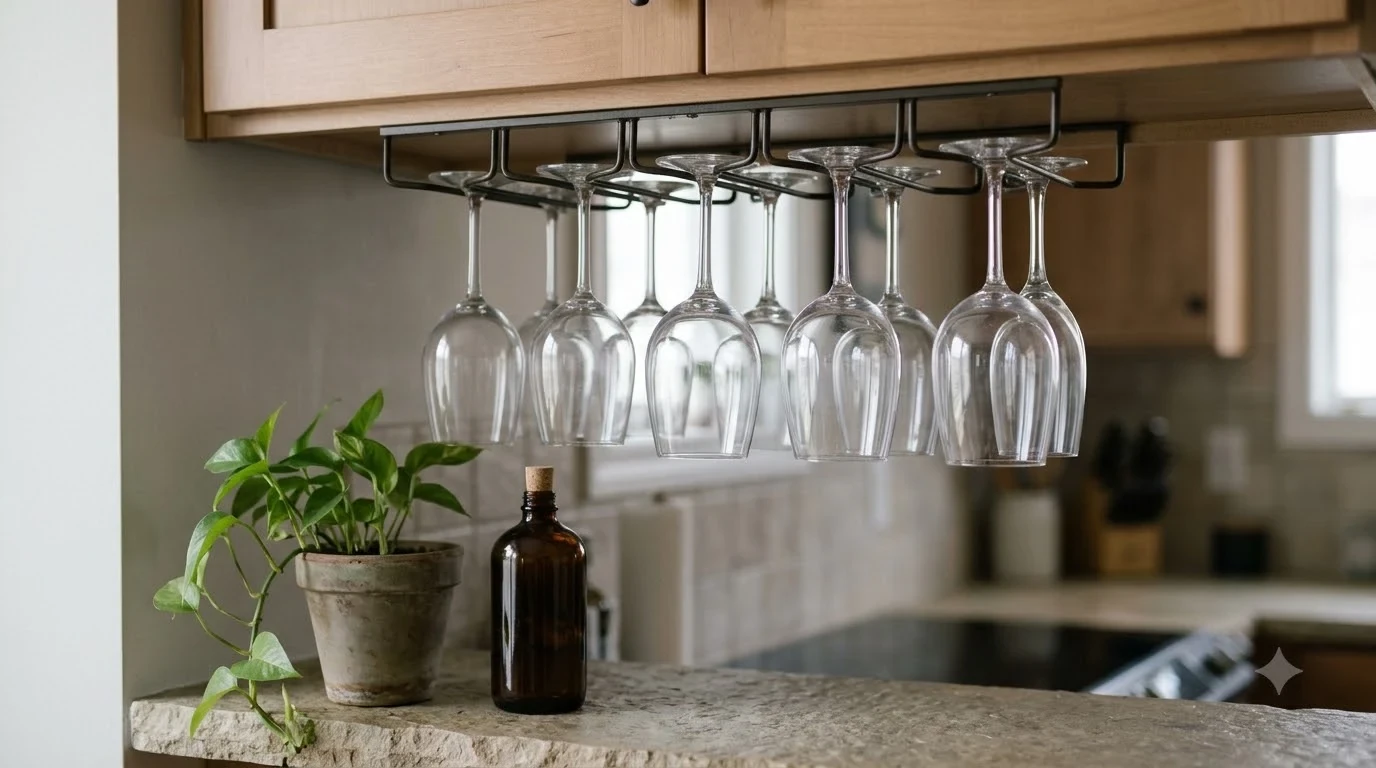
Overhead racks are the most space-efficient option for a dedicated bar corner or an island. They hang glasses bowl-down, so water drains out and the glass dries without spotting. The main decision is the mounting system. A rack bolted into a ceiling joist or a solid wall stud carries far more weight than one attached with drywall anchors, and the manufacturer’s weight rating should be checked against a full load of glasses.

Why it stands out: A wide overhead rack can hold a large set of stemware in one line, and it leaves the counter clear for food prep. Glasses sit at eye level, which makes it easy to choose the right size for a meal.
Keep in mind: Installation takes planning. Check the distance between the rack and any light fixture, and make sure the glasses will not hit the cabinet door when it opens.
Best for: Homes with an island or a bar wall that has open ceiling or wall space, and households with many stemmed glasses.
Best for Small Kitchens With Cabinet Space
Under-cabinet racks use the space between the countertop and the bottom of a wall cabinet. They suit galley kitchens and apartments where floor space is tight. Because they attach to a cabinet, the cabinet’s depth and the height of the glass are the two measurements that matter most. Stemmed glasses need enough clearance for the bowl to sit below the rack without the foot touching the counter.
Why it stands out: It is one of the few options that adds storage without taking any floor or counter area. Many designs use slim rods, so the rack does not block the view of the backsplash.
Keep in mind: The rack will only be as deep as the cabinet allows, and a tall-stemmed glass may not fit under a low cabinet. Measure the glass before buying.
Best for: Small kitchens and rentals where drilling into walls is not an option, provided the cabinets have enough depth.
Best for Renters and Quick Setup
Freestanding racks need no tools and can move with you. They sit on a counter or a shelf and hold glasses upright. They are a practical choice for people who want to try a storage method before committing to mounted hardware. The trade-off is that they use counter space that could otherwise hold appliances or cutting boards.
Why it stands out: There is no mounting, no wall damage, and no tools. A freestanding rack can be set up in minutes and taken apart when you move.
Keep in mind: Check that the base is wide enough to resist tipping when a glass is pulled off the rack. Lighter bases can shift when the rack is loaded on one side.
Best for: Renters, people with limited wall space, and anyone who wants a temporary solution.
Best for Dishwasher Protection
A dishwasher insert is a different category. It does not store glasses on the counter. Instead, it holds stems in place during the wash cycle so they do not rattle or tip against plates. Many people use an insert alongside a storage rack, using the insert for washing and the rack for drying and storage.
Why it stands out: Stems are the most common breakage point in a dishwasher. An insert keeps each glass in a fixed position, which reduces contact with other dishes.
Keep in mind: Inserts vary by dishwasher model, so confirm the fit before buying. They also do not replace a drying rack for hand-washed glasses.
Best for: Households that run the dishwasher often and own delicate or thin-stemmed glassware.
Best for Large Collections and Entertaining
A collection of several dozen glasses needs a rack with multiple tiers or a wide overhead frame. Hosts who own mixed sets, such as red, white, and sparkling glasses, often choose a rack that separates them by size, so each glass has its own space and the largest bowls do not crowd the smaller ones.
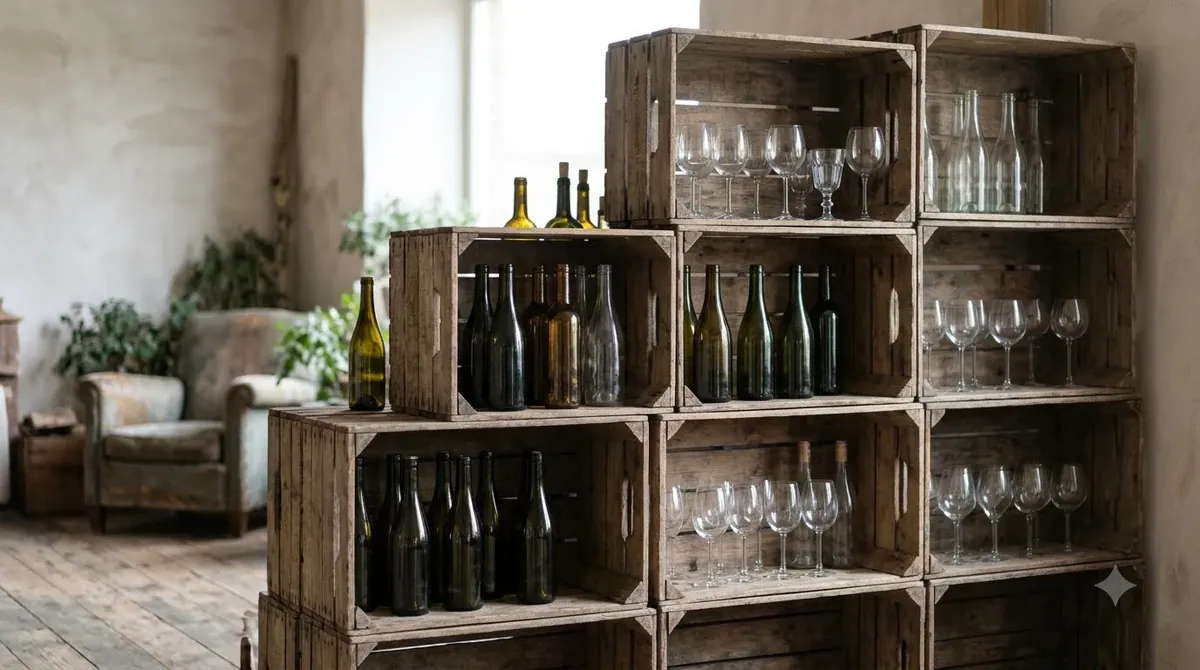
Why it stands out: Multi-tier designs add capacity without extra wall length. Sorting glasses by type makes it quicker to set a table.
Keep in mind: Larger racks weigh more, so the mounting point or base must be strong enough. Plan for the heaviest load you expect, not the average one.
Best for: Hosts, home bars, and anyone who regularly serves more guests than their cupboards hold.
How to Choose a Wine Glass Rack
Start with measurements. Record the height of your tallest stemmed glass and the depth of the space where the rack will sit. Then count how many glasses you need to store at once, not your total collection. Stemware usually needs more clearance than tumblers, so a rack that fits a short glass may not fit a Burgundy or a large Bordeaux glass.
Next, decide how the rack will be used. A drying rack should let water drain from the bowl and should not trap moisture inside the glass. A storage rack should keep glasses from touching. Some racks do both, but a dedicated drying design usually gives better results for hand-washed glassware.
Finally, check the materials. Chrome and stainless steel resist rust in humid kitchens. Powder-coated steel is common and inexpensive, though the coating can chip over time. Wood adds warmth but needs sealing if it sits near a sink. Rubber or silicone grips on the rack arms protect the rims from scratches.
Tip: Stemware is easiest to store when each glass is hung or set by the foot, not the bowl. This keeps the rim from touching the rack and reduces the chance of chipping.
Frequently Asked Questions
Is an overhead wine glass rack better than an under-cabinet rack?
Neither is better in every kitchen. An overhead rack gives more capacity and works well above an island or bar. An under-cabinet rack saves more space in a narrow kitchen. The right choice depends on the ceiling height, cabinet depth, and how many glasses you own.
Can a wine glass rack hold tall stemmed glasses?
Many racks can, but the clearance under the rack determines the limit. Measure the height of your tallest glass and compare it with the space between the rack and the shelf or counter below. A rack that works for standard glasses may not fit large Bordeaux or Burgundy glasses.
Should wine glasses be stored upside down?
Storing them upside down on a drying rack is common because it lets water drain from the bowl. Storage racks usually hold glasses by the foot or stem so the rim does not touch anything. The main goal is to keep glasses dry and separated.
Does a wine glass rack need to be mounted?
Not always. Freestanding racks sit on a counter and need no installation. Mounted racks hold more glasses and free up counter space, but they require secure fixings into a wall, ceiling, or cabinet.
A wine glass rack is a simple way to protect stemware and keep a kitchen or bar organized. Measure your glasses and space before you shop, then match the rack type to how you wash and store. For more ideas on wine tools, browse the accessories library, and check the wine glass dishwasher rack guide if you want to protect stems during washing. Glass shape and size also affect which rack will fit, and the Wikipedia overview of wine glass parts explains the bowl, stem, and foot in more detail.
More in Wine Accessories
 Coravin Vs Vacu Vin: Choose the Right Wine Saver for Your BottlesUpdated Nov 21, 2026
 Zwilling Wine Stopper Review: Preserve Open Bottles LongerUpdated Nov 21, 2026
 Wine Enthusiast Wine Preserver Review: Features, Benefits and LimitationsUpdated Nov 21, 2026
 Wine Enthusiast Wine Stopper: An Easier Way to Reseal Open BottlesUpdated Nov 21, 2026
 Vintorio Wine Opener: Two-Step Cork RemovalUpdated Nov 21, 2026
 Zwilling Wine Aerator Review: Aerate, Pour, and Seal With One ToolUpdated Nov 21, 2026