


We may earn a commission when you buy through links on this page, at no extra cost to you. Learn more.
The best wine cellar racks are sturdy, horizontal metal or wood racks with a deep frame, because they hold bottles on their sides, keep corks in contact with the wine, and stack safely as a collection grows. Rack choice depends on how many bottles you store and how the space is shaped: modular bins suit a growing collection, a wall-mounted rack saves floor space, and a floor-standing unit gives the most capacity. Plan for the weight of full bottles and for airflow around the racks.
A wine cellar rack is the structure that holds your bottles while they rest. A good rack keeps each bottle secure, makes labels easy to read, and lets you find a bottle without moving the whole stack. Racks come in metal, wood, and modular systems that can be expanded over time. The sections below compare the main styles, explain how each fits a cellar or storage closet, and list what to check before you buy.
Quick Comparison
Cellar racks differ mainly in capacity, how they are mounted, and how easily they expand. The table gives an overview before the detailed sections.
| Rack type | Best use | Capacity | Space needed |
|---|---|---|---|
| Modular bin rack | A growing collection | Expandable | Floor or wall |
| Wall-mounted rack | Small cellar or closet | Moderate | Wall only |
| Floor-standing rack | Dedicated storage room | High | Floor footprint |
| Wooden cubby rack | Display and easy access | Moderate | Floor or wall |
| Under-stairs or alcove rack | Unused corner or niche | Custom | Built to fit |
Best for a Growing Collection
Modular bin racks let you add units as your collection grows. Each unit holds several bottles on their sides, and you can extend the system along a wall or stack it in a closet.
Look for a system with sturdy side panels and a base that spreads the weight evenly. Bins should be deep enough that the bottle sits without sliding, and the corks should stay in contact with the wine. Modular systems are flexible, but check that the pieces lock together firmly so a full row does not shift. Start with a unit that matches your current stock and add more as you buy. Mixing bin sizes within one system can look uneven, so choose a single bin size if you want a clean, consistent layout. Leave a small gap between the top row and the ceiling for airflow and for lifting bottles out without catching the frame.
Best for Small Cellars and Closets
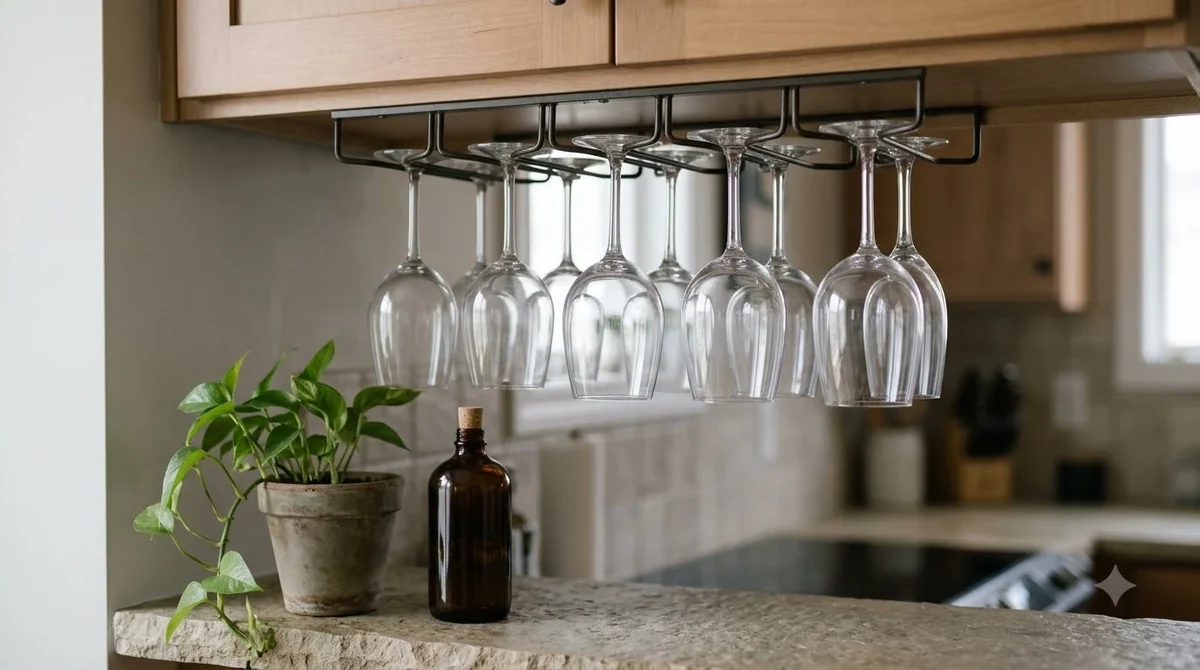
Wall-mounted racks are a practical choice when floor space is limited. They attach to a wall and hold bottles above the floor, which keeps the room tidy and frees up room for other storage.
Before mounting, confirm the wall type and the load rating, since a full rack of bottles is heavy. Anchor the rack into studs or use wall anchors suited to the wall material. Place the rack away from heating vents and out of direct sunlight, because warm, bright spaces are poor conditions for keeping wine.
Best for a Dedicated Storage Room
Floor-standing racks hold the most bottles per square foot of floor space, and they suit a dedicated cellar or storage room. They can be sized to the room, with multiple levels and wide bays.
Check the floor’s load capacity and make sure the rack is anchored to the wall for stability, especially in tall units. A floor that is level matters too, because a rack set on an uneven surface leans and can shift its load over time. Shim the base before loading the bottles, and recheck the alignment after the first few weeks as the frame settles. Leave space between the rack and the wall for airflow, and allow room to reach the bottles you need without disturbing others.
Best for Display and Easy Access
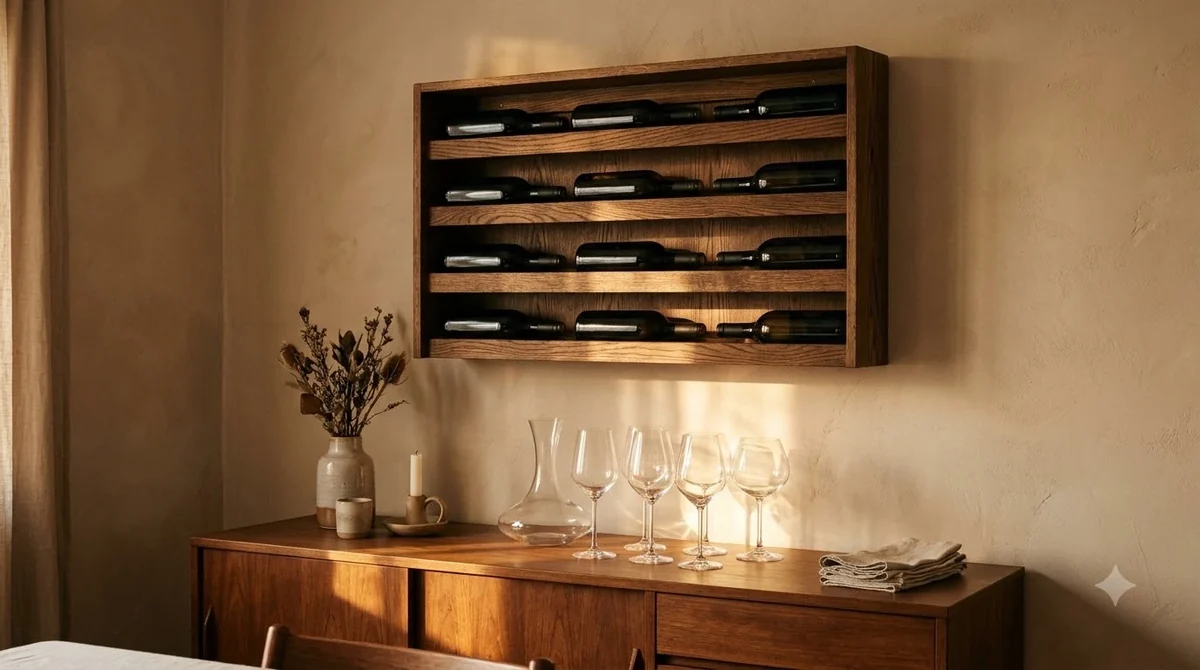
Wooden cubby racks show the bottle labels and make it easy to pick a bottle without pulling others out. They suit a collection you like to see, or a room where the rack is part of the decor.
Solid wood is sturdier than thin veneer, and a rack with a deep cubby keeps the bottle from rolling. Make sure the cubbies are sized for the bottles you own, since wide-shouldered bottles may not fit tight openings. Open-front cubbies make it easy to slide a bottle in and out, while closed-front designs add a little dust protection but make reaching the bottle slower. Pick the style that matches how often you take bottles out, because a rack you use daily should favor easy access over a closed front.
Best for Odd Spaces and Alcoves
Custom racks built into an under-stairs area or an alcove make use of space that standard units cannot fill. They are sized to the opening and can be designed to match the room.
Custom work takes more planning and usually costs more, so measure carefully and allow for airflow and access. Confirm that the design allows you to reach every bottle without strain.
Custom racks also let you plan for the bottles you actually own. A rack built for standard bottles may not fit magnums or bottles with wide shoulders, so list the bottle sizes before the carpenter or installer starts. Leave a few open bays for future purchases, and check that the rack leaves enough clearance for the door to open fully and for the light switch to remain reachable.
Best for Short-Term Storage
Simple freestanding racks are a good choice for bottles you plan to open within a few months. They are easy to move, inexpensive, and suitable for a kitchen pantry or a cool closet.
Rotation is the habit that makes a short-term rack work. Put newly bought bottles at the back and move older ones forward, so each bottle is opened in turn rather than left behind for years. Label the rack shelves by year or by occasion if the collection is large, since a clear layout saves time when you are choosing a bottle for a dinner.
Short-term racks should still be kept out of direct light and away from heat. A simple rack does not replace a proper cellar setup for bottles you plan to age.
How to Choose a Wine Cellar Rack
Start with capacity. Count the bottles you own and the bottles you expect to buy over the next few years, then choose a rack that holds that number with room to spare. Next, measure the space and confirm how the rack will be mounted or placed.
Tip: according to VinePair’s aging guide, wine meant to age should be kept in a cool, dark place, often on a horizontal rack. Place racks away from heat sources and direct light, and avoid storing bottles where they will be knocked.
Then consider the material and finish. Metal is sturdy and easy to clean, wood adds warmth but should be kept dry, and modular plastic is lightweight and affordable. Finally, check how the rack holds the bottle. A bottle that rests on its side with the cork in contact with the wine is the standard setup for long-term keeping.
Frequently Asked Questions
Should wine bottles lie down on a rack?
Storing bottles horizontally is the common approach for wine meant to be kept for some time, and VinePair’s aging guide recommends a horizontal rack. The article does not explain the full reasoning, so check the rack design and your plans for each bottle.
What is the best place to put a wine cellar rack?
Choose a cool, dark place away from heat sources and direct sunlight. A basement, interior closet, or a dedicated cooled room is usually better than a kitchen or a sunny wall.
How much weight can a wine rack hold?
A full bottle is heavy, so the total load adds up quickly. Check the manufacturer’s stated capacity for each shelf or bay, and make sure the wall or floor can carry the full rack.
Can I store wine on a rack for a long time?
Racks are suitable for both short and longer storage when the environment is right. For bottles you plan to age, keep the space cool and dark and avoid frequent temperature swings, since these matter more than the rack itself.
The best wine cellar rack depends on how many bottles you store, how the space is shaped, and how long the wine will rest. Start with capacity, then choose the mounting style that fits the room. For a related look at holding bottles at home, see the wine bottle holder guide, and the accessories library covers more storage gear.
More in Wine Accessories
 Coravin Vs Vacu Vin: Choose the Right Wine Saver for Your BottlesUpdated Nov 21, 2026
 Zwilling Wine Stopper Review: Preserve Open Bottles LongerUpdated Nov 21, 2026
 Wine Enthusiast Wine Preserver Review: Features, Benefits and LimitationsUpdated Nov 21, 2026
 Wine Enthusiast Wine Stopper: An Easier Way to Reseal Open BottlesUpdated Nov 21, 2026
 Vintorio Wine Opener: Two-Step Cork RemovalUpdated Nov 21, 2026
 Zwilling Wine Aerator Review: Aerate, Pour, and Seal With One ToolUpdated Nov 21, 2026