

We may earn a commission when you buy through links on this page, at no extra cost to you. Learn more.
The best wine bottle thermometer is usually a simple strip or clip-on sensor that reads the bottle’s surface temperature, because a quick check tells you whether a red is ready to pour or a white has chilled enough. Choose by how you will use it: a strip stuck to the glass suits a single bottle at the table, a digital probe reads the temperature of a cellar or fridge, and an infrared gun gives a fast reading across several bottles. The right reading depends on the wine style, so a thermometer is most useful alongside a serving-temperature guide.
A wine bottle thermometer answers a simple question: is this bottle at the right temperature to serve? Serving temperature changes how a wine tastes, and a bottle taken from a fridge or cellar can be too cold or too warm without anyone noticing. Thermometers range from adhesive strips to digital probes and infrared guns. The sections below compare these options, explain what each one measures, and list the points to check before buying one.
Quick Comparison
Bottle thermometers differ mainly in how they measure, how precise they are, and whether they stay on the bottle. The table gives an overview before the detailed sections.
| Thermometer type | Best use | How it reads | Stays on bottle |
|---|---|---|---|
| Adhesive strip | Checking one bottle at the table | Color change on the glass | Yes |
| Clip-on or sleeve sensor | Watching a bottle chill or warm | Digital readout | Yes |
| Digital probe | Fridge or cellar readings | Probe and display | No |
| Infrared thermometer | Checking several bottles quickly | Point and read | No |
| Wine fridge display | Monitoring a storage unit | Built-in display | Not applicable |
Best for Checking One Bottle at the Table
An adhesive strip is the simplest option. It sticks to the bottle, and a color panel shows the approximate temperature as the glass warms or cools. It requires no batteries and costs little, so it suits a single bottle during a dinner.
The reading is approximate, and the strip reflects the glass surface more than the wine inside. Use it as a rough guide and rely on the serving range for the wine style. Strips can also peel in a damp cooler, so press the edge down firmly before use.
Best for Watching a Bottle Chill or Warm
Clip-on or sleeve sensors show a digital reading and suit people who want more precise information during chilling. Many fit on the bottle’s neck or body and update as the temperature changes.
Check the battery type and the reading range. A sensor that only shows whole degrees is enough for serving, while a model with a wider range is more useful for storage. Make sure the sensor does not block the bottle’s label or make the bottle hard to grip, since a slippery or bulky clip can be awkward at the table.
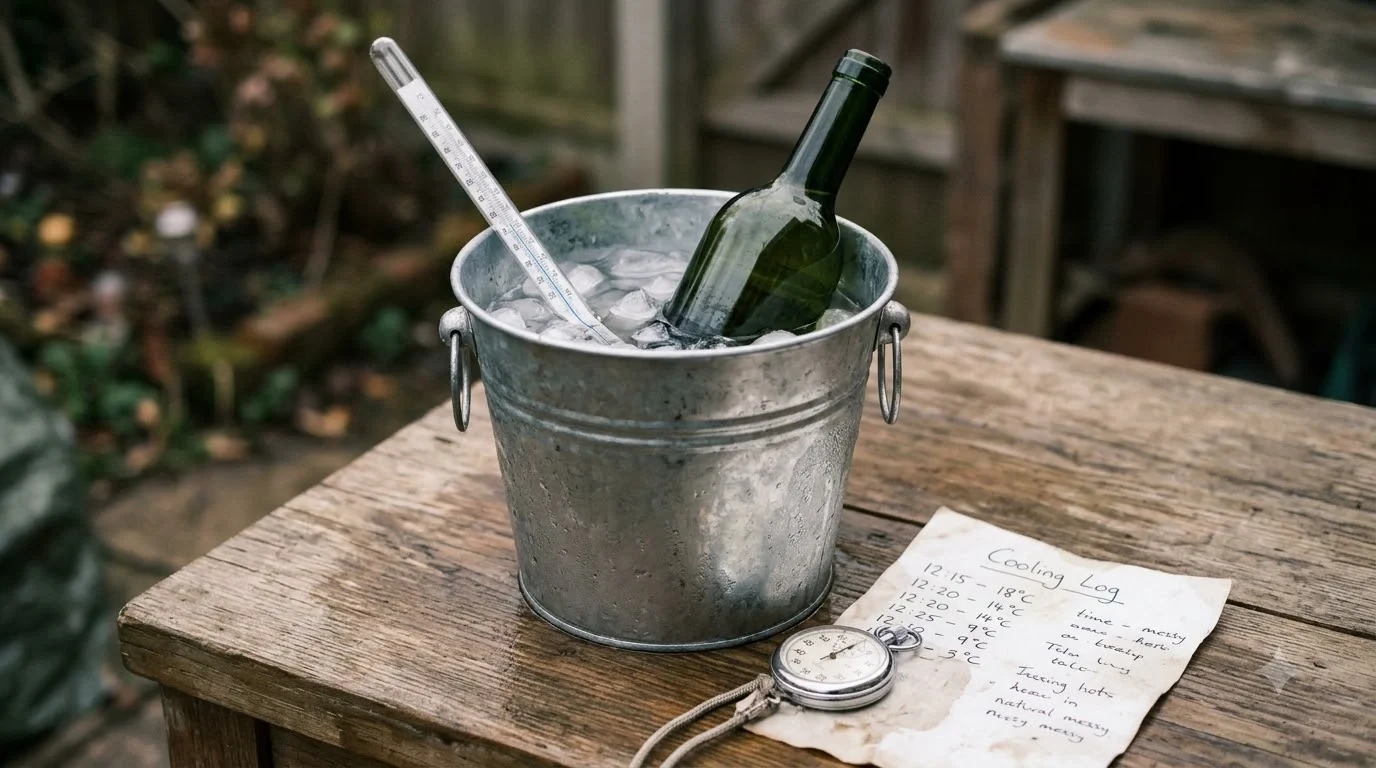
Timing matters when you use a sensor. Chilling a bottle in a refrigerator takes hours, while a freezer or an ice bucket can cool it in well under an hour, so a sensor helps you judge when to stop. Glass with a thick base warms more slowly than a thin bottle, and a sensor on the neck may report a different number from the body. Check the reading in two spots if the bottle is large or if you want an exact figure.
Best for Fridge and Cellar Readings
Digital probes measure the air or the bottle in a storage space, and the readout sits outside the unit. They are useful for a fridge or small cellar where you want to know the temperature without opening the door often.
Place the probe away from the cooling vent and near the bottles, not against the door where temperatures swing. A probe reading is not the same as the wine’s temperature, so use it to track the storage environment and check bottles by hand before serving.
Best for Quick Checks Across Several Bottles
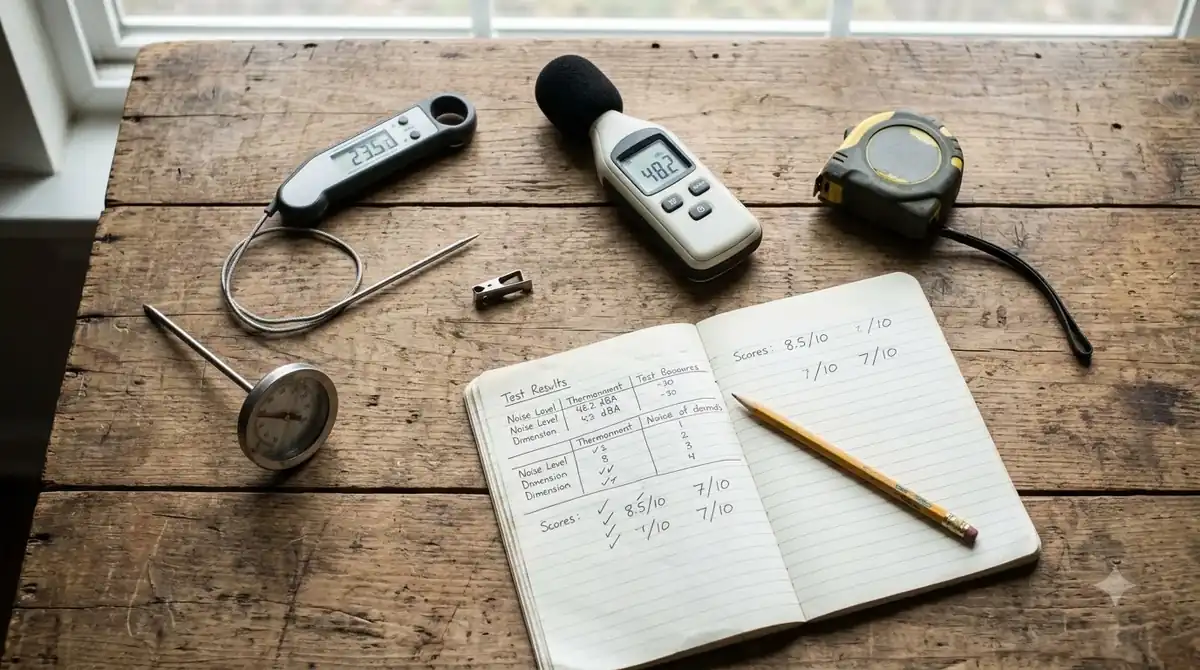
An infrared thermometer measures the surface of a bottle from a distance, which makes it fast when you have several bottles to check. You point it at the glass and read the number on the display, and it needs no contact with the bottle.
Infrared readings reflect only the glass surface, which warms or cools faster than the liquid inside. A reading taken right after a bottle leaves the fridge can be misleading. Wait a few minutes after moving a bottle, or hold the bottle in your hand to gauge how it feels, before relying on the number. Aim the thermometer at the body of the bottle, avoiding the base and the shoulder where the glass is thicker, and take the reading from a consistent distance each time. These habits make comparisons between bottles more meaningful, since the same method gives the same kind of reading.
Best for Monitoring a Wine Fridge
A wine fridge with a built-in display reads the storage temperature constantly, so you do not need a separate device. This is the easiest way to keep a stable environment for a collection.
Check that the display reads in the units you prefer and that the fridge holds a steady setting. A built-in display shows the storage air, not the bottle, so pair it with a probe if you want to track the bottle itself. Stable storage matters for a collection because repeated swings in temperature stress wine over time. A display that stays within a narrow band gives more reassurance than a single reading taken on a random day, so log the setting weekly if you keep bottles for longer periods.
Best for Budget Everyday Checks
Simple strips and basic sensors cover most home needs without much expense. They are light, easy to store, and enough for checking a bottle before pouring.
Budget thermometers work best for casual serving. If you want to track long-term storage or compare temperatures closely, a more precise digital model is worth the extra cost. A budget strip is also a sensible first step before buying a larger device, since it shows whether the habit of checking temperature before serving fits your routine. Replace the strip when the color panel fades or the adhesive stops holding, because an unreadable strip gives no useful information.
How to Choose a Wine Bottle Thermometer
Start with the question you want answered. Is it the temperature of one bottle at the table, a fridge setting, or a quick check across several bottles? That choice points to the right type. Then decide whether you need a reading that stays on the bottle or a probe that stays in the storage space.
Tip: match the reading to the wine. According to VinePair’s serving temperature guide, sparkling wine is served ice cold at 40 to 50 degrees Fahrenheit, white and rosé at 45 to 55, light reds at 55 to 60, and medium to full-bodied reds at 60 to 65.
Also check the range and the accuracy stated by the maker, and whether the device needs batteries. A reliable thermometer is one you will actually use, so choose a size and style that fits your habits.
Frequently Asked Questions
Is a bottle thermometer accurate?
Most consumer models give a useful approximation, but they measure the glass or the air around the bottle rather than the liquid inside. Use the reading as a guide, and confirm by touch or by letting the bottle sit for a few minutes.
What temperature should I serve red wine at?
VinePair’s guide gives 55 to 60 degrees Fahrenheit for light-bodied reds and 60 to 65 degrees for medium to full-bodied reds. Chill a red about an hour before serving if it is warmer than the range.
Can I use a thermometer on sparkling wine?
Yes. Sparkling wine is served very cold, around 40 to 50 degrees Fahrenheit, according to VinePair. A strip or sensor can confirm the bottle has reached that range before you open it.
Do I need a thermometer if I have a wine fridge?
A wine fridge display shows the storage temperature, which is useful for stable keeping. A separate bottle thermometer still helps when you want to check a bottle’s serving temperature before pouring.
The best wine bottle thermometer depends on whether you need to check one bottle, track a fridge, or scan several bottles quickly. Start with the reading you want, then choose the type that gives it clearly. For wine serving basics that pair well with a thermometer, the wine bottle holder guide covers the table setup, and the accessories library lists related gear.
More in Wine Accessories
 Coravin Vs Vacu Vin: Choose the Right Wine Saver for Your BottlesUpdated Nov 21, 2026
 Zwilling Wine Stopper Review: Preserve Open Bottles LongerUpdated Nov 21, 2026
 Wine Enthusiast Wine Preserver Review: Features, Benefits and LimitationsUpdated Nov 21, 2026
 Wine Enthusiast Wine Stopper: An Easier Way to Reseal Open BottlesUpdated Nov 21, 2026
 Vintorio Wine Opener: Two-Step Cork RemovalUpdated Nov 21, 2026
 Zwilling Wine Aerator Review: Aerate, Pour, and Seal With One ToolUpdated Nov 21, 2026