

We may earn a commission when you buy through links on this page, at no extra cost to you. Learn more.
The baccarat decanter to consider for a formal, one-bottle red-wine service is the Château Baccarat Decanter, a French crystal vessel with a broad base and 750 ml capacity. It weighs 1.70 kg empty and calls for careful hand washing, so it is a statement serving piece rather than an everyday utility carafe. It makes the most sense for buyers who value Baccarat crystal and regularly decant full-bodied reds; shoppers who prioritize quick cleaning or extra capacity should compare larger, simpler vessels.
Baccarat sells more than one wine decanter, so “Baccarat decanter” is not a single shape or specification. This review focuses on the Château model, reference 2610986, and compares it with the brand’s Masséna Decanter to make the buying decision more concrete. The central question is not whether the crystal looks luxurious; the product is clearly positioned as a design object. It is whether its dimensions, capacity, weight, and care requirements suit the way you actually open and serve wine.
Specs and Key Features
The Château Baccarat Decanter is a clear crystal vessel made in France, measuring 27 cm high and holding 75 cl. Its wide base and tapered neck are intended to expose wine to air while concentrating aromas toward the opening.
| Specification | Château Baccarat Decanter |
|---|---|
| Product reference | 2610986 |
| Material and finish | Clear crystal |
| Country of manufacture | France |
| Height | 27 cm (about 10.6 in) |
| Diameter | 14.8 cm (about 5.8 in) |
| Empty weight | 1.70 kg (about 3.75 lb) |
| Capacity | 75 cl (750 ml; about 25.4 fl oz) |
| Creation date listed by Baccarat | 2012 |
The standout functional detail is the shape. Baccarat describes a wide base that narrows into the neck, drawing inspiration from the taste-vin silhouette used by sommeliers. The broad lower chamber gives wine a larger exposed surface than it would have in a bottle, while the narrower top gives the pour a more controlled route into the glass. Baccarat positions this geometry as a way to aerate wine and open its aromatic profile, rather than presenting the decanter as a storage bottle.
Capacity is an important buying detail, not just a number for a specification sheet. At 750 ml, the Château holds one standard wine bottle by nominal volume; it is not an oversized vessel with generous extra room for a magnum or two bottles. The 14.8 cm diameter and 27 cm height also make it a substantial object on a dining table or bar cart. Review the official Château Baccarat product specifications before purchase if exact dimensions are critical to your display or storage space.
What Owners Like
The Château’s strongest appeal is its combination of recognizable crystal styling and a wine-specific profile, rather than an unusual gadget or complicated aeration mechanism. Baccarat lists a 2012 creation date and presents the wide-bottom, tapering-neck shape as part of the product’s design, which gives buyers a clear visual identity to assess.
One caution about the heading: Baccarat’s US product listing provides a description and specifications, not a verified collection of owner comments. There is not enough public owner-review evidence on that page to claim that buyers repeatedly praise a particular feature or report a common experience. A more useful way to frame the positives is to identify the qualities likely to matter to someone choosing this model: clear crystal, a recognizable silhouette, French manufacture, and a capacity matched to one 750 ml bottle.
For a host who enjoys presenting a Cabernet Sauvignon, Syrah, or young Bordeaux blend at the table, the broad base gives the decanter a practical purpose beyond display. Wine Folly explains that a wide base increases wine’s exposure to oxygen and can be useful for full-bodied, high-tannin reds. The Château’s shape therefore aligns with a familiar wine-serving use, even though the available product information does not establish how much faster it aerates than another wide-based vessel. Pairing it with suitable red wine glasses also makes the full serving setup feel considered without requiring a matching set.
The clear finish is another practical advantage. It leaves the color of a young red visible and makes it easier to watch the pour when an older bottle has sediment. That transparency is useful in a serving vessel: the decanter can sit in the middle of the table without hiding the wine behind colored glass or opaque decoration. Buyers who already invest in wine glasses may appreciate a decanter that looks coherent beside refined stemware, although matching glassware is a style choice rather than a requirement for good wine service.
Common Complaints
The most obvious drawback is the empty weight: Baccarat lists the Château at 1.70 kg, or about 3.75 lb, before wine is added. It is heavier than a basic glass carafe, so lifting, tilting, and carrying it while full calls for more attention, especially when serving around a crowded table.
The 75 cl capacity is also a design constraint. It corresponds to one standard 750 ml bottle, so this is not the right choice for pouring a magnum or combining several bottles in one vessel. A wine buyer who wants extra surface area and room for more than one bottle may prefer a decanter with a capacity closer to 1.5 liters or 2 liters. The Château can still aerate a single bottle, but its listed capacity does not offer the extra headroom found in larger, more utilitarian shapes.
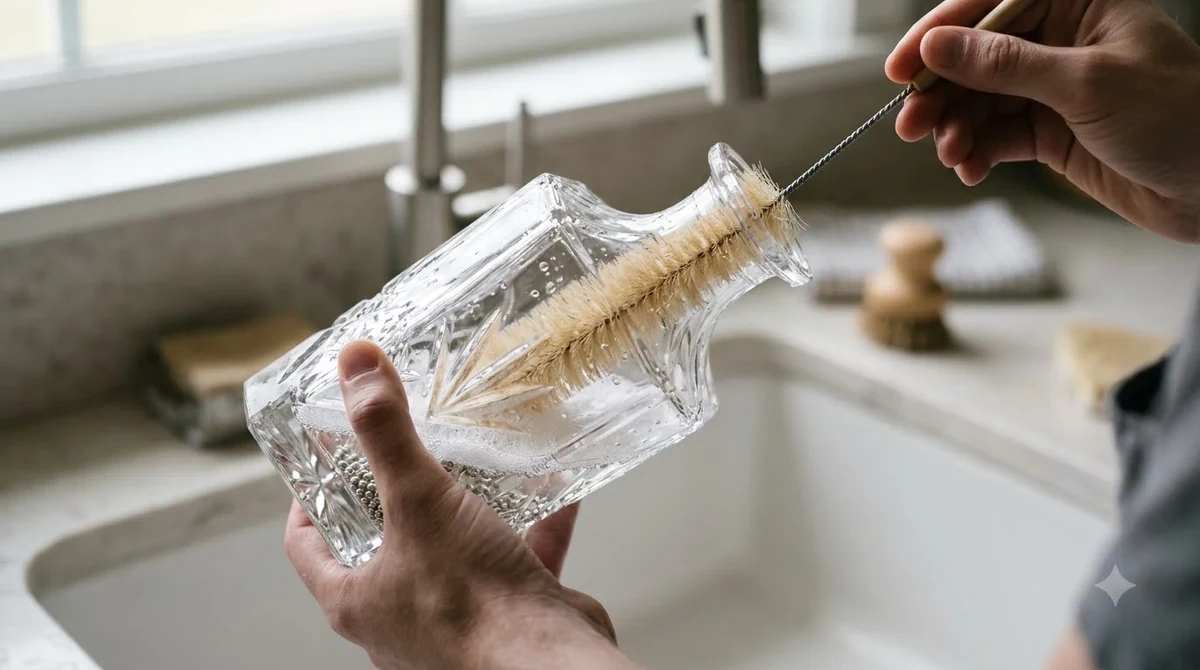
Cleaning is another consideration for crystal buyers. Baccarat’s US care FAQ recommends washing its crystal by hand with warm water or mild soap to avoid potential damage; that advice makes the Château less convenient for someone who expects to put every serving piece in the dishwasher. The product page does not publish a neck-opening measurement, so it is not possible to promise that a standard brush will reach every interior curve. Before buying, consider whether you have a suitable soft brush and enough drying space for a 27 cm vessel.
Tip: Rinse the decanter soon after pouring, use warm rather than very hot water, and let it dry fully before putting it away. Avoid leaving wine in crystal for an extended period; a clean, dry vessel is easier to use for the next bottle.
These are practical limitations rather than evidence of defective construction. No reliable set of owner comments was available on Baccarat’s listing from which to report recurring breakage, leaking, or staining complaints. Treat the weight, single-bottle capacity, and hand-wash recommendation as the known trade-offs, and inspect the decanter carefully when it arrives for chips or damage before its first use.
Who Should Buy and Who Should Skip
The Château Baccarat Decanter suits buyers who want a crystal serving piece with a defined wine function, especially those who routinely open one 750 ml bottle of structured red wine for a small group. Its broad base is consistent with the aeration approach often recommended for Cabernet Sauvignon and other full-bodied reds, and its clear finish preserves a view of the wine.
It is also a reasonable choice for someone furnishing a formal dining room, assembling a crystal bar collection, or choosing a special gift for a wine enthusiast who values presentation. The 2012 creation date, French manufacture, and distinct wide-base silhouette give the item a specific design identity. For a coordinated table, consider the decanter alongside Glassware Brands, but do not assume a matching glass collection is necessary: good stemware should fit the wine style and your hand as much as the decanter’s appearance.
Skip it if your first priority is everyday convenience. A household that opens wine casually, washes serving gear in a dishwasher, or wants a lightweight vessel for frequent use will probably get more practical value from a simpler glass carafe. Also look elsewhere if you often serve magnums, decant two bottles together, or want a large base and extra headroom for vigorous aeration. Wine Folly notes that full-bodied reds can benefit from a wide base, while light-bodied reds such as Pinot Noir can be served in a smaller or medium decanter that has been chilled; the Château’s principal appeal is strongest for a one-bottle red-wine service rather than every possible wine routine.
Consider the room where it will live, too. At 27 cm tall and 14.8 cm in diameter, it needs a secure shelf or cabinet space where it will not be crowded against other crystal. Its 1.70 kg empty weight makes a low, stable storage position more sensible than a high shelf. Buyers who prize the Baccarat name and presentation can accept those requirements; buyers who want a tool to use quickly and put away without thought should make function the priority.
How It Compares to Alternatives
The closest named alternative in Baccarat’s own wine-decanter range is the Masséna Decanter. It is taller, heavier, and slightly larger in capacity than the Château, while its sculpted neck and diamond-cut stopper give it a more overtly decorative look.
Baccarat lists the Masséna at 34 cm tall, 2.10 kg, and 90 cl, compared with the Château at 27 cm, 1.70 kg, and 75 cl. The difference is meaningful: Masséna adds 15 cl of nominal capacity but also adds 400 g of empty weight and 7 cm of height. It is therefore not a lighter or more compact upgrade. The Masséna is a stronger fit for someone who prefers a taller profile and a stopper-led design; the Château is the more restrained choice for a table where a broad, low bowl is the visual focus.
For the least complicated alternative, a plain glass jug or carafe can perform the basic job of holding wine after it is poured from the bottle. Wine Basics argues that much of a decanter’s functional difference comes down to exposed surface area: a wide base speeds aeration, while a narrow vessel exposes less wine to air and can suit an older bottle being separated from sediment. A simple glass carafe can be easier to wash, replace, and store, even if it does not deliver the same crystal presentation.
There is also a useful distinction between a decanter and the rest of the serving setup. A fine vessel cannot compensate for a glass that is poorly matched to the wine, so choose stemware separately based on grape and style. For sparkling wine service, a set of champagne flutes addresses a different purpose and is not a substitute for a red-wine decanter. If the goal is a single statement piece for still red wine, the Château is more focused than a collection of unrelated bar accessories; if the goal is maximum utility for a range of bottles and occasions, a plain larger carafe is easier to justify.
Frequently Asked Questions
These answers cover details that help place the Château in a broader wine routine, including bottle size, decanting time, and sediment handling. The model is identified by a specific Baccarat reference, but its usefulness still depends on the wine and the way it will be served.
What is the Baccarat Château Decanter reference number?
Baccarat identifies the Château Decanter with reference 2610986. Use that number when asking a boutique or customer service about the exact model, especially when comparing listings that shorten the product name.
How long should Cabernet Sauvignon stay in the decanter?
Wine Folly gives about 1 to 2 hours as a useful range for full-bodied wines, though the ideal time varies with the bottle’s age and structure. Start checking the aroma and taste before serving rather than treating the clock as a fixed rule.
Can the Château decanter be used for white wine?
Yes, but most white wines do not need decanting for aeration. Wine Folly notes that a small chilled decanter can be used for white wine or rosé when presentation is desired; keep the vessel cool so the wine does not warm unnecessarily.
Can decanting remove sediment from an older red?
Yes. Pour slowly and stop when sediment approaches the shoulder of the bottle; a light source behind the bottle can help you see the deposit before it reaches the decanter. This is a different purpose from aerating a young red, even though the same vessel can be used for both jobs.
Will the 75 cl Château hold a magnum?
No. A magnum contains 1.5 liters, twice the Château’s stated 750 ml capacity, so it cannot hold a full magnum. Wine Basics suggests looking at a 2-liter decanter for magnum service, which also leaves room to pour and swirl.
The Château Baccarat Decanter is best understood as a premium crystal serving piece that can aerate a single bottle, not as the most economical or low-maintenance decanter for every household. Choose it for its French crystal, distinctive profile, and one-bottle capacity; choose a lighter, larger glass vessel if convenience, extra room, or dishwasher-friendly care matters more.
More in Wine Glasses
 Zwiesel Glas Champagne Flutes for Durable Everyday Sparkling WineUpdated Nov 20, 2026
 Vera Wang Crystal Wine Glasses: Design, Quality and Buying AdviceUpdated Nov 20, 2026
 West Elm White Wine Glasses: Compare Designs for Better Everyday Wine ServiceUpdated Nov 20, 2026
 Zalto Stemless Wine Glasses: Discover Their Distinctive DesignsUpdated Nov 20, 2026
 Viski Champagne Glasses That Match Your Style and Sparkling WineUpdated Nov 20, 2026
 Vista Alegre Decanter Review: Crystal Style and Wine ServiceUpdated Nov 20, 2026