


We may earn a commission when you buy through links on this page, at no extra cost to you. Learn more.
This ariel wine review finds that ARIEL is a worthwhile choice for wine drinkers seeking familiar grape varieties with less than 0.5% alcohol by volume. Produced by J. Lohr, the range includes Cabernet Sauvignon, Chardonnay, and Sauvignon Blanc, each made through fermentation followed by alcohol removal. The Cabernet is the darker, oak-influenced option, the Chardonnay offers ripe fruit and buttery notes, and the Sauvignon Blanc is the freshest, most citrus-driven choice. ARIEL is best approached as an alcohol-removed wine alternative rather than an exact replacement for the body and texture of conventional wine.
Finding a convincing alcohol-removed wine involves more than checking the alcohol percentage. The grape variety, production method, acidity, sweetness, and remaining texture all influence whether a bottle feels appropriate at dinner or works better as the foundation for a nonalcoholic cocktail. ARIEL has an established place in this category, with a history dating to 1985 and production connected to California winemaker J. Lohr. This guide examines its range, explains the differences between the three featured varieties, and offers practical advice for choosing, serving, and storing a bottle.
Who ARIEL Wine Is For
ARIEL is particularly suitable for wine drinkers who want recognizable grape varieties and traditional wine-making steps without the alcohol level of conventional wine. Its three featured expressions cover different drinking occasions, from a crisp white wine with seafood to an oak-aged red alongside a substantial dinner.
The brand is produced by J. Lohr Vineyards & Wines, with ARIEL grapes grown on sustainably farmed estate vineyards in Monterey County and Paso Robles, California. The producer ferments and ages the wines before removing the alcohol. This distinction matters because ARIEL starts with fermented wine rather than simply combining grape juice and flavorings to imitate a wine profile.
The range is worth considering for people who enjoy the familiar aromas of Cabernet Sauvignon, Chardonnay, or Sauvignon Blanc but prefer a beverage containing less than 0.5% ABV. It also suits hosts who want to provide a wine-style option at a dinner where guests have different drinking preferences. The availability of red and white varieties makes it easier to match the bottle with the food rather than serving one generic alternative for every course.
However, ARIEL may disappoint someone expecting the same weight, warmth, and finish as a conventional wine. Alcohol contributes to wine’s body and mouthfeel, so removing it changes the drinking experience. An alcohol-removed Cabernet Sauvignon, for example, can retain recognizable dark-fruit aromas while feeling considerably lighter than a full-alcohol Cabernet.
It is also important to understand the alcohol classification. ARIEL is not a guaranteed 0.0% beverage. Its featured wines contain less than 0.5% alcohol by volume, meaning trace alcohol remains. Anyone who requires a beverage with absolutely no alcohol should distinguish this category from products specifically verified as 0.0%.
Readers comparing the individual bottles can also explore ariel wine for a broader look at the brand and its product range. For a wider perspective on producers and wine styles, the Wine Brands resource provides another useful starting point.
Key Factors to Compare Before Buying
The most useful comparison starts with grape variety, flavor profile, alcohol content, and nutritional information. ARIEL’s three featured wines share the same under-0.5% ABV classification, but their aromas, food applications, and calorie figures are different.
The following figures come from the producer’s published product information. Calories and carbohydrates are listed per 5-ounce serving, allowing a consistent comparison between the three varieties.
| ARIEL variety | Alcohol by volume | Calories per 5 oz. | Carbs per 5 oz. | Principal characteristics |
|---|---|---|---|---|
| Sauvignon Blanc | Less than 0.5% | 21 | 7 g | Lime, kiwi, passion fruit, herbs |
| Chardonnay | Less than 0.5% | 33 | 9 g | Tropical fruit, apple, butterscotch, oak |
| Cabernet Sauvignon | Less than 0.5% | 38 | 9 g | Black currant, cherry, blueberry, chocolate |
These numbers make Sauvignon Blanc the lightest option in the published lineup by calories and carbohydrates per serving. Chardonnay and Cabernet Sauvignon contain more calories, although both have the same listed carbohydrate figure. These differences are useful when comparing product information, but they do not automatically indicate which wine will taste better or pair more successfully with a meal.
Alcohol content and production
ARIEL’s under-0.5% ABV classification is an important purchasing consideration. The wines are fermented first, then undergo an alcohol-removal process. This approach preserves some of the characteristics created during fermentation, including grape-specific aromas and aspects of the original wine’s flavor profile.
Independent technical information identifies reverse osmosis as the alcohol-removal method for ARIEL Cabernet Sauvignon. The process separates components of the wine through filtration, allowing alcohol to be removed while retaining other wine components. The finished beverage nevertheless differs from the original wine because alcohol plays a role in aroma release, flavor perception, and texture.
The producer provides additional information about its ARIEL wine range and production, including the featured grape varieties and their individual characteristics.
Flavor and body
Consider whether you prefer citrus and herbs, ripe apple and oak, or dark berries and chocolate. These are the central flavor directions of the three featured expressions. Sauvignon Blanc is the logical choice for a lighter, fresher profile, while Chardonnay offers a more rounded aromatic impression and Cabernet Sauvignon provides the familiar dark-fruit character of a red wine.
Body is another important consideration. The independent review of ARIEL Cabernet Sauvignon describes its palate as relatively light and lean, despite a more substantial impression than some other nonalcoholic red wines. That observation illustrates why buyers should not judge an alcohol-removed red solely by its grape variety.
Ingredients and nutrition
Nutritional figures should be compared using the same serving size. The producer’s website provides 5-ounce figures, while the H-E-B listing for Cabernet Sauvignon gives a separate 8-ounce serving declaration. Those numbers should not be compared directly without accounting for the difference in volume.
Ingredient information is also useful when comparing products. H-E-B lists dealcoholized wine, purified water, grape juice concentrate, natural fruit juice concentrate, natural flavors, and potassium metabisulfite among the ingredients for its ARIEL Cabernet Sauvignon listing. This is a retailer-published product declaration, not a complete ingredient specification for every ARIEL variety.
Tip: Compare alcohol content, serving size, calories, and carbohydrates together. A 5-ounce nutritional declaration and an 8-ounce declaration describe different quantities, even when they refer to the same bottle.
Step-by-Step: How to Choose an ARIEL Bottle
The easiest way to select ARIEL is to start with the meal or occasion rather than choosing a bottle based only on its red or white color. A few simple decisions can narrow the range to the expression most likely to suit your preferences.
-
Decide whether you want red or white wine.
For a red-wine-style experience, start with Cabernet Sauvignon. For white wine, consider whether you prefer the fresher citrus character of Sauvignon Blanc or the ripe fruit and oak profile of Chardonnay.
-
Identify your preferred flavor profile.
Choose Sauvignon Blanc if lime, kiwi, passion fruit, and herbs sound appealing. Select Chardonnay for apple, tropical fruit, butterscotch, and toast. Choose Cabernet Sauvignon if black currant, cherry, blueberry, and chocolate are more attractive.
-
Match the wine to the food.
Think about the main ingredients and the weight of the meal. Seafood and fresh vegetables usually favor Sauvignon Blanc or Chardonnay, while beef and lamb are natural companions for Cabernet Sauvignon.
-
Review the alcohol declaration.
All three featured expressions contain less than 0.5% ABV. If your purchasing requirement is strictly 0.0%, this range should not be treated as interchangeable with a verified zero-alcohol product.
-
Compare serving-size nutrition information.
Use the same serving volume when comparing calories and carbohydrates. The producer publishes 5-ounce nutritional figures, while some retailer listings provide information using 8-ounce servings.
-
Consider how you intend to drink it.
If you want a straightforward glass with dinner, choose the grape variety that matches the food. If you plan to make a spritz or another alcohol-free mixed drink, consider how the wine’s acidity and fruit character will interact with the additional ingredients.
-
Plan for storage after opening.
ARIEL’s producer recommends consuming its Cabernet Sauvignon and Chardonnay within five days of opening. Refrigeration and a secure closure help maintain the wine’s remaining freshness during that period.
Following these steps helps avoid a common mistake: expecting every alcohol-removed wine to behave like its traditional counterpart. Choosing according to flavor and occasion produces a more realistic expectation of what the bottle can deliver.
ARIEL Wine Types and Styles Explained
ARIEL’s three featured varieties provide different interpretations of alcohol-removed wine. Understanding the individual production and flavor characteristics makes the range easier to compare, particularly if you are accustomed to buying conventional wines by grape variety.
ARIEL Sauvignon Blanc
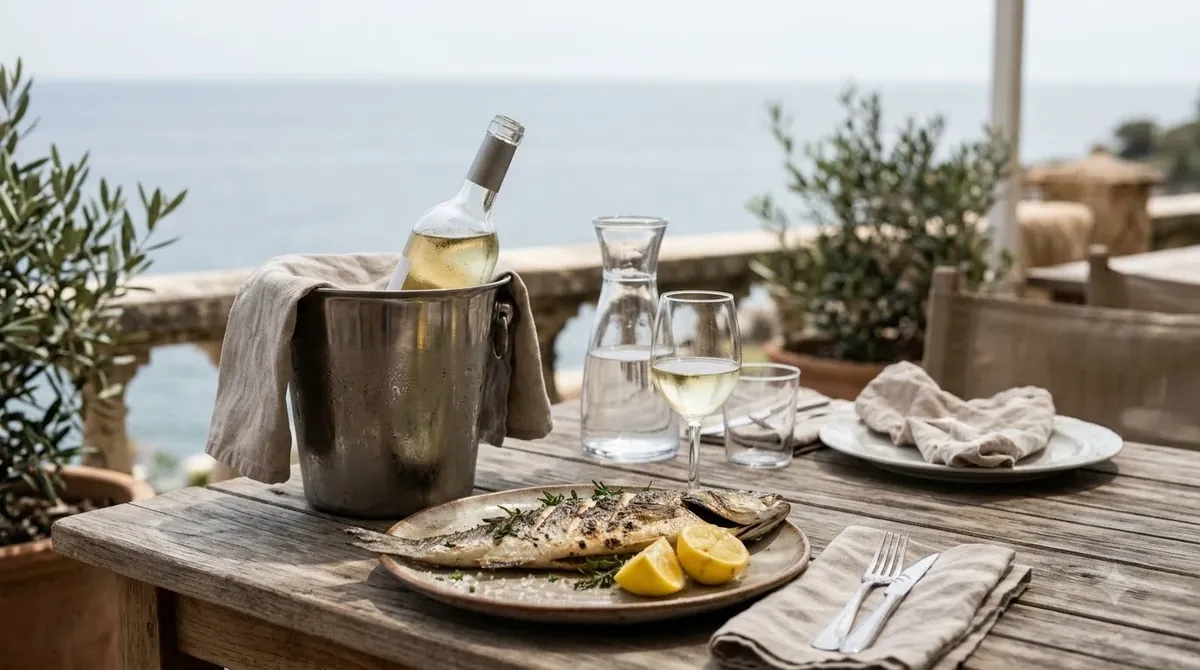
Sauvignon Blanc is the freshest and most citrus-oriented expression in the featured range. The producer describes lime, kiwi, passion fruit, and fresh herbs as its principal aromas and flavors. These characteristics make it a sensible starting point for someone who normally enjoys aromatic, refreshing white wines.
The published nutritional information lists 21 calories and 7 grams of carbohydrates per 5-ounce serving. That makes it the lowest-calorie expression among the three featured ARIEL wines according to the producer’s figures.
For food, think about dishes that benefit from refreshing acidity and citrus-like flavors. Grilled shrimp, white fish with lemon, herb salads, and vegetable appetizers are suitable starting points. Acidic food generally needs a wine with comparable or higher acidity to avoid making the wine seem flat. Sauvignon Blanc’s characteristic freshness makes it the most natural direction in this lineup for those pairings.
Serve it chilled, around 45 to 50 degrees Fahrenheit. This temperature keeps the wine refreshing without making its aromas unnecessarily difficult to appreciate. It is also a useful choice for daytime meals, casual gatherings, and occasions where a lighter white-wine style is preferred.
ARIEL Chardonnay
Chardonnay is the more rounded and oak-influenced white option. The producer describes ripe apple, tropical fruit, butterscotch, and toasted oak, giving it a different personality from the citrus-driven Sauvignon Blanc.
The producer’s Chardonnay production outline also provides useful information about its composition. It describes a blend containing 93% Chardonnay, 5% White Riesling, and 2% Sauvignon Blanc. Fermentation takes place in stainless-steel cooperage and small oak barrels, followed by blending and further aging before alcohol removal.
This production approach helps explain the wine’s combination of ripe fruit and oak characteristics. It is a more appropriate selection for someone who normally prefers a softer, fuller-feeling white wine rather than a sharply citrus-driven style. However, alcohol removal can reduce the perceived weight compared with conventional Chardonnay.
For food, consider seafood, veal, duck, and cream-based pasta dishes, which are among the pairings suggested by the producer. Roast chicken and mild cheeses are also practical options. Serve at approximately 50 to 55 degrees Fahrenheit to give the oak and fruit aromas room to develop.
The producer lists 33 calories and 9 grams of carbohydrates per 5-ounce serving. It also recommends enjoying the wine within five days after opening.
ARIEL Cabernet Sauvignon
Cabernet Sauvignon is the red expression and the most obvious choice for someone who prefers dark-fruit aromas and a traditional red-wine pairing. The producer identifies black currant, cherry, blueberry, and chocolate notes, together with soft tannins and a dry finish.
Its production outline explains that the wine undergoes fermentation in stainless steel before being separated from the skins. A portion is transferred into oak cooperage for extended aging, and alcohol is removed shortly before bottling. The published blend composition is 79% Cabernet Sauvignon and 21% other red wine varietals.
That production detail is useful because the finished product is not simply unfermented grape juice with a red-wine flavor. It begins with fermented wine and receives additional handling before bottling. Nevertheless, the removal of alcohol affects the body and texture that consumers normally associate with Cabernet Sauvignon.
An independent review by The Dry Standard identifies black currant and cherry aromas, hints of blueberry, and a subtle chocolate note. The review also points out that the palate is relatively lean and lacks the depth and fullness associated with a more substantial conventional red wine. This is a useful qualification for anyone considering ARIEL as a replacement for a favorite full-bodied Cabernet.
For food, the producer recommends beef, lamb, and red-sauced dishes. Tomato-based pasta, grilled mushrooms, and mild cheeses can also make practical pairings. Serve it around 55 to 60 degrees Fahrenheit rather than allowing it to become excessively warm.
The producer lists 38 calories and 9 grams of carbohydrates per 5-ounce serving. It recommends enjoying an opened bottle within five days.
Common Mistakes When Buying and Drinking ARIEL
The biggest purchasing mistake is assuming that an alcohol-removed wine will taste exactly like a conventional wine made from the same grape. ARIEL preserves recognizable varietal characteristics, but alcohol removal changes body, texture, and the way aromas and flavors are perceived.
Confusing alcohol-removed with 0.0%
ARIEL’s featured varieties contain less than 0.5% ABV. That is different from a product specifically labeled and verified as 0.0%. Consumers who need to avoid every trace of alcohol should make this distinction before purchasing rather than relying on general descriptions such as alcohol-free or nonalcoholic.
Expecting full-bodied Cabernet Sauvignon
Traditional Cabernet Sauvignon is generally associated with relatively high tannin, dark fruit, and a substantial structure. ARIEL’s version retains dark-fruit characteristics and soft tannins, but the independent review describes a lighter palate with limited depth. Expecting the same weight as a conventional Cabernet can therefore lead to disappointment.
Choosing the wrong white wine for the meal
Not every white wine performs equally well with every dish. ARIEL Sauvignon Blanc is a better starting point for citrus-seasoned seafood and fresh herb dishes, whereas Chardonnay’s ripe fruit and oak profile is more naturally suited to cream pasta, duck, and richer seafood preparations.
Serving the wine too warm
Temperature can change the way an alcohol-removed wine feels. White wines served excessively cold may seem muted, while red wines served too warm can appear less refreshing. As a starting point, use 45 to 50 degrees Fahrenheit for Sauvignon Blanc, 50 to 55 degrees for Chardonnay, and 55 to 60 degrees for Cabernet Sauvignon.
Ignoring the serving size
Comparing nutritional figures without checking their serving volumes creates misleading conclusions. The producer’s website gives calories and carbohydrates per 5-ounce glass, while the H-E-B Cabernet Sauvignon listing reports a separate 8-ounce serving. Always compare like-for-like quantities.
Assuming every ARIEL bottle is identical
The different grape varieties have distinct compositions, production details, and food applications. The Chardonnay outline specifies a three-variety white blend, while the Cabernet outline identifies a red blend containing other red wine varietals. A single general description of ARIEL cannot fully explain every expression.
ARIEL Wine Care and Storage Tips
Proper storage is particularly important for alcohol-removed wines because the finished beverage contains much less alcohol than conventional wine. Once opened, the bottle should be closed securely and refrigerated rather than left on the counter for several days.
For ARIEL Chardonnay and Cabernet Sauvignon, the producer recommends enjoying the wine within five days of opening. This gives consumers a practical storage guideline for two of the featured expressions. The same conservative approach is useful for the Sauvignon Blanc, although the individual product information should take priority for any specific storage instructions.
Before opening
Keep unopened bottles in a cool, dark location away from direct sunlight, heat sources, and significant temperature fluctuations. Conventional wine is commonly stored on its side at approximately 55 degrees Fahrenheit, particularly when it has a natural cork closure. For ARIEL, follow the actual bottle’s closure and storage instructions while maintaining stable, cool conditions.
Avoid keeping wine in a hot kitchen cabinet, beside an oven, or in a location exposed to afternoon sunlight. Excessive heat can damage wine’s flavor and freshness. A dedicated wine refrigerator or a consistently cool storage area is preferable when available.
After opening
Replace the original closure securely after pouring and refrigerate the bottle. Cold storage helps slow changes in aroma and flavor. Keep the bottle upright in the refrigerator so that the remaining liquid has less surface area exposed to air.
Do not assume that the normal shelf life of a fortified wine or a conventional red wine applies to ARIEL. The producer’s five-day recommendation for its Cabernet Sauvignon and Chardonnay is a more appropriate reference for those bottles.
Serving temperatures
Serving temperature should reflect the wine style. A chilled Sauvignon Blanc is refreshing with seafood and salads, while Chardonnay benefits from slightly warmer refrigerator temperatures that allow its apple and oak aromas to become more noticeable. Cabernet Sauvignon can be served slightly cooler than typical room temperature.
Use these practical starting temperatures:
- Sauvignon Blanc: 45 to 50 degrees Fahrenheit.
- Chardonnay: 50 to 55 degrees Fahrenheit.
- Cabernet Sauvignon: 55 to 60 degrees Fahrenheit.
For a standard wine pour, approximately 5 ounces is a useful serving measure. A 750 ml bottle contains approximately five such servings. This makes it easier to plan quantities when serving ARIEL at a dinner or gathering.
There is no need to decant ARIEL Cabernet Sauvignon for the extended periods sometimes used for young, full-bodied conventional reds. A short time in the glass is generally sufficient to appreciate its available aromas and flavor characteristics.
Frequently Asked Questions
Is ARIEL wine completely alcohol-free?
No. The featured ARIEL wines contain less than 0.5% alcohol by volume, rather than a guaranteed 0.0%. The alcohol level is reduced after fermentation, leaving trace amounts in the finished beverage. The distinction is important for consumers who require a product with absolutely no alcohol.
Who makes ARIEL wine?
ARIEL is produced by J. Lohr Vineyards & Wines. Its production is connected to the company’s California winemaking operations and sustainably farmed estate vineyards. The brand’s original commercial debut dates to 1985.
Does ARIEL wine contain added sugar?
The H-E-B ingredient and nutrition declaration for ARIEL Cabernet Sauvignon lists 9 grams of total sugars and zero grams of added sugars per 8-ounce serving. That information applies to the specific retailer-listed Cabernet product, not automatically to every variety or bottle formulation. Nutritional declarations for individual expressions should be considered separately.
Can ARIEL wine be used in cooking?
Yes, it can be used as a wine-style ingredient in recipes such as tomato-based sauces, reductions, and marinades. However, alcohol-removed wine will not behave exactly like conventional wine during cooking, particularly in recipes that depend on alcohol for extracting or carrying certain flavors. Add it gradually and adjust the acidity and seasoning to suit the finished dish.
Can ARIEL wine be used to make sangria?
Yes. ARIEL’s Cabernet Sauvignon can provide a red-wine-style base for fruit-forward sangria, while Chardonnay can work in lighter white sangria variations. The producer also publishes mocktail recipes featuring its Cabernet Sauvignon and Chardonnay, including a berry sangria-style preparation. Fresh fruit, citrus, and chilled sparkling water can add freshness and texture.
ARIEL offers a recognizable selection of alcohol-removed wines backed by established California winemaking, with three featured varieties that serve different tastes and meals. Sauvignon Blanc is the freshest option, Chardonnay brings ripe fruit and oak, and Cabernet Sauvignon offers dark-fruit character with a lighter body than conventional red wine. For buyers who understand the under-0.5% ABV classification and want a fermented wine alternative rather than a perfect replica of traditional wine, ARIEL is a brand worth considering.
More in Wine Brands
 Louis Latour Wine Price: Compare Bottles by Style and TierUpdated Nov 20, 2026
 Yellow Tail Moscato Price: What to Expect Before You BuyUpdated Nov 20, 2026
 Sutter Home Sweet Red Review: Find the Right Food PairingsUpdated Nov 20, 2026
 Franzia Chillable Red Review: Find the Right Serving StyleUpdated Nov 20, 2026
 Veuve Clicquot Rose Review: Flavor, Food Pairings and Buying AdviceUpdated Nov 20, 2026
 Rombauer Wine Price: Compare Bottles Before You BuyUpdated Nov 20, 2026