

We may earn a commission when you buy through links on this page, at no extra cost to you. Learn more.
Aligote wine is a crisp, dry white made mainly from the Aligoté grape, most often in Burgundy, France, where it is the region’s second most planted white after Chardonnay. It is light-bodied, high in acidity and usually meant to be drunk young, with apple, lemon and herbal notes. Its bright character makes it an easy, food-friendly white, and it is the traditional base for the Kir cocktail.
This guide covers what Aligoté wine tastes like, how it differs from Chardonnay, how to choose a bottle, and how to serve and pair it at home.
What Aligoté Wine Tastes Like
Aligoté wine is usually dry, light-bodied and sharp, with a clean finish. Its flavors commonly include green apple, lemon and unripe peach, along with white flower, fresh herbs and a mineral edge. Reference material describes the wines as zesty and high in acidity, which gives them a refreshing lift that makes them easy to drink on their own. Wine Folly’s Aligoté grape guide describes the same zesty, high-acid profile and the light, dry style of the wine.
Because the grape ripens early and yields moderately, growers aim for freshness rather than richness. The wine has no tannin, since it is a white, and its alcohol usually falls between 11.5 and 13.5 percent. That moderate strength is part of its appeal for a casual lunch or a long afternoon of cooking.
Where Aligoté Comes From
Aligoté was first recorded in Burgundy in the eighteenth century. Today it grows on the fringes of the Côte-d’Or, in the Mâconnais and in the Côte Chalonnaise, with about 1,700 hectares planted in Burgundy compared with roughly 12,800 hectares of Chardonnay. Some of the grape is also blended into Crémant de Bourgogne, the region’s sparkling wine.
Aligoté’s cold tolerance helped it spread into Eastern Europe. Bulgaria grows more than twice as much as Burgundy, mostly in Stara Zagora Province near Chirpan, and the grape is also grown in Ukraine, Romania, Switzerland and Moldova. Elsewhere, plantings are small, with some in Washington State and California, where it is mostly used for blending.
Bourgogne Aligoté and Bouzeron: Choosing the Right Label
In Burgundy, the easiest label to find is Bourgogne Aligoté. Under the appellation, these wines must be made exclusively from Aligoté, and yields are capped at 60 hectoliters per hectare. That rule ensures the wine comes from the grape and the region rather than a blend, so you know what you are drinking.
The village of Bouzeron has its own appellation with a lower yield cap of 45 hectoliters per hectare. Reference material considers Bouzeron to make the region’s finest examples of the grape, so it is worth trying when you want to taste the grape at its most focused. Its yield limit is tighter, so the wines tend to show a more distinctive character than a basic bottle.
| Label | What it tells you | Yield cap |
|---|---|---|
| Bourgogne Aligoté | Made exclusively from Aligoté under the regional appellation | 60 hl/ha |
| Bouzeron | Village appellation for Aligoté, often seen as the grape’s finest expression in Burgundy | 45 hl/ha |
| Crémant de Bourgogne | Sparkling wine that may include Aligoté in the blend | Not applicable |
Tip: When you see Aligoté on a label outside Burgundy, check whether the bottle is a varietal wine or a blend. In Bulgaria and other regions, the grape is often valued for its acidity rather than as the only grape in the bottle.
How Aligoté Compares With Chardonnay
Many drinkers know Chardonnay better than Aligoté, and the comparison helps explain the grape’s character. Chardonnay can be rich, creamy and oaky in many styles, while Aligoté is lighter, sharper and more direct. Aligoté tends to be less about oak and more about the fresh, citrus-and-apple profile that the grape gives on its own.
If you enjoy Chardonnay, Aligoté is a useful next step when you want a white that feels lighter at the table. For more on how alcohol levels vary across white wines, the Chardonnay alcohol content guide shows how the numbers shift with style and ripeness.
Serving and Pairing Aligoté
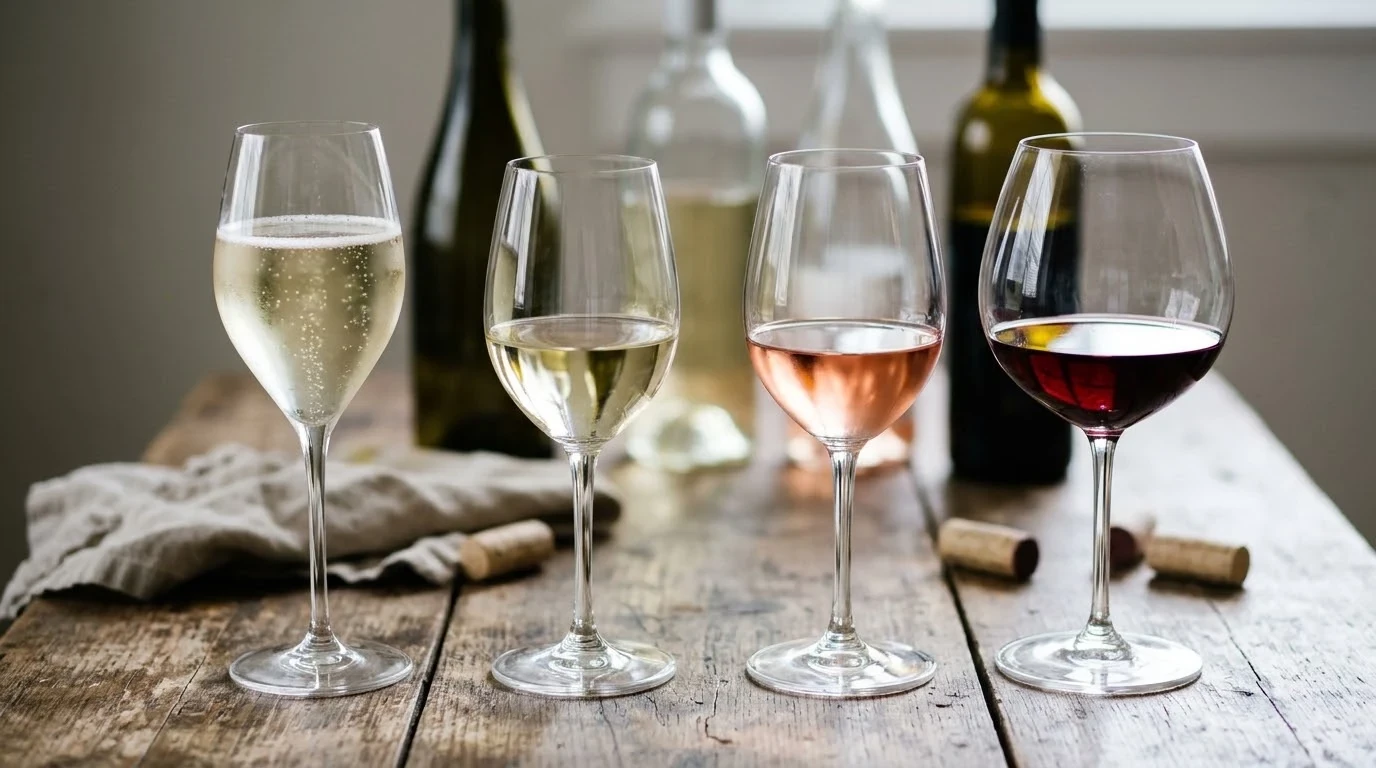
Aligoté is best served cool, at about 45 to 55°F (7 to 12°C), in a white wine glass. Reference material notes that it does not need decanting, and it is meant to be drunk young, although a bottle can be cellared for one to three years. Keep the bottle chilled until you pour, and let the glass warm slightly as you drink.
Its acidity makes it a strong partner for seafood. Fish, shellfish, vegetable soups, fresh salads and creamy cow’s milk cheeses all pair well, which makes it a practical choice for a relaxed lunch or a casual dinner.
The Kir Cocktail and Other Uses
Aligoté is the traditional base for the Kir, a simple drink made by adding a small measure of crème de cassis to the wine. The blackcurrant liqueur softens the acidity and adds a fruity note, and the result is a light aperitif that works well before a meal. Use a dry Aligoté rather than a sweet one, so the drink stays balanced.
The same approach works for a spritz-style drink. Mix a chilled Aligoté with sparkling water and a few fresh herbs, then add a slice of citrus. Keep the mixture light, since the wine’s own flavors are the point.
How to Choose an Aligoté Bottle
Start with the label. A Bourgogne Aligoté gives you a clear, reliable introduction to the grape, while a Bouzeron is a good choice when you want a more focused bottle. Check the producer and the vintage, since the grape ripens early and fresh vintages tend to show the best character.
Consider when you will drink it. Aligoté is meant to be drunk young, so a recent vintage makes more sense than holding a bottle for many years. If you are unsure, buy a single bottle to try at home, then compare it with a second producer on the next occasion.
Read the alcohol content on the label as a guide to the style. Aligoté usually falls between 11.5 and 13.5 percent, so a bottle far outside that range may be a different style or a blend. Pair that with the producer’s notes, which often explain whether the wine is meant for everyday drinking or a more serious occasion.
Keep a few bottles from different producers on hand for a tasting at home. Pour them side by side, chilled to the same temperature, and note which one you prefer. Within a few tastings, you will learn whether you prefer the sharper, mineral style or a rounder, fruitier one.
Frequently Asked Questions
Is Aligoté wine dry or sweet?
Aligoté wine is usually dry. It is light-bodied and high in acidity, with fresh apple and citrus notes and no sweetness on the finish.
What is the difference between Bourgogne Aligoté and Bouzeron?
Bourgogne Aligoté is a regional appellation for wine made from Aligoté, with a yield cap of 60 hectoliters per hectare. Bouzeron is a village appellation with a lower yield cap of 45 hectoliters per hectare, and reference material considers it the grape’s finest expression in Burgundy.
How should I serve Aligoté?
Serve it cool, at about 45 to 55°F, in a white wine glass. It does not need decanting, and it is meant to be drunk young.
What is a Kir and why is Aligoté used?
A Kir is a drink made by adding crème de cassis to a glass of white wine. Aligoté is the traditional choice because its high acidity balances the sweetness of the liqueur.
For a broader look at white wine styles and grape families, read the Wine by Type guide. If you want to explore other lesser-known grapes, the Chambourcin wine guide offers another example of a grape that rewards a closer look.
More in Wine Types & Grapes
 Zinfandel Sugar Content: Dry Red vs. White Zinfandel GramsUpdated Nov 21, 2026
 Best Zinfandel Substitute Options for Sipping and CookingUpdated Nov 21, 2026
 Zweigelt Food Pairing: Best Dishes, Cheeses, and Serving TipsUpdated Nov 21, 2026
 Zinfandel Tannins Explained: How Structure Shapes Every BottleUpdated Nov 21, 2026
 Zinfandel Sweetness Level: Dry Red vs. Sweet White Zin ExplainedUpdated Nov 21, 2026
 Xinomavro Food Pairing: Best Dishes, Styles, and Serving TipsUpdated Nov 21, 2026