

We may earn a commission when you buy through links on this page, at no extra cost to you. Learn more.
Where is Chenin Blanc from? Chenin Blanc is from France’s Loire Valley, especially the historic Anjou area west of the city of Tours. The grape was recorded as “Plant d’Anjou” in the ninth century, long before the name Chenin Blanc became established. It later became a signature of several Loire appellations and found a major second home in South Africa, where it is also called Steen.
Chenin Blanc’s birthplace explains why French bottles are so closely associated with places such as Anjou, Savennières, Saumur, and Vouvray. But the grape’s story did not stop in France: it crossed the Atlantic-facing Cape of South Africa in the 17th century and eventually became one of that country’s defining white varieties. Understanding the difference between origin and modern importance makes it easier to read a wine list, choose a style, and recognize what a region contributes to the glass.
Where Chenin Blanc Originated in the Loire Valley
Chenin Blanc originated in the Loire Valley of western France, with its earliest documented history centered on Anjou. A reference from 845 identifies a grape called “Plant d’Anjou,” linking the variety to the region more than a thousand years ago.
The historical account is tied to the Abbey of Saint-Maur de Glanfeuil, near the Loire River. The Chenin Blanc Association recounts that Charles the Bald, known in French as Charles le Chauve, referred to Plant d’Anjou in an essay in 845. Wine Enthusiast likewise places the grape in the Loire by the ninth century, describing it as a white variety recorded on the river’s banks. These records make the Loire the established historical home of Chenin Blanc, rather than South Africa or another modern growing region. The Chenin Blanc Association’s historical timeline traces the grape’s journey from the Loire to the Cape.
The name changed as the grape spread. The Chenin Blanc Association links it to Mont Chenin and says the variety was renamed after the site in the 15th century, after moving east into Touraine. Other Loire names, including Pineau de la Loire and Plant d’Anjou, remained in use, so historical references may describe the same grape under different names.
Monasteries helped develop vineyards in Anjou and Saumur. Anjou wines gained a wider audience when Henry II became King of England in 1154 and his court began serving wines from his home county. Vineyards expanded during the 16th and 17th centuries, building on the region’s early written record.
| Milestone | Place | Historical detail |
|---|---|---|
| 845 | Anjou, Loire Valley | Plant d’Anjou appears in a written reference. |
| 1154 | Anjou and England | Henry II’s royal court begins serving Anjou wines. |
| 1655 | Cape of Good Hope | Chenin is believed to be among the vine cuttings brought to South Africa. |
| 1659 | Cape of Good Hope | Three young vines produce a recorded 14.5 liters of wine. |
| 1963 | Stellenbosch, South Africa | Steen is identified as Chenin Blanc. |
Anjou, Saumur, and Touraine Define the Loire Heartland
Within the Loire Valley, Chenin Blanc is most closely associated with Anjou, Saumur, and Touraine. These central Loire districts contain some of the grape’s best-known appellations, including Savennières, Vouvray, Coteaux du Layon, and Quarts de Chaume.
Anjou is the historic starting point, and the wider Anjou-Saumur area produces both dry and sweet Chenin. Savennières, in Anjou, is especially associated with dry still wines. Farther east, Saumur is known for sparkling wines as well as still examples, showing how one grape can serve several styles within a compact area.
Touraine extends the story eastward. Vouvray is its best-known Chenin appellation and produces still wines across a range of sweetness levels, as well as sparkling wine. The variety is also used in Crémant de Loire, a Loire sparkling-wine appellation. A bottle labeled Vouvray, Savennières, or Coteaux du Layon therefore points to a specific place and tradition, not a different grape.
These place names also signal style. Vouvray may be dry, off-dry, sweet, or sparkling; Savennières is associated with dry still wine, while Coteaux du Layon and Quarts de Chaume are notable for sweet wines. Knowing these appellations can help identify Chenin even when a wine list does not name the grape.
Loire Climate and Soils Shape Chenin Blanc
The Loire’s cool-to-moderate conditions and varied soils help explain Chenin Blanc’s range of styles. The grape buds early but ripens late, so the growing season and harvest conditions can influence whether growers make a crisp dry wine, a sparkling base wine, or a concentrated sweet wine.
Soils vary across the central Loire. Wine Enthusiast identifies clay, schist, and sandy loam as suitable for Chenin; calcareous clay in Vouvray can give wines a rounded feel with acidity, while limestone tends to emphasize freshness. Clay can support richer sweet styles, so wines from different sites may feel quite different. See Wine Enthusiast’s Chenin Blanc profile for a concise overview.
Harvest timing matters too. Earlier-picked grapes retain acidity for dry wines and sparkling base wines. Later fruit can become riper and sweeter; in favorable conditions, botrytis cinerea, or noble rot, concentrates the grapes and contributes honeyed character to some Loire dessert wines.
The grape’s naturally high acidity is an important part of its versatility. It can balance ripe fruit in warmer or later-harvested wines, while in dry examples it gives structure and lift. That balance helps explain why Chenin can work as both a refreshing aperitif and a richly textured dessert wine without being limited to one sweetness level.
South Africa Became Chenin Blanc’s Second Home
Chenin Blanc has a centuries-old connection with South Africa, but its origin remains French. The grape is believed to have arrived at the Cape among vine cuttings brought in 1655, and local growers came to know it as Steen.
The Chenin Blanc Association records that grapes from three young vines were pressed on February 2, 1659, producing about 14.5 liters of wine. The varieties recorded at the time included steendruif, now identified as Chenin Blanc, and hanepoot, the local name for Muscat of Alexandria. This early Cape history helps explain why the grape is so deeply established in South African wine culture even though it came from the Loire.
For years, Steen was treated as a distinct variety. In 1963, Stellenbosch University viticulturist Professor C. J. Orffer matched Steen and Chenin leaves and identified them as the same grape. Chenin had been the Cape’s most widely planted variety by the 1950s, but high yields and use in brandy distillation later gave it a workhorse reputation. Producers have since put greater emphasis on quality, site, and old vineyards.
South African Chenin now appears in many forms, from fresh, unoaked wines to fuller dry bottlings and sweet late-harvest examples. Decanter notes that South Africa also uses the name Steen and grows Chenin widely, while Wine Enthusiast describes it as a prominent national white variety with dry, sweet, and sparkling expressions. The country is therefore not the birthplace of Chenin Blanc, but it is central to the grape’s modern identity. On a bottle, “Steen” is a traditional South African name for Chenin; “Vouvray” or “Savennières” points to France. Neither name guarantees a single flavor profile, but each gives you a useful starting point for understanding origin and style.
Where Chenin Blanc Grows Beyond France and South Africa
Chenin Blanc is grown in several countries beyond its historic Loire home and its major South African base. Wine Enthusiast lists plantings in the United States, Australia, New Zealand, Argentina, Brazil, and Mexico, although the grape’s role and the amount planted differ from place to place.
In the United States, California is an established growing area, including Napa Valley and Mendocino; Washington and Texas also grow the variety. Producers in New York, Missouri, Wisconsin, and Arizona have experimented with it. US drinkers can therefore find domestic Chenin rather than assuming every bottle comes from France or South Africa.
Australia has used Chenin in blends with grapes such as Chardonnay, Sémillon, and Sauvignon Blanc, and Wine Enthusiast describes Australian examples as often showing pronounced tropical notes. New Zealand produces smaller amounts, including sweet dessert styles, while Argentina, Brazil, and Mexico have used it in larger white-wine blends.
These plantings do not change the grape’s origin: a California Chenin is a local wine made from a French variety. The same distinction applies to Merlot, another French grape with a global footprint, as explained in where Merlot is from.
How Origin Influences Chenin Blanc’s Flavor and Style
Chenin Blanc’s birthplace helps explain its classic profile, but origin is only one influence on the finished wine. Loire examples commonly show high acidity, floral and honeyed aromas, and flavors such as apple, pear, and quince; South African wines can range from crisp and fruit-forward to fuller, riper styles.
In the Loire, dry Chenin can be lean and fresh, with apple, pear, and mineral notes; richer versions may show quince and honey. Sweet wines from Coteaux du Layon and Quarts de Chaume can develop concentrated floral and honeyed flavors, especially with noble rot. Sparkling Chenin from Vouvray or Crémant de Loire offers a fresh alternative.
South African Chenin often emphasizes ripe pear, peach, and tropical fruit. Cooler-fermented examples can stay bright and pear-like, while fuller dry wines may become peachier. Oak can add texture; stainless steel or neutral vessels preserve freshness. Picking decisions and cellar choices help determine the wine’s body.
For a closer look at aroma, texture, and sweetness, see what Chenin Blanc tastes like. It also helps to remember that a regional name describes origin, while terms such as dry, off-dry, sweet, and sparkling describe style. A Vouvray may be still or sparkling and may range from dry to sweet, so the place name alone does not answer every question about the wine.
How to Choose, Serve, and Pair Chenin Blanc
Start by matching the style to the occasion: dry Chenin is a versatile table white, sparkling Chenin suits a toast or salty appetizer, and sweet Chenin works with fruit-based desserts and blue cheese. Serve it cool rather than ice-cold so its acidity and aromas remain clear.
For a lighter, crisp Chenin Blanc, aim for 45–50°F; a fuller-bodied dry white is generally better at 50–55°F. Sweet white Chenin is usually served around 43–50°F. Pair the high-acid dry styles with rich dishes such as roast chicken with cream sauce, pork with a fruit glaze, fried fish, shrimp, or scallops; goat cheese is a classic match for dry Loire Chenin. For sweet Chenin, choose a dessert that is no sweeter than the wine, such as apple tart, pear cake, or fruit-based pastries.
Tip: If you are unsure which bottle to choose, use the place name and style together: a dry Savennières for a focused still white, a Vouvray for a broad range of sweetness and sparkling options, or a South African Steen for a different regional expression of the same grape.
A standard pour is about 5 ounces, and a 750-milliliter bottle yields roughly five glasses. Keep an opened still Chenin in the refrigerator and aim to finish it within 3–5 days for the best freshness; sparkling bottles are best enjoyed within 1–3 days when properly sealed and chilled. If you are comparing grapes rather than regions, the Wine by Type overview can help distinguish varietal wines from blends. Port, by contrast, is a fortified wine from Portugal’s Douro Valley, not a style of Chenin; the guide to where Port is from explains that separate origin story.
Frequently Asked Questions
What do Chenin Blanc grapes look like?
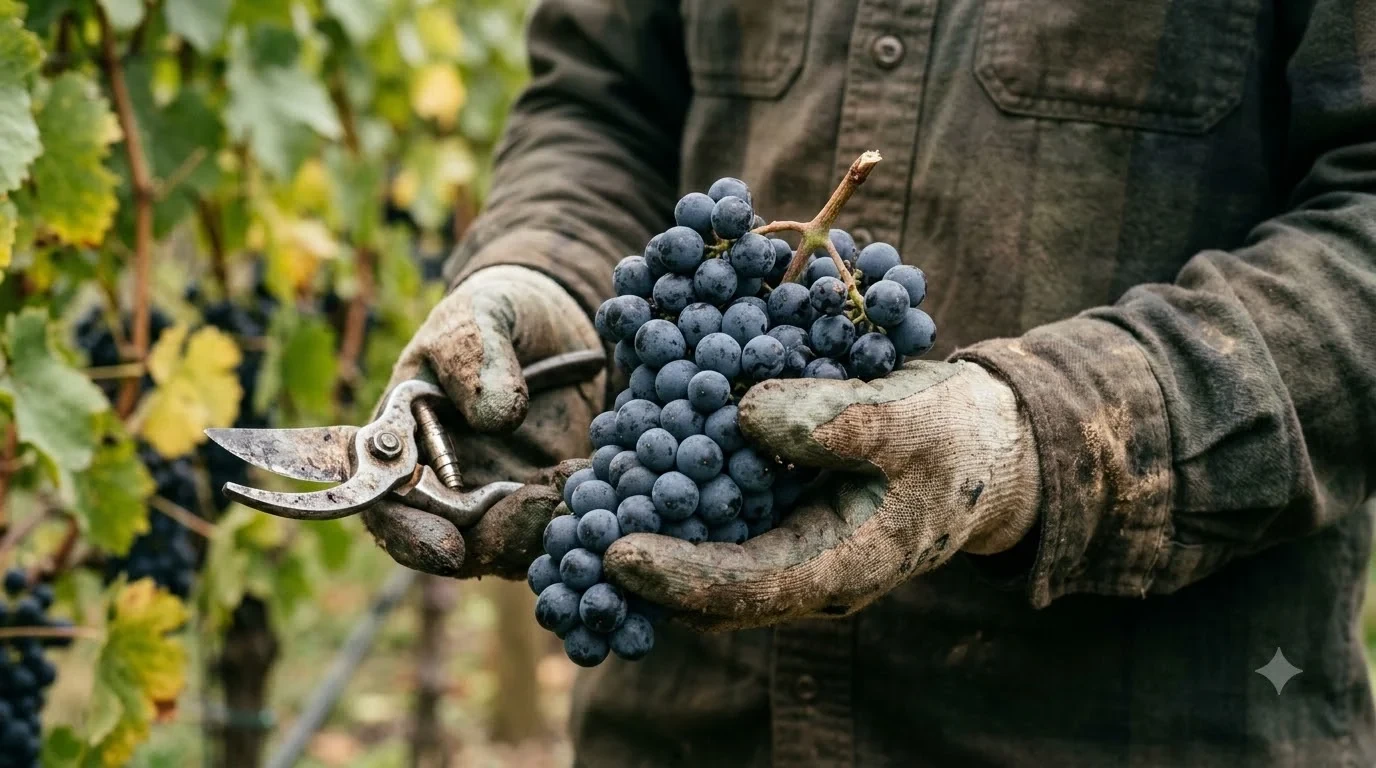
The berries are yellow-green when they grow on the vine, and the grapes form conical bunches. That appearance helps distinguish the fruit botanically, even though grape color and bunch shape are not usually visible once the wine is in the glass.
When did Chenin Blanc reach Australia?
Chenin vine cuttings from South Africa were planted in Western Australia’s Swan Valley by English botanist Thomas Waters in 1829. The Chenin Blanc Association’s timeline adds that Waters dug the cellar of Olive Farm the following year.
Why was Steen sometimes spelled Stein?
A handwritten note by Governor Simon van der Stel compared wine made from Steen with German Stein wines. That comparison encouraged use of the Germanic spelling “Stein” before the grape’s identity was settled.
Does Chenin Blanc grow in Canada?
Yes. Wine Enthusiast identifies plantings in British Columbia’s Okanagan region and in Ontario, showing that the grape is grown in more than one Canadian wine area.
How long can Chenin Blanc age in the bottle?
Wine Enthusiast gives a general cellaring range of 5–10 years for Chenin Blanc and notes that the variety can age for a long time. The actual window depends on the wine’s concentration, sweetness, acidity, and producer’s winemaking choices.
Chenin Blanc comes from the Loire Valley, but its long history in South Africa and plantings across the New World have made it a genuinely international grape. Start with the region and style on the bottle, then explore how Anjou, Vouvray, Savennières, and South African Steen each express the same versatile variety.
More in Wine Types & Grapes
 Zinfandel Sugar Content: Dry Red vs. White Zinfandel GramsUpdated Nov 21, 2026
 Best Zinfandel Substitute Options for Sipping and CookingUpdated Nov 21, 2026
 Zweigelt Food Pairing: Best Dishes, Cheeses, and Serving TipsUpdated Nov 21, 2026
 Zinfandel Tannins Explained: How Structure Shapes Every BottleUpdated Nov 21, 2026
 Zinfandel Sweetness Level: Dry Red vs. Sweet White Zin ExplainedUpdated Nov 21, 2026
 Xinomavro Food Pairing: Best Dishes, Styles, and Serving TipsUpdated Nov 21, 2026