

We may earn a commission when you buy through links on this page, at no extra cost to you. Learn more.
For anyone asking “what is barbera,” it is a red wine grape from Italy’s Piedmont region, prized for lively acidity, low-to-moderate tannins, and cherry-led fruit. It can produce fresh, easy-drinking reds as well as concentrated wines aged in oak. Its bright acidity makes it a natural partner for tomato-based pasta, roasted meats, and the rich dishes of northern Italy.
Barbera is one of the most useful Italian reds to know because it combines generous fruit with a refreshing, food-friendly structure. The name on the bottle may point to the grape, a place such as Asti or Alba, or a more specific category such as Nizza; understanding those clues makes it easier to choose a style that suits the meal.
The Barbera Grape and Its Piedmont Roots
Barbera is a dark-skinned red grape whose historic home is Piedmont in northwestern Italy, especially the Monferrato hills and the provinces of Asti and Alessandria. It is prized for naturally high acidity and relatively low tannin, a combination that gives the wines freshness without the firm grip associated with Nebbiolo.
Barbera vines are vigorous and can produce generous crops, so vineyard decisions matter. Decanter notes that careful pruning and less fertile soils, including calcareous and clay-loam sites, can help concentrate the fruit. Growers commonly train the vines using the Guyot system, and the grape’s late-ripening nature means that it usually reaches harvest after earlier-ripening varieties such as Dolcetto. In the Asti area, the regional consortium says picking commonly takes place in the second half of September; elsewhere, dates shift with the site and growing season.
The grape’s Piedmont identity is older than its modern reputation for polished, oak-aged reds. The Barbera consortium records a first historical reference in a 1512 cadastral document from the municipality of Chieri, while the grape was included in Count Nuvolone’s 1798 handbook of Piedmontese varieties. For generations, local families valued it as an everyday table wine. More focused vineyard work and cellar techniques from the 1980s onward helped demonstrate that lower yields and careful handling could produce wines with greater depth and aging potential.
Barbera’s balance is easy to remember: high acidity, usually low-to-moderate tannin, and substantial color. That profile is different from Cabernet Sauvignon, which generally has higher tannin, and from Nebbiolo, whose tannins can be much more prominent. It is also why Barbera can feel lively and juicy even when its color looks dark and its alcohol level gives the wine a fuller impression.
Flavor, Aroma, Acidity, and Color
Most Barbera tastes dry, fruit-forward, and fresh, with tart cherry at the center and notes of blackberry, raspberry, plum, or red berry alongside it. The exact mix depends on ripeness, climate, vineyard location, and whether the winemaker uses stainless steel or oak.
In a younger stainless-steel version, expect crisp cherry, raspberry, and sometimes a hint of cranberry, with an energetic finish. A warmer site or riper harvest can bring darker plum and blackberry notes. Floral suggestions may include violet, while more savory bottles can show dried herbs or a touch of earth. These are fruit and aroma impressions rather than sweetness: Barbera is typically made as a dry red, even when ripe fruit makes it seem round or almost sweet on the nose.
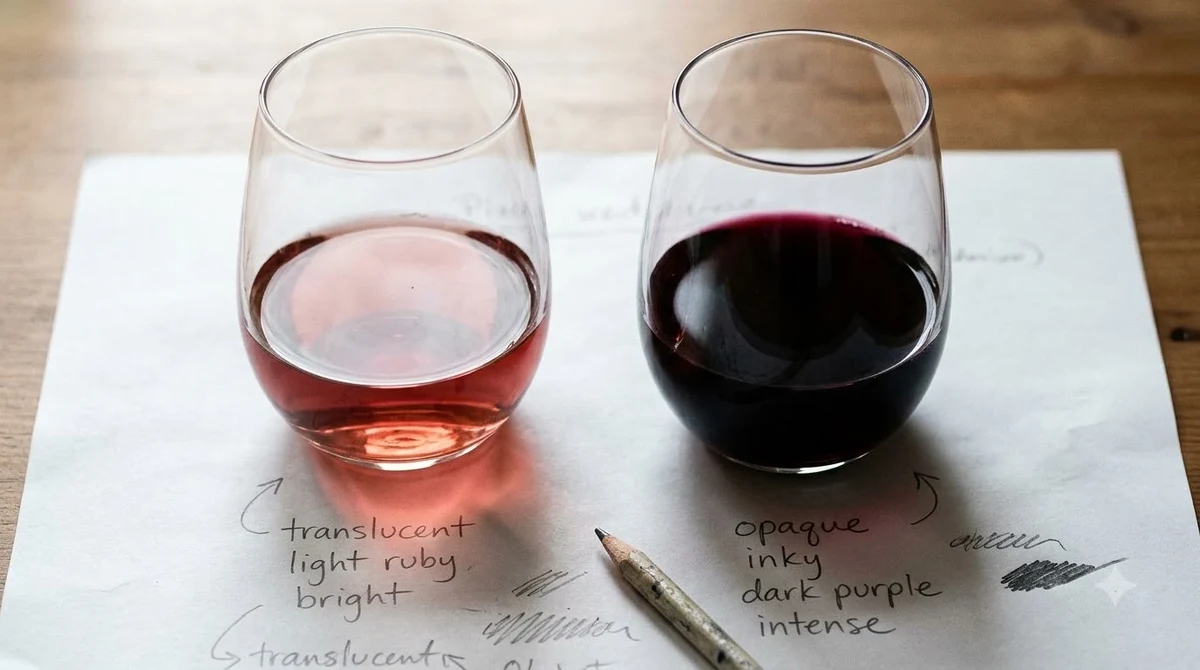
Color is another clue. The grape has dark blue-black skin and often produces a vivid ruby or purple-red wine, sometimes so deep that the glass looks almost opaque at the center. With time in the bottle, the color can move toward garnet or brick at the rim. For a visual explanation of how the shade varies by style and age, see our guide to Barbera color. The aromatic profile is explored in more detail in our Barbera tasting notes.
Acidity is the defining structural feature. It makes the wine feel brisk and mouthwatering, helps cut through fatty foods, and keeps the fruit from seeming heavy. Tannin is usually gentler than in many famous Italian reds, although oak-aged or more concentrated examples can feel firmer. For readers comparing grape varieties, our overview of Wine by Type explains how grape, region, and winemaking shape the character of a bottle.
Piedmont Appellations: Asti, Alba, and Nizza
Barbera’s best-known Italian labels come from Piedmont, but Asti, Alba, and Nizza do not mean exactly the same thing. Each name identifies a regulated production area or wine category, and the rules give useful clues about grape composition, maturation, and expected weight.
Barbera d’Asti DOCG comes from 116 municipalities in the province of Asti and 51 in Alessandria, according to the Consorzio Barbera d’Asti e Vini del Monferrato. Its rules require 90% to 100% Barbera, allowing up to 10% other non-aromatic red varieties grown in Piedmont. A standard Barbera d’Asti is generally fresh and direct, often fermented in stainless steel; the regional consortium’s Barbera d’Asti specification sets its minimum alcohol at 12%. The Superiore version has a 12.5% minimum and must age at least 14 months from November 1 after harvest, including six months in wooden barrels and six months in bottle. Oak can add vanilla, cocoa, and spice while giving the wine more breadth.
Barbera d’Alba DOC is produced around Alba in the province of Cuneo. Piemonte’s official wine portal states that it must contain 85% to 100% Barbera, with up to 15% Nebbiolo permitted, and must age for at least one year; the minimum alcohol level is 12%. Its Superior designation requires at least 12.5% alcohol and the same minimum year of aging. Nizza is a separate DOCG centered on Barbera in the Asti area. It is made from 100% Barbera and must age for at least 18 months, including six months in wood; Nizza Riserva requires at least 30 months, including one year in wood. These longer élevage periods and stricter production limits are intended to yield more concentrated, structured wines.
| Wine category | Required grape composition | Minimum aging | Minimum alcohol |
|---|---|---|---|
| Barbera d’Asti DOCG | 90% Barbera | 4 months from November 1 after harvest | 12% ABV |
| Barbera d’Asti Superiore DOCG | 90% Barbera | 14 months; 6 months in wood and 6 months in bottle | 12.5% ABV |
| Barbera d’Alba DOC | 85% Barbera | At least 1 year | 12% ABV |
| Nizza DOCG | 100% Barbera | At least 18 months; 6 months in wood | Not stated here |
The figures in the table are minimum requirements, not tasting scores or guarantees that every bottle will have the same weight. The Barbera d’Asti rules also permit subzone names such as Tinella and Colli Astiani, while Nizza now stands on its own. When comparing labels, start with the appellation and aging term, then use the producer’s description to understand whether the wine is intended to be bright and immediate or more structured and cellar-worthy.
How Vineyard Choices and Winemaking Shape the Style
Barbera can be made in several styles because the grape brings color and acidity naturally, while the winemaker controls much of its texture and aromatic weight. Stainless steel tends to preserve clear fruit, whereas malolactic fermentation and barrel aging can soften acidity and add layers of spice or toast.
A straightforward Barbera is commonly fermented in temperature-controlled stainless-steel tanks and bottled after a relatively short period of maturation. The goal is to keep the cherry and berry flavors vivid, with a clean finish that makes the wine easy to pour alongside a weeknight meal. This style is often medium-bodied, but the lively acidity can make it seem lighter and more nimble than its color suggests. It is usually best enjoyed while its primary fruit is fresh.
For a more ambitious version, growers may lower yields, select grapes from better-exposed hillside parcels, and pick at full but balanced ripeness. In the cellar, malolactic fermentation converts sharper malic acid into softer lactic acid, moderating the grape’s naturally brisk profile. Aging in large casks or smaller barrels can contribute vanilla, baking spice, cocoa, and additional texture. The goal is balance: oak should complement the fruit and acidity rather than cover them.
Oak does not automatically mean better or more ageworthy. A well-made stainless-steel Barbera can be expressive and complete, while an oak-aged bottle may be structured but less appealing if the wood dominates. Look for clues such as “Superiore,” “Riserva,” or “Nizza” when you want stricter aging requirements, but remember that producers also make serious wines without those terms. A useful background is Decanter’s overview of the Barbera grape, which describes its high acidity, relatively low tannin, and range of steel- and oak-aged expressions.
Food Pairings That Match Barbera’s Acidity
Barbera works especially well with foods that are rich, savory, or tomato-based because its acidity refreshes the palate and its modest tannin does not overwhelm the dish. Think of it as a flexible red for Italian-American staples as well as the meat- and pasta-centered cooking of Piedmont.
For pasta, pair a youthful Barbera with tomato sauce, ragù, lasagna, or ravioli filled with meat or mushrooms. Tomato is naturally acidic, so a wine with equally noticeable acidity is a better fit than a flat, soft red. Barbera’s bright fruit also complements tomato’s sweet-sour character, while its moderate body does not swamp the pasta. For a classic regional match, the Piemonte wine authority recommends Barbera d’Asti with agnolotti or ravioli served with braised meat sauce.
For meat, pour Barbera with grilled sausages, roast pork, braised beef, meatballs, or roasted chicken with herbs. Fat and protein soften the wine’s tannin, while the acidity cuts through the richness. A more structured Superiore or Nizza can stand up to slow-cooked short ribs, game, or a deeply savory mushroom dish. Hard cheeses such as aged Parmigiano-Reggiano and Pecorino are also useful partners because their salt and fat help make the wine feel rounder.
Not every food on the table needs to be heavy. Try a fresher Barbera with pizza, charcuterie, grilled vegetables, lentil soup, or a mushroom-and-herb tart. Avoid very hot chili sauces if the bottle is high in alcohol: alcohol and tannin can amplify chili heat. Oily fish is generally a difficult match for tannic reds, though a light, low-tannin Barbera with grilled salmon or tomato-braised cod may work better than a firm, oak-heavy red. Keep the preparation savory rather than very spicy, sweet, or heavily smoked.
Tip: Match Barbera’s acidity to the dish. A tomato-rich pasta or a braise with a little vinegar usually works better than a sweet glaze, and a richer oak-aged bottle is a better choice for slow-cooked meat than for delicate fish.
Serving Temperature, Glassware, and Storage
Serve most Barbera slightly cool rather than warm: 55–60°F is a useful range for a fresh or medium-bodied red. That temperature keeps the acidity refreshing and the fruit clear, while avoiding the flat, alcoholic impression that can appear when red wine is served too warm.
If the bottle has been stored at room temperature, place it in the refrigerator for about 20 to 30 minutes before pouring, then check the temperature by feel. A lighter, steel-aged Barbera can sit near 55°F; a fuller oak-aged bottle may show better closer to 60°F. Use a standard red wine glass with enough bowl space to collect the cherry and spice aromas. A typical pour is 5 ounces, and a 750-milliliter bottle provides about five standard glasses.
Most young Barbera does not need lengthy decanting. Open the bottle, pour a small taste, and give it 10 to 15 minutes in the glass if the aromas seem tight. A concentrated, young, oak-aged red may benefit from 30 to 60 minutes in a decanter, especially if it feels firm on opening. Older bottles should be handled more gently; prolonged exposure to air can make delicate aromas fade rather than improve.
Store unopened bottles on their side in a cool, dark place near 55°F, away from heat, sunlight, and sharp temperature swings. Once opened, reseal the bottle and keep it in the refrigerator; most still wines remain in good shape for about three to five days, although fruit and freshness gradually decline. Bring the remaining wine back toward serving temperature before the next glass. For ordinary young Barbera, drinking within a few years is a sensible plan, while the stronger Superiore and Nizza styles can reward additional bottle age.
Frequently Asked Questions
These quick answers clarify five details that can be confusing on a first Barbera purchase, from label wording to the grape’s history and harvest timing.
Is Barbera a grape or a wine region?
Barbera is the name of the grape variety. On a label such as Barbera d’Asti, the place name identifies the regulated origin of the wine, while Barbera identifies the principal grape. The same variety can also appear in blends or in wines labeled with broader regional names.
Can Barbera be sparkling?
Yes. The Barbera consortium says the grape can be used for young, sometimes semi-sparkling red wines as well as still wines intended for aging. These lightly sparkling examples are a different expression from the more familiar still Barbera d’Asti or Barbera d’Alba.
When does Barbera usually ripen?
The Barbera consortium classifies it as medium-late ripening, with the first ten days of October listed as the usual ripening period. In the Asti appellation, harvest commonly takes place earlier, in the second half of September, because harvest timing depends on the vineyard site and the decision about picking.
When was Barbera first documented in Piedmont?
The first historical reference cited by the Barbera d’Asti consortium is a 1512 cadastral document from Chieri. The variety was later included in Count Nuvolone’s 1798 handbook of Piedmontese grape varieties, helping establish its place in the region’s written wine history.
Is Barbera grown outside Piedmont?
Yes. The regional consortium lists Oltrepò Pavese, Colli Piacentini, Franciacorta, Umbria, Campania, and Sicily among the Italian areas where Barbera is important. It also identifies California and South America as growing areas beyond Italy, so the grape name alone does not guarantee a Piedmont origin.
Barbera is a smart choice when you want a red with dark fruit, refreshing acidity, and less tannic grip than many fuller-bodied classics. Start with a fresh Barbera d’Asti for pizza or pasta, then try an aged Superiore, Barbera d’Alba, or Nizza alongside richer food to see how vineyard and cellar choices change the grape’s character.
More in Wine Types & Grapes
 Zinfandel Sugar Content: Dry Red vs. White Zinfandel GramsUpdated Nov 21, 2026
 Best Zinfandel Substitute Options for Sipping and CookingUpdated Nov 21, 2026
 Zweigelt Food Pairing: Best Dishes, Cheeses, and Serving TipsUpdated Nov 21, 2026
 Zinfandel Tannins Explained: How Structure Shapes Every BottleUpdated Nov 21, 2026
 Zinfandel Sweetness Level: Dry Red vs. Sweet White Zin ExplainedUpdated Nov 21, 2026
 Xinomavro Food Pairing: Best Dishes, Styles, and Serving TipsUpdated Nov 21, 2026