

We may earn a commission when you buy through links on this page, at no extra cost to you. Learn more.
The best answer to what glass for white wine is a clear, stemmed glass with a moderately sized bowl that narrows gently at the rim. This shape gives most white wines enough room to release aromas while helping them stay cool. A smaller, tapered glass suits crisp Sauvignon Blanc and Riesling, while fuller Chardonnay benefits from a wider bowl. You do not need a separate glass for every grape; a well-made universal white wine glass handles most bottles.
The right glass is a useful serving tool, not a test of wine knowledge. Bowl size, opening width, stem length, and rim shape influence how wine reaches your nose and palate, but none can rescue a bottle served too warm. Start with one versatile glass, then add a specialty shape only when a particular style is a regular part of your table.
The Best Everyday White Wine Glass
For everyday use, choose a medium-sized tulip-shaped glass: rounded through the lower bowl, gently narrower at the top, and large enough to swirl a modest pour. It works for Pinot Grigio, Albariño, unoaked Chardonnay, and many dry blends without forcing you to change stemware between courses.
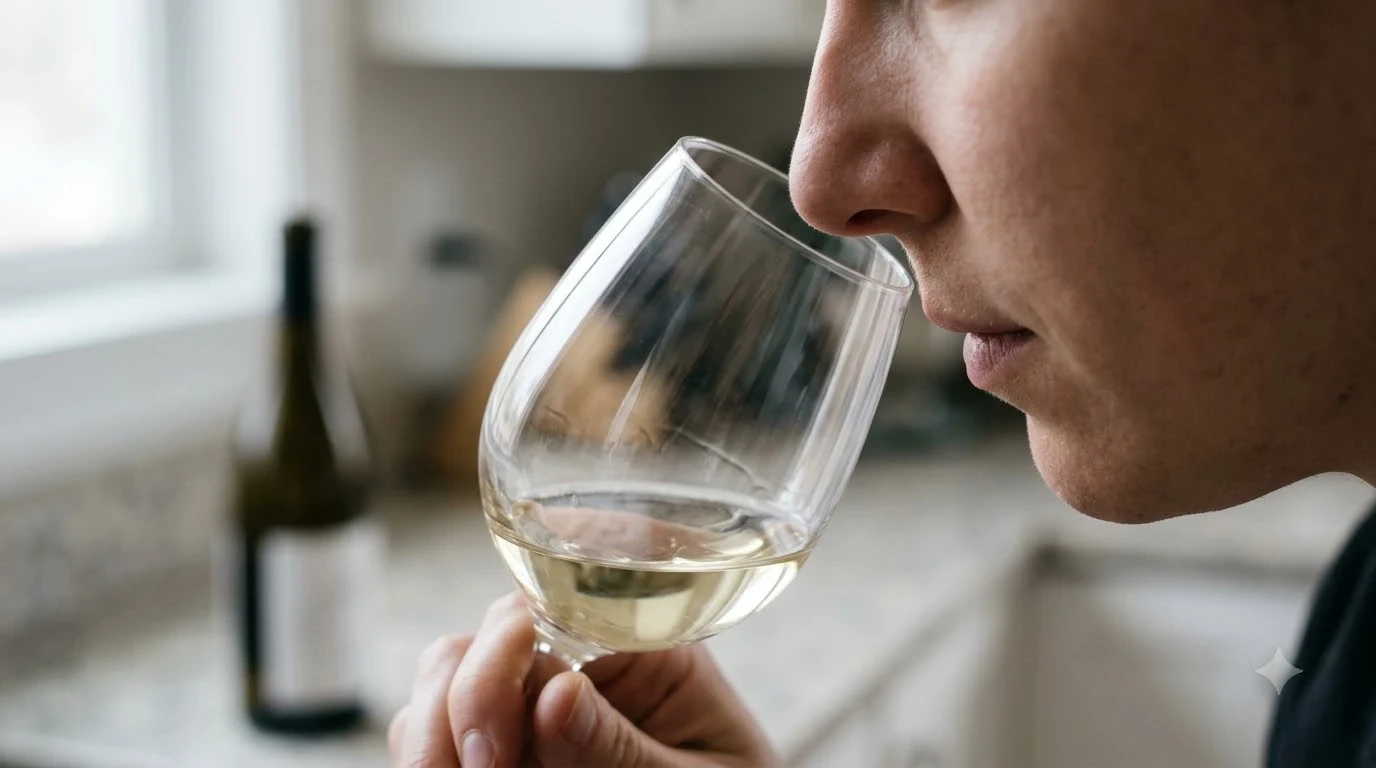
A white wine glass is generally smaller and less open than a typical red wine glass. Wine Enthusiast explains that a narrower bowl and opening help preserve delicate aromas, and that whites generally need less aeration than fuller-bodied reds. The shorter bowl also brings the wine closer to your nose, while a longer stem helps keep your hand away from the chilled liquid.
Look for a bowl that leaves room above the wine rather than one that must be filled nearly to the rim. Clear, uncolored glass lets you see whether a Pinot Grigio is pale straw or an aged Chardonnay has taken on a deeper gold tone. The rim should feel smooth, and the glass should stand securely on its base. A moderate bowl will not show a mature white Burgundy quite like a dedicated Burgundy-style glass, but it gives most dinner wines enough room to express fruit, acidity, and oak.
Match the Bowl to the White Wine Style
Choose the bowl according to the wine’s body and aromatic intensity: narrower for crisp, high-acid whites and wider for rich, textured whites. These are useful preferences rather than rigid rules, and a universal glass remains a sound option when you serve several grapes at one sitting.
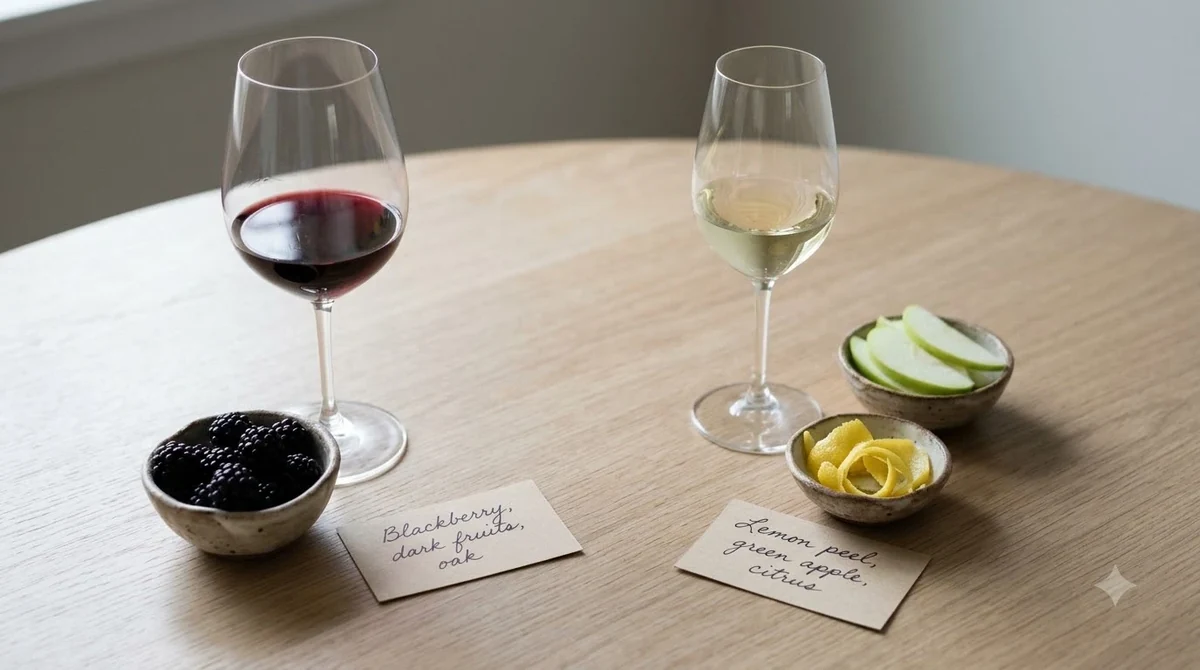
A Riesling or Sauvignon Blanc glass usually has a smaller bowl and tighter opening. This shape keeps delicate floral, citrus, and herbal aromas close to the nose, and suits dry Riesling, Sauvignon Blanc, Grüner Veltliner, and other lively whites. Wine Enthusiast groups Riesling and Sauvignon glasses as the smaller style for high-acid wines, while its Chardonnay/Viognier style has a broader opening for fuller-bodied whites.
Chardonnay, especially an oaked or lees-aged example, can benefit from more space. Choose a moderately wide Chardonnay or white Burgundy glass with a rounded bowl and a rim that still tapers inward. Viognier and some richer Rhône white blends can also work well in this shape. Use the comparison below as a starting point; the serving ranges distinguish lighter whites from fuller-bodied bottles.
| White wine style | Glass shape | Serving temperature | Why it fits |
|---|---|---|---|
| Sauvignon Blanc, Albariño | Small, narrow bowl | 45–50°F | Focuses citrus, herbal, and mineral aromas |
| Dry Riesling, Grüner Veltliner | Small, tapered bowl | 45–50°F | Preserves freshness and aromatic lift |
| Pinot Grigio, unoaked Chardonnay | Medium universal bowl | 45–50°F | Balances freshness with room to swirl |
| Oaked Chardonnay, white Burgundy | Wider Chardonnay bowl | 50–55°F | Gives rich texture and layered aromas more space |
| Viognier, fuller-bodied white blends | Medium-wide bowl | 50–55°F | Allows expressive aromas to develop |
Light whites are usually served at 45–50°F, while fuller-bodied whites are better around 50–55°F. The glass does not replace temperature control: a delicate Sauvignon Blanc in a very wide bowl can lose its crisp impression if it sits on a warm table. Sweetness alone does not require a large glass, either. A lightly sweet Riesling can work in a small aromatic-white glass, while a concentrated dessert wine may suit a smaller dessert-wine stem; see what glass for dessert wine for that separate category.
How Bowl Shape and Rim Affect Aroma
The bowl gives aromas room to collect, and the rim helps direct those aromas toward your nose. For most still whites, the goal is moderate air contact: enough to reveal citrus, stone fruit, flowers, or oak, but not so much that a delicate wine seems faint after a few minutes.
A bowl that curves outward near its base and narrows toward the rim performs two jobs. The wider lower portion gives you space to rotate the wine gently, exposing more surface to air; the narrower opening gathers some released aroma. Decanter describes the inward taper as a way to keep a wine’s aromatic character from escaping too quickly. This basic tulip profile is one reason a conventional white wine glass is more useful than a straight-sided tumbler for focused tasting.
Opening width changes the way a wine is delivered. A narrow mouth limits the area from which aromas disperse and can make crisp whites feel compact and precise; a broader rim lets more aroma reach the nose at once and can make rich Chardonnay seem more expansive. A tiny glass may compress a complex white Burgundy, while a very large red Burgundy bowl can disperse subtle aromas from Picpoul or Pinot Grigio. Decanter notes that the ISO tasting glass has a bowl about 10 centimeters tall and 6.5 centimeters wide at its broadest point, a standardized form useful for comparing wines consistently.
Why Stem Length and Glass Clarity Matter
A stemmed glass is the dependable choice for chilled white wine because it lets you hold the vessel without cupping the bowl. A long stem also makes swirling easier and keeps fingerprints away from the part of the glass where you inspect the wine’s color.
White wine is commonly served below room temperature, so warmth from your hand can matter. Wine Enthusiast points out that white glasses often have longer stems than red glasses for this reason. Hold the stem or base, especially with Sauvignon Blanc at 45–50°F or fuller Chardonnay served around 50–55°F. If a wine is too cold and muted, let it warm gradually in the glass rather than gripping the bowl throughout the meal.
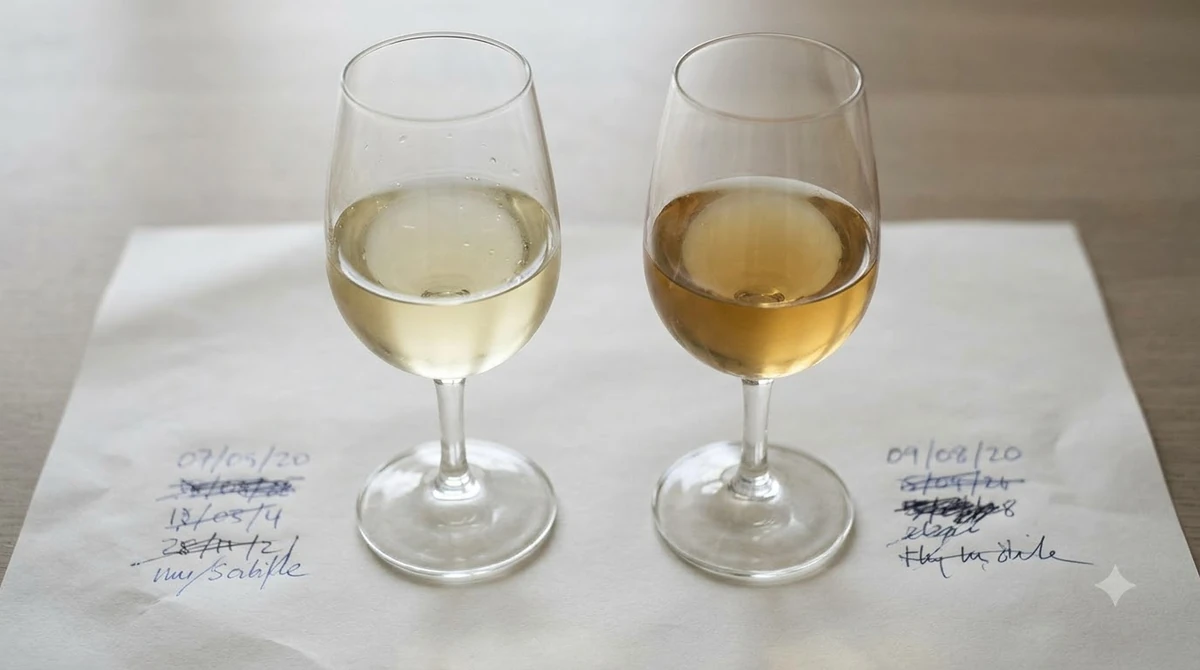
Choose plain, clear glass rather than colored or heavily decorated stemware for tasting. A neutral surface makes it easier to assess color, including the difference between a pale lemon-toned Albariño and a deeper gold Chardonnay. Decanter recommends simple, colorless glasses so the vessel does not obscure the wine’s appearance. Stemless glasses are fine for patios and picnics, but the hand rests against the bowl and warms the wine more quickly. For an outdoor lunch with Pinot Grigio that may be a reasonable compromise; for a slow tasting of aromatic Riesling, a stemmed glass offers better control.
Serve White Wine at the Right Temperature
Temperature has a larger effect on the first impression of white wine than small differences between two good glasses. Serve light-bodied whites at 45–50°F and fuller-bodied whites at 50–55°F; then use the glass to preserve those conditions rather than expecting its shape to correct a warm or overly cold pour.
At the colder end of the range, crisp Sauvignon Blanc or Albariño can feel refreshing, with acidity and citrus notes prominent. If served too cold, however, its aroma may seem closed and its texture muted. Let it sit briefly in the glass and reassess it as it warms. A rich Chardonnay at 50–55°F has more room to show its fruit and texture than one poured ice-cold straight from the refrigerator.
Chill the bottle before serving, and avoid filling glasses so high that the wine warms before the guest reaches the bottom. A modest pour leaves headspace for a gentle swirl; in a warm room, serve smaller pours and return the bottle to an ice bucket between rounds. Food matters too: high-acid Riesling or Sauvignon Blanc suits lemon-dressed seafood, goat cheese, and fresh herbs, while fuller Chardonnay can stand up to roast chicken, butter-based sauces, and grilled corn. Match the wine’s acidity to the dish; an especially sharp vinaigrette can overwhelm a soft, low-acid white.
Tip: Chill the bottle, not the empty glass as your main temperature strategy. Pour a small first serving, keep the bottle cold between pours, and let a too-cold white warm gradually in the bowl.
Universal, Stemless, and Specialty Glasses
You can serve almost every still white wine in a universal wine glass with a medium bowl, gently tapered rim, and stem. Specialty glasses are useful when you regularly drink a particular style, but they are optional rather than a requirement for enjoying Chardonnay, Riesling, or Sauvignon Blanc.
VinePair argues that a home collection can stay simple: a set of all-purpose glasses can serve both red and white wine, with separate flutes reserved for sparkling wine. Its practical point is that a stem keeps hands off the bowl, limiting unwanted warming and making swirling easier. A properly designed universal glass still has a bowl wider below than at the opening, enough capacity to leave headspace, and a rim that gathers aroma. A water tumbler holds wine, but a straight-sided vessel does less to concentrate aroma and can be harder to swirl without spilling.
Consider adding a second shape only when you can name the benefit. If most of your bottles are crisp Sauvignon Blanc, dry Riesling, and Albariño, a small aromatic-white glass may be worthwhile. If you often pour oaked Chardonnay, white Burgundy, or Viognier, a wider Chardonnay bowl can make those wines feel more open. Stemless glasses are easier to store and less likely to tip on a low outdoor table, yet they warm wine faster; choose them for convenience, not for a long tasting of a carefully chilled white Burgundy. A flute preserves a narrow stream of bubbles, but a tulip-shaped sparkling glass or regular white wine glass gives the aromas more room to reach the nose. You do not need to serve every bottle of Champagne in a flute simply because it is sparkling. The vessel should support what you want to notice: persistent bubbles, aromatic detail, or both. For most still-wine drinkers, the universal glass remains the most useful first purchase.
Care, Pouring, and Building a Practical Set
Choose glasses that are easy to clean, store, and replace, because consistency matters more than a complicated collection. Four or six matching universal glasses are a practical starting point for everyday meals; add one specialty white-wine shape later if your drinking habits justify it.
Wash glassware soon after use so traces of dish soap, detergent, or a previous drink do not carry into the next pour. Rinse thoroughly and store glasses where rims are not pressed against hard surfaces. If you use a dishwasher, leave enough room that stems and bowls do not knock together; delicate stemware may be safer when hand-washed. Before serving, look for chips, cracks, or cloudy residue, and dry with a clean lint-free cloth. A chipped rim is uncomfortable, and detergent film can make subtle whites such as Pinot Grigio and Riesling seem less clear aromatically.
Pour a moderate amount rather than filling the bowl. A standard 5-ounce pour from a 750-milliliter bottle yields about five glasses, leaving room for aroma to gather above the wine. At a tasting, pour less so guests can compare several wines; at dinner, top up in smaller amounts from a chilled bottle instead of starting with a nearly full glass that warms before the meal is over. When setting the table for both red and white wine, a dedicated glass for each can make service easier, but it is not mandatory: a universal glass can handle a light Pinot Noir as well as a crisp white, while a larger red-wine bowl gives Cabernet Sauvignon or Syrah more air. For help selecting the companion shape, see what glass for red wine. The useful principle is to scale the bowl to the wine’s body, not to treat every grape as separate equipment. For a broader look at styles, the Wine by Type overview covers still, sparkling, fortified, and sweet wines; the guide to what glass for mead addresses that neighboring category.
Frequently Asked Questions
What are the dimensions of a standard ISO wine-tasting glass?
Decanter describes the benchmark ISO glass as having a bowl about 10 centimeters tall and 6.5 centimeters wide at its broadest point, with a stem around 5 centimeters tall. Those dimensions are intended to make comparative tastings more consistent, not to define the only acceptable glass for a home dinner.
How many white wine glasses should I buy for a small household?
A set of four matching glasses covers many everyday meals for two people and leaves room for a guest or a second pour. A six-glass set is more practical if you often host a dinner for four to six, but you do not need several grape-specific shapes before you know which ones you reach for.
Can Champagne be served in a regular white wine glass?
Yes. A white wine glass gives Champagne more room to release aromas than a very narrow flute, which can make complex notes easier to notice. Use a flute when preserving a fine stream of bubbles is the priority, and a tulip-shaped or white wine glass when aroma is equally important.
Should I use crystal or ordinary glass for white wine?
Either material can work well if the glass is clear, clean, balanced, and comfortable to drink from. Crystal can be made with a particularly fine rim and thin walls, while ordinary glass is often more durable for frequent use; the quality of the design matters more than the label on the material.
Does a different glass really change how the same wine tastes?
It can change how aromas collect and how the wine is delivered, so the same Sauvignon Blanc may seem more focused in a narrow glass and more open in a broader one. The difference is usually a refinement rather than a transformation, and personal preference plays a part in which shape feels best.
The best white wine glass is the one that keeps the wine cool, gathers its aromas, and feels natural to use at the table. Start with a clear, stemmed universal shape, then add a narrower Riesling or Sauvignon Blanc glass or a wider Chardonnay bowl only when your drinking habits make the distinction worthwhile.
More in Wine Types & Grapes
 Zinfandel Sugar Content: Dry Red vs. White Zinfandel GramsUpdated Nov 21, 2026
 Best Zinfandel Substitute Options for Sipping and CookingUpdated Nov 21, 2026
 Zweigelt Food Pairing: Best Dishes, Cheeses, and Serving TipsUpdated Nov 21, 2026
 Zinfandel Tannins Explained: How Structure Shapes Every BottleUpdated Nov 21, 2026
 Zinfandel Sweetness Level: Dry Red vs. Sweet White Zin ExplainedUpdated Nov 21, 2026
 Xinomavro Food Pairing: Best Dishes, Styles, and Serving TipsUpdated Nov 21, 2026