


We may earn a commission when you buy through links on this page, at no extra cost to you. Learn more.
The best vin santo substitute for most recipes is sweet Marsala, used in the same amount, because its dried-fruit, nutty and caramel notes can stand in for Vin Santo in sauces, desserts and baking. Choose Bual or Malmsey Madeira when you want a rounder, richly sweet alternative, or tawny Port when a darker, more caramelized flavor suits the dish. For a no-alcohol version, combine raisin-soaking liquid with grape juice and a little lemon so the replacement brings both dried-fruit flavor and acidity.
The right replacement depends on what the Vin Santo is doing. A splash in biscotti dough is easier to replace than the wine in a zabaglione, a pan sauce or a glass served after dinner. Vin Santo itself varies by producer and denomination: examples made with Trebbiano and Malvasia can show dried apricot, raisin, almond, honey and lively acidity, while sweetness levels are not identical across every bottle. For more styles, browse wine by type.
Sweet Marsala Is the Best All-Purpose Replacement
Sweet Marsala is the most useful first choice for replacing Vin Santo in a recipe: begin with a 1:1 swap, especially for zabaglione, poached fruit, cake batters and pan sauces that benefit from a nutty, dried-fruit profile. Marsala comes from western Sicily, while traditional Vin Santo is associated with several Italian regions, including Tuscany and Umbria.
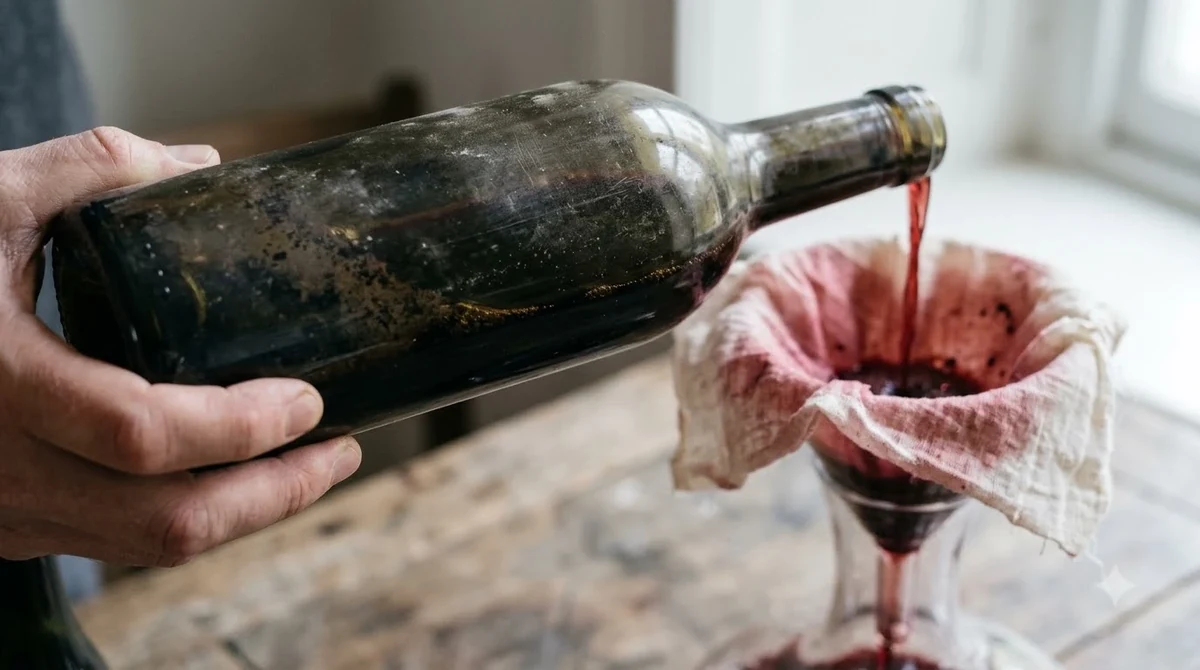
Though made differently, both can show toasted nuts, dried fruit, caramel and spice. Marsala is fortified and generally around 15 to 20 percent alcohol by volume; traditional Vin Santo gets its concentration from dried grapes. Choose a sweet Marsala for desserts because bottles vary in sweetness and savory character.
Look for the sweetness terms on a Marsala label. Dolce is sweet and is the most natural starting point for a dessert; semisecco is semi-dry and can work in a less sweet cake or sauce; secco is dry and is better suited to savory cooking unless you make a deliberate sweetness adjustment. Marsala comes in gold, amber and ruby styles. Gold and amber are generally closer to many Vin Santos; ruby brings red-fruit notes and some tannin.
Marsala’s native Sicilian grapes, fortification and oxidative oak aging give it aromas of nuts, dried fruit, honey, spice and vanilla. These shared flavors make it flexible, though it is not a replica; use less added sugar when the wine is sweet, and add a little lemon only if the finished dish needs lift. Read more in VinePair’s guide to Marsala.
Madeira, Port and Sherry Offer Different Flavor Matches
Madeira, tawny Port and selected Sherry styles can all replace Vin Santo, but each shifts the flavor in a different direction. For a sweet dish, choose Bual or Malmsey Madeira, tawny Port, Cream Sherry or a restrained amount of Pedro Ximénez; for a savory reduction, a drier Madeira or Oloroso may work better.

Madeira for acidity and toasted depth
Madeira is a strong alternative when the recipe needs a concentrated, nutty wine that will remain lively as it cooks down. Its four familiar styles form a useful sweetness ladder: Sercial is dry, Verdelho is medium-dry, Bual (also called Boal) is medium-sweet, and Malmsey (Malvasia) is sweet. For a Vin Santo dessert, start with Bual or Malmsey; for mushrooms, poultry gravy or a savory pan sauce, a dry or medium-dry style may be more appropriate. Madeira’s acidity can keep a reduction from tasting flat, but its signature heated and oxidative notes are more pronounced than in many Vin Santos.
Madeira’s controlled heating and cask maturation create nut, caramel and dried-fruit notes. Bual is medium-sweet and Malvasia is sweet, according to the Madeira tourism guide. Start at 1:1 and adjust the recipe’s sugar; dry Sercial is too lean for a sweet Vin Santo recipe unless you rebalance the dish.
Tawny Port for richer desserts
Tawny Port works especially well with figs, pears, chocolate, toasted nuts and baked fruit. It ages in wood with oxygen exposure, which develops a tawny color and secondary nutty flavors. The 10-, 20-, 30- and over-40-year age categories describe the style of the final blend rather than a simple promise that every component spent exactly that number of years in cask. Compared with Vin Santo, tawny Port often has more body, deeper caramel character and a heavier impression of sweetness.
Begin with the same volume of tawny Port, but reduce other sweeteners when a dessert already contains sugar, honey or dried fruit. Its dark-fruit profile can dominate a delicate custard. Ruby Port is usually less suitable because it emphasizes fresh red and black fruit rather than tawny’s oxidative, nutty notes.
Sherry for raisin, walnut and caramel notes
Cream Sherry is the easiest Sherry style to use in sweet recipes because it blends oxidative Oloroso with a naturally sweet component such as Pedro Ximénez. It brings a rounded texture and aromas reminiscent of roasted nuts, nougat and caramel. Use it at 1:1 in fruit desserts, ice-cream sauces and cakes, then taste before adding extra sugar.
Pedro Ximénez (PX) is much sweeter and thicker. Made from sun-dried grapes, it carries raisin, fig, date, honey and dark-chocolate notes, with more than 212 grams of sugar per liter. Start with half the Vin Santo amount and make up the missing liquid with water or juice. Oloroso is the opposite: a dry, full-bodied Palomino Sherry aged with oxygen, better for savory sauces than sweet desserts.
Match the Substitute to the Recipe
The table gives practical starting amounts for a recipe that calls for 1/4 cup (4 tablespoons) of Vin Santo; the amounts are kitchen starting points, not fixed rules for every bottle.
| Replacement | Starting amount for 1/4 cup Vin Santo | Best uses | What to adjust |
|---|---|---|---|
| Sweet Marsala | 1/4 cup | Zabaglione, cake, poached pears, pan sauce | Reduce added sugar if the Marsala is very sweet |
| Bual or Malmsey Madeira | 1/4 cup | Almond cake, custard, baked fruit, cheese sauce | Use Bual for balance; Malmsey for a sweeter result |
| Tawny Port | 1/4 cup | Figs, pears, chocolate, nut desserts | Cut other sweeteners slightly |
| Cream Sherry | 1/4 cup | Fruit sauces, pound cake, ice cream | Check sweetness before adding sugar |
| Pedro Ximénez | 2 tablespoons, plus 2 tablespoons water or juice | Raisin-heavy puddings, glazes, chocolate sauces | Dilute its intense sweetness |
| Raisin infusion | 3 tablespoons infusion plus 1 tablespoon grape juice | Biscotti, quick breads, fruit cake | Add lemon a few drops at a time |
For zabaglione, choose sweet Marsala or Bual Madeira. Whisk the wine with egg yolks and sugar over gentle heat until pale, thick and able to hold soft ribbons; timing depends on the bowl and batch size.
For biscotti, cantucci and firm cookies, a modest flavor difference is easy to hide: use sweet Marsala, tawny Port or raisin infusion. If dough is too soft, add flour a tablespoon at a time. For cakes and quick breads, keep the replacement liquid close to the original volume so the crumb and baking time remain predictable.
For poached pears, figs or apples, Marsala and tawny Port reinforce the fruit. Dry Madeira or Oloroso suits a savory pan sauce with mushrooms or poultry. Reduce over moderate heat and taste as the liquid concentrates; a sauce can become sweeter and saltier as it cooks.
Alcohol-Free Replacements for Baking and Sauces
A raisin infusion is the closest practical alcohol-free direction because it supplies the dried-grape flavor that defines many Vin Santos. Combine it with unsweetened grape juice for body and a little lemon juice for brightness; for a cake or biscotti, use the mixture in the same total volume as the wine the recipe calls for.
To make a simple raisin infusion, place 1/4 cup of golden or dark raisins in 1/2 cup of just-boiled water and let them steep for 20 to 30 minutes. Mash the raisins lightly, strain the liquid, and cool it before measuring. Start with 3 tablespoons of the infusion and 1 tablespoon of white or red grape juice for each 1/4 cup of Vin Santo. Add 1/4 teaspoon of lemon juice, taste, and add a few drops more only if the mixture seems flat. The infusion provides dried-fruit flavor, not alcohol or barrel-aged complexity.
Without raisins, combine 3 tablespoons white grape juice, 1 tablespoon cooled black tea and 1/4 teaspoon lemon juice for 1/4 cup of replacement liquid. Tea adds a restrained drying sensation; lemon stops the juice tasting like candy. Use unsweetened juice, or reduce the recipe’s sugar if the juice is sweetened.
For savory dishes, dilute unsweetened grape juice with water or vegetable stock, then add wine vinegar or lemon a few drops at a time. Stock adds savory depth and acid balances sweetness. Do not replace wine with straight vinegar; the result would be sharply sour.
Tip: For a nonalcoholic substitute in a dessert, start with 3 tablespoons of raisin infusion, 1 tablespoon of grape juice and 1/4 teaspoon of lemon juice per 1/4 cup of Vin Santo. This preserves the dried-fruit direction while keeping the mixture from becoming one-dimensional.
Adjust Sweetness, Acidity and Cooking Technique
Use the substitute’s sweetness and acidity to decide what needs changing, rather than adding sugar automatically. A dessert wine should be at least as sweet as the dessert it accompanies, while a sauce needs enough acidity to balance rich ingredients and concentrated fruit.
Identify the recipe’s other sweeteners first. Honey, brown sugar, dates, raisins or sweetened fruit may call for semisecco Marsala or Bual Madeira; a lightly sweet custard may suit sweet Marsala or Malmsey. Treat Pedro Ximénez as a concentrate: begin with half the wine volume and replace the rest with another liquid.
Next, check the recipe’s acidity. A reduction with butter, cream or roasted fruit can taste heavy if the wine has very little freshness. Madeira can provide a sharper edge, while lemon juice or a mild wine vinegar can brighten an alcohol-free mixture. Add acid in small increments: for a 1/4-cup replacement, begin with 1/4 teaspoon of lemon juice, stir, and taste. You can add more, but it is difficult to undo excessive sourness.
Cooking method matters. Alcohol evaporates at different rates depending on pan width, heat and time, so a quick simmer does not remove it all. In a reducing sauce, flavor and sugar concentrate as liquid evaporates; begin with less sweetener and adjust at the end. In a cake, the wine also contributes moisture and crumb texture.
Color and aroma matter too: tawny Port and PX can darken custard, while sweet Marsala and pale Madeira are easier to use when appearance matters. For delicate dishes, add half the replacement first and build up only if the flavor stays balanced.
Choose a Substitute for Sipping and Serving
When the wine is meant to be poured beside dessert rather than cooked into it, prioritize balance and finish over a recipe’s liquid measurement. A glass of Vin Santo often accompanies cantucci, almond cookies, blue cheese or a simple pastry, so look for a sweet wine with enough acidity to keep the pairing fresh.
For a similar Italian style, try a sweet passito made from dried grapes. Late-harvest Riesling offers more citrus and floral lift; Moscato is lighter and more grapey; Sauternes brings honeyed richness but less nuttiness. Choose based on whether dried fruit, honey, acidity or body matters most.
For a darker glass, tawny Port or PX Sherry can accompany blue cheese, walnuts, figs and dark chocolate. PX is exceptionally sweet, so pair it with a less-sweet dessert or serve a small pour alone; Cream Sherry is more moderate with fruit tarts and ice cream. Sherry Wines recommends serving PX slightly chilled, around 54 to 57°F.
Serve each wine according to its style. Tenuta Trecciano lists 18 to 20°C (64 to 68°F) for its Vin Santo del Chianti, although other producers may suggest a cooler pour. Read our notes on how to serve Vin Santo and whether Vin Santo should be chilled. A small tulip-shaped glass helps concentrate aromas.
After opening, keep the bottle sealed and store it according to style. Madeira and many Sherries tend to keep longer than ordinary table wine, but storage and air in the bottle still matter. For Vin Santo, see how long Vin Santo lasts after opening; compare wine categories before choosing a bottle for another dessert or cheese course.
Frequently Asked Questions
Vin Santo has a long Italian history, but its name and regional variations can cause confusion. These five details cover terms and styles that are useful to recognize alongside bottles from Tuscany, Umbria and other Italian regions.
What does Vin Santo mean?
Vin Santo is commonly translated as “holy wine.” The historical explanation links the name with religious use and the Catholic Mass, although the precise origin of the term is disputed and several historical theories exist.
Is Greek Vinsanto the same as Italian Vin Santo?
No. Santorini Vinsanto is a distinct Greek dessert wine, not the Italian wine made in places such as Tuscany and Umbria. The similar names reflect different regional traditions, so a bottle from Santorini should not be assumed to taste like Tuscan Vin Santo.
What is Occhio di Pernice?
Occhio di Pernice, or “eye of the partridge,” is a rarer rosé-colored style of Vin Santo. It is made with red grapes, often including Sangiovese, rather than following the familiar white-grape profile.
What does Riserva mean on a Vin Santo label?
For Vin Santo, the Riserva designation indicates a longer minimum aging period than the standard bottling. Wine Enthusiast explains that the term means the wine has been aged for at least four years, although individual producers may age their wines longer.
Is every Vin Santo made without added spirit?
No. Most traditional Vin Santo is associated with dried-grape concentration and long aging, but a style labeled Vin Santo liquoroso is fortified with grape spirit. That added spirit changes the wine’s alcohol level and can make it a less direct replacement in a delicate recipe.
For most cooking, sweet Marsala is the dependable first swap, while Madeira, tawny Port and Sherry let you tune the result toward freshness, caramel or raisin richness. Match the wine to the role it plays in the recipe, begin with the measurements above, and adjust sweetness and acidity only after tasting the finished balance.
More in Wine Types & Grapes
 Zinfandel Sugar Content: Dry Red vs. White Zinfandel GramsUpdated Nov 21, 2026
 Best Zinfandel Substitute Options for Sipping and CookingUpdated Nov 21, 2026
 Zweigelt Food Pairing: Best Dishes, Cheeses, and Serving TipsUpdated Nov 21, 2026
 Zinfandel Tannins Explained: How Structure Shapes Every BottleUpdated Nov 21, 2026
 Zinfandel Sweetness Level: Dry Red vs. Sweet White Zin ExplainedUpdated Nov 21, 2026
 Xinomavro Food Pairing: Best Dishes, Styles, and Serving TipsUpdated Nov 21, 2026