

We may earn a commission when you buy through links on this page, at no extra cost to you. Learn more.
For a first look at slovenia vineyards, start with the three distinct wine regions—Podravje, Posavje, and Primorska—and explore their different climates, landscapes, and signature grapes. The country’s compact size hides a wide range of vineyard landscapes, from cool northeastern terraces to Mediterranean-influenced slopes near the Adriatic. This guide explains where the main wine districts sit, which local wines to seek out, and how to plan a visit without confusing Slovenia’s neighboring appellations.
Between the Alps, the Pannonian Plain, and the Adriatic, Slovenia has varied vineyard conditions. White grapes predominate, alongside distinctive reds, sparkling wines, sweet specialties, and local blends. The three-region structure makes a tasting list or road trip easier to plan.
How Slovenia’s vineyard regions fit together
Slovenia’s vineyards are organized into three winegrowing regions and nine districts: Podravje in the northeast, Posavje in the southeast, and Primorska in the southwest. This structure is the simplest way to read a Slovenian wine label or decide which landscape to explore.
The national picture is substantial for a small country. Slovenia’s Ministry of Agriculture reports approximately 17,500 hectares of cultivated vineyards, with nearly 14,900 hectares registered for the marketing of grapes and wine. It also records 28,000 agricultural holdings that cultivate vines and more than 2,500 registered producers who bottle wine. The ministry gives a typical annual production range of 800,000 to 900,000 hectoliters, although harvest size changes with weather. These numbers describe an industry that includes many small growers as well as larger cellars; they do not mean that every holding operates as a commercial winery.
White varieties prevail among the country’s 60 grape varieties, and the ministry says up to 70 percent of production consists of quality wines with a geographical indication. Many sites occupy steep slopes and terraces, where hand labor remains important. The broader Wine Regions resource explains how origin designations help readers interpret regional wines elsewhere, too.
| Measure | Slovenia | What it tells you |
|---|---|---|
| Cultivated vineyard area | About 17,500 hectares | The approximate national vineyard footprint |
| Area registered for grape and wine marketing | Nearly 14,900 hectares | The registered commercial area |
| Grape varieties | 60 | A broad mix, with white grapes predominant |
| Annual wine production | 800,000–900,000 hectoliters | A typical reported range, not a fixed annual output |
| Registered bottling producers | More than 2,500 | A highly varied producer base |
Use the regions as guides, not guarantees of flavor. Elevation, aspect, soil, harvest choices, and cellar decisions can make two wines from one district quite different, especially in Primorska’s four distinct districts. For a buyer, the district name narrows the likely style, while the grape and producer explain the bottle more precisely. A local wine list may spell grape names in Slovenian, Italian, or their international form, so recognizing equivalents such as Rebula and Ribolla Gialla makes regional comparisons easier.
Podravje: aromatic whites on northeastern slopes
Podravje is Slovenia’s northeastern wine region, with two districts and a strong emphasis on aromatic, fresh white wines. Its best-known vineyard landscapes cluster around Štajerska Slovenija, including Ljutomer, Jeruzalem, Ormož, and Svečina, while Prekmurje sits farther east across the Mura River.
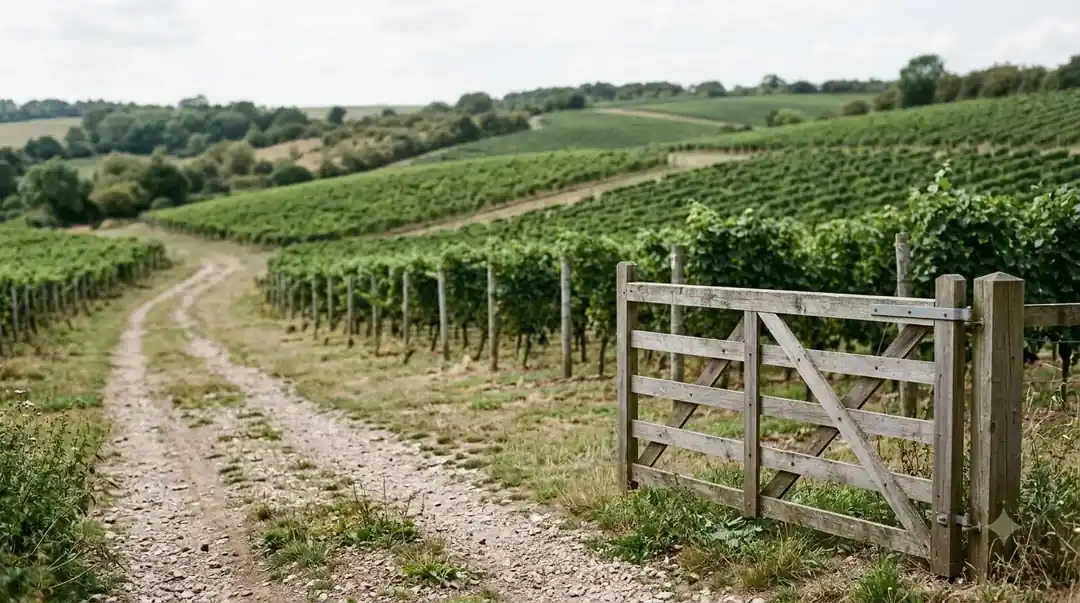
Štajerska Slovenija is the country’s largest winegrowing district, covering about 5,400 hectares according to the Ministry of Agriculture. The Pohorje Hills bring cooler air from the west, while the Pannonian Plain contributes warmer continental influence from the east. Vineyards climb rolling hills and steep slopes, often shaped into terraces. Sandy clay, marl, and limestone soils support grapes such as Furmint, Sauvignon Blanc, Riesling, Pinot Gris, Gelber Muskateller, Traminer, and Chardonnay. Furmint is known locally as Šipon, and it is a particularly useful variety to remember when exploring this region.
Prekmurje is smaller, with approximately 440 hectares in the ministry’s regional description. It is somewhat warmer and associated with Blaufränkisch as well as aromatic whites. Gornja Radgona adds a long sparkling-wine tradition, with more than 150 years of production. Maribor and Ptuj bring historic wine culture to the itinerary, while Ljutomer and Ormož are useful bases for exploring vineyards. Wines from Štajerska can range from brisk dry whites to botrytized and ice-wine bottlings made from Furmint or Welschriesling. For a cool-climate comparison abroad, see Tasmania vineyards; the local grapes and traditions in Podravje remain distinctly Slovenian.
Posavje: Cviček and small-scale family cellars
Posavje is Slovenia’s smallest wine region and lies in the southeast, where three districts—Dolenjska, Bela Krajina, and Bizeljsko-Sremič—make a varied patchwork of vineyards. It is the region to know for Cviček, traditional family winemaking, and distinctive cellar landscapes.
Dolenjska covers about 1,350 hectares in the Ministry of Agriculture’s figures and is best known for Cviček, a light reddish wine with a geographical indication. Unlike a single-variety red, Cviček is made by blending red and white grape varieties. Its light body and relatively low alcohol make it a different proposition from the fuller reds associated with warmer Primorska. The style is tied closely to Dolenjska’s local identity, and it is a useful choice for readers who want to understand a wine that cannot be described simply by naming one grape.
Bela Krajina, on the southern side of the Gorjanci Hills, has roughly 300 hectares in the ministry’s profile. Day-to-night temperature differences help preserve freshness in aromatic wines, and Blaufränkisch and Gelber Muskateller are recognized grapes. Bizeljsko-Sremič has about 700 hectares and Pannonian continental conditions; its vineyards often sit 200–400 meters above sea level, and red and white Bizeljčan wines share the district with Blaufränkisch. Its repnice are cellars hand-dug into sand, a distinctive part of the landscape. Rumeni Plavec, a local white grape with high acidity, is used in blends and sparkling wines.
Choose Posavje when local foodways and family cellars matter as much as a particular grape. Cool conditions also support sparkling wines based on Rumeni Plavec, Chardonnay, and Pinot Noir. For a comparison with a better-known Italian appellation, our Chianti Classico vineyards article offers a different regional model.
Primorska: Mediterranean grapes, Brda hills, and Karst soil
Primorska is Slovenia’s warmest wine region, in the southwest near the Adriatic, and it contains four districts: Vipava Valley, Goriška Brda, the Karst, and Slovenian Istria. It is the best region to explore for Mediterranean-influenced whites, fuller reds, indigenous grapes, and the country’s best-known orange-wine tradition.
The Karst district has around 560 hectares and is closely associated with Teran, a deep-colored red made from Refošk (Refosco) grown in iron-rich terra rossa soil. Vipava Valley extends across about 2,100 hectares, where cool Alpine air meets warm winds from the Gulf of Trieste. Its flysch soils suit local grapes Zelen and Pinela; Merlot is widespread, and white blends may include Malvasia and Ribolla Gialla. Tasting more than one producer helps show the variation across the long valley.
Goriška Brda has approximately 1,800 hectares on hills near the Italian border. Vineyards range from roughly 80 to 400 meters above sea level, and the Adriatic is about 20 kilometers away. Ribolla Gialla, called Rebula locally, occupies more than a quarter of the district’s vineyard area and is bottled alone or blended with Chardonnay; Merlot and Cabernet varieties feature in red blends. Cooling air from the Alps and warm air from the Gulf of Trieste shape the local conditions. Slovenia’s wine tourism information links Brda, Vipava, the Karst, and Istria by wine roads, but these remain four distinct districts.
Slovenian Istria has around 1,850 hectares and is the warmest Primorska district. Its mostly flysch soils and maritime setting favor Refošk and Malvasia, often spelled Malvazija locally. These are natural choices for a coastal tasting and Mediterranean food.
Slovenian grapes and wine styles worth seeking out
The most rewarding Slovenian tasting usually combines familiar grapes with varieties that are harder to find elsewhere. Furmint, Rebula, Zelen, Pinela, and Žametovka help show the country’s local character, while Sauvignon Blanc, Chardonnay, Merlot, and Cabernet Sauvignon provide useful reference points.
Start in Podravje with Furmint/Šipon, Sauvignon Blanc, Riesling, or Gelber Muskateller. These grapes can make fresh aromatic whites, while Furmint and Welschriesling are also used for botrytized and ice-wine styles. Gornja Radgona is the region’s sparkling-wine reference point. In Posavje, taste Cviček for its red-and-white blend tradition, then look for Blaufränkisch or sparkling wines that include Rumeni Plavec.
In Primorska, compare Rebula from Brda, Zelen or Pinela from Vipava, Teran from the Karst, and Malvazija from Slovenian Istria. The flight moves from a signature local white to lesser-known indigenous grapes, then to a distinctive red and a coastal white. Food can clarify the differences: high-acid Sauvignon Blanc and Riesling suit dishes with freshness, while salt and fat soften tannin. A wine served with dessert should be at least as sweet as the dish. Chili heat is amplified by alcohol and tannin, and oily fish tends to clash with tannic reds.
Serve light whites and rosé at 45–50°F, fuller whites at 50–55°F, and light reds at 55–60°F; fuller reds are generally better at 60–65°F. Sweet whites are best around 43–50°F. A standard tasting pour is about 5 ounces, and a 750-milliliter bottle holds roughly five such glasses.
Tip: For a first Slovenian tasting, choose one wine from each major region rather than several bottles from only one area: a Podravje Furmint, a Posavje Cviček, and a Primorska Rebula or Teran will show three clearly different regional identities.
How to plan a Slovenia vineyard visit
Build a vineyard trip around one region at a time, because the districts are spread across different landscapes and each deserves more than a rushed stop. For a first visit, choose between the terraced hills around Jeruzalem and Ljutomer, the family-wine culture of Dolenjska, or the four-district variety of Primorska.
In Podravje, use Maribor, Ptuj, or the Ljutomer–Ormož area as a base; Gornja Radgona suits sparkling-wine fans, while Jeruzalem is known for terraced scenery. In Posavje, plan a slower route through Dolenjska and Bizeljsko-Sremič for Cviček and the repnice caves. In Primorska, choose between Slovenian Istria’s coastal wines, Karst reds, Vipava’s indigenous whites, and Brda’s Rebula rather than rushing through all four districts in one day.
Contact wineries before setting out. Small producers may have limited tasting hours, and an appointment creates time to ask which district the grapes come from, whether a wine is a blend, and how local conditions shaped it. These questions help explain why Zelen from Vipava can differ markedly from Sauvignon Blanc in Podravje.
Expect hills and terraces, not continuous flat vineyard paths. Regional sources describe dry farming and substantial manual work as common features, so shoes with good grip are practical. A designated driver or arranged transport is sensible when tastings are part of the day, and visitors should confirm whether a producer is receiving guests during harvest or cellar work.
For broader itinerary planning, the national wine-region overview at I Feel Slovenia’s wine guide outlines the three regions and their best-known districts. For production figures and official regional descriptions, consult the Ministry’s Slovenian wines overview. Both are useful companions to a producer’s own visit information, which should determine tasting availability and appointment details.
Frequently Asked Questions
These quick answers cover vineyard heritage and seasonal customs that add context to the region-by-region guide. They include Maribor’s living vine, rural vineyard cottages, and celebrations tied to the wine calendar.
Where can visitors see Slovenia’s famous Old Vine?
The Old Vine grows in Maribor, in the Podravje region, and is more than 450 years old. It is still bearing fruit, and cuttings have been presented as diplomatic gifts, making it a living symbol of Slovenian wine culture.
When does the grape harvest usually take place in Slovenia?
The harvest season generally runs from late August to early October. Exact picking dates vary by region, grape variety, and weather, so the calendar is a broad guide rather than a fixed schedule for every vineyard.
What is Martinovanje in Slovenia?
Martinovanje is a major wine and food celebration held around November 11, St. Martin’s Day. A traditional table may include roast goose, red cabbage, and mlinci, and folk belief marks the occasion as the moment when must becomes wine.
Are there traditional vineyard cottages in Slovenia?
Yes. Vineyard cottages are a familiar feature of the countryside, especially in areas where small family holdings have shaped the landscape. They reflect the social side of viticulture, where a vineyard could be both a source of wine and a place for gatherings.
How long has winegrowing been part of Slovenian life?
Grapevines have been cultivated in Slovenia for more than two thousand years. The tradition continued through the Middle Ages, when vineyards around Ljubljana and on nearby hills were managed by nobles, monasteries, and city authorities.
Slovenia’s vineyard regions reward a curious, regional approach: taste Podravje for aromatic whites, Posavje for Cviček and local traditions, and Primorska for Mediterranean varieties and distinctive reds. Start with one district, speak with its producers, and let the next bottle guide the rest of the journey.
More in Wine Regions
 Willcox Wine Trail: Discover Arizona’s High-Elevation Wine CountryUpdated Nov 20, 2026
 Yakima Valley Wine Region: Find the Best Styles to TryUpdated Nov 20, 2026
 Vosne Romanee Wine Tasting: Identify Aromas and Choose Better PairingsUpdated Nov 20, 2026
 Yakima Valley Wine Festival: Find the Best Seasonal Wine EventsUpdated Nov 20, 2026
 Wales Vineyards: Discover Cool-Climate Wines and Where to VisitUpdated Nov 20, 2026
 Yountville Wine Festival: Discover Napa Wines and Local FoodUpdated Nov 20, 2026