

We may earn a commission when you buy through links on this page, at no extra cost to you. Learn more.
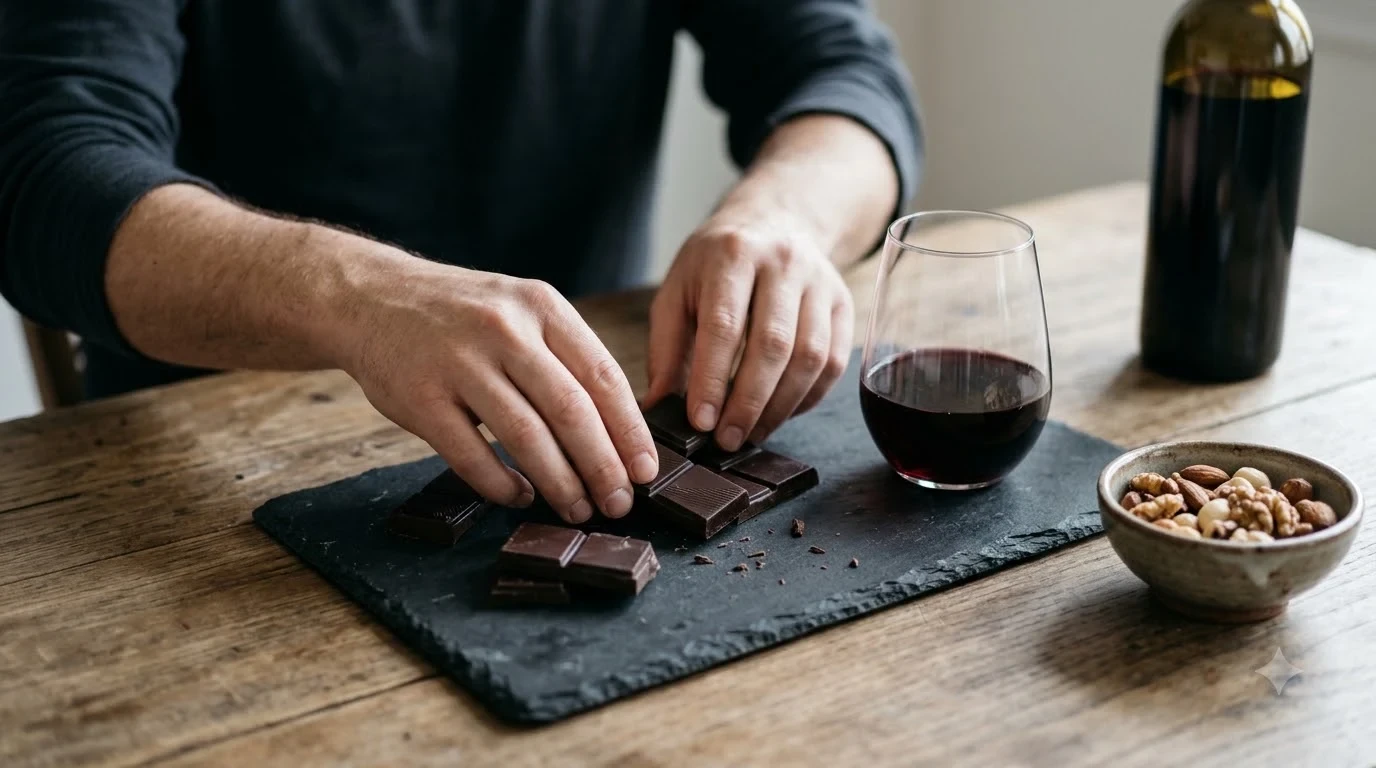
Pairing cabernet sauvignon with chocolate works best with bittersweet dark chocolate around 70% cacao or higher, served beside a fruit-forward bottle that is at least as bold as the bar. Milk and white chocolate usually call for a different wine, because their extra sugar and cream clash with the firm tannins in a young cabernet. The pairing succeeds when tannin, sweetness and intensity stay in balance, and it fails when one side overwhelms the other. The sections below explain each factor and give a practical shortlist of chocolate styles and bottle types.
Wine and chocolate appear together on many holiday and Valentine’s Day tables, yet the cabernet version of the pairing is one of the more demanding combinations to get right. Both carry tannin, both can taste bitter, and both can turn a glass of red sour when the balance slips. Experienced tasters usually treat the match as a question of weight, sweetness and texture rather than a fixed rule. Once you understand those three levers, you can predict whether a given bar and bottle will cooperate, and you can adjust your choice before guests arrive.
Why Cabernet Sauvignon and Chocolate Are Hard to Match
Cabernet sauvignon is one of the most structured red wines, and chocolate brings structure of its own. When two bitter, dry components meet, the wine can lose its fruit and the chocolate can lose its sweetness, so the result feels thinner and harsher than either item alone.
Cabernet sauvignon is known for firm tannin, the compound that comes from grape skins, seeds and stems and gives red wine its drying grip. Chowhound notes that cabernet sauvignon carries higher tannin levels than many other reds, and that higher alcohol can make a wine taste even bolder. That structure works well beside grilled beef, but it becomes a liability when the second half of the pair is also bitter.
Chocolate is not free of tannin either. VinePair’s breakdown of wine and chocolate notes that chocolate contains tannins too, with darker bars holding more and some reaching double-digit percentages, which is why a tannic red can clash with a tannin-rich truffle. Wine Folly describes the same effect from the wine side: a dry red poured next to a hunk of dark chocolate often starts to taste bitter and sour. Neither component is faulty on its own. The issue is that two drying, bitter elements amplify each other.
Most failed pairings come down to this stacking effect. Tannin in the wine grips the palate, the cocoa solids in the chocolate add their own grip, and the combined finish feels more astringent than either item does by itself. The fix is rarely to abandon cabernet entirely. It is more often to change the chocolate, the wine style, or both.
The Tannin Problem and How Fat Softens It
Fat is the tool that most consistently softens tannin, and it explains why some bites work while others feel harsh.
Chocolate’s cocoa butter coats the mouth. Chowhound makes this point directly: the fat in chocolate can smooth out the intensity of bitter tannins in wine. That is why a smooth, rich truffle often works better with a cabernet than a thin, bitter bar with the same cocoa percentage. The effect is strongest when the chocolate melts slowly on the tongue while the wine is still present, so take a small bite, let it soften, and then sip. Salt works in a similar way, because it softens the perception of bitterness and makes tannin feel less severe.
Why Intensity Decides the Outcome
Dark chocolate in the 80% range and above is the hardest category to match. VinePair advises that the more intense the chocolate, the more intense the wine should be, and it warns that sweet, fruity styles will not hold up against it. For super-dark bars, the same guide suggests a fortified wine such as Port, because its concentrated sweetness can stand up to high cacao. Cabernet can still work at that level, but only with a bold, structured bottle, since a light, delicate red will be overwhelmed.
What the Bite Feels Like
Tasting Table describes the usual failure in vivid terms: a bitter chocolate paired with an equally tannic red can feel like rubbing your tongue on sandpaper. That sensation is useful as a diagnostic. If the wine leaves a chalky, drying finish that lingers after the chocolate has melted, the balance is off, and the next move is a fruitier or sweeter bottle rather than a second bite.
Sweetness Comes First: Matching the Wine to the Chocolate
The working rule is that the wine should be at least as sweet as the chocolate, and milk chocolate needs more sweetness than dark.
Sweetness is the rule that most guides agree on. A dry wine beside a sugar-rich dessert tastes thin, and sometimes sour. Tasting Table makes the point directly: when the wine is less sweet than the food, the contrast makes the wine taste more bitter. That is why a cabernet that works with a 70% bar can fall apart next to a milk chocolate brownie.
The same guide notes that dark chocolate tolerates a little less sweetness from the wine than milk or white chocolate does. That gives a dry cabernet a realistic chance with bitter dark chocolate but not with sweeter bars. Sweeter chocolates call for wines with more sugar, such as Pedro Ximenez or a raisined dessert wine like Vin Santo or Recioto della Valpolicella. These wines carry concentrated sweetness that softens bitterness rather than competing with it.
If you want a deeper walkthrough of how sweetness and acidity interact in these matches, Tasting Table’s wine and chocolate guide lays out the principle with additional examples, including pairings for white chocolate and high-acid bars. Use the principle as your filter, then let your own palate make the final call.
Chocolate Styles and Their Cabernet Fit
The chocolate type drives most outcomes, so identify its cocoa content and sweetness before choosing the bottle.
| Chocolate style | Cocoa and sugar profile | Cabernet sauvignon fit |
|---|---|---|
| Milk chocolate | About half cocoa and half cream; sweeter and lower in tannin | Weak; choose a sweet red such as Brachetto d’Acqui |
| Dark chocolate, around 70% | Balanced bitterness with enough tannin to meet a bold red | Strong; pick a fruit-forward bottle with ripe structure |
| Intense dark chocolate, 80% and up | Heavy bitterness and high tannin | Possible only with a bold, structured bottle; light or sweet styles get overwhelmed |
| White chocolate | At least 20% cocoa butter; rich and fatty | Poor; pair with rosé, riesling or Moscato d’Asti instead |
Milk chocolate is roughly half chocolate and half cream, according to Wine Folly, which gives it a creamy texture and a sweeter, lower-tannin profile. Those traits make it a poor partner for a firm cabernet, which tastes bitter beside it. For milk bars, reach for a sweet red such as Brachetto d’Acqui or a late-harvest red instead of a dry bottle.
White chocolate sits in a different category. The FDA’s minimum for white chocolate is 20% cocoa butter, and that high fat content calls for acidity to cut through the richness. Tasting Table suggests rosé, riesling, late-harvest gewürztraminer, Sauternes, Moscato d’Asti or ice wine. Wine Folly is more open to Pinot Noir here, calling it a surprisingly good match. Cabernet is not on either list, and a tannic red clashes with the creamy sweetness of white chocolate.
The middle ground is a dark bar around 70%. This is where cabernet is most likely to work, because the bitterness is strong enough to meet a bold red without overwhelming it. Choose bars with clean cocoa flavor and light add-ins, and taste the bar before pouring, since its character sets the baseline for every glass that follows.
Tip: Before you pour, bite a square of the chocolate and then sip a small amount of the wine. If the wine suddenly tastes sharper and drier than it did on its own, the bar is too bitter for that bottle, so move to a fruitier or sweeter red before serving.
Which Cabernet Sauvignon Styles Handle Chocolate Best
Riper, warm-climate bottles with generous fruit and softer structure usually handle chocolate more gracefully than lean, cool-climate examples.
Tasting Table notes that cabernet sauvignon, along with zinfandel, malbec, merlot and shiraz, is easier to match with dark chocolate when it comes from warm climates, where the fruit ripens fully and develops sugar. That ripe fruit gives the wine a softer edge to meet bitterness. Leaner, cooler-climate bottles tend to show sharper acidity and firmer tannin, which makes them more likely to clash with a bitter bar.
Sommelier Ricardo Cubias, quoted by Chowhound, says the red should be as bold as or bolder than the chocolate, and he names Paso Robles zinfandel or Santa Ynez cabernet sauvignon as examples. He also warns that very tannic young reds, such as a young syrah, can taste harsh beside dark chocolate, so bold does not mean austere. The target is a fruit-forward bottle with enough body to match the bar and tannin that feels ripe rather than drying.
If you want a more forgiving option than a dry cabernet, value red blends with some residual sugar can work well with darker chocolate. Wine Folly points out that many value reds carry roughly 10 to 60 grams per liter of residual sugar, which helps them handle bitterness. Check the producer’s sweetness information on the label or website, and expect a rounder, softer profile than a dry, oak-driven cabernet.
Serving Temperature, Decanting and Pour Planning
Serve the cabernet in the full-red range and give young bottles time to open before the chocolate comes out.
Full-bodied reds show best at 60 to 65 F, a touch cooler than a typical warm room. At that temperature the fruit lifts and the tannin feels less aggressive, which helps the pairing. Serving the wine too warm makes alcohol read as heat and the bottle taste heavier, while serving it too cold makes the tannin feel more severe than it is.
Young full reds benefit from decanting for 30 to 60 minutes. Air softens the sharper edges of tannin and brings the fruit forward, which matters even more when chocolate is on the table. For timing on a particular bottle, see how long to decant cabernet sauvignon.
Plan the tasting so the wine is poured in small amounts. Serve one chocolate at a time, let guests reset with a sip of water between bites, and keep the pace unhurried. Store unopened bottles on their side in a cool, dark spot near 55 F while they wait for the event, and review how long does cabernet sauvignon last unopened if you are buying ahead.
Flavored Chocolate: Nuts, Fruit, Sea Salt and Caramel
Add-ins often shape the match as much as the cocoa, so the flavor in the filling can decide which cabernet fits.
Tasting Table notes that nutty add-ins bring earthiness and extra sweetness when they are caramelized, and that Pedro Ximenez Sherry suits nutty chocolates because it adds its own nutty, sweet character. A bar with roasted nuts and a moderately bittersweet shell is a sensible test for a cabernet, while heavy caramel pushes the match toward sweeter, richer wines.
Fruit fillings change the picture in a different way. Tasting Table suggests raspberries, strawberries and cherries work best with wines that share those notes, and a New World pinot noir, merlot or zinfandel would all be good matches. A cabernet with dark cherry character can work, but choose a bottle whose fruit runs in the same direction as the filling.
Sea salt dark chocolate is a useful test case. Salt softens the perception of bitterness and makes tannin feel less severe, so a mid-weight cabernet with ripe fruit is a sensible first attempt. Serve a small piece of plain dark chocolate alongside, so guests can taste the difference the salt makes against the same wine. For other red styles to compare with cabernet, browse Wine by Type.
Frequently Asked Questions
How many glasses does one bottle cover at a chocolate tasting?
A standard 750-millilitre bottle yields about five 5-ounce pours, which covers a small group where each guest takes one glass. For a larger gathering, plan on a second bottle or split the tasting so that milk and dark chocolate are served in separate rounds. Keep the pours small, since the chocolate itself can be filling.
How long does leftover cabernet last once opened?
Opened still wines generally keep about three to five days in the refrigerator, though the fruit fades steadily after the first day. Re-cork the bottle tightly, store it cold, and taste it before pouring the next day, since a dulled wine makes chocolate pairings feel flatter. If the wine has turned sharp or vinegary, switch to a fresh bottle.
Does chili chocolate work with cabernet sauvignon?
Chili heat tends to intensify when it meets alcohol and tannin, so a firm cabernet can make spicy chocolate taste hotter and more bitter. A fruit-forward red with softer structure, or a sweet fortified wine, usually calms the heat better. If you plan to serve a cabernet, choose a chocolate with mild chili or none at all.
Is Port a safer backup than cabernet for very dark chocolate?
Port is often recommended for high-cacao chocolate because its concentrated sweetness can match intense bitterness, and it often carries spice notes that complement cocoa. Fortified wines also keep longer than table wines, so an opened bottle can last a few weeks for a later tasting. It is a good fallback if the cabernet tastes too dry on the night.
Does dessert change the pairing?
Dark chocolate inside a cake or cheesecake brings enough fat and starch to counteract the bitterness of both the chocolate and the wine, which makes the match more forgiving. A flourless dark chocolate torte has the bold profile to stand up to a glass of cabernet sauvignon or merlot. Choose a dessert with a moderate sugar level so the wine stays in balance.
Cabernet and chocolate reward a deliberate approach. Match the bitterness first, then the sweetness, and keep the wine’s fruit in view throughout. A short test flight at home will show quickly which bars and bottles belong together.
More in Wine Types & Grapes
 Zinfandel Sugar Content: Dry Red vs. White Zinfandel GramsUpdated Nov 21, 2026
 Best Zinfandel Substitute Options for Sipping and CookingUpdated Nov 21, 2026
 Zweigelt Food Pairing: Best Dishes, Cheeses, and Serving TipsUpdated Nov 21, 2026
 Zinfandel Tannins Explained: How Structure Shapes Every BottleUpdated Nov 21, 2026
 Zinfandel Sweetness Level: Dry Red vs. Sweet White Zin ExplainedUpdated Nov 21, 2026
 Xinomavro Food Pairing: Best Dishes, Styles, and Serving TipsUpdated Nov 21, 2026