

We may earn a commission when you buy through links on this page, at no extra cost to you. Learn more.
Cote de nuits wine is Burgundy Pinot Noir, known for its bright red and dark fruit, lively acidity, fine to firm tannins, and clear differences from one village and vineyard site to the next. The Côte de Nuits lies in eastern France, north of the Côte de Beaune, and is home to celebrated names such as Gevrey-Chambertin, Chambolle-Musigny, and Vosne-Romanée. Most bottles are red, but a small number of white wines are also made. The most useful way to understand the region is to read the village and vineyard name on the label, then consider the producer and vintage.
For a first bottle, start with the style you enjoy rather than assuming that the most prestigious appellation will be the best match. Some Côte de Nuits Pinot Noir is vivid and floral; other examples are structured, earthy, and built for a longer time in the cellar. The distinctions below explain where those differences come from, how Burgundy classifies its vineyards, and how to serve the wines with food.
Where the Côte de Nuits Vineyards Sit
The Côte de Nuits is the northern half of Burgundy’s famous Côte d’Or wine corridor, running south from the outskirts of Dijon toward Nuits-Saint-Georges and Corgoloin. Its principal vineyard strip is compact: the Bourgogne wine board describes a route of about 20 kilometers, with some sections only 200 meters wide, so neighboring sites can have noticeably different conditions.
From north to south, key villages include Marsannay, Fixin, Gevrey-Chambertin, Morey-Saint-Denis, Chambolle-Musigny, Vougeot, Vosne-Romanée, and Nuits-Saint-Georges. These names are not simply tourist stops; they are appellations that identify the origin of the grapes. A bottle labeled Gevrey-Chambertin, for example, must come from that defined appellation, while a bottle marked Bourgogne may use fruit from a wider area. Moving through the villages is a useful way to understand how Burgundy connects a wine’s identity to its place of origin.
The Côte de Nuits should also be distinguished from the Hautes-Côtes de Nuits, a higher inland area west of the main slope. The two names are related, but they do not describe identical vineyard locations or appellations. The higher vineyards sit on plateaus rather than the narrow Côte d’Or escarpment, and their wines can show a different balance of freshness, fruit, and structure. A regional overview of the Côte de Nuits vineyards helps make that geographic distinction clearer, especially when comparing bottles from the main slope with those from the inland hills.
Limestone, Clay, and the Shape of the Slope
The Côte de Nuits owes much of its character to a fractured geological base of Jurassic limestone, marl, and clay. The Bourgogne wine board dates the formation of the Côte de Nuits’ underlying geology to about 175 million years ago; later shifts and erosion exposed different layers across a relatively small area.
Those changes matter because Pinot Noir is sensitive to differences in soil depth, drainage, and exposure. Some parcels have shallow, stony limestone soils; others contain more clay or marl, which can hold more water and contribute to a different texture in the finished wine. Scree and eroded limestone fragments also cover parts of the slope. The official Bourgogne geology overview explains how layers of clay-limestone bedrock lie close together and help create a patchwork of distinct vineyard conditions.
Aspect and position on the slope add another layer. A site’s orientation affects how much sun the vines receive, while its height and the depth of its soil influence drainage and water availability. A producer may farm several parcels within one village, yet the wines can differ because the parcels occupy different positions or contain different proportions of limestone and clay. That is one reason a single village should not be reduced to a fixed flavor formula.
Climate and vintage shape the result, too. A cool year can emphasize tart cherry, red currant, and acidity, while a warmer season may give riper fruit and a broader palate. Harvest timing, extraction, whole-cluster use, and oak aging further influence the wine, so place provides a framework rather than dictating every detail.
How Burgundy’s Appellation Levels Work
Burgundy’s labels follow a four-level hierarchy: regional, village, Premier Cru, and Grand Cru. The levels identify increasingly specific origins, but they should be treated as a guide to vineyard designation rather than a guarantee that every bottle at a higher level will taste better than every bottle below it.
At the broadest level, a regional wine may be labeled Bourgogne or Bourgogne Côte d’Or, depending on its permitted origin. Village appellations name a commune such as Fixin, Gevrey-Chambertin, or Vosne-Romanée. A village wine can be an excellent introduction to a producer’s style because it often combines fruit from more than one parcel within the appellation. For a broader explanation of the area’s designations, see the Côte de Nuits wine region overview.
Premier Cru on a label identifies a more specific, officially classified vineyard site within a village appellation. The site name usually appears after the village, as in a village name followed by “Premier Cru” and the climat name. “Climat” is Burgundy’s term for a precisely delimited vineyard parcel with its own recognized identity. A Premier Cru can show a particularly distinctive expression of a village, but its character still depends on the producer, the year, and how the wine was made.
Grand Cru is the top vineyard classification and appears as the named vineyard appellation. Famous Côte de Nuits examples include Chambertin, Clos de Vougeot, Musigny, Bonnes Mares, and Romanée-Conti. The classification does not eliminate differences in style, maturity, or winemaking, so a careful buyer still considers producer and vintage. One useful distinction is Côte de Nuits-Villages, an appellation covering five communes: Brochon, Comblanchien, Corgoloin, Fixin, and Premeaux-Prissey. It describes a broader origin than a single-commune name such as Gevrey-Chambertin or Nuits-Saint-Georges.
How the Main Villages Differ in the Glass
The Côte de Nuits villages share a Pinot Noir foundation, yet their familiar styles range from firm and savory to fragrant and delicate. These are useful tendencies rather than rigid rules, and individual vineyard sites and producers can shift the profile considerably.
Gevrey-Chambertin is often associated with a more powerful, structured red, with dark cherry, spice, and sometimes an iron-like or earthy note. Its celebrated Grand Cru names include Chambertin and Chambertin-Clos de Bèze. Morey-Saint-Denis can combine structure with freshness: shallow limestone sites may produce taut, lively wines, while deeper soils can give a broader profile. Its Grand Crus include Clos de la Roche, Clos de Tart, and Clos des Lambrays.
Chambolle-Musigny is frequently the more perfumed and finely textured counterpoint, with red berries, floral notes, and a graceful rather than muscular feel. Bonnes Mares and Musigny are two of its best-known Grand Cru vineyards. Vougeot is known for Clos de Vougeot, a large Grand Cru whose many parcels and owners make producer choice especially important; wines can be firm and dense, but styles vary across the site.
Vosne-Romanée is renowned for Pinot Noir with concentration, aromatic depth, and a polished texture. Its famous Grand Crus include Richebourg, La Tâche, and Romanée-Conti. Nuits-Saint-Georges often gives firmer, earthier reds, although wines from its northern edge can share some of the roundness associated with Vosne-Romanée. The village also produces some substantial whites. Fixin is another named village appellation in the northern group; Marsannay is distinctive for producing white and rosé as well as red wines. For additional village-by-village context, Berry Bros. & Rudd’s Côte de Nuits village guide discusses these differences in detail. A tasting flight makes the contrasts easier to recognize. Compare Gevrey-Chambertin with Chambolle-Musigny to hear the difference between power and perfume, then add Nuits-Saint-Georges for a firmer, more savory point of reference. A guided Côte de Nuits wine tasting can help you make those contrasts more systematically. Keep the wines at similar serving temperatures and taste them in a quiet setting; otherwise, food or serving conditions can obscure the distinctions. This is a practical way to compare village character before exploring named vineyard sites.
Choosing a Bottle and Reading Its Label
Begin with a village or appellation whose style appeals to you, then compare producers within that category. A village-level Gevrey-Chambertin can be a more satisfying choice than an unfamiliar Premier Cru selected only for its prestige. The same principle applies to Chambolle-Musigny, Vosne-Romanée, and Nuits-Saint-Georges.
Read the label from the specific place outward. The village or vineyard name tells you the appellation; “Premier Cru” or a named Grand Cru indicates a more tightly defined origin. The producer name is equally important because vineyard ownership and winemaking are not uniform across Burgundy. Two wines from the same climat can differ in ripeness, texture, oak influence, and approach to tannin, even when they share the same appellation.
Use the appellation as a starting point
For a first taste of the region, look for a regional Bourgogne Pinot Noir or a Côte de Nuits-Villages wine. These labels can offer an accessible introduction to the region’s red-fruit character and acidity without requiring you to choose among the most famous sites. Step up to a village appellation when you want a more specific expression, then explore Premier Cru or Grand Cru bottlings when you are ready to compare named vineyards.
Think about maturity and producer style
Young Côte de Nuits Pinot Noir often emphasizes cherry, raspberry, currant, and fresh spice. With bottle age, some wines develop dried fruit, forest floor, mushroom, leather, and savory notes, while their tannins can become less prominent. Not every bottle needs long cellaring: lighter village wines may be enjoyable earlier, while structured examples from top sites and strong vintages can reward patience. Ask about the producer’s typical style and the wine’s drinking window rather than assuming every Grand Cru requires decades in the cellar. Vintage matters, too. Cooler seasons can bring sharper acidity and restrained fruit; warmer ones can produce riper flavors and a fuller impression. Neither is automatically superior. Consider whether you prefer bright, high-toned Pinot Noir or a richer style, then use vintage notes as a guide.
Serving Temperature and Food Pairings
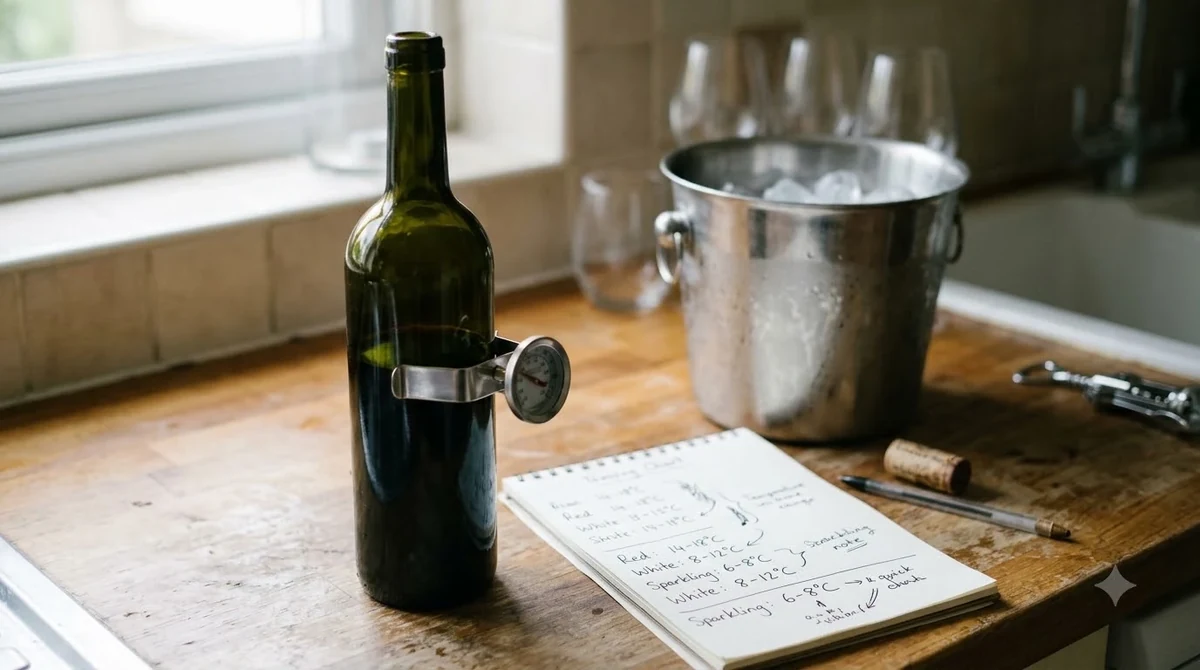
Côte de Nuits reds show their best balance when served slightly cool rather than warm. Light-bodied, fragrant examples can be served at 55–60°F, while fuller, more structured bottles are generally better at 60–65°F; chilling too much can mute aroma and make tannins seem harder.
| Wine style | Serving temperature | Useful food matches |
|---|---|---|
| Light, fragrant Pinot Noir | 55–60°F | Roast chicken, duck, mushrooms |
| Fuller, structured Pinot Noir | 60–65°F | Beef, lamb, braised short ribs |
| Côte de Nuits Chardonnay | 50–55°F | Fish, veal, roast poultry |
| White wine with more freshness | 45–50°F | Shellfish, salads, lighter seafood |
For red wines, match the intensity of the dish to the wine. Roast chicken, duck breast, pork tenderloin, and mushroom dishes work well with the lighter, more fragrant side of Pinot Noir. More structured Gevrey-Chambertin or Nuits-Saint-Georges can stand beside beef, lamb, or braised short ribs. The region’s reds also suit savory dishes with herbs, mushrooms, and moderate amounts of earthy spice.
Acidity is a useful partner for rich food, so a lively Pinot Noir can refresh the palate between bites of duck or roast meat. Salt and fat soften the impression of tannin, making a structured red more comfortable with a well-seasoned beef dish. Avoid pairing highly tannic red wine with oily fish, where the combination can taste metallic or harsh. If serving a white Côte de Nuits, its Chardonnay-based style is a natural partner for fish, veal, and white meat.
Tip: Start a red Côte de Nuits bottle around 58°F and let it warm gently in the glass. For a young, full-bodied red, allow 30–60 minutes in a decanter if its structure seems tight; delicate older bottles are better opened carefully and monitored rather than automatically decanted for a long period.
A standard 750 ml bottle gives about five 5-ounce pours. Use a clear glass with enough room to swirl, and give the wine a few minutes after pouring before judging its aroma. If you are tasting several villages side by side, pour the lighter or more delicate wine first, then move toward the more structured examples.
Frequently Asked Questions
Which Côte de Nuits village makes rosé?
Marsannay is the standout answer: its appellation includes red, white, and rosé wines. Rosé is far less characteristic of the Côte de Nuits than Pinot Noir red, so Marsannay is the village name to remember when looking for a local pink wine.
Are all red Burgundy Grand Cru wines from the Côte de Nuits?
Almost all are, but there is an important exception. Corton is the red Grand Cru located in the Côte de Beaune, south of the Côte de Nuits, so the Burgundy Grand Cru map extends beyond the northern district.
What does “climat” mean on a Burgundy wine label?
A climat is a named, precisely delimited vineyard site with a recognized identity. It is not a weather description on the label; it identifies a particular parcel whose soils, exposure, and history help distinguish it from neighboring sites.
How high are the Hautes-Côtes de Nuits vineyards?
The vineyards of the Hautes-Côtes de Nuits are cultivated on plateaus roughly 300–400 meters above sea level. They extend across about 20 communes in the hinterland, west of the narrower Côte de Nuits slope.
Why does a Burgundy label sometimes omit the words “Pinot Noir”?
Burgundy places strong emphasis on the origin of the grapes, so the appellation or vineyard name commonly takes priority over the variety name. In Côte de Nuits red wine, the grape is generally understood from the regional tradition and the appellation rather than spelled out as the main label identity.
The Côte de Nuits rewards attention to detail: village names, vineyard classifications, and producer choices all help explain what is in the glass. Start with a village-level Pinot Noir, compare a few neighboring appellations, and let your own preference guide the next bottle. That approach makes the region’s complexity easier to enjoy without treating its most famous labels as the only ones worth discovering.
More in Wine Regions
 Willcox Wine Trail: Discover Arizona’s High-Elevation Wine CountryUpdated Nov 20, 2026
 Yakima Valley Wine Region: Find the Best Styles to TryUpdated Nov 20, 2026
 Vosne Romanee Wine Tasting: Identify Aromas and Choose Better PairingsUpdated Nov 20, 2026
 Yakima Valley Wine Festival: Find the Best Seasonal Wine EventsUpdated Nov 20, 2026
 Wales Vineyards: Discover Cool-Climate Wines and Where to VisitUpdated Nov 20, 2026
 Yountville Wine Festival: Discover Napa Wines and Local FoodUpdated Nov 20, 2026