

We may earn a commission when you buy through links on this page, at no extra cost to you. Learn more.
The answer to “should sparkling wine be chilled” is yes, and the usual target is 40 to 50°F (about 4 to 10°C), which keeps the bubbles fine and the flavors crisp. Cold wine holds more dissolved carbon dioxide, so the gas escapes slowly once the cork comes out. Most bottles need one to three hours in the refrigerator, or about twenty minutes in an ice bath when time is short. Serve a little cooler than you think you need, because the wine will warm as you drink it.
Many people learn early that white wine goes in the fridge and red stays out of it. Sparkling wine usually lands somewhere in the middle of that rule, and the confusion is understandable. The bottle holds a large amount of dissolved carbon dioxide under pressure, and temperature controls how that gas behaves once the wire cage comes off. Get the temperature right and you get a lively, precise glass. Get it wrong and the wine can taste flat, foamy, or muted. This guide explains the reasoning, gives a serving chart you can keep handy, and walks through the fastest reliable ways to chill a bottle. If you want the broader picture of how wine styles differ before you focus on sparkling, the Wine by Type hub is a good place to start.
What Chilling Does to the Bubbles
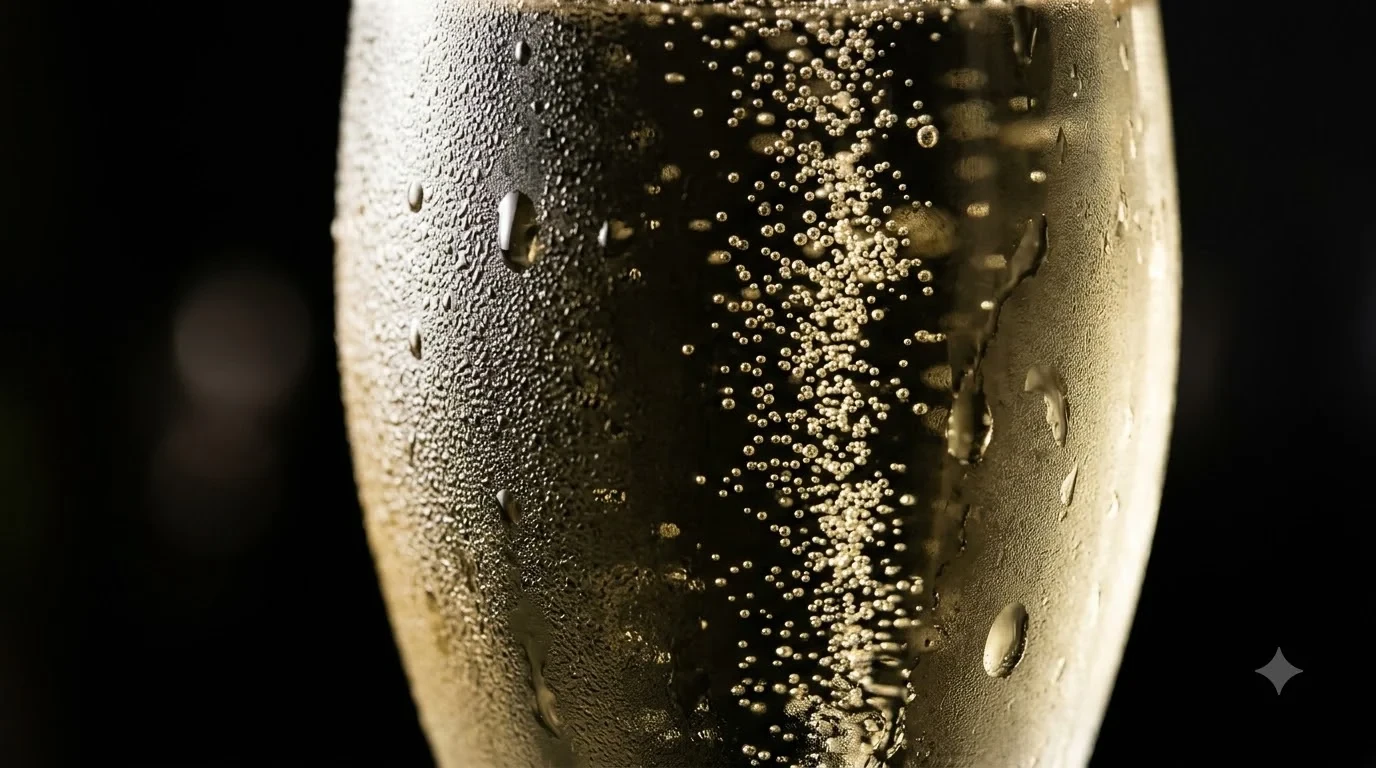
Chilling sparkling wine is mostly a question of carbon dioxide. Cold wine holds more of that gas in solution, so the bubbles release slowly and stay small once the bottle is open.
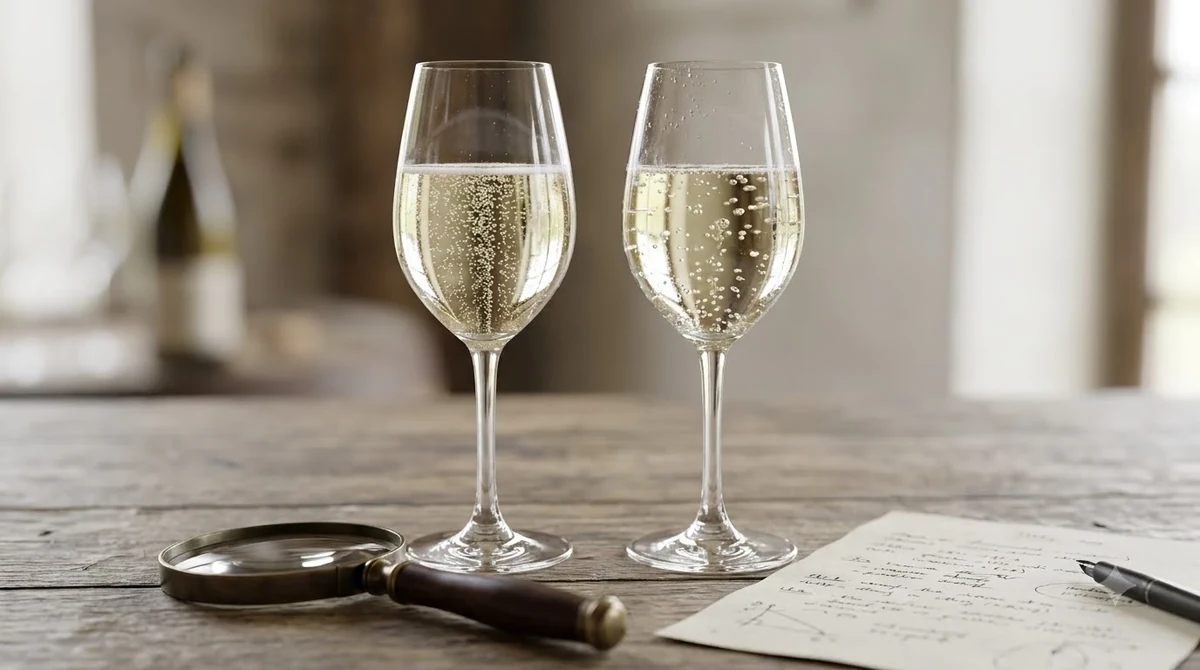
The bubbles in sparkling wine are carbon dioxide that stayed dissolved under pressure inside the bottle. Wine Spectator’s Ask Dr. Vinny column explains that the amount of carbon dioxide a liquid can hold depends on its temperature. As the wine warms, the gas becomes less soluble and tries to leave faster. Anyone who has opened a warm can of soda has seen the result: a burst of foam and a drink that goes flat quickly.
A well-chilled glass works the other way. The gas stays dissolved longer, so the bubbles rise in a gentle, steady stream that carries aroma toward your nose. That fine fizz also helps the wine feel crisp on the palate, because the acidity is not competing with a rush of gas. The result is a wine that tastes tighter and fresher, which is exactly what most people want from a bottle of bubbly.
Temperature changes also take time to settle, and this catches people out. A bottle can feel cool on the outside while the wine inside is still warm, because the carbon dioxide needs time to recombine. The column notes that rapid chilling can leave the wine still trying to release gas, so a freezer blast can produce a rush of foam when the cork comes out. Chilling gradually, such as thirty minutes in a bucket of ice and water, gives the wine time to settle and keeps the bubbles steady.
The Serving Range for Each Style
Most sparkling wines are best served between 41 and 50°F, and the exact target depends on the bottle and the producer. The chart below lists typical ranges for common styles, along with how long each one needs in the refrigerator.
| Wine style | Typical serving temperature | Time in the fridge |
|---|---|---|
| Sparkling (Prosecco, Cava, everyday Champagne) | 41–50°F (5–10°C) | Up to 2 hours |
| Light, dry white (Sauvignon Blanc, Riesling) | 45–50°F (7–10°C) | About 1.5 hours |
| Rosé | 48–53°F (9–12°C) | Up to 1.5 hours |
| Full-bodied white (Chardonnay) | 50–55°F (10–13°C) | About 1 hour |
| Light to medium red (Pinot Noir, Beaujolais) | 54–60°F (12–16°C) | 45 to 60 minutes |
| Full-bodied red (Cabernet Sauvignon, Syrah) | 60–65°F (16–18°C) | About 25 minutes |
The Wine Enthusiast serving guide recommends 41 to 45°F for Champagne, Cava, Prosecco, and Sekt, and notes that vintage Champagnes can be served a little warmer, at 45 to 50°F, to bring out toast and biscuit notes. The Champagne house G.H. Mumm recommends 46 to 50°F (8 to 10°C) for its wines, and says that its oldest bottles, rosés, vintage wines, and grand cuvées show their full complexity at 53.5 to 57°F (12 to 14°C). Producers clearly differ on how warm older bottles should go, which is why the chart keeps the everyday sparkling range broad.
For a typical weeknight bottle of Prosecco or a non-vintage Champagne, aim for the lower end of that band. For older or prestige bottles, you can let the glass sit a little warmer, but never so warm that the wine feels heavy and the aromas flatten. If you are also planning a dessert course, the guide on should ice wine be chilled covers the sweet-white range of 43 to 50°F in more detail.
Prosecco, Cava, and Champagne Are Made Differently
How a sparkling wine gets its bubbles shapes its texture and aroma, and those differences help explain why one bottle may need a slightly different approach from another.
Prosecco is made from the Glera grape using the tank method, in which the second fermentation that creates the bubbles happens in large sealed tanks rather than in each individual bottle. The result is typically fresher and more fruit-forward, with a lighter and more open style that suits casual pouring. Champagne and Cava, by contrast, get their bubbles from a second fermentation inside the bottle itself. That slower process adds texture and a broader range of aromas, which is why the same wine can show different character depending on how it is served.
That bottle-fermented character is one reason serving guidance often points to a slightly warmer range for older or vintage bottles. Wine Enthusiast notes that the toast and biscuit notes in vintage Champagne come forward when the wine is served a bit warmer than everyday bubbly. A warmer target for special bottles is a refinement, though, not permission to leave them on the counter. Serving any sparkling wine near room temperature is a mistake, because the bubbles rush out and the aromas lose their definition.
How Long to Chill and the Fastest Safe Methods
Plan on about two to three hours in the refrigerator, or about twenty minutes in an ice bath when time is short.

The refrigerator is the most dependable option. Wine Enthusiast suggests up to two hours for sparkling wine, while G.H. Mumm recommends laying the bottle on its side in the lowest part of the refrigerator for about three hours. Plan ahead, because a crowded fridge chills more slowly than an empty one. If you are hosting, move the bottle in the night before or early on the day, so it is ready when guests arrive.
For a quicker result, use a metal bucket. G.H. Mumm’s serving advice is to fill about two thirds of the bucket with cold water, top it with ice to about 10 centimeters below the rim, and leave the bottle for twenty minutes. Dry the bottle with a clean cloth before you pour so it does not slip in your hand. The method works well for last-minute bottles, and it chills the wine more steadily than a quick blast in the freezer.
The freezer is the riskiest shortcut. Dr. Vinny recommends thirty minutes in an ice and water bucket rather than five minutes in the freezer, because rapid chilling can leave the carbon dioxide still trying to escape. Wine Enthusiast also warns that a bottle wrapped in a damp paper towel and placed in the freezer needs a timer, since it can shatter if left too long. If you use the freezer at all, set a timer and check the bottle early.
Tip: Put the bottle in the ice bath before guests arrive, then top up the ice as it melts. A bucket on the table keeps the wine cold through the first round of pours and stops it from warming too quickly. Bubbly punches built on fruit and sparkling wine follow the same logic, so the guide on should sangria be chilled is a useful companion when you are batching drinks.
What Happens When the Wine Is Too Cold or Too Warm
Serving sparkling wine too cold mutes its aromas, and serving it too warm lets the bubbles escape before you have had a chance to enjoy them.
G.H. Mumm explains the trade-off clearly. If sparkling wine is served too cold, you get fewer bubbles, numbed taste buds, and less pronounced aromas. If it is served too warm, the carbon dioxide releases too quickly and too profusely, which disrupts the first aromas and lowers the quality of the tasting. The goal is the middle of the range, where the wine tastes lively and still shows its scent.
Wine Enthusiast quotes a sommelier who makes a similar point about cold wine: when a bottle is too chilled, the aroma stops telling you much about it, and the flavors you would normally pick up simply go missing. The same guide advises erring on the colder side for slow drinkers, because a poured wine cannot be cooled further once it is in the glass, but it will warm.
Red wines follow the same logic within their own range. Light reds are best at 54 to 60°F, and if they are poured too warm, their fruit can taste tart and sharp. Full-bodied reds sit at 60 to 65°F, and Wine Enthusiast points out that serving them near 70°F lets alcohol dominate the flavor. If you are weighing a sweeter red, see should sweet red wine be chilled for the specific range, because sugar changes how a red balances at different temperatures.
Glassware and Pouring After the Cork Comes Out
Choose a glass that keeps the bubbles and aromas where you want them, and remember that the wine will warm a few degrees once it is poured.
Wine Enthusiast’s guide weighs flutes against white wine glasses. The tall, thin flute highlights a fine, yeasty bouquet and helps preserve effervescence, but several experts quoted in the piece see it as mostly for showing off the bubbles. One winemaker prefers a stemmed white wine glass, arguing that the wider bowl lets the wine breathe and magnifies its aromas. The same winemaker points out that a flute holds a pocket of gas that can make you cough when you inhale, which is a small but real drawback at the table.
Hold the glass by the stem. One sommelier in the guide notes that the farther your hand is from the bowl, the longer the wine stays cold, which is a simple habit that makes a difference during a long toast or a slow evening. G.H. Mumm adds that the warmth from your hand can raise the temperature of the wine in the bowl. Once served, Champagne often rises by 3.5 to 5.5°F (2 to 3°C), depending on room temperature, so Mumm suggests serving it slightly cooler than your target at first.
After the first pour, keep the bottle in the bucket with fresh ice rather than leaving it on the table. Refill the ice and water as the level drops, and pour smaller glasses more often so the bottle stays cold for the whole evening. A good habit is to return the bottle to the chill between rounds, which keeps the wine in its serving range from the first glass to the last.
Frequently Asked Questions
Where should I store unopened sparkling wine before chilling it?
Keep unopened bottles somewhere cool, dark, and steady, ideally near 55°F (13°C). A steady spot matters more than hitting an exact number, because frequent temperature swings are hard on sparkling wine. Avoid kitchen cabinets close to the oven or dishwasher, which tend to be warmer than the rest of the room.
How long does opened sparkling wine keep in the fridge?
Leftover sparkling wine generally stays lively for about one to three days when kept in the refrigerator with a stopper. Still wines last longer, usually three to five days, so use the bubbly first if you are working through leftovers. Recork the bottle tightly and store it upright to limit how much gas escapes.
What do the sweetness labels on sparkling wine mean?
From driest to sweetest, the common labels are Brut Nature, Extra Brut, Brut, Extra Dry, Dry, Demi-Sec, and Doux. Brut Nature and Extra Brut are the driest styles, while Demi-Sec and Doux carry the most sugar. Check the label to see where a particular bottle sits before you decide how to serve it.
How much alcohol does Prosecco contain?
Prosecco usually lands between 11 and 12% alcohol by volume, which makes it a lighter option than many still wines. Because its second fermentation happens in tanks, producers can bottle it young and bright. The exact figure varies a little from one bottle to the next, so the percentage on the bottle is the number to trust.
Is a wine refrigerator better than a kitchen fridge for sparkling wine?
A wine refrigerator holds a steadier temperature than a kitchen fridge, which helps when you are aiming for a specific range. Wine Enthusiast notes that some models offer separate cooling zones, so Champagne, white, and red can be ready at the same time. A kitchen fridge still works well if you plan ahead and avoid placing the bottle near the door.
Chilling sparkling wine is one of the simplest ways to get a better glass, and the target is easy to hit with a little planning. Start two to three hours ahead when you can, and use the ice bath when you cannot. A bottle held in the 40 to 50°F range will pour lively and bright from the first glass to the last.
More in Wine Types & Grapes
 Zinfandel Sugar Content: Dry Red vs. White Zinfandel GramsUpdated Nov 21, 2026
 Best Zinfandel Substitute Options for Sipping and CookingUpdated Nov 21, 2026
 Zweigelt Food Pairing: Best Dishes, Cheeses, and Serving TipsUpdated Nov 21, 2026
 Zinfandel Tannins Explained: How Structure Shapes Every BottleUpdated Nov 21, 2026
 Zinfandel Sweetness Level: Dry Red vs. Sweet White Zin ExplainedUpdated Nov 21, 2026
 Xinomavro Food Pairing: Best Dishes, Styles, and Serving TipsUpdated Nov 21, 2026