

We may earn a commission when you buy through links on this page, at no extra cost to you. Learn more.
Amador County vineyards are planted across the Sierra Nevada foothills about 45 miles southeast of Sacramento, and the area is best known for old-vine Zinfandel grown on granitic and sandy soils. The county also grows Barbera, Sangiovese, and several Italian and Rhône varieties, and it has more than 40 wineries spread across a small, rural landscape.
This guide explains where the vineyards are, how the county’s wine history shaped them, which grapes do well there, and what to expect when you visit. It is written for readers who want a clear picture of the region before they buy a bottle or plan a trip.
Where the Amador County vineyards are located
The county sits on the western slope of the Sierra Nevada, inside California’s Gold Country. Local identity is strongly tied to the Mother Lode, the gold-bearing belt that runs through the foothills. The vineyards are spread along the county’s ridges and valleys, and the elevation changes a lot from one site to the next, which gives growers a range of growing conditions within a short drive.
Because the county is inland and away from the coast, it gets hot summer days and cool nights. Those swings help the grapes keep acidity while they build sugar and flavor. Reviewers often describe the wines as bold but still lively, which is one reason the county has attracted attention from people who usually buy Napa or Sonoma bottles.
A short history of Amador County wine
Winegrowing began here during the Gold Rush, when settlers planted vines to supply a fast-growing population. Many wineries opened in the nineteenth century, and the county became one of the more important wine areas in the state at that time. The industry then struggled badly after the Gold Rush faded and Prohibition closed many producers.
The region has since been revived by families and small producers who replanted old sites and started new ones. The Wikipedia article on Amador County notes that the county has a high share of old Zinfandel vines, though it flags some of its age claims as needing citations, so treat exact vine ages as approximate.
Grape varieties grown in Amador County
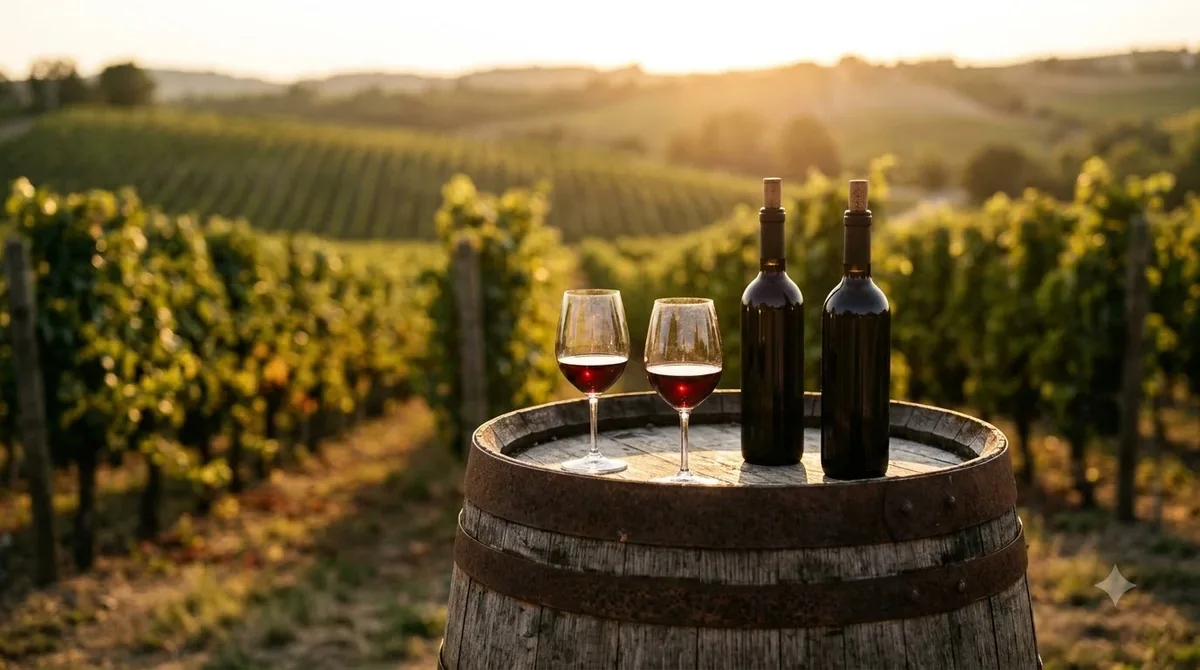
Zinfandel is the grape most people associate with the county, and it accounts for a large share of the planted acreage. Many of these vines are old and dry-farmed, which keeps yields low and concentrates the fruit. The result is usually a dark, fruit-forward red with peppery spice.
Other varieties show up in smaller numbers. Barbera brings brighter acidity and red-cherry flavor, Sangiovese appears in a few Italian-style bottlings, and Rhône grapes such as Syrah and Grenache are grown by producers who want more structure and savory notes. The table below gives a quick overview of the main styles.
| Grape | Typical style in the county | Good with |
|---|---|---|
| Zinfandel | Jammy blackberry, black pepper, moderate to high tannin | Barbecue, grilled meats, sharp cheddar |
| Barbera | Tart red cherry, lively acidity, lighter body | Tomato dishes, pizza, roast chicken |
| Sangiovese | Red fruit, dried herbs, firm finish | Pasta with red sauce, aged cheeses |
| Syrah | Dark plum, smoked spice, savory edge | Lamb, mushrooms, grilled vegetables |
Zinfandel: the county’s signature grape
Zinfandel from the foothills tends to show more red fruit and baking spice than the riper versions from warmer valleys. Wine Folly describes Zinfandel as a bold, fruit-forward red with smoky spice, and notes that cooler sites lean toward raspberry and cherry while warmer ones bring deeper black fruit. Amador producers often aim for the middle of that range, with enough fruit to be generous and enough acidity to keep the wine from feeling heavy.
Blends are a big part of the county’s identity too. Many producers combine Zinfandel with Petite Sirah, Barbera, or other red varieties to balance fruit with structure. These blends are often labeled with a proprietary name rather than a single grape, so read the back label or ask staff for the grape list before you buy. A blend can be a good choice for a group, because it tends to be food-friendly and less polarizing than a single-variety Zinfandel with high alcohol.
When you buy an Amador Zinfandel, look at the vintage and the producer’s notes on vine age. Older vines usually produce smaller crops, and lower yields are a common reason older-vine bottles taste more concentrated. A bottle that names a specific vineyard site or vine age usually gives you more to compare than a generic county label.
Visiting Amador County vineyards
Most of the wineries are small, family-run estates, so tasting rooms tend to be relaxed and easy to navigate without a reservation. Plan a visit that covers two or three producers rather than a long list, because the drives between estates can be slow on rural roads. Many tasting rooms also pour a mix of Zinfandel, Barbera, and Rhône blends, which helps you compare styles in one afternoon.
Spring and early fall are usually the most comfortable seasons for walking vineyards. Summer can be very hot in the foothills, so bring water and plan outdoor visits for early morning. Ask staff which vineyards are open to visitors, since some estates are production-only and do not offer public tastings.
Tip: Ask the tasting room whether the wine you are pouring comes from a single vineyard or a blend of sites. That answer tells you a lot about how the producer thinks about the region.
How to choose and serve an Amador County wine
Start with the grape. A Zinfandel suits a hearty dinner with barbecue or a burger, while a Barbera works well with lighter dishes and tomato-based sauces. If you are buying for a gathering, a rosé or light red from the county can bridge the gap between white and dark wine.
For serving, Wine Folly suggests a temperature of about 60 to 68 degrees Fahrenheit for Zinfandel, and recommends decanting bold bottles for around 30 minutes before pouring. Open the bottle a little ahead of the meal, and pour into a wide glass so the aromas have room to open.
Frequently Asked Questions
Is Amador County known for a particular grape?
Yes. Zinfandel is the grape most closely linked to the county, and many of its vines are old. Barbera, Sangiovese, and Rhône varieties are also grown, though in smaller amounts.
How far is Amador County from Sacramento?
The county lies about 45 miles southeast of Sacramento, so it is a manageable day trip for people based in the capital. Travel time depends on traffic and which part of the county you visit.
Do I need reservations to visit Amador County wineries?
Many tasting rooms welcome walk-ins, but some estates require reservations, especially on weekends and during harvest season. Check each winery’s website before you go.
What is the best time of year to visit the vineyards?
Spring and early fall are usually the most comfortable. Summer can be very hot in the foothills, so plan outdoor walks for the morning and keep water with you.
Amador County rewards visitors who like wines with personality and a sense of history. Start with a Zinfandel, compare it with a Barbera or Rhône blend, and then explore the rest of the county’s wine regions to see how they differ. For a broader picture of how these regions compare, the wine regions guide is a useful next step.
If you want to compare the county with another place that grows Zinfandel, read more about Amador County wine and the Loudoun County vineyards in Virginia, which take a very different approach to the same grapes.
More in Wine Regions
 Willcox Wine Trail: Discover Arizona’s High-Elevation Wine CountryUpdated Nov 20, 2026
 Yakima Valley Wine Region: Find the Best Styles to TryUpdated Nov 20, 2026
 Vosne Romanee Wine Tasting: Identify Aromas and Choose Better PairingsUpdated Nov 20, 2026
 Yakima Valley Wine Festival: Find the Best Seasonal Wine EventsUpdated Nov 20, 2026
 Wales Vineyards: Discover Cool-Climate Wines and Where to VisitUpdated Nov 20, 2026
 Yountville Wine Festival: Discover Napa Wines and Local FoodUpdated Nov 20, 2026