

We may earn a commission when you buy through links on this page, at no extra cost to you. Learn more.
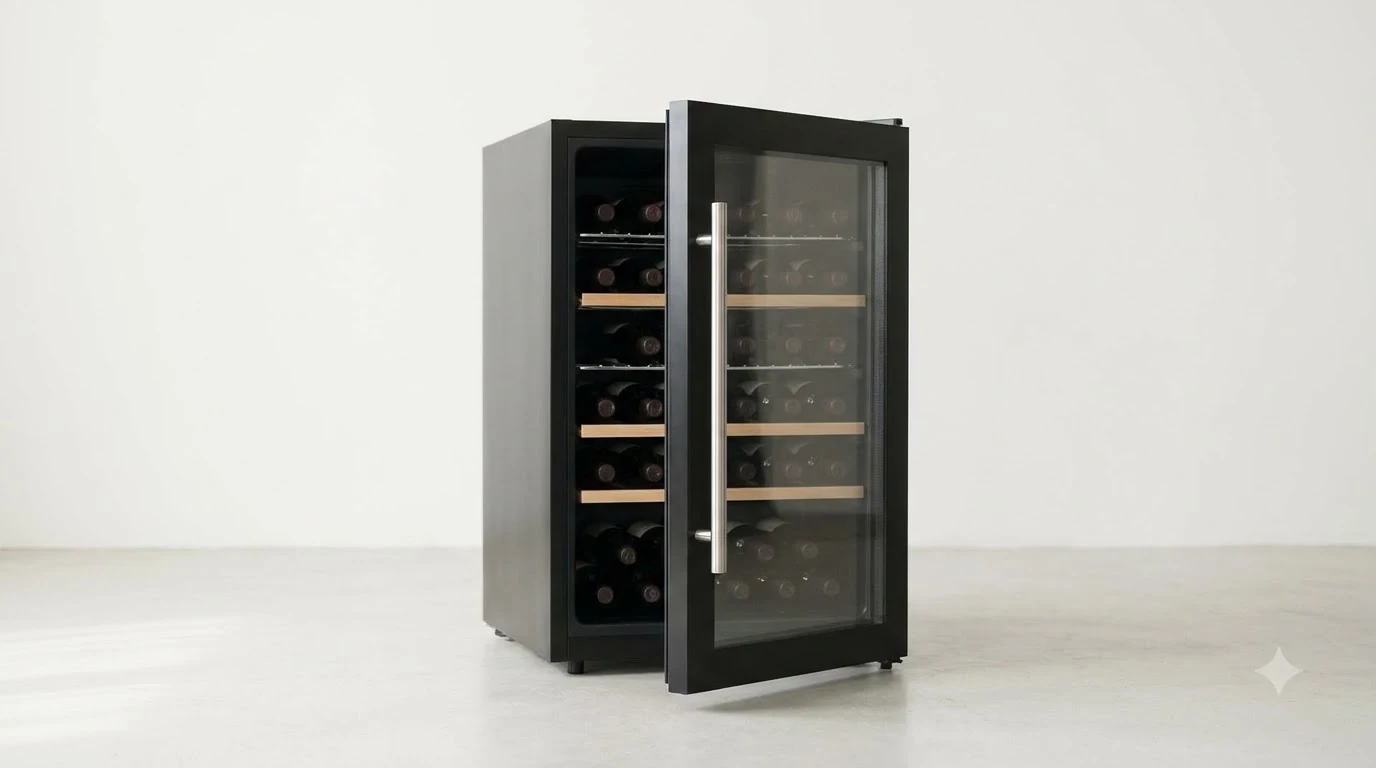
For sub zero wine fridge repair, start by checking power, airflow, condenser cleanliness, door closure, and temperature settings before assuming a major cooling component has failed. A warm cabinet can result from a blocked condenser or an open door, but failed fans, sensors, thermostats, and sealed-system parts can produce similar symptoms. Owners can perform a few safe checks; electrical testing and refrigerant work belong to a qualified technician.
A Sub-Zero wine storage unit is designed to protect bottles from heat swings, excess light, and unnecessary movement. When its display climbs or a service indicator appears, the goal is to identify what can be corrected safely, preserve stable storage for the collection, and give a technician useful information without dismantling the appliance.
How Sub-Zero Wine Storage Systems Work
Sub-Zero wine cabinets maintain controlled storage zones, but the controls and service indicators vary by model. An IW-30 column, a 424 undercounter unit, and a 400 Series cabinet should not be treated as interchangeable appliances: their control layouts, access points, and diagnostic procedures differ.
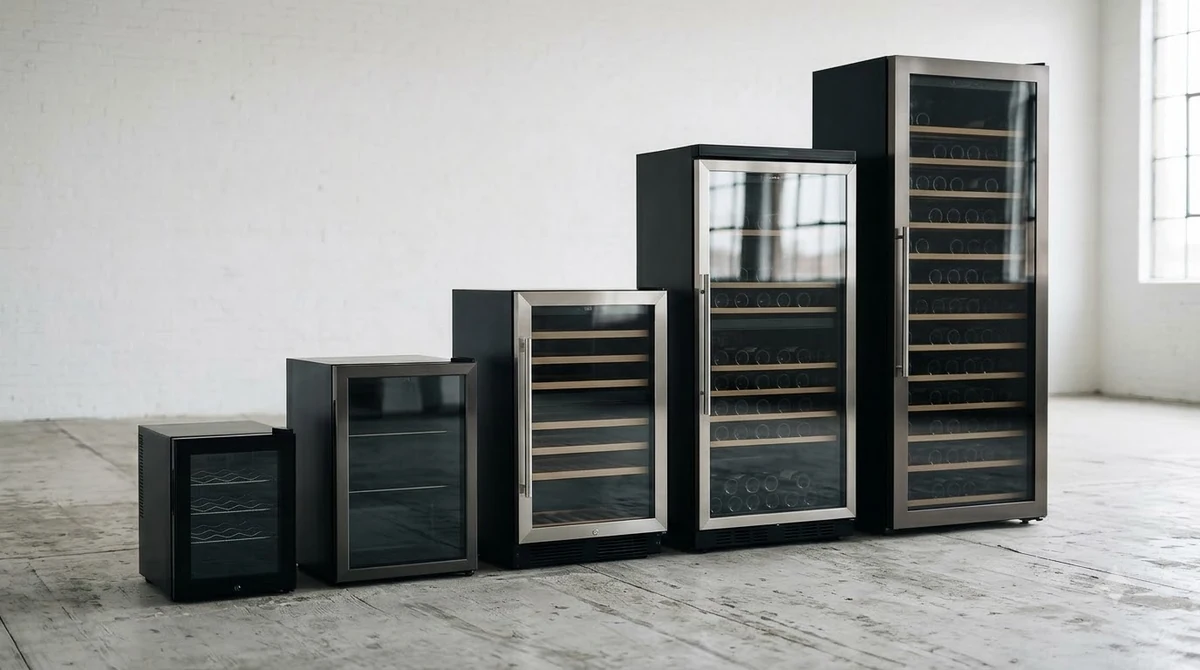
Most cooling complaints involve connected systems. The compressor circulates refrigerant through the sealed system, the condenser releases heat, fans move air, and temperature sensors report conditions to the controls. A thermostat or control board determines when cooling should run, while the door gasket helps keep conditioned air inside and warm, humid room air outside.
These parts can create overlapping symptoms. A dirty condenser can make the compressor run longer; weak airflow can cause uneven temperatures; a damaged gasket can introduce warm air; and an inaccurate sensor can make the display misrepresent the cabinet temperature. Sub-Zero lists fans, sensors or thermostats, compressor, evaporator, condenser, and door gasket among possible causes of warm wine storage temperatures. Log both zone readings over several hours; one compartment may drift while the other remains stable.
First Checks Before Booking a Repair
Start with causes that can be checked without removing an appliance panel. Power, control settings, a blocked door, a recent load of warm bottles, and restricted condenser airflow can all explain a temporary temperature rise without proving that the sealed cooling system has failed.
Confirm that the unit has power and is switched on at its control panel. If the home circuit breaker has tripped, do not keep resetting it if it trips again; repeated trips can signal an electrical fault. For a newly installed or newly powered wine unit, Sub-Zero advises allowing at least 24 hours to cool. Some new models may cool one zone at a time during initial cooling, which the manufacturer identifies as normal. A large addition of room-temperature bottles can also raise the temperature while the cabinet removes that extra heat.
Next, verify that the setpoint has not been changed. Sub-Zero’s warm-unit guidance lists an electronic setting range of 34°F to 65°F; for the dial control described there, 4 to 6 is the suggested starting range, with 1 warmest and 10 coldest. Those are control ranges, not an ideal target for every wine. Wine Enthusiast’s wine storage guidance recommends a steady 53°F to 57°F for long-term storage across red, white, sparkling, and fortified styles. Sub-Zero’s warm wine troubleshooting instructions also recommend confirming the setpoint, condenser condition, and door closure before concluding that service is needed.
Inspect the door opening from top to bottom. A rack, bottle, shelf, or loose item can stop the door from sealing; a door left ajar lets warm, humid air enter. Look for a gasket that is visibly torn, twisted, dirty, or pulled away from the cabinet. Clean ordinary grime from an accessible seal with a soft damp cloth and dry it, but do not stretch the gasket or use solvents. After correcting an obvious issue, give the cabinet up to 24 hours to recover and monitor each zone with a separate refrigerator thermometer. Avoid repeatedly changing the setpoint while it stabilizes.
Cleaning the Condenser Safely
A dirty condenser is one of the first maintenance issues to rule out when a Sub-Zero wine cabinet runs for long periods or struggles to cool. Access varies by model, but the priorities are consistent: follow the correct guide, turn the unit off as directed, protect your hands, and remove dust without bending the delicate fins.
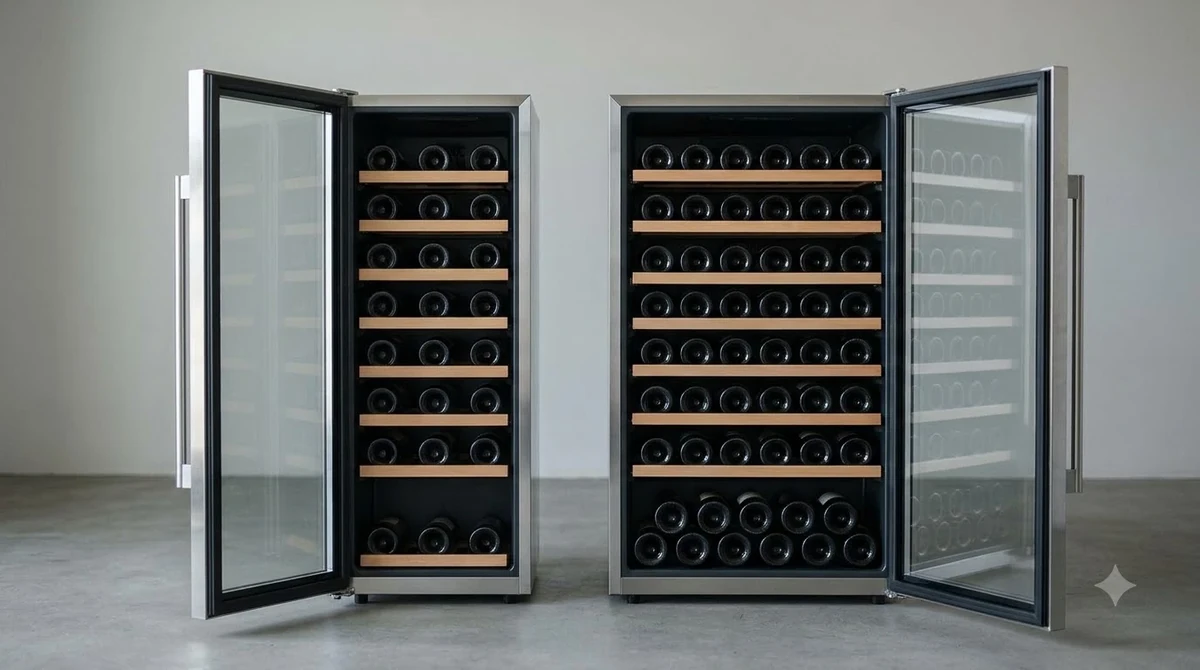
Follow the Use and Care Guide for the exact model before removing a grille or kickplate. For the wine-storage model covered in Sub-Zero’s guide, the condenser sits behind the grille and the kickplate is secured with two mounting screws. The manufacturer instructs owners to turn power off at the control panel and wear gloves because condenser fins can be sharp. Use a soft-bristle brush and vacuum to lift dust and lint, moving the vacuum in the direction of the fins so the metal is not bent.
Cleaning frequency is model-specific. The cited Sub-Zero wine-storage guide recommends cleaning every 6 to 12 months and warns that neglect can cause temperature loss, mechanical failure, or damage. Other product families may have a different interval or screen arrangement, so do not assume that a procedure for an IW, 400 Series, or undercounter unit automatically applies to another model. If the grille resists removal or access is unclear, leave the work to a technician.
Do not spray degreaser, household cleaner, water, or fragrance onto the condenser. Sub-Zero says condenser chemicals are unnecessary and are not recommended for certain models. Keep tools away from wiring, tubing, fan blades, and other components; never remove an electrical cover as part of routine cleaning. After reinstalling the grille as instructed, turn the unit on and monitor both zones. It may take up to 24 hours for temperatures to return to normal. If the cabinet remains warm or a service indicator returns, cleaning has not resolved the underlying fault.
Tip: Record the date of each condenser cleaning, the cabinet temperature before and after, and any service message. A short maintenance log helps distinguish a recurring fault from a warm room or a door that was left open.
Symptoms and Components That Commonly Need Repair
A symptom can narrow the inspection, but it cannot identify a failed part by itself. A qualified technician should compare the displayed temperature with an independent reading, check airflow and door sealing, and test the relevant electrical or refrigeration components for the exact model.
Warm or uneven zones: A fan that is not moving air, a faulty temperature sensor, an out-of-range thermostat, a poor door seal, or a sealed-system problem can cause a zone to drift above its setting. On a dual-zone cabinet, note whether one compartment is warm or both are. One warm zone may lead the technician to check a local fan, sensor, door, or control; both zones warming together may lead to checks of shared cooling components and condenser airflow. These are diagnostic clues, not owner-performed component tests.
Long run times, condensation, and noise: Compressors can run longer when the room is hot, the condenser is dirty, the door has been open, or warm wine has just been loaded. Some condensation inside the cabinet is normal after the door has been open, especially in a warm or humid room; Sub-Zero says fogging should resolve when the door stays closed. Persistent moisture calls for a check of the condenser and gasket. A torn gasket should be replaced through a Factory Certified Parts Distributor or service provider. A new rattle, scrape, or unusually loud hum may point to a fan obstruction, loose component, worn motor, or compressor issue. Do not reach through a grille to stop a sound; record when it occurs and share that with the technician.
| Check or reference | Verified figure | How to use it |
|---|---|---|
| Long-term wine storage target | 53°F–57°F | Wine Enthusiast’s recommended steady range for different wine styles. |
| Electronic setpoint range in Sub-Zero warm-unit guidance | 34°F–65°F | A control range, not a universal storage recommendation. |
| Initial cool-down | At least 24 hours | Allow a newly powered unit time to reach operating temperature. |
| Return after condenser cleaning | Up to 24 hours | Monitor both compartments before deciding whether cleaning resolved the issue. |
| Condenser maintenance in the cited wine-storage guide | Every 6–12 months | Follow the interval and access instructions for your model. |
The figures describe different things: a wine-storage target, an available control range, and manufacturer time windows. They are not interchangeable. A cabinet set to a valid number can still be malfunctioning if the actual zone temperature does not stabilize, while a momentary reading after a door opening may not represent the long-term condition.
Service Lights, Temperature Alarms, and Model-Specific Codes
A flashing wrench, SERVICE message, or temperature alarm is a reason to consult model-specific instructions rather than a generic refrigerator error-code list. Sub-Zero wine cabinets have different control generations, and the same warning can appear differently on an IW, WS, or 400 Series model.
For the 400 Series guidance, a flashing SERVICE indicator is associated with an excessive compressor-run condition and can disable cooling. The manufacturer instructs owners to turn the unit off, clean the condenser, make sure nothing blocks the door, and turn it back on. It should return to normal temperatures within 24 hours; if the lights flash and the unit shuts itself off again, Sub-Zero identifies a thermistor issue as a possibility. If SERVICE returns or temperatures rise, contact Factory Certified Service rather than continuing to reset the cabinet.
Other generations use different diagnostic conventions. An independent repair company’s explanation, based on Sub-Zero service manuals, notes that WS models use two-digit codes, IW models use a three-part code structure, and the 400 Series uses indicator patterns rather than the same numbered list. For example, the WS table associates codes 05 through 08 with upper or lower cabinet and evaporator thermistor faults. Use these examples only after identifying the model; codes do not transfer between generations.
Write down the complete message, whether the indicator flashes steadily or intermittently, which zone is affected, and the temperatures shown. If an alarm clears on its own, record that too. Do not clear stored faults repeatedly just to make the display look normal; a technician may need the event history. If the display shows 45°F and 55°F but the cabinet is not cooling, some models may be in showroom mode, so ask Customer Care for model-specific instructions rather than guessing at a failed compressor.
Choosing a Technician and Protecting Your Wine
Choose a provider familiar with Sub-Zero wine storage and the control generation in your cabinet. Sub-Zero recommends Factory Certified Service providers, which it says are selected and trained for its products; owners can locate one through the manufacturer’s support site or Customer Care at 800-222-7820.
Before booking, photograph the product rating plate and record the model number, serial number, installation date if known, and authorized dealer. Plate positions vary: some wine-storage guides place it inside the cabinet near the lower portion of the compartment, while older models can have different locations. The guide for your exact appliance illustrates the correct position. When you contact service, describe the affected zone, setpoint, measured temperature, how long the unit has run, recent condenser cleaning, gasket condition, and every alarm or code. Ask the technician to explain the test results and provide a written estimate before authorizing parts or labor.
Sealed-system work is different from routine cleaning. Sub-Zero describes a process that recovers refrigerant, repairs or replaces the faulty component, replaces the filter-drier, evacuates moisture and air with a vacuum pump, and recharges the system with the correct refrigerant amount. The manufacturer says this work can take about 45 minutes to several hours depending on the fault; a contaminated or restricted system can take many hours. Special tools and training are required, so owners should not open refrigerant lines, attempt a recharge, or handle compressor wiring.
While service is arranged, reduce door openings and move vulnerable bottles to another stable, dark location if the cabinet temperature keeps rising. A regular refrigerator can be useful for short-term holding, but it is not an ideal long-term substitute for controlled wine storage. Wine storage guidance emphasizes a steady temperature, limited light, and minimal movement. Our article on how long does rose last after opening addresses the separate question of opened-bottle life; a cabinet repair will not reverse oxidation in wine that has already been opened. For other appliance-care questions, see our Brand Troubleshooting collection. For a broader look at wine-cooler service, our wine enthusiast wine fridge repair resource can provide context, but the Sub-Zero model guide should govern service work.
Frequently Asked Questions
These answers cover a few model and use details that can be easy to miss during a repair call. Keep the model number nearby because features and control behavior are not identical across every Sub-Zero wine unit.
On a Sub-Zero column display, which temperature belongs to each zone?
On the column control panel illustrated in the wine-storage guide, the left temperature represents the lower zone and the right temperature represents the upper zone. The displayed setting can be adjusted in one-degree increments, so note both sides before reporting a temperature problem.
Is it normal to hear a fan during operation?
Some fan noise during operation is normal, according to Sub-Zero troubleshooting material. A new grinding, scraping, or much louder sound is different from ordinary airflow and should be described to the service technician.
Can I remove a wine rack to inspect the cabinet?
The Sub-Zero wine-storage guide says a removable rack is pulled to full extension, tilted upward, and lifted out. Remove every bottle from the rack first, and do not force racks marked as fixed-position by a small square cutout at the rear corner.
Why did the interior lights stop working after the door was left open?
On covered models, leaving a door or drawer ajar can disable the lights to limit excess heat. Close it for one hour; if the lights remain off, Sub-Zero recommends contacting Factory Certified Service rather than replacing internal lighting parts yourself.
Can a Sub-Zero wine unit connect to a home security alarm?
Some wine-storage models include low-voltage wiring provisions for a home security alarm connection. Whether that feature is present and how it is wired depends on the model and the security system, so have the installer or a qualified technician confirm compatibility.
A Sub-Zero wine cabinet may need only a basic power, door, setting, or condenser check, but persistent temperature drift and recurring service indicators require a model-specific diagnosis. Keep the wine stable while arranging qualified help, and let a trained technician handle electrical components and sealed-system repairs.
More in Storage & Fridge Care
 How Long Can You Store Wine in a Wine Fridge? Protect Bottle QualityUpdated Nov 20, 2026
 Can You Store Beer in a Wine Fridge? Keep Both Drinks FreshUpdated Nov 20, 2026
 Is It Worth Repairing a Wine Fridge? Spot the Cheap Fixes Before You ReplaceUpdated Nov 20, 2026
 Wine Fridge Condensation: Identify Causes and Fix Moisture ProblemsUpdated Nov 20, 2026
 Wine Fridge Too Cold: Protect Your Wine and Fix the TemperatureUpdated Nov 20, 2026
 How to Reset Wine Fridge: Restore Cooling and SettingsUpdated Nov 20, 2026