

We may earn a commission when you buy through links on this page, at no extra cost to you. Learn more.
Learning how to pronounce montepulciano comes down to saying “mon-teh-pool-CHAH-noh,” placing clear emphasis on the fourth syllable while blending the “ci” into a single soft “ch” sound. The vowel “i” acts purely as an Italian spelling marker to soften the letter “c” before the “a,” meaning you skip pronouncing it as a separate syllable. Mastering these five crisp syllables lets you order Italy’s beloved central red wine or its Tuscan namesake town with complete confidence.
Long Italian wine names often intimidate English speakers at restaurant tables and wine shops, especially when multiple vowels cluster together at the end of a word. Once you understand a couple of predictable Italian phonetic rules, however, saying Montepulciano out loud becomes straightforward and natural—much like mastering how to pronounce cotes du rhone or other classic European wine regions.
Breaking Down the Pronunciation
Montepulciano is pronounced mon-teh-pool-CHAH-noh (IPA: /ˌmontepulˈtʃaːno/), with the primary vocal stress landing firmly on the penultimate syllable, CHAH. Breaking the word into five distinct, evenly paced syllables eliminates the urge to rush or stumble over the middle consonants.

The biggest stumbling block for English speakers is the letter combination cia near the end of the word. In Italian phonetics, the letter “c” produces a hard “k” sound before “a,” “o,” and “u,” but shifts to a soft “ch” sound (as in “church”) before “e” and “i.” When an Italian word needs a soft “ch” sound followed immediately by an “a,” the writer inserts a silent “i” between them. Consequently, cia is spoken as a single syllable—CHAH—rather than two separate syllables like “see-ah.”
Every other vowel in the word retains its pure, clipped Italian sound without gliding into English diphthongs. The opening mon sounds like the start of “monsoon” with a short “o,” followed by teh (rhyming with “ten,” never “tee” or “tay”) and pool (a quick “oo” sound, since Italian “u” never sounds like “uh”). Finally, noh ends cleanly like the English word “no” without trailing off into an extra “w” sound.
| Syllable | Phonetic Guide | Sound Comparison | Stress & Articulation Notes |
|---|---|---|---|
| Mon | mon | Start of monsoon | Unstressed; keep the “o” short and rounded. |
| te | teh | Rhymes with ten | Unstressed; short “e” sound, not “tee.” |
| pul | pool | Similar to pool | Unstressed; Italian “u” is always a crisp “oo.” |
| cia | CHAH | Church + ah | Primary stress; the “i” is completely silent. |
| no | noh | Short no | Unstressed; clean finish without a lingering glide. |
Tip: Compare Montepulciano (mon-teh-pool-CHAH-noh) with Montalcino (mon-tahl-CHEE-noh). In Montalcino, the “i” comes before a consonant (“n”), so you actually pronounce the “ee” sound—whereas in Montepulciano, the “i” precedes a vowel (“a”) and stays silent.
What Montepulciano Actually Is
Montepulciano refers to two completely different things in the Italian wine world: a widely planted red wine grape from central Italy and a Renaissance hill town in southern Tuscany. Knowing which one you are looking at on a bottle label prevents one of the most common mix-ups in wine shopping.
As a grape variety, Montepulciano is a dark-skinned, late-ripening black grape native to central Italy, most famously championed in the Adriatic coastal region of Abruzzo. According to Wine Folly’s Montepulciano grape guide, wines made from this variety are celebrated for their deep ruby-purple color, plush fruit character, and approachable structure. Under Italian wine law, bottles labeled Montepulciano d’Abruzzo (pronounced mon-teh-pool-CHAH-noh dah-BROOT-soh) must contain at least 85 percent of the Montepulciano grape.
By contrast, the hilltop town of Montepulciano sits in Tuscany, roughly sixty miles southeast of Florence. Its flagship red wine, Vino Nobile di Montepulciano (VEE-noh NOH-bee-leh dee mon-teh-pool-CHAH-noh), is crafted primarily from Sangiovese—locally called Prugnolo Gentile—rather than the Montepulciano grape. When scanning a wine list or retail shelf, look at the surrounding words on the label: “d’Abruzzo” signals the grape variety, while “Vino Nobile di” or “Rosso di” points to the Tuscan town and Sangiovese-based wines.
Flavor Profile and Wine Styles
Wines made from the Montepulciano grape deliver generous dark fruit flavors balanced by savory herbal notes, medium-to-full body, and remarkably soft, velvety tannins. Unlike ultra-tannic Italian reds that demand years in a cellar, most Montepulciano bottlings offer immediate, crowd-pleasing drinkability alongside refreshing food-friendly acidity.
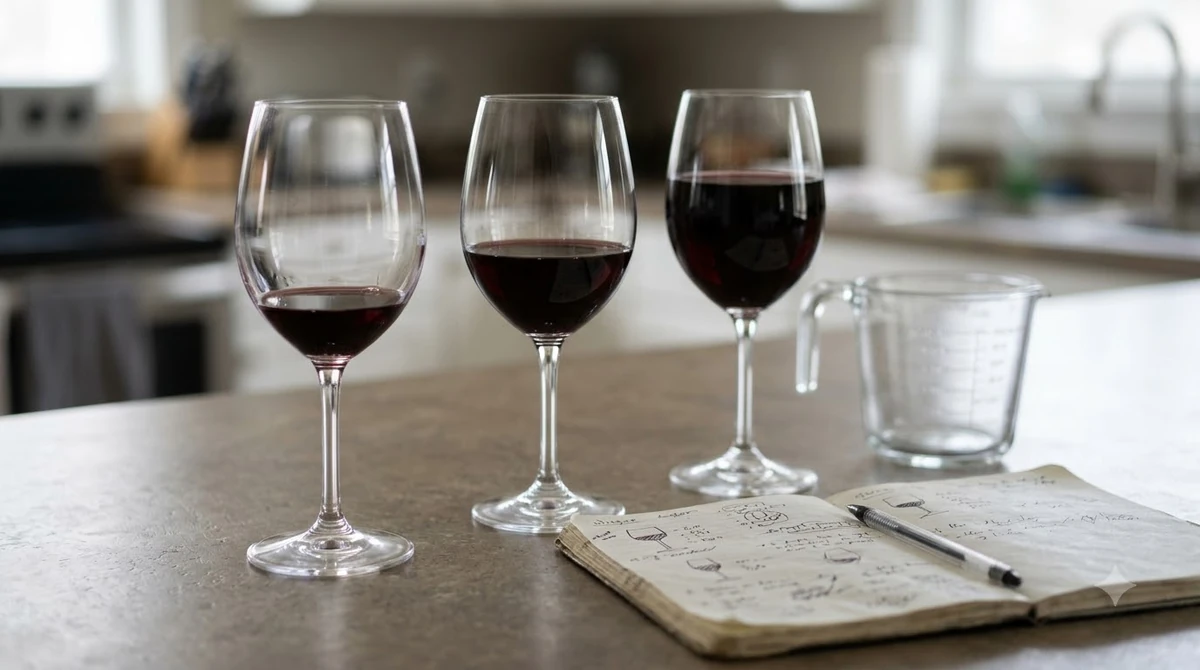
In a standard glass of Montepulciano d’Abruzzo, primary aromas center on ripe black cherry, boysenberry, and red or black plum. Beneath that juicy fruit core, tasters typically find earthy undertones of dried oregano, black pepper, cocoa, and subtle leather. Alcohol levels generally fall between 12.5 percent and 14 percent ABV, giving the wine enough weight to feel satisfying without coming across as heavy or jammy. If you enjoy fruit-forward yet savory reds—similar to what you might discover when learning how to pronounce grenache—Montepulciano occupies a very similar comfort zone.
Producers also craft the grape into several distinct styles depending on vineyard elevation and aging rules. Everyday DOC bottlings are fermented in stainless steel or neutral vessels to highlight bright, fresh cherry and plum notes for early consumption. Riserva bottlings require a minimum of two years of aging before release (including at least one year in wood), developing deeper notes of dark chocolate, tobacco, and spice. Additionally, Abruzzo produces a vibrant, deep cherry-pink rosé called Cerasuolo d’Abruzzo (cheh-rah-SWOH-loh dah-BROOT-soh) from the exact same grape.
Where Montepulciano Grows
More than half of all Montepulciano vines grow in Abruzzo, a rugged, mountainous region wedged between the Apennine peaks and the Adriatic Sea. Because the grape ripens late in the autumn harvest season, it thrives in the warm sunshine and cooling coastal breezes of central and southern Italy while remaining rare in the cooler northern regions.
Within Abruzzo, the northern province of Teramo holds the prestigious Colline Teramane Montepulciano d’Abruzzo DOCG designation, where stony soils and mountain-to-sea temperature swings yield more structured, age-worthy reds. Just north of Abruzzo in the coastal Marche region, Montepulciano serves as the backbone for Rosso Conero and Rosso Piceno, often blended with a small proportion of Sangiovese to add brisk floral lift.
Further south, winemakers in Molise and Puglia rely heavily on Montepulciano both as a varietal wine and as a rich blending partner that adds deep color and plush mid-palate weight to local red blends. Across all these central and southern appellations, hillside vineyards with good drainage consistently produce the most concentrated and aromatic expressions.
How to Serve and Pair Montepulciano
Serving Montepulciano slightly below warm room temperature—ideally between 60°F and 68°F (15°C to 20°C)—keeps its dark berry fruit crisp and prevents the alcohol from tasting overly warm. A quick 15 to 20 minutes in the refrigerator before pouring is usually all a bottle needs if it has been stored in a standard 70°F kitchen.
Youthful, everyday Montepulciano d’Abruzzo bottles rarely need formal decanting, though 15 to 20 minutes of air in an oversized red wine glass helps the herbal aromatics open up. Older Riserva and Colline Teramane DOCG bottlings benefit from 30 to 60 minutes in a decanter to soften their oak-aged tannins and separate any natural sediment. Properly stored on its side in a cool, dark spot around 55°F, an everyday bottling drinks best within two to four years of the vintage, while top DOCG releases can cellar gracefully for a decade or more.
At the dinner table, Montepulciano is one of Italy’s most versatile culinary partners, as highlighted in Wine Enthusiast’s guide to Italian wine. Its lively acidity cuts effortlessly through rich tomato sauces, melted mozzarella, and wood-fired Neapolitan pizza, while its plush tannins latch onto grilled lamb chops, beef ragù, roasted sausages with lentils, and aged pecorino cheese. Exploring these classic regional matches is an easy way to broaden your palate across different wine by type categories without overthinking formal pairing rules.
Frequently Asked Questions
How do you pronounce Montepulciano d’Abruzzo?
Say “mon-teh-pool-CHAH-noh dah-BROOT-soh.” Put the main stress on the “CHAH” syllable in Montepulciano and the “BROOT” syllable in Abruzzo, keeping the double “z” sharp like a “ts” sound.
Is Montepulciano pronounced with a “see-ah” or a “chah” sound?
It is always pronounced with a single “chah” sound, never “see-ah.” In Italian spelling, the letter “i” in “cia” is silent and exists solely to tell the reader that the “c” is soft like “ch” rather than hard like “k.”
Are Montepulciano d’Abruzzo and Vino Nobile di Montepulciano the same wine?
No, they are made from completely different grapes in different regions. Montepulciano d’Abruzzo is made from the Montepulciano grape in Abruzzo, whereas Vino Nobile di Montepulciano comes from the Tuscan town of Montepulciano and is made primarily from Sangiovese.
What does Montepulciano wine taste like?
Montepulciano is a dry, medium-to-full-bodied red wine bursting with flavors of black cherry, ripe plum, and blackberry. It features soft, plush tannins, refreshing acidity, and savory hints of dried herbs, black pepper, and cocoa.
Once you break the word down into mon-teh-pool-CHAH-noh, ordering this central Italian staple becomes effortless. Whether you reach for a bright, everyday Montepulciano d’Abruzzo for pizza night or an oak-aged Riserva for braised meats, you can now ask for it by name like a seasoned Italian wine lover.
More in Wine Types & Grapes
 Zinfandel Sugar Content: Dry Red vs. White Zinfandel GramsUpdated Nov 21, 2026
 Best Zinfandel Substitute Options for Sipping and CookingUpdated Nov 21, 2026
 Zweigelt Food Pairing: Best Dishes, Cheeses, and Serving TipsUpdated Nov 21, 2026
 Zinfandel Tannins Explained: How Structure Shapes Every BottleUpdated Nov 21, 2026
 Zinfandel Sweetness Level: Dry Red vs. Sweet White Zin ExplainedUpdated Nov 21, 2026
 Xinomavro Food Pairing: Best Dishes, Styles, and Serving TipsUpdated Nov 21, 2026