

We may earn a commission when you buy through links on this page, at no extra cost to you. Learn more.
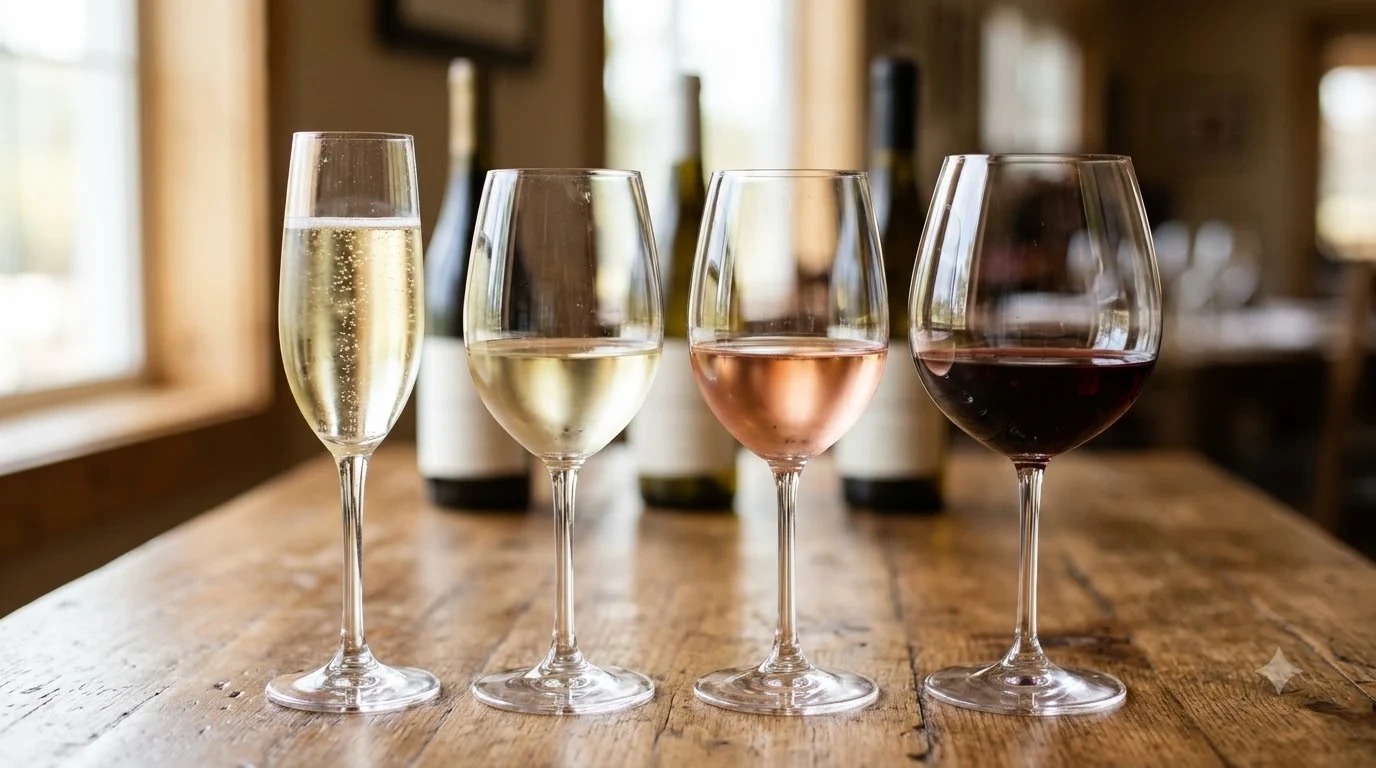
Champagne wine is a sparkling wine made only in the Champagne region of northeastern France, usually from Chardonnay, Pinot Noir, and Pinot Meunier. The bubbles come from a second fermentation inside the bottle, and most bottles are dry in style. Serve it chilled in a flute, and expect flavors of green apple, brioche, and citrus, with a fine, lasting bead. It pairs well with salty, fried, and fish dishes, and it can be served with a main course as well as before a meal.
Champagne is the name most people use for sparkling wine, but in strict terms only wine from the Champagne region of France can carry the name. The label on a bottle tells you a lot about what is inside, from the sweetness level to the age of the wine. This guide explains how champagne is defined, what it tastes like, how to serve it, and how to choose a bottle for a meal or a celebration.
What Champagne Wine Is
Champagne is a protected name. The official Champagne website states that Champagne only comes from Champagne, France, and that rule matters for buyers. For a broader look at how regions shape sparkling and still wine, the wine regions guide is a good companion read. Sparkling wines made elsewhere, including those from other parts of France, Spain, Italy, or the United States, are sold under their own names, such as Cava, Prosecco, or Crémant, even when they are made with the same method.
Most champagne is a blend. Wine Folly’s champagne guide lists Chardonnay, Pinot Noir, and Pinot Meunier as the main grapes, and the producer decides the proportions. For a look at vineyards outside France, the Calistoga vineyards guide covers another growing area. Chardonnay adds lightness and citrus, Pinot Noir adds body and red-fruit notes, and Pinot Meunier adds softness and fruit. A house style comes from how these three are combined, which is why two champagnes from different producers can taste quite different.
How Champagne Gets Its Bubbles
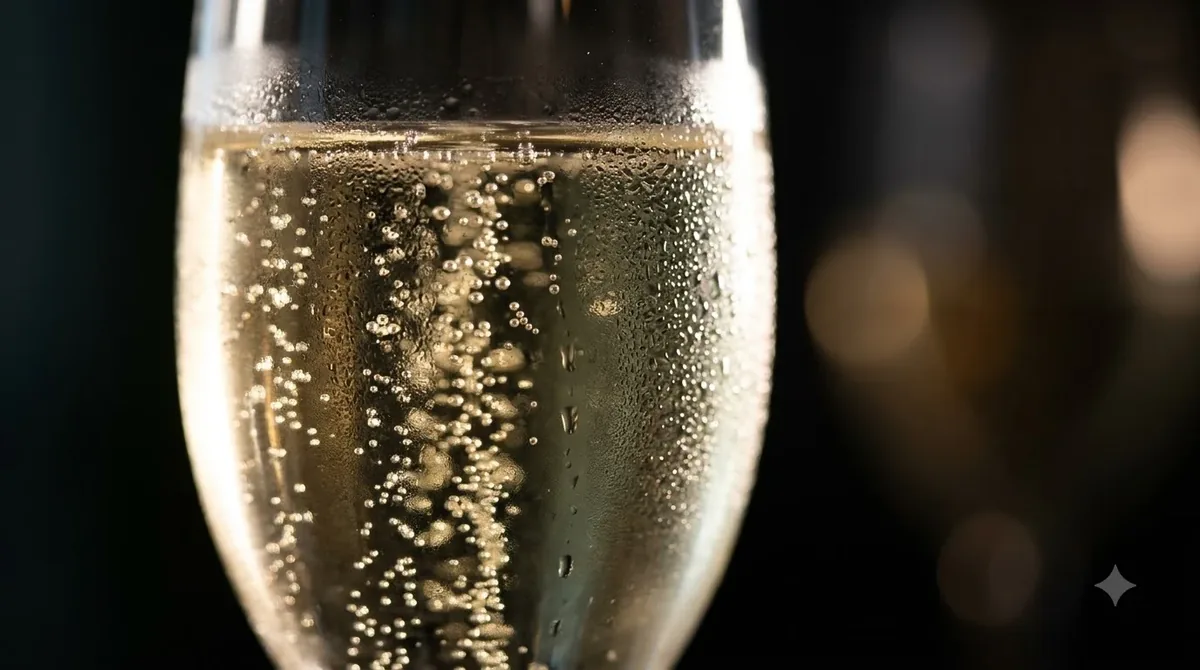
Champagne is made with a second fermentation that takes place inside the bottle. Yeast and sugar are added to the base wine, the bottle is sealed, and the carbon dioxide produced during fermentation stays dissolved in the wine. When the bottle is opened, that gas escapes as bubbles. This process is slower and more costly than tank fermentation, which is one reason champagne often costs more than other sparkling wines.
After the second fermentation, the wine ages on its yeast deposits, called lees, for a period of time. Wine Folly notes that the most treasured bottles age a minimum of three years. That aging adds creamy, bready flavors and a finer bubble. Producers then remove the lees and add a small dose of sugar before the cork is placed, and the amount of that sugar sets the sweetness level on the label.
Flavor Profile and Sweetness Levels
A typical dry champagne shows green apple, lemon, and white flowers, with a toasty note from aging. Older or more prestigious wines often show brioche, almond, and baked apple. Because the bubbles carry aromas to the nose, the first smell of a champagne can seem brighter than the wine tastes on the palate.
Wine Folly lists most champagne as dry in style. Many labels use terms from the driest to the sweetest, including Brut Nature, Extra Brut, Brut, Extra Dry, Sec, Demi-Sec, and Doux. A Brut is the most common style and tastes dry to most people, while Doux is noticeably sweet. Check the sweetness word on the label before you buy, because it tells you more about the taste than the color of the bottle.
| Feature | What to expect |
|---|---|
| Region | Champagne, northeastern France |
| Main grapes | Chardonnay, Pinot Noir, Pinot Meunier |
| Method | Second fermentation in the bottle |
| Typical style | Dry, with fine bubbles |
| Common flavors | Green apple, lemon, brioche, almond |
| Serving temperature | About 38 to 45 degrees Fahrenheit (3 to 7 degrees Celsius) |
How to Serve Champagne
Wine Folly recommends serving champagne at 38 to 45 degrees Fahrenheit (3 to 7 degrees Celsius), ideally in a flute glass. The cold temperature keeps the bubbles fine and the acidity fresh. A flute concentrates the bubbles and helps the aromas reach your nose, while a wide, shallow glass lets the wine lose its fizz more quickly.
Chill the bottle for at least a few hours before opening it, or place it in an ice bucket with water and ice for about 30 minutes. Open it slowly. Hold the cork firmly, turn the bottle rather than the cork, and let the gas release gently. A loud pop is more about show than quality, and a quiet opening keeps more of the wine in the glass.
Tip: Pour the glass about two-thirds full and let the foam settle before topping it up. This keeps the wine from foaming over and helps the bubbles last longer in the glass.
Food Pairings for Champagne
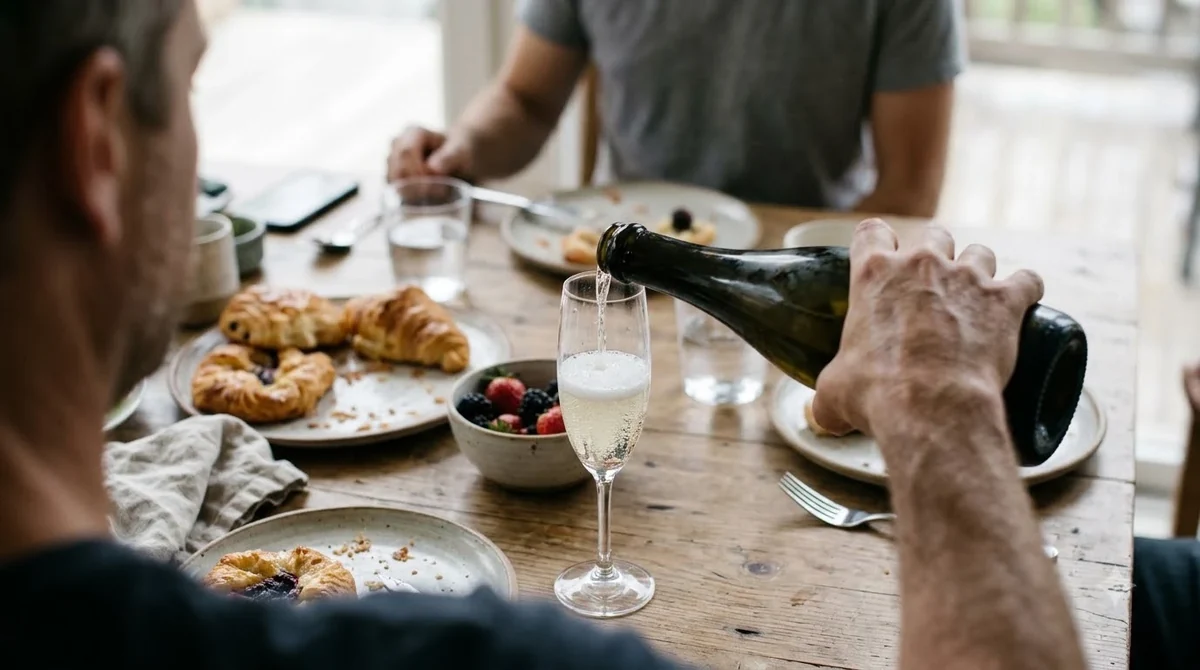
Wine Folly points to salty, fried, and fishy dishes as a strong match for champagne. The acidity and bubbles cut through oil and salt, which is why fried chicken, potato chips, oysters, and fried fish are classic partners. Roasted nuts and hard, salty cheeses also work well with a dry bottle.
The page also suggests serving champagne with the main course, not only as an aperitif. A dry champagne can handle roast chicken, pork, or a creamy pasta, especially if the dish has some acidity or salt. For a sweeter style, such as a Demi-Sec, pair the wine with fruit-based desserts. Avoid pairing a very sweet wine with a dish that is also sweet, because the sugar in the food can make the wine taste flat.
How to Choose a Good Bottle
Start with the sweetness level. If you are not sure what you like, a Brut is the safest starting point because it suits most meals. Next, look for the producer and whether the label says vintage or non-vintage. Non-vintage champagne is a blend from several years, which gives a consistent house style. A vintage bottle comes from a single year and can taste richer, but it is usually more expensive.
Pay attention to the age statement, if there is one. Wine Folly’s note that the most treasured bottles age at least three years is a useful benchmark for a serious champagne. Younger bottles tend to be fresher and more fruit-driven, while older ones taste more complex. Both can be enjoyable, so match the bottle to your plans rather than chasing age alone.
Storage matters as well. Champagne does best in a cool, dark place, away from heat and strong light. Once opened, keep the wine sealed with a proper stopper in the refrigerator and drink it within a day or two. The bubbles fade quickly, so a half-finished bottle will taste flat the next day.
Frequently Asked Questions
Is all sparkling wine champagne?
No. Only sparkling wine made in the Champagne region of France can use the name. Sparkling wines from other places are sold under their own names, even when they use the same method.
Is champagne sweet or dry?
Most champagne is dry in style, and Wine Folly lists the taste as dry. The sweetness level is shown on the label, from Brut Nature (driest) to Doux (sweetest).
What is champagne made from?
Most champagne is a blend of Chardonnay, Pinot Noir, and Pinot Meunier. The proportions vary by producer and by year.
What temperature should champagne be served at?
Serve it between about 38 and 45 degrees Fahrenheit, in a flute. That range keeps the bubbles fine and the acidity fresh.
Champagne is a versatile wine for celebrations and everyday meals. Choose a Brut for the widest range of food, chill it properly, and serve it in a flute. Once you know how the sweetness levels and grape blends change the flavor, it becomes easier to pick a bottle that suits both the occasion and the table.
More in Wine Regions
 Willcox Wine Trail: Discover Arizona’s High-Elevation Wine CountryUpdated Nov 20, 2026
 Yakima Valley Wine Region: Find the Best Styles to TryUpdated Nov 20, 2026
 Vosne Romanee Wine Tasting: Identify Aromas and Choose Better PairingsUpdated Nov 20, 2026
 Yakima Valley Wine Festival: Find the Best Seasonal Wine EventsUpdated Nov 20, 2026
 Wales Vineyards: Discover Cool-Climate Wines and Where to VisitUpdated Nov 20, 2026
 Yountville Wine Festival: Discover Napa Wines and Local FoodUpdated Nov 20, 2026