

We may earn a commission when you buy through links on this page, at no extra cost to you. Learn more.
The best mini wine fridge for most small-space drinkers is a freestanding, single-zone compressor unit holding 12 to 24 bottles, which balances steady cooling with a compact footprint. If you want zero noise in a bedroom or home office, a thermoelectric countertop model is the better call, while entertaining hosts who pour both whites and reds at once should pick a dual-zone cabinet. Built-in undercounter coolers work best for kitchen remodels that need front-venting hardware.
A standard kitchen refrigerator runs far too cold and dry for wine, stripping aromatics and drying out natural corks over time. Compact wine coolers solve that problem without demanding the floor space of a full cellar cabinet, letting apartment dwellers, casual weeknight drinkers, and home-bar hosts keep bottles ready at proper serving and storage temperatures.
Quick Comparison
Different mini wine fridge designs trade off cooling power, noise levels, installation flexibility, and zone control depending on where you plan to set the unit.
| Cooler Type | Typical Capacity | Cooling System | Ventilation | Best Fit |
|---|---|---|---|---|
| Countertop Thermoelectric | 6 to 18 bottles | Thermoelectric (solid-state) | Rear and side clearance | Quiet offices, bedrooms, cool rooms |
| Compact Single-Zone Compressor | 12 to 28 bottles | Compressor with refrigerant | Rear and side clearance | Everyday storage and warm kitchens |
| Dual-Zone Compact Cooler | 15 to 32 bottles | Compressor or hybrid | Front or rear (varies by build) | Serving whites and reds simultaneously |
| Slim Built-In Undercounter | 15 to 30 bottles | Front-venting compressor | Zero-clearance front grille | Flush kitchen cabinetry and bar islands |
| Open-Bottle Vertical Cooler | 18 to 24 bottles | Compressor | Rear and side clearance | By-the-glass drinkers with open bottles |
Best for Quiet Bedrooms and Home Offices: Countertop Thermoelectric Coolers
Countertop thermoelectric units use solid-state heat pumps instead of refrigerant coils, producing virtually no vibration and whisper-quiet operation for noise-sensitive spaces.

Why it stands out: Without a mechanical compressor cycling on and off, these compact cabinets keep sediment undisturbed and blend into living rooms, studies, or studio apartments where a low mechanical hum would become distracting. According to Wine Enthusiast, thermoelectric units rely on electricity passing between two conductors alongside an internal fan, making them lightweight and free of chemical refrigerants. Most hold between six and 18 standard Bordeaux bottles and fit comfortably beneath upper kitchen cabinets or on top of a sturdy sideboard.
Keep in mind and best for: Because thermoelectric cooling depends on ambient room temperature, these coolers struggle to pull interior temperatures down in warm climates, sun-drenched rooms, or hot garages. They perform reliably when room temperatures stay cool and steady, usually below the mid-70s Fahrenheit. Choose this style if quiet operation and a tiny tabletop footprint matter more than deep chilling power in a hot kitchen.

- Capacity
- 1.3 cu ft
- Storage
- Wine bottles or cans
- Door
- Reversible, glass
- Defrost
- Manual
Reds and whites can share this 1.3 cubic foot cooler, which stores either type on horizontal racking, and it also takes canned beer and beverages. The reinforced glass door has an airtight seal, the door swing is reversible, and two front legs level the cabinet. At 35.8 pounds and about 16.5 inches deep, it fits a counter or sideboard.
Pros & ConsView
- Stores red, white or canned drinks
- Reversible glass door with airtight seal
- Two front legs level the cabinet
- Manual defrost needs periodic attention
- A single shelf limits stacking layouts
Best for Everyday Reliability in Warm Kitchens: Compact Single-Zone Compressor Coolers
Compact single-zone compressor fridges use miniature refrigerant systems to hold steady cellar or serving temperatures regardless of warm room air, making them the most dependable all-around mini coolers.
Why it stands out: Unlike solid-state units, a compressor-driven mini fridge easily chills crisp white wines and sparkling bottles down into the mid-40s Fahrenheit even during summer heat waves. As reviewers at Wine Enthusiast note, consistent temperature stability is non-negotiable because even minor swings can flatten aromas and accelerate aging. Modern compact compressors also include vibration-dampening mounts and UV-tinted glass doors that shield bottles from fluorescent kitchen lights and afternoon glare. If you are comparing broader categories across our best rated wine cooler lineup, single-zone compressors consistently offer the strongest cooling recovery after the door opens.
Keep in mind and best for: Compressor motors emit a soft hum when cycling and require several inches of breathing room around the back and sides so heat can dissipate safely. Every bottle inside shares one uniform temperature setting, which is ideal if you mostly drink one style or store bottles around 55°F for medium-term aging. This is the right pick for home cooks and apartment renters who want set-and-forget thermal power in a freestanding footprint.

- Capacity
- 18 bottles
- Cooling
- Compressor, single zone
- Temp Range
- 41°F to 72°F
- Door
- Double-layer tempered glass
Warm kitchens call for a cooler that does not wobble with room temperature, and this compressor unit is built around that idea. Single-zone cooling is described as unaffected by outside heat, while frost-free operation, a vibration-absorbing system and a low-noise design keep daily use trouble-free. The slim 12-inch body holds 18 bottles of different sizes across six shelves.
Pros & ConsView
- Compressor cooling resists outside heat
- Frost-free operation with low-noise design
- Anti-shake system keeps bottles steady
- Single zone means one temperature for every bottle
- Slim 12-inch body caps storage at 18 bottles
Best for Hosting Both Red and White Drinkers: Dual-Zone Compact Coolers
Dual-zone mini wine fridges split the interior into two independently controlled compartments, letting you chill whites and rosés below while holding reds closer to cellar temperature above.
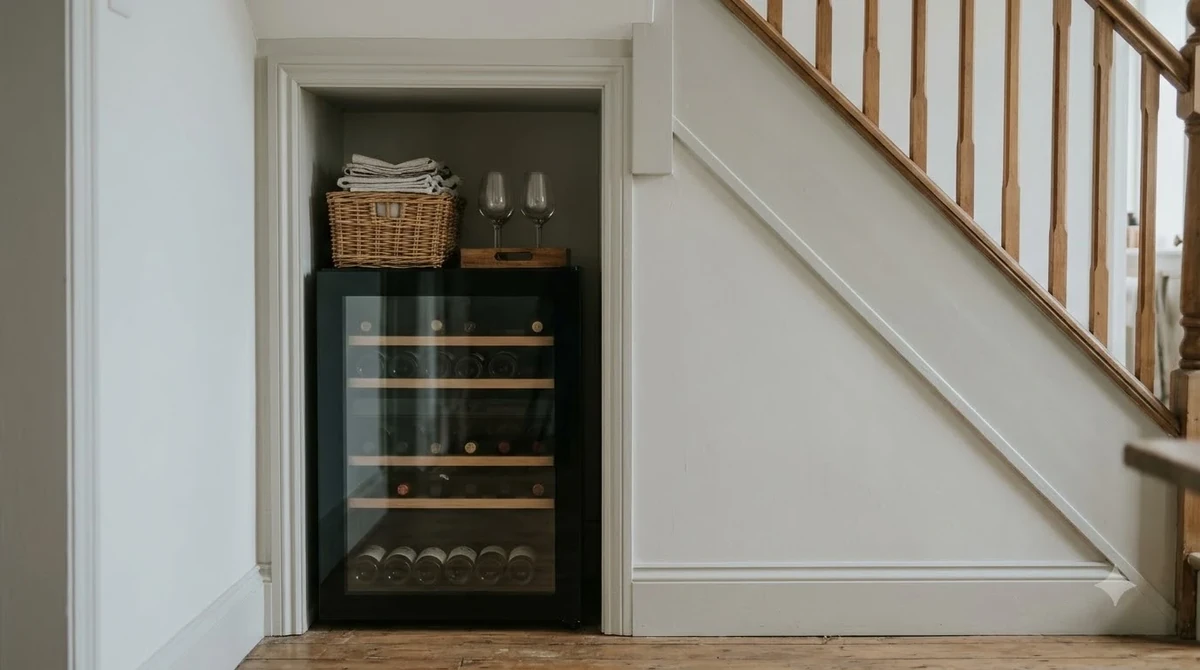
Why it stands out: All wine ages well around 55°F, yet serving temperatures differ sharply between crisp Sauvignon Blanc and full-bodied Cabernet Sauvignon. A dual-zone cabinet removes the guesswork of pulling reds out early to warm up or rushing whites into an ice bucket before guests arrive. Digital touch controls let you dial in each chamber separately—often around 45°F to 50°F for whites and 55°F to 65°F for reds—while tinted double-pane glass doors prevent cold air from bleeding between zones. Pairing a dual-zone cooler with well-proportioned wine glasses makes impromptu weeknight pours and dinner parties effortless.
Keep in mind and best for: Dividing a small cabinet with an insulated partition slightly reduces usable bottle capacity compared to a single-zone box of the exact same exterior dimensions. Taller sparkling bottles or wide-shouldered Pinot Noir bottles may also require removing a shelf in whichever compartment is shorter. Pick a dual-zone mini fridge if you regularly host guests with mixed preferences and prioritize ready-to-pour convenience over maximum bottle count.

Two independently controlled zones let you keep whites and sparkling wine cooler than reds in the same cabinet, across a 41 to 64°F range. It holds up to 33 standard bottles on adjustable shelves, leaving room for a growing collection. Compressor cooling with air circulation, a touch LED display and a double-layer glass door round out a freestanding unit measuring 17 by 20 by 33.4 inches.
Pros & ConsView
- Independent dual-zone temperature control
- Holds up to 33 standard bottles
- Double-layer glass door with digital display
- Compressor system can produce operating noise
- Freestanding unit needs 17 by 20 inches of floor
Best for Kitchen Remodels and Wet Bars: Slim Built-In Undercounter Coolers
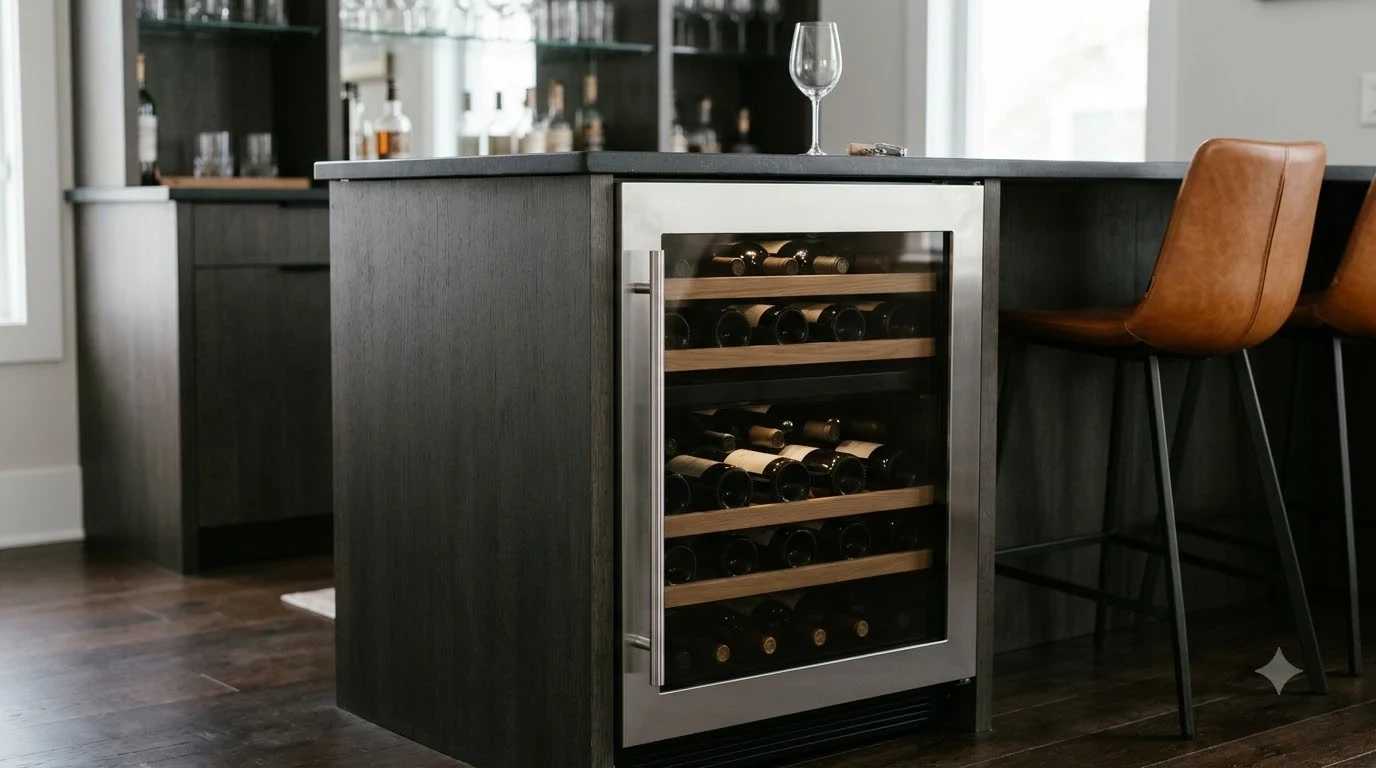
Slim built-in mini wine fridges feature front-venting exhaust grilles and zero-clearance hinges, allowing them to slide flush into standard 15-inch undercounter cabinetry without overheating.
Why it stands out: Standard freestanding coolers vent heat through their rear or side panels, which causes compressor failure if you push them tightly between cabinets. Built-in models solve this engineering hurdle by routing airflow through a slotted kickplate at the bottom front, creating a tailored, integrated look beneath kitchen counters, islands, or home wet bars. Many slim undercounter units also include reversible door swings, security locks, and smooth-gliding beechwood racks so you can read labels without jostling neighboring bottles.
Keep in mind and best for: Front-venting ventilation hardware and heavier cabinetry-grade insulation add weight and require careful measurement of cutout width, height, and door-swing clearance before ordering. Even if you use a built-in unit freestanding at first, you will appreciate the flexibility if you renovate later. Choose this type if you want permanent, furniture-grade integration in a kitchen or entertaining bar.

- Capacity
- 12 bottles
- Cooling
- Compressor
- Controls
- Digital touch, °C/°F
- Lock
- Key lock
A narrow, freestanding wine-cellar-style cabinet that holds 12 standard bottles and can sit on a floor or table. A digital display with soft-touch controls handles the temperature and the °C or °F selection, while LED lights show off the shelves. The built-in door handle keeps the front smooth, so it slides next to other furniture without snagging. A key lock is fitted.
Pros & ConsView
- Narrow stainless design holds 12 bottles
- Digital touch controls with °C or °F
- Built-in handle keeps the front smooth
- Exact slim dimensions are not listed
- Compressor models can hum in very quiet spaces
Best for Weeknight By-the-Glass Pourers: Open-Bottle Vertical Storage Coolers
Open-bottle mini wine fridges combine horizontal racking with dedicated upright slots, letting you store recorked bottles vertically without risking leaks or premature oxidation.
Why it stands out: Traditional wire racks force every bottle onto its side, which works great for sealed corks but causes messy drips or stopper blowouts once a bottle has been opened and fitted with a vacuum pump or preservation stopper. Vertical-rack compact coolers carve out standing room—usually for three or four open bottles—right alongside standard horizontal shelves. Keeping opened wine chilled slows down oxidation dramatically, helping preserve aromatics if you pay close attention to how long does wine last after opening across reds, whites, and sparkling wines.
Keep in mind and best for: Upright bays sacrifice a handful of horizontal slots, meaning overall bottle counts typically sit closer to 18 to 24 bottles rather than maximizing tight stacking. You also need enough vertical clearance above the standing rack for tall Champagne or Riesling necks topped with stoppers. This style suits solo drinkers, couples, and casual tasters who open two or three different bottles over a week rather than finishing one in a single evening.

- Capacity
- 8 bottles (750 ml)
- Temp Range
- 46°F to 64°F
- Voltage
- 220V
- Door
- Double-layer glass, key lock
For a household that opens one bottle at a time, an eight-bottle cabinet is plenty. This small black unit has digital temperature control from 46°F to 64°F, one removable shelf to rearrange the layout, and a double-layer glass door meant to shield wine from UV and heat. A circulation system aims to cool faster and hold steady.
Pros & ConsView
- Digital control across a 46°F to 64°F range
- Removable shelf allows flexible bottle layout
- Double-layer glass door guards against UV and heat
- Listed voltage is 220V, so check your outlet
- Only 8 bottles and a single shelf
How to Choose
Selecting the right mini wine fridge comes down to matching the cooling hardware and interior layout to your room conditions and drinking habits. Before comparing specific models, evaluate five practical specs:
- Cooling technology and ambient room heat: Choose a compressor unit if the fridge will live in a warm kitchen, sunny dining area, or climate above 75°F. Reserve thermoelectric coolers for cool, air-conditioned offices or bedrooms where silence below 40 decibels is your top priority.
- True bottle capacity versus bottle shape: Manufacturers rate capacity using slim 750ml Bordeaux bottles. If you regularly buy wide-bellied Burgundy, Rhône, Pinot Noir, or Champagne bottles, expect real-world capacity to drop by 15 to 25 percent unless the shelves are removable or widely spaced.
- Single-zone versus dual-zone control: Stick with a single-zone cabinet if you want straightforward long-term storage around 55°F or mostly drink one color of wine. Upgrade to dual-zone only when you want reds and whites ready to serve simultaneously without transferring bottles to your kitchen fridge.
- Freestanding clearance versus built-in venting: Check where heat exits the cabinet. Freestanding units need two to four inches of open air behind and beside the walls, whereas built-in undercounter coolers vent exclusively from the front kickplate.
- UV protection and shelving material: Look for double-pane, UV-tinted glass to block light damage, paired with wood or coated wire racks that cradle bottles without scratching labels. You can explore additional configurations and installation styles in our guide to wine fridges by type.
Tip: Always buy one size larger than your current weekly stash—a 12-bottle unit fills up almost immediately once you mix sparkling bottles, wider Pinot Noir shoulders, and a couple of open bottles.
Frequently Asked Questions
How many bottles does a mini wine fridge actually hold?
Most mini wine fridges hold between 6 and 28 standard 750ml Bordeaux bottles, depending on whether they are countertop or undercounter height. Because wider Burgundy, Champagne, and magnum bottles take up extra space, real-world capacity is typically 15 to 25 percent lower than the advertised maximum when mixing bottle shapes.
Is a thermoelectric or compressor mini wine fridge better?
Compressor mini wine fridges cool faster, reach lower temperatures for whites and sparkling wines, and perform reliably in warm kitchens. Thermoelectric units are quieter and virtually vibration-free, making them better suited for bedrooms, offices, and cool rooms where ambient temperatures stay steady.
Can I put a freestanding mini wine fridge under a counter?
No, unless the manufacturer explicitly rates it for built-in or zero-clearance installation. Freestanding mini wine fridges vent heat through their back and side panels, so enclosing them inside tight cabinetry traps heat, strains the cooling system, and can cause early failure.
What temperature should I set my mini wine fridge to?
If you are using a single-zone fridge for general storage of both reds and whites, 55°F is the standard benchmark. In a dual-zone unit set up for immediate serving, keep whites and sparkling wines between 45°F and 50°F and reds between 58°F and 65°F.
The right compact cooler protects every bottle from kitchen heat, harsh light, and temperature swings without crowding your floor plan. Measure your available clearance carefully, account for wider bottle shapes, and pick the cooling system that matches both your room temperature and how you like to pour.
More in Wine Fridges by Type
 Best White Wine Fridge for Reliable Chilling and StorageUpdated Nov 20, 2026
 Best Smart Wine Fridge for Steady Temperatures and Remote ChecksUpdated Nov 18, 2026
 Best Black Under Counter Wine Fridge Options for Kitchens and IslandsUpdated Nov 18, 2026
 Best Black Slim Wine Fridge for Narrow Gaps and Dark KitchensUpdated Nov 18, 2026
 Best Built In Dual Zone Wine Fridge Options by Kitchen LayoutUpdated Nov 18, 2026
 Best Slim Built in Wine Cooler: 5 Space-Saving Styles for Tight KitchensUpdated Nov 18, 2026